
The Case For Film
Will Artificial Intelligence aid the revival of film photography?
Since the inception of photography, photographers have manipulated images to show something different from what they initially captured when pushing the shutter button…
Will Artificial Intelligence aid the revival of film photography?
Since the inception of photography, photographers have manipulated images to show something different from what they initially captured when pushing the shutter button.
And since Niépce created the first photographic image, the evolution of technology has made it increasingly easy for us to change the original image.
Initially, photographers could only do this in the wet darkroom, with techniques like dodging and burning, hiding parts of the negative or stacking negatives.
Now, in the digital age, after scanning a negative or working directly with a file from a digital camera, photographers can easily remove or add objects, change colors, distort images, add filters to create specific moods, and make a multitude of other changes to the original image.
And while digital photo editing tools have been around for several decades, the latest development in image creation and manipulation is a total game changer: text-to-image Artificial Intelligence (AI).
AI can do more than manipulate an image: it can create a photo without needing an actual subject, using program instructions (not totally accurate, of course: text-to-image AI uses databases with millions of images made of real objects or people).
While still in its infancy, developments are going extremely fast, and we already see AI being used to create photo-like images of portraits, landscapes, food, and pictures in the style of the old masters of painting.
Since photographers using Photoshop already led to controversies, AI has the potential for even more debate.
What images can we trust?
Digital photography increased the challenge of answering this question because digital photos don't exist: they are only a bunch of specifically arranged zeroes and ones. Not even that: they are bits stored in a magnetic region on a disk or as electrical charges on an SSD.
And while we can ask the trust question regarding any photo altered with editing software, the use of AI to create images out-of-thin-air makes this question even more critical.
Digital photography, as I pointed out in a previous article, still needs a subject that reflects, absorbs, or blocks light to create a picture. Therefore, we still would have that subject against which we can check the 'truthfulness' of the created image. With AI, we don't even have that.
We are entirely at the mercy of the binary gods.
It is probably not without reason that image fact-checking is now a common practice on social media and other communication channels.
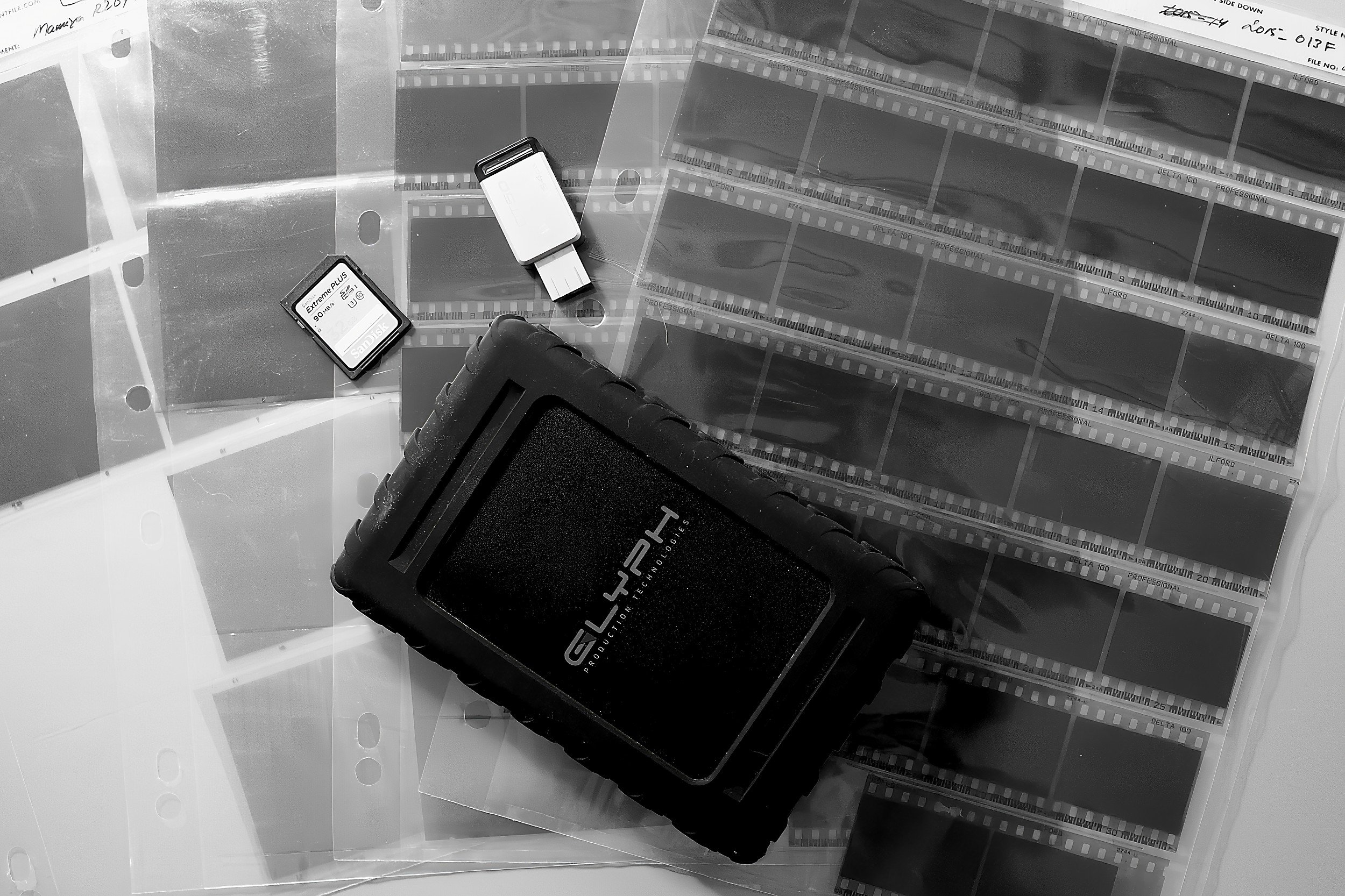
Photos created on film, in stark contrast, are tangible from the start.
A roll of film base with a light-sensitive emulsion is exposed to light and then chemically developed, creating a negative film strip you can hold in your hand! And while it is possible to alter that negative (e.g., with markers or acid), it would bear clear evidence.
Therefore, any final image that starts on film, whether printed in a wet darkroom or scanned and edited with photo editing software, is backed up by a negative that provides tangible proof of the image as the photographer initially captured it.
Consequently, I can see the revival of film photography, which has been going on for several years now, becoming even more vital for specific genres. Especially with people for whom the image's truthfulness is critical:
Crime and other photography that needs 100% proof of not being manipulated;
Documentary photography and news photography;
Art collectors;
Museums and students: to see what the original image was and what the photographer has edited to achieve his vision or message.
Will artists, and other professional and hobby photographers, now flock in swarms back to film photography?
I don't think so.
Digital photography is too far evolved and has too many positive aspects: going back to film will not be practical from a workflow perspective for most photographers.
And while I don't use it, AI, the newest member of the image creation family, is, in my opinion, an excellent development. It is a new tool that has its rightful place in the complete range of visual arts.
Entirely digital art also has found its place in the photography and public art world: look only at the fact that NFTs achieve (sometimes extremely) high price points.
However, like the written proof of authenticity that photographers add to their prints, the tangible film negative could become the new proof of authenticity for those photos that require it.
And as such, the increased digitization of art through AI could be an additional stimulus for photographers in specific genres to go back to film.
The Trinity Is No More
One Camera Is Gone, And It Is Probably Not The One You Would Expect
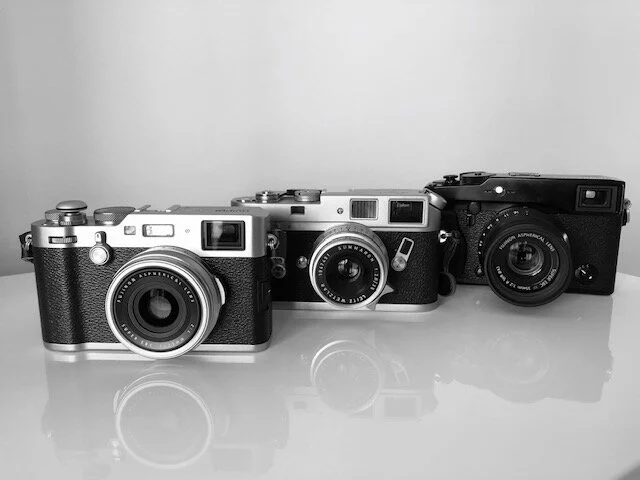
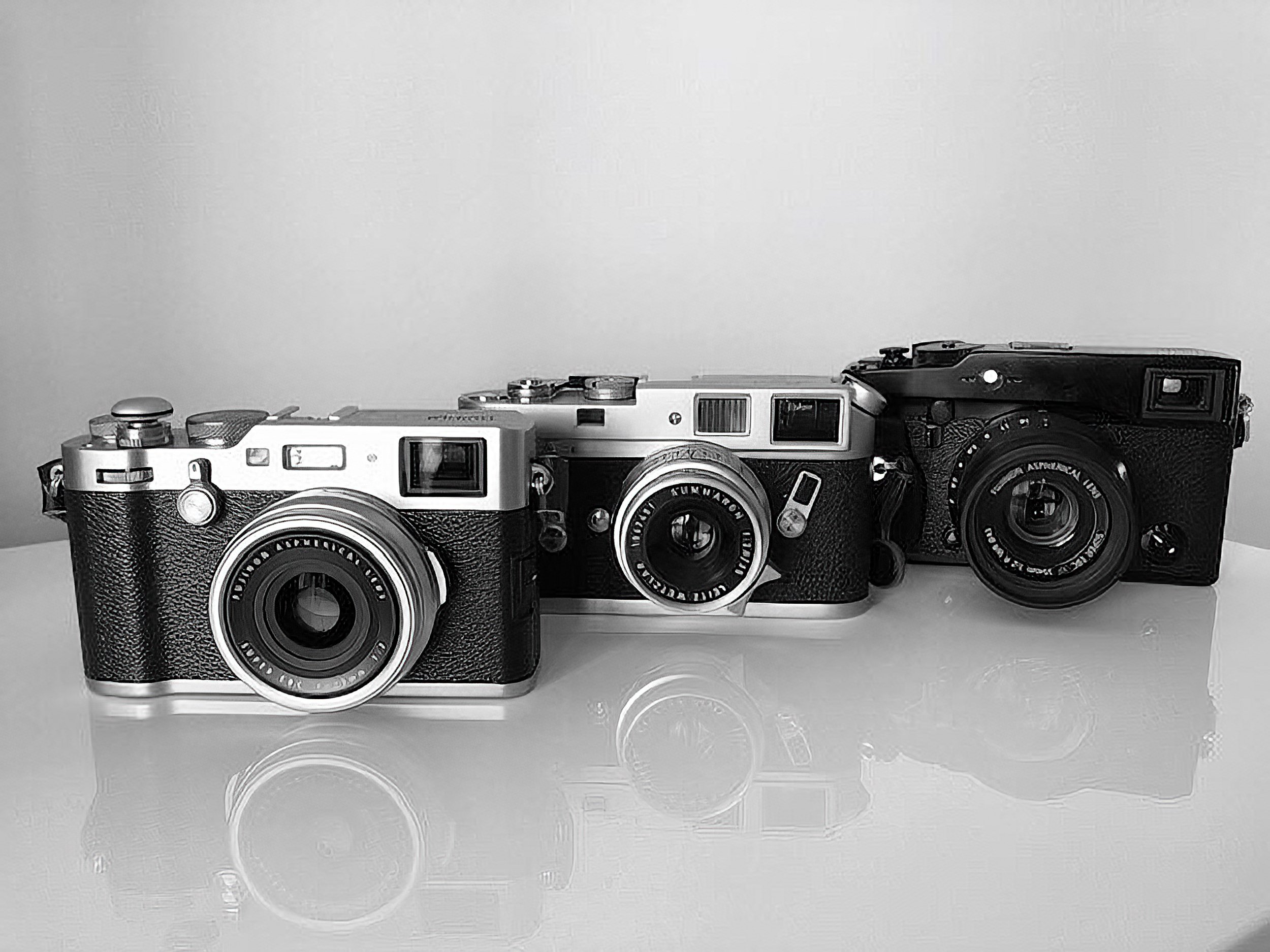
In 2019, I was fortunate to obtain two new cameras that were an excellent accompaniment to my Fujifilm X-Pro 1 and supplemented each other: a new Fujifilm X100F and a used Leica M4.
As I wrote, these three cameras became my Trinity.
One Camera Is Gone, And It Is Probably Not The One You Would Expect
In 2019, I was fortunate to obtain two new cameras that were an excellent accompaniment to my Fujifilm X-Pro 1 and supplemented each other: a new Fujifilm X100F and a used Leica M4.
As I wrote, these three cameras became my Trinity.
The X-Pro 1 was going to be my exchangeable-lens camera for when I wanted to create images with wide-angle (broader than 35mm full-frame equivalent) or longer lenses.
The X100F (with its 35mm full-frame equivalent lens) and the Leica M4 (with its 35mm Summaron) would be my daily go-to cameras, depending on whether I wanted to shoot digital or analogue.
This setup worked well; I created many street and social documentary-style images and essays with these three tools.
And now I broke the Trinity up.
What happened?
Did one of the cameras break? Did I not like any of them anymore?
Fortunately, none of those.
One of my daughters went to study abroad in September of this year and wanted to take a real camera with her. Although she has the ubiquitous iPhone, she wanted a real camera (insert dad doing a happy dance).
After researching several alternatives and the cost involved, I decided that I was going to give her the X100F.
Yup, I parted with this lovely camera to give my daughter an excellent tool and a fantastic shooting experience.
It is easy to set the Fujifilm X100F up as a 'point and shoot camera, and if she wants to go manual, that is still a possibility.
So there you have it: the X100F is no longer part of my daily toolkit.
While my daughter was thrilled with this decision - and she is making great memories with the X100F in Bonny Scotland - it gave me a challenge and an opportunity.
Without the X100F and its 23mm lens (35mm full-frame equivalent), I no longer had a direct digital match to the 35mm Summaron on the Leica M4. Because the only lenses I had for the X-Pro 1 were a Fujinon 18mm/1.2, a Fujinon 35mm/1.4, a Fujinon 35mm/1.2 XF, and a TTArtisan 50mm/1.2.
All great lenses, which I still use today, but none of them are a direct match to the 35mm angle of the Summaron.
Enter the TTArtisan 23mm/1.4
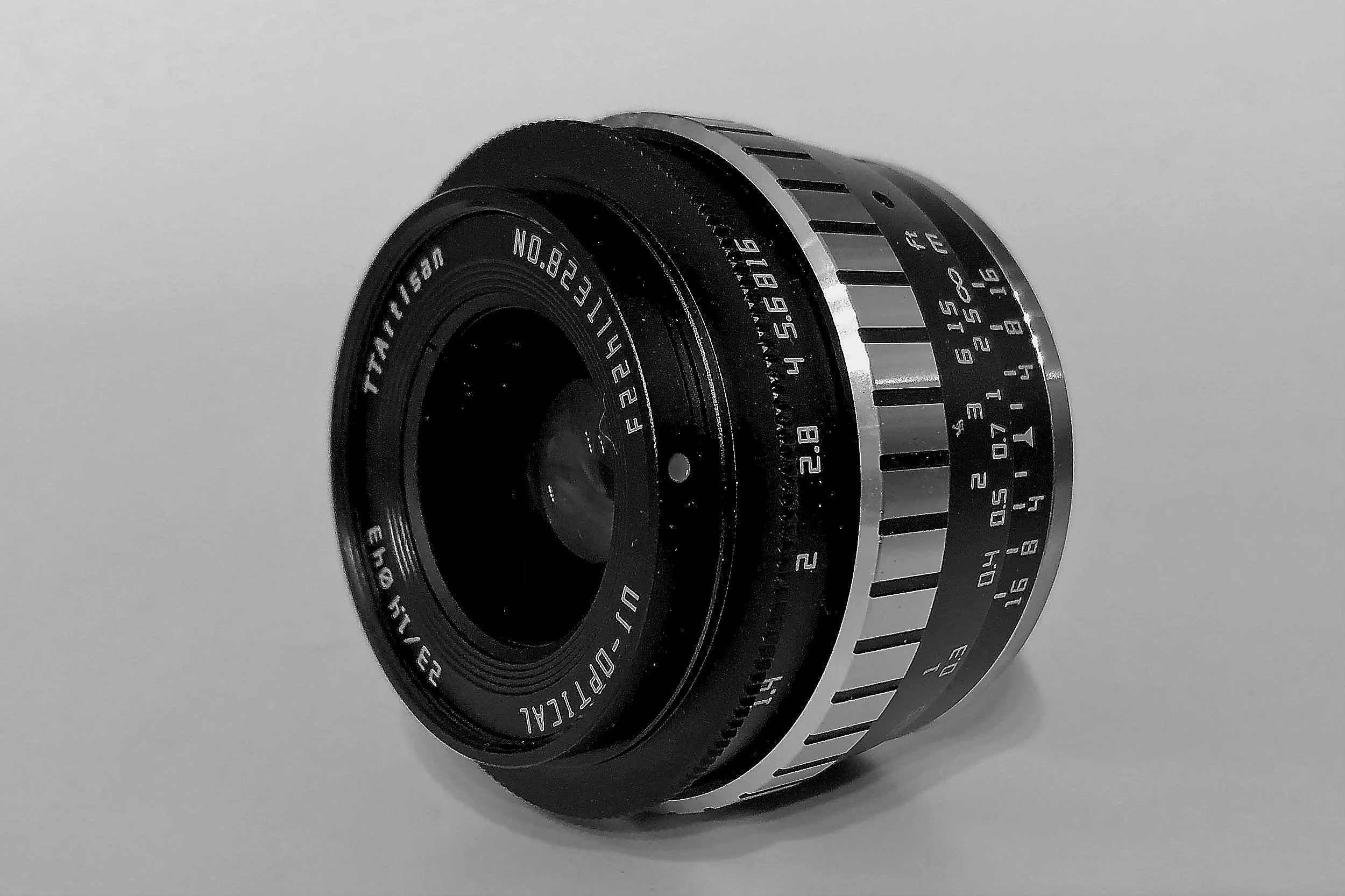
After some deliberation and research, I decided on this lens for several reasons.
It is extremely reasonably priced.
It is small.
It has a nice, solid feel to it.
It balances nicely on the X-Pro 1.
It looks cool.
And most importantly, it delivers excellent image results.
Considering this, I couldn't find a lens with a better price/quality ratio.
And there is another spec to this lens, which for me is essential: it has a distance/aperture scale which allows for zone and hyperfocal focusing! Unfortunately, the only Fujinon 23mm lens with this feature (the 23mm/1.4 R) is just over seven times more expensive.
[note: I have no affiliation with TTArtisan or Pergear, and I purchased this lens myself]
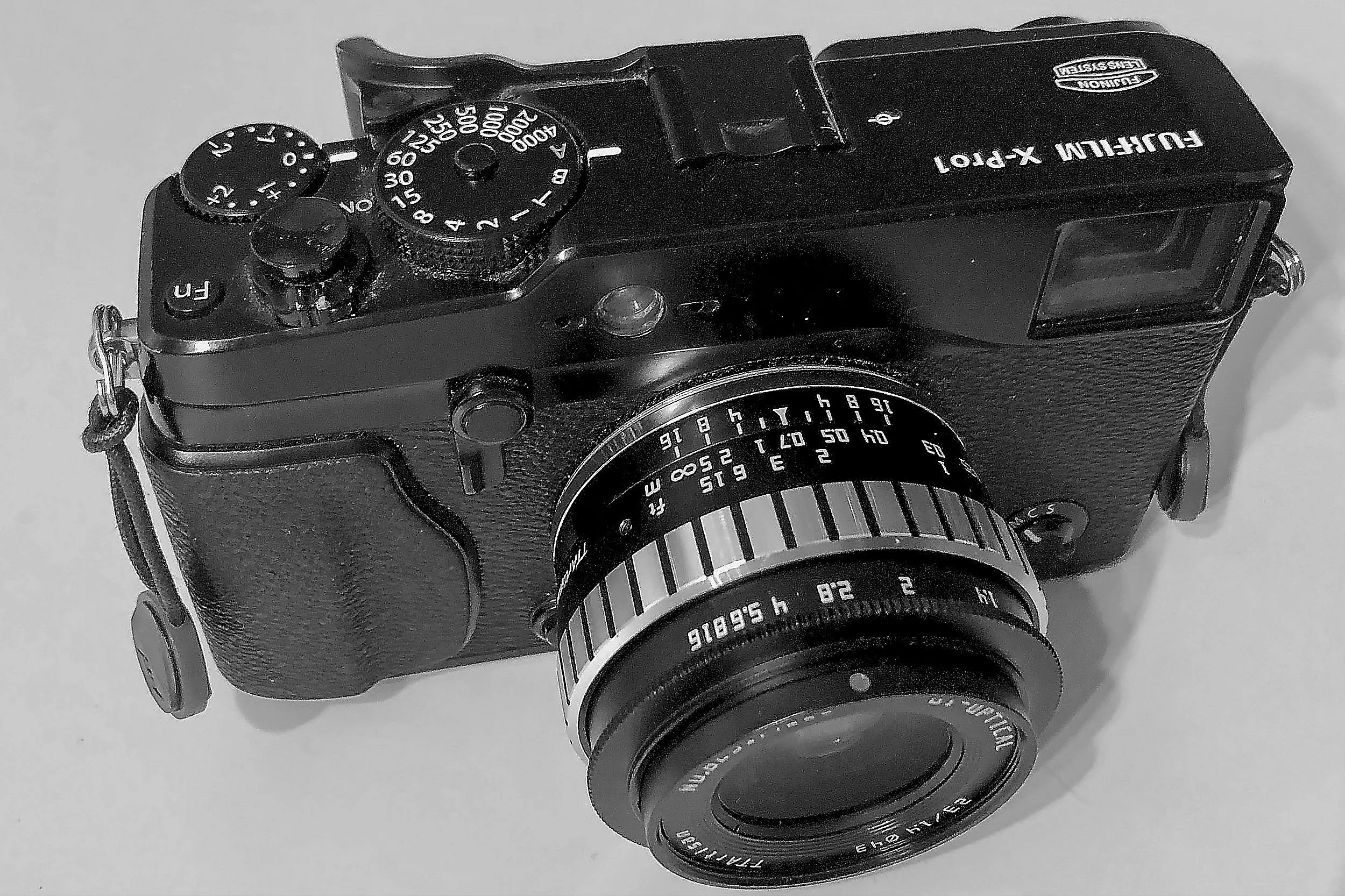
So now I am back to two daily cameras: the Leica M4 with the 35mm Summaron and the Fujifilm X-Pro 1 with the 23mm TTArtisan, which makes life also a bit easier because I don't have to choose between three cameras when going out on the street.
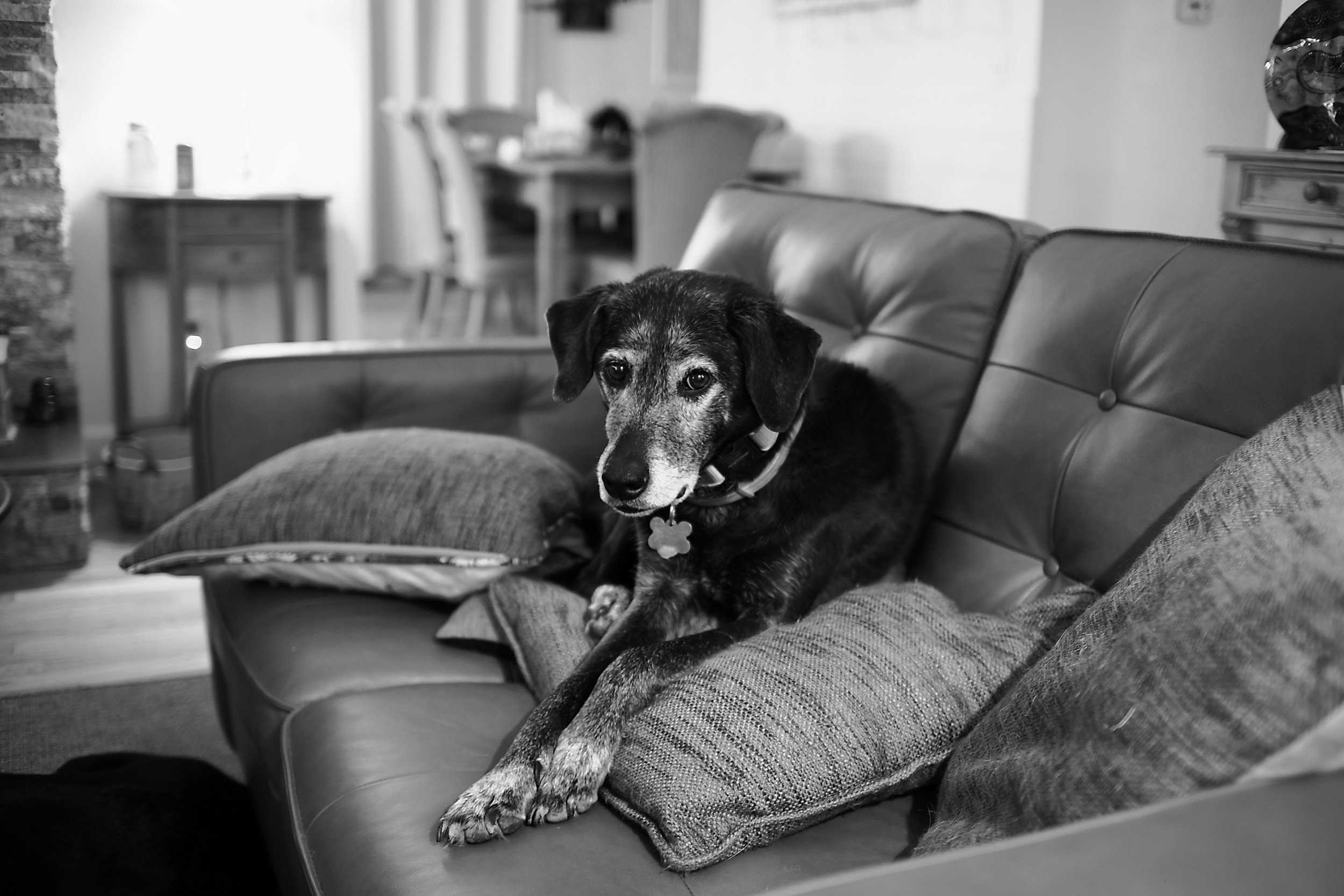
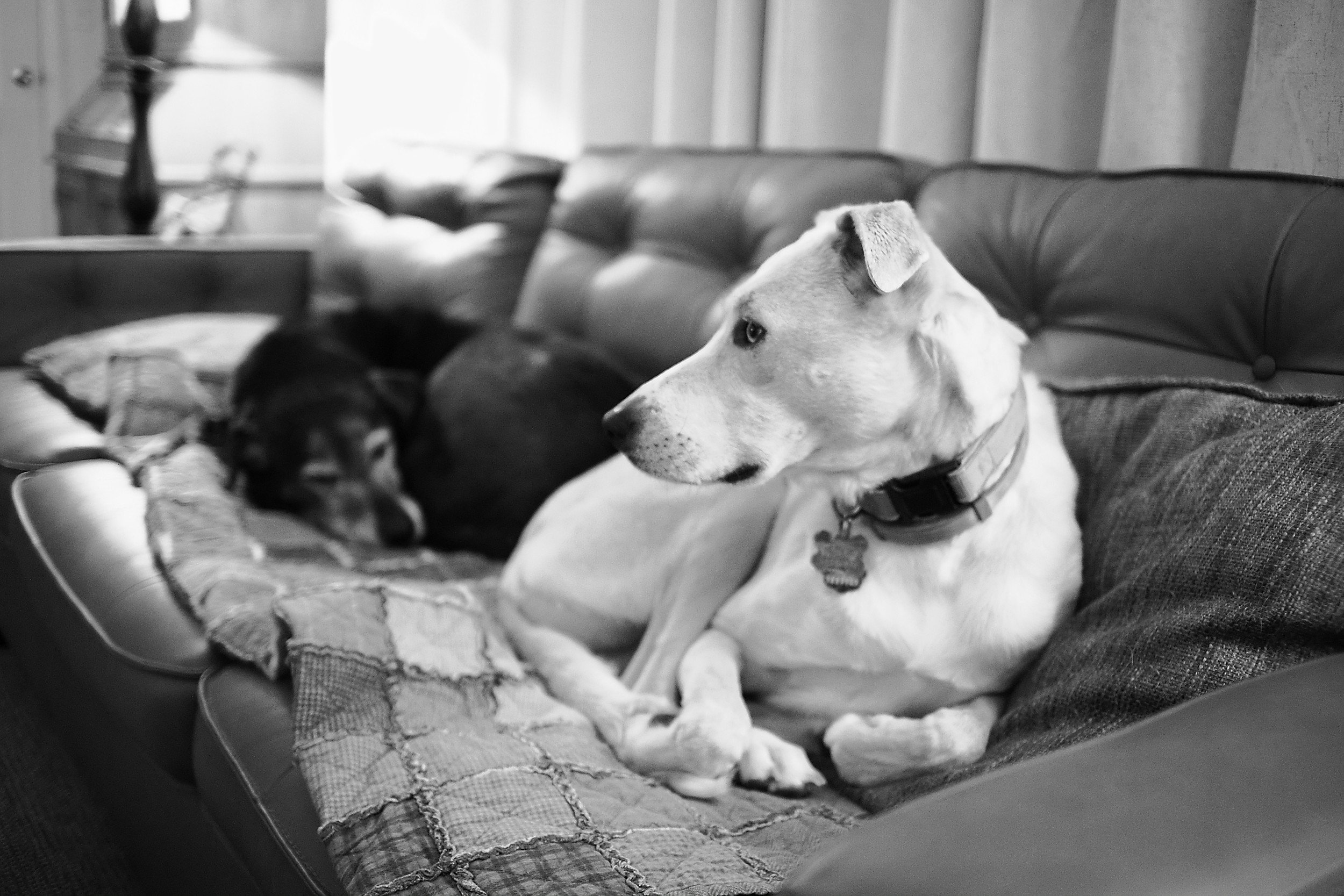
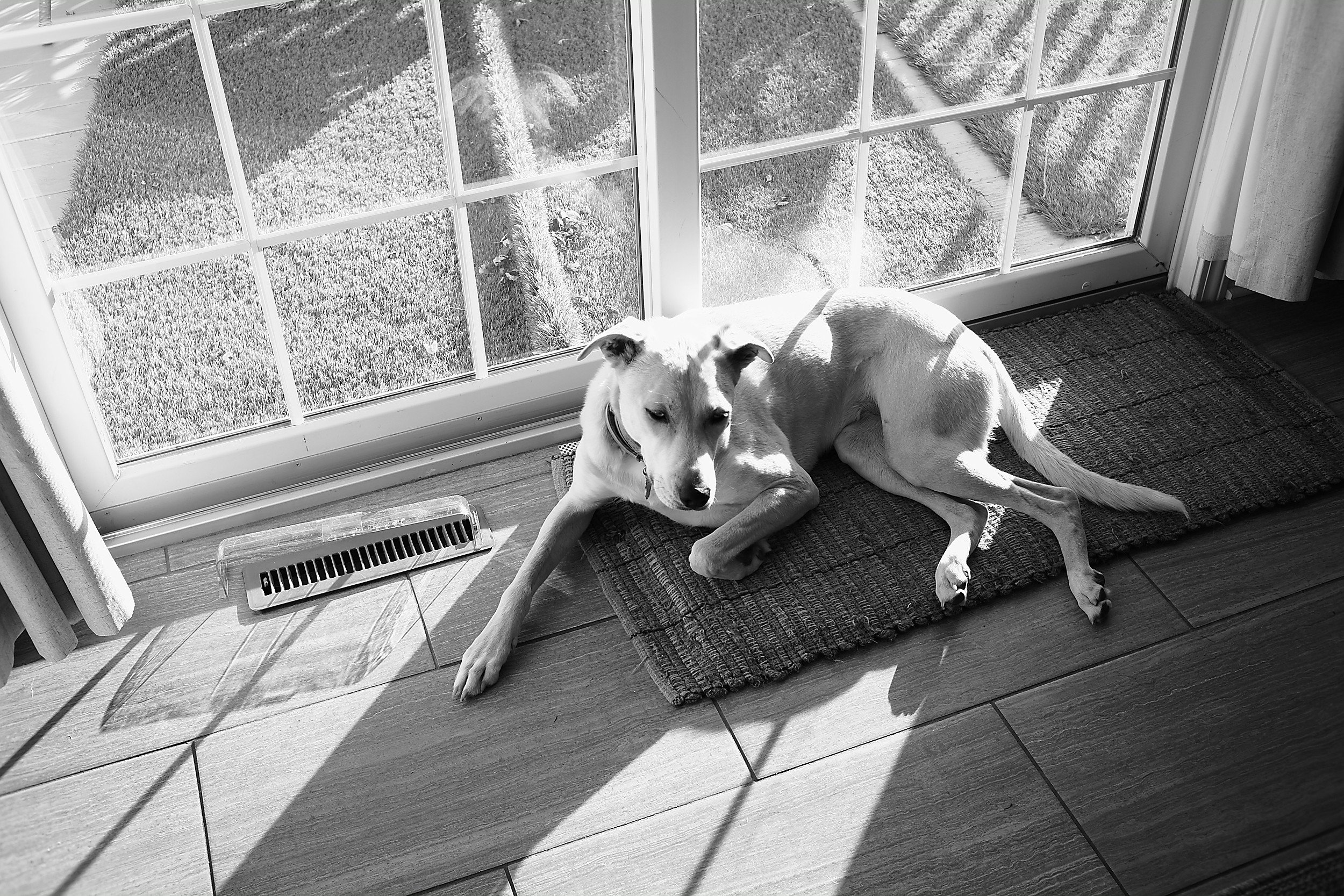
The images below are the first results of shooting with the TTArtisan 23mm (all are SOOC jpegs).
Admittedly, there is some learning curve since the lens is fully manual and does not communicate with the camera. I am finding, however, that the use of this lens is not much different from using the Summaron (all Leica devotees now probably are shaking their heads and un-friending me). And zone focusing even allows me to get great results using the X-Pro1's OVF.
Getting The Shot: 5 Reasons For Shooting With Film In 2021
My Considerations For Continuing To Shoot With Film
Now, almost two years further on the road, it is time for me to reassess whether I want to continue shooting with film going forward…

My Considerations For Continuing To Shoot With Film
When I started this blog back in 2015, I published several articles to explain why I recommend photographers to try or continue shooting with film.
In 2018 I summarized why I still shot film then.
In 2019 I added a new digital camera to my toolbox (the Fujifilm X100F) and another film camera (the Leica M4).
Film is relatively expensive to use, as compared to shooting digital and I have to annually assess (convince myself) whether I want to continue using it. So now, almost two years further on the road, it is time for me to reassess whether I want to continue shooting with film going forward.
First, let's go back to the main reasons I mentioned in the past for shooting with film and see if these are still valid.
The need to be disciplined and follow a set process
It is essential to follow specific sequences to capture an image with most film cameras: from setting shutter speed and aperture to framing and focusing your subject.
The need to know your photography theory
Still valid! And very much related to the first reason mentioned above. To get the exposure you want, you need to know how shutter speed and aperture will impact the result. You also need to know the specifics of the film you are using, whether it is a reversal film or a slow black and white emulsion.
Film is just better for some shots
I love shooting with medium format cameras. For my fine-art images (link to ArtPal), medium format provides excellent results with its shallow depth of field and great details. Digital medium format backs, however, are quite expensive and create huge digital files that my computer can't handle.
Also, some grain effects (for example, as achieved when shooting an ISO 3200 film) are almost impossible to reproduce with a digital camera or post-processing.
And talking about post-processing: once you have mastered a specific film and camera combination, it is my experience that it is possible to get consistent results with not much post-processing needed after scanning the negatives. And who wants to spend more time behind their computer than necessary?
In conclusion, based on my assessment: I still want to continue shooting with film.
And there is one more reason I have not mentioned yet, which is the most important: I just love to work with film cameras!
Let's be clear: there is no need to shoot film. It is a personal choice.
I love it: the process, the results.
I love handling a film camera, going through all the actions to ensure all settings are correct. It is just more fun than working with a digital camera, even if you are shooting a DSLR or mirrorless camera in 'full manual' mode.
So do I want to continue shooting with film in 2021? Yes!
Both digital and film have their merits, and, depending on the situation, I choose a specific medium and method of creating images. I am lucky I can experience both worlds, with as my main go-to cameras for daily use the trinity Fujifilm X-Pro1, Fujifilm X100F, and Leica M4.
And keep in mind: whatever medium you use for creating images; in the end, it is not the tool that is important. Far more important is going out and creating at all.