
AI and Photography: Defining the Boundaries
Can AI-Generated Images Truly Qualify as Photography? A Barthesian Perspective
Generative Artificial Intelligence and Photography: if there is one area of controversy in the photographic world today, it is this one. Are AI-generated images photography? Should they be allowed to be submitted for photography contests? Can they be sold as photography?

Can AI-Generated Images Truly Qualify as Photography? A Barthesian Perspective
Generative Artificial Intelligence and Photography: if there is one area of controversy in the photographic world today, it is this one.
Are AI-generated images photography? Should they be allowed to be submitted for photography contests? Can they be sold as photography?
Introduction
Mike Johnston recently published a strong opinion on The Online Photographer website titled "AI Imaging is a Pox, a Fraud and a Thief.”
In the article, he states that:
“Photography in its most exalted form and practice is a means of investigating and appreciating the visual world, of commemorating what we are privileged to see; and as such it should have some sort of connection to the real, like a bear print in the woods is connected to the bear, or like a fossil had to be formed by an actual ancient trilobite. It has to have a trace of the real, left by the actual [bold by M|P]. The ligatures that bind it to truth (whether closely or loosely) are an essential and indivisible part of its nature, in the complete absence of which it is not itself. To be "photography," an imaging system, whether analog or digital, either by its nature or by virtue of the way it is deployed by a sentient human being, must respect the lens image, and, through the lens image, report to the viewer of the photograph, in some manner and to some degree, what actually might have existed in the world of appearances.
AI has nothing to do with photography, except as a means of flooding the culture with counterfeits—a flood that is dispiritingly likely to drown once and for all the benefits and the benevolences of the art and the craft we have learned over the years to love.”
The main reason why I agree with him and also think that AI-generated images should not be considered photography is his observation that "To be "photography," an imaging system, ..., must respect the lens image, and, through the lens image, report to the viewer of the photograph, ..., what actually might have existed in the world of appearances." [bold by M|P].
I already mentioned something similar in my blog post, Fine Art Defined, where I observed that:
“The interesting notion here is that, different from other art forms, photography to be creative needs an already existing creation; be this a man made object, a natural object or a living being. Whereas a painter by using the capturing medium (canvas, paint and whatever else the artists decides to use) can create a picture of a vase without an actual vase in existence, and the potter can create a formerly not existent vase by applying his creative medium, without light bouncing off an actually existing vase a photographic image of a vase is not possible.”
I posted that in 2015, long before generative AI was even a thing, and unbeknown to me at the moment, I actually was - in a far simpler way and in blissful ignorance of what this great philosopher wrote about the subject - paraphrasing what Roland Barthes said in 1980!
In his seminal work, "Camera Lucida," (which I only read recently - better late than never, I daresay), Barthes delves deep into the essence of photography, asserting that the uniqueness of the medium lies in its ability to capture the "that-has-been," or the intractable.
He emphasizes that a photograph's referent is the "necessarily real thing which has been placed before the lens," [bold by M|P], and this quality sets photography apart from other forms of representation.
Now, however, in the age of artificial intelligence (AI), we are confronted with a profound question: Can AI-generated images be considered true photography?
Spoiler Alert!
In this essay, I will explore the argument that AI-generated images (I deliberately do not call them photos) do not fully encapsulate the essence of traditional photography defined by Barthes and, therefore, in my opinion, never can or should be called photography.
The Nature of Photography's Referent
Barthes distinguishes the "photographic referent" from other systems of representation, asserting that in photography, one can never deny the existence of the captured subject. He argues that while painting can feign reality without actually having seen it and discourse can combine signs with "chimeras" as referents, photography uniquely captures an undeniable reality. It is this constraint that Barthes defines as the very essence of photography, what he names the "noeme" of the medium.
This noeme is the "That-has-been," signifying the subject's presence before the lens.
AI-Generated Images: An Examination
AI-generated images are products of computer algorithms and neural networks that create visuals without the direct presence of a physical subject. These algorithms analyze patterns and data to generate images that mimic the style and content of photographs.
While they, therefore, can create hyper-realistic scenes and subjects that, at a glance, are indistinguishable from traditionally captured photos, the fundamental question, however, arises if AI-generated images truly can be considered photography in the Barthesian sense.
The Absence of the "That-has-been"
One of the primary reasons AI-generated images cannot fully embody the essence of traditional photography is the absence of the "That-has-been." In photography, as we have seen above, the referent is the physical object or scene that existed in the real world and was captured by the camera. In contrast, AI-generated images lack this referent. They are not tied to a physical presence or a moment that has passed. Instead, they are a creation of algorithms and data, making their referent more abstract, virtual, and devoid of the immediate, undeniable reality that Barthes associates with traditional photography.
The Missing Interplay of Reality and the Past
Furthermore, the interplay of reality and the past, another crucial aspect of Barthes's definition of photography, is absent in AI-generated images.
Traditional photographs capture a specific moment in time, preserving it as an irrefutable "artifact of the past." AI-generated images, on the other hand, do not have a moment of origin in the same way. They are not the result of a subject's presence before a lens, and they do not carry the weight of the past in the same manner. Therefore, they lack the tension between presence and separation that defines photography's essence.
Conclusion
In light of Roland Barthes's exploration of photography's essence in "Camera Lucida," it becomes evident that AI-generated images do not align with the fundamental principles he outlined. The absence of the "That-has-been" and the missing interplay between reality and the past makes it impossible to categorize AI-generated images as traditional photography.
While AI-generated images may be technically impressive and visually compelling - and, in my opinion, absolutely deserve their place in the broad gamma of visual art - they lack the unique quality of capturing the "necessarily real thing." They are not bound to an undeniable reality that has been present before the lens.
Therefore, it is essential to recognize the distinction between photography, which embodies the essence of the "That-has-been," and AI-generated images, which depart from the core principles that have defined the medium since its inception.
Do you agree that AI-generated images are not photography and should not be passed off as such?

The Case For Film
Will Artificial Intelligence aid the revival of film photography?
Since the inception of photography, photographers have manipulated images to show something different from what they initially captured when pushing the shutter button…
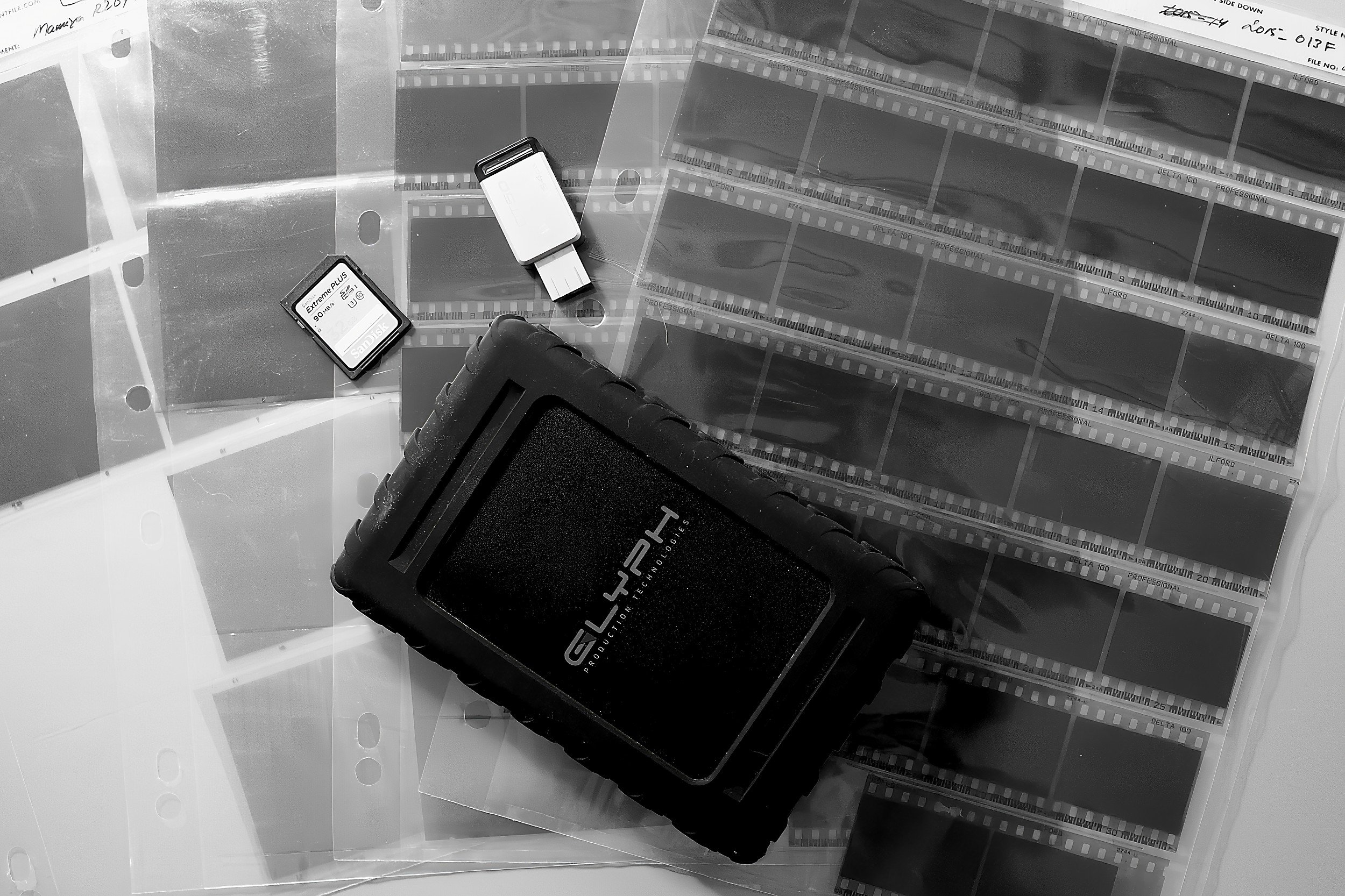
Will Artificial Intelligence aid the revival of film photography?
Since the inception of photography, photographers have manipulated images to show something different from what they initially captured when pushing the shutter button.
And since Niépce created the first photographic image, the evolution of technology has made it increasingly easy for us to change the original image.
Initially, photographers could only do this in the wet darkroom, with techniques like dodging and burning, hiding parts of the negative or stacking negatives.
Now, in the digital age, after scanning a negative or working directly with a file from a digital camera, photographers can easily remove or add objects, change colors, distort images, add filters to create specific moods, and make a multitude of other changes to the original image.
And while digital photo editing tools have been around for several decades, the latest development in image creation and manipulation is a total game changer: text-to-image Artificial Intelligence (AI).
AI can do more than manipulate an image: it can create a photo without needing an actual subject, using program instructions (not totally accurate, of course: text-to-image AI uses databases with millions of images made of real objects or people).
While still in its infancy, developments are going extremely fast, and we already see AI being used to create photo-like images of portraits, landscapes, food, and pictures in the style of the old masters of painting.
Since photographers using Photoshop already led to controversies, AI has the potential for even more debate.
What images can we trust?
Digital photography increased the challenge of answering this question because digital photos don't exist: they are only a bunch of specifically arranged zeroes and ones. Not even that: they are bits stored in a magnetic region on a disk or as electrical charges on an SSD.
And while we can ask the trust question regarding any photo altered with editing software, the use of AI to create images out-of-thin-air makes this question even more critical.
Digital photography, as I pointed out in a previous article, still needs a subject that reflects, absorbs, or blocks light to create a picture. Therefore, we still would have that subject against which we can check the 'truthfulness' of the created image. With AI, we don't even have that.
We are entirely at the mercy of the binary gods.
It is probably not without reason that image fact-checking is now a common practice on social media and other communication channels.
Photos created on film, in stark contrast, are tangible from the start.
A roll of film base with a light-sensitive emulsion is exposed to light and then chemically developed, creating a negative film strip you can hold in your hand! And while it is possible to alter that negative (e.g., with markers or acid), it would bear clear evidence.
Therefore, any final image that starts on film, whether printed in a wet darkroom or scanned and edited with photo editing software, is backed up by a negative that provides tangible proof of the image as the photographer initially captured it.
Consequently, I can see the revival of film photography, which has been going on for several years now, becoming even more vital for specific genres. Especially with people for whom the image's truthfulness is critical:
Crime and other photography that needs 100% proof of not being manipulated;
Documentary photography and news photography;
Art collectors;
Museums and students: to see what the original image was and what the photographer has edited to achieve his vision or message.
Will artists, and other professional and hobby photographers, now flock in swarms back to film photography?
I don't think so.
Digital photography is too far evolved and has too many positive aspects: going back to film will not be practical from a workflow perspective for most photographers.
And while I don't use it, AI, the newest member of the image creation family, is, in my opinion, an excellent development. It is a new tool that has its rightful place in the complete range of visual arts.
Entirely digital art also has found its place in the photography and public art world: look only at the fact that NFTs achieve (sometimes extremely) high price points.
However, like the written proof of authenticity that photographers add to their prints, the tangible film negative could become the new proof of authenticity for those photos that require it.
And as such, the increased digitization of art through AI could be an additional stimulus for photographers in specific genres to go back to film.