
AI and Photography: Defining the Boundaries
Can AI-Generated Images Truly Qualify as Photography? A Barthesian Perspective
Generative Artificial Intelligence and Photography: if there is one area of controversy in the photographic world today, it is this one. Are AI-generated images photography? Should they be allowed to be submitted for photography contests? Can they be sold as photography?

Can AI-Generated Images Truly Qualify as Photography? A Barthesian Perspective
Generative Artificial Intelligence and Photography: if there is one area of controversy in the photographic world today, it is this one.
Are AI-generated images photography? Should they be allowed to be submitted for photography contests? Can they be sold as photography?
Introduction
Mike Johnston recently published a strong opinion on The Online Photographer website titled "AI Imaging is a Pox, a Fraud and a Thief.”
In the article, he states that:
“Photography in its most exalted form and practice is a means of investigating and appreciating the visual world, of commemorating what we are privileged to see; and as such it should have some sort of connection to the real, like a bear print in the woods is connected to the bear, or like a fossil had to be formed by an actual ancient trilobite. It has to have a trace of the real, left by the actual [bold by M|P]. The ligatures that bind it to truth (whether closely or loosely) are an essential and indivisible part of its nature, in the complete absence of which it is not itself. To be "photography," an imaging system, whether analog or digital, either by its nature or by virtue of the way it is deployed by a sentient human being, must respect the lens image, and, through the lens image, report to the viewer of the photograph, in some manner and to some degree, what actually might have existed in the world of appearances.
AI has nothing to do with photography, except as a means of flooding the culture with counterfeits—a flood that is dispiritingly likely to drown once and for all the benefits and the benevolences of the art and the craft we have learned over the years to love.”
The main reason why I agree with him and also think that AI-generated images should not be considered photography is his observation that "To be "photography," an imaging system, ..., must respect the lens image, and, through the lens image, report to the viewer of the photograph, ..., what actually might have existed in the world of appearances." [bold by M|P].
I already mentioned something similar in my blog post, Fine Art Defined, where I observed that:
“The interesting notion here is that, different from other art forms, photography to be creative needs an already existing creation; be this a man made object, a natural object or a living being. Whereas a painter by using the capturing medium (canvas, paint and whatever else the artists decides to use) can create a picture of a vase without an actual vase in existence, and the potter can create a formerly not existent vase by applying his creative medium, without light bouncing off an actually existing vase a photographic image of a vase is not possible.”
I posted that in 2015, long before generative AI was even a thing, and unbeknown to me at the moment, I actually was - in a far simpler way and in blissful ignorance of what this great philosopher wrote about the subject - paraphrasing what Roland Barthes said in 1980!
In his seminal work, "Camera Lucida," (which I only read recently - better late than never, I daresay), Barthes delves deep into the essence of photography, asserting that the uniqueness of the medium lies in its ability to capture the "that-has-been," or the intractable.
He emphasizes that a photograph's referent is the "necessarily real thing which has been placed before the lens," [bold by M|P], and this quality sets photography apart from other forms of representation.
Now, however, in the age of artificial intelligence (AI), we are confronted with a profound question: Can AI-generated images be considered true photography?
Spoiler Alert!
In this essay, I will explore the argument that AI-generated images (I deliberately do not call them photos) do not fully encapsulate the essence of traditional photography defined by Barthes and, therefore, in my opinion, never can or should be called photography.
The Nature of Photography's Referent
Barthes distinguishes the "photographic referent" from other systems of representation, asserting that in photography, one can never deny the existence of the captured subject. He argues that while painting can feign reality without actually having seen it and discourse can combine signs with "chimeras" as referents, photography uniquely captures an undeniable reality. It is this constraint that Barthes defines as the very essence of photography, what he names the "noeme" of the medium.
This noeme is the "That-has-been," signifying the subject's presence before the lens.
AI-Generated Images: An Examination
AI-generated images are products of computer algorithms and neural networks that create visuals without the direct presence of a physical subject. These algorithms analyze patterns and data to generate images that mimic the style and content of photographs.
While they, therefore, can create hyper-realistic scenes and subjects that, at a glance, are indistinguishable from traditionally captured photos, the fundamental question, however, arises if AI-generated images truly can be considered photography in the Barthesian sense.
The Absence of the "That-has-been"
One of the primary reasons AI-generated images cannot fully embody the essence of traditional photography is the absence of the "That-has-been." In photography, as we have seen above, the referent is the physical object or scene that existed in the real world and was captured by the camera. In contrast, AI-generated images lack this referent. They are not tied to a physical presence or a moment that has passed. Instead, they are a creation of algorithms and data, making their referent more abstract, virtual, and devoid of the immediate, undeniable reality that Barthes associates with traditional photography.
The Missing Interplay of Reality and the Past
Furthermore, the interplay of reality and the past, another crucial aspect of Barthes's definition of photography, is absent in AI-generated images.
Traditional photographs capture a specific moment in time, preserving it as an irrefutable "artifact of the past." AI-generated images, on the other hand, do not have a moment of origin in the same way. They are not the result of a subject's presence before a lens, and they do not carry the weight of the past in the same manner. Therefore, they lack the tension between presence and separation that defines photography's essence.
Conclusion
In light of Roland Barthes's exploration of photography's essence in "Camera Lucida," it becomes evident that AI-generated images do not align with the fundamental principles he outlined. The absence of the "That-has-been" and the missing interplay between reality and the past makes it impossible to categorize AI-generated images as traditional photography.
While AI-generated images may be technically impressive and visually compelling - and, in my opinion, absolutely deserve their place in the broad gamma of visual art - they lack the unique quality of capturing the "necessarily real thing." They are not bound to an undeniable reality that has been present before the lens.
Therefore, it is essential to recognize the distinction between photography, which embodies the essence of the "That-has-been," and AI-generated images, which depart from the core principles that have defined the medium since its inception.
Do you agree that AI-generated images are not photography and should not be passed off as such?

Beyond the Cars: Photography as a Window into the People and Communities that Surround Car Shows
How Photography Can Tell the Story of Car Shows As A Social Phenomenon
Since their conception, cars have captured the interest of all kinds of people: those who are interested in design, those who are interested in racing, people who are interested in mechanics and engines, those who like to show off with fancy cars, and individuals who collect cars, to name a few.

How Photography Can Tell the Story of Car Shows As A Social Phenomenon
Finally, finally, finally! I have finished my essay on car shows and the people who attend them!
It seems to me that an increasing number of car shows are happening in our country. During summer, there is at least one every weekend in every city and town, and often additional events during weeknights. And this appears to be the same in South Carolina (where I used to live), New York (which I now call home), or any other State, according to the announcements I see on social media.
Initially, I was made aware of these events by my daughter, who, for her final project, "The Soul of the Classic Car," for her BFA in photography from Winthrop University, focused on details of vintage cars.

I also may be particularly aware of them because I owned a Mazda Miata for some time, and looking at other small sports cars on display was fun.
As a result, while I am not a gearhead (I couldn't point out an alternator if my life depended on it), I have visited several car shows over the last three years. In the first instance, I did this partially because I owned that Miata, but the main reason for continuing to go to these shows was because I am intrigued by their social aspect.
A Photographer's Paradise
Car shows provide excellent opportunities for photographers to capture stunning images.
They may focus on photographing individual vehicles and capturing each car's unique design and details (as my daughter did), or they may catch the event's overall atmosphere, including the crowds, vendors, and other attractions.
These events are also excellent for trying various photography techniques, such as close-up shots of car details, panoramic views of the entire event, or capturing the vehicles in motion on the road or track. In post-production, photographers may give their photos a nostalgic feel or use other editing techniques that show the beauty and style of the cars they photographed.
Some photographers, like me, may even specialize in capturing the human element of car shows, focusing on the interactions between enthusiasts, collectors, and other car fans.
The latter group of photogs, and even more specifically, photographers interested in social-documentary, can capture various images that tell the story of the event and its attendees: they may focus on documenting the people who attend the event, including the collectors, enthusiasts, families, and vendors—for example, capturing portraits of attendees and candid shots of them interacting with the vintage cars on display.
In addition to documenting the people directly, a social-documentary photographer may also focus on images of the cars while telling the personal stories behind each vehicle. Or they can record the different activities at the show, such as competitions, demonstrations, or presentations.
Whatever the photographic genre they specialize in, photographers at car shows have a unique opportunity to capture the essence of automotive history and design, share that beauty with the world through their images, and highlight the significance of cars in American culture and history.
I am passionate about capturing stories and experiences of people and events through my camera lens. Therefore as a documentary-style photographer at car shows, I aim to capture the event and its attendees in a way that gives the viewer a sense of the atmosphere and the unique culture and community surrounding the cars.
And while I am often struck by the beauty of the cars on display, I am even more interested in the people who attend the show. So often, I approach attendees, introducing myself and asking about their stories and experiences with classic cars. Everyone has a unique story: about their first car, a restoration project, or the history behind the vintage vehicles on display.
I can spend an entire day taking pictures and talking with attendees, documenting their experiences and stories. I love to capture images of families enjoying the event, collectors admiring classic cars, and enthusiasts discussing the intricacies of vintage car design. Since I am there, I also take close-up shots of the cars, focusing on their unique features and design elements.

Some thoughts about the future of this social phenomenon
Visiting these events, I always wonder whether these car shows are part of a dying culture - specifically, those focused on vintage cars.
Not immediately, but how about 10 or 20 years from now? Most cars from the 1970s onwards, which by then will be 'vintage,' don't have the exciting designs that the vehicles from the 1940s through 1960s have. And even further in the future, will people get excited to see a 'vintage' Tesla?
Car enthusiasts will likely find ways to keep the current oldtimers running. I have seen vehicles from the 20s at car shows; keeping a 1950s car running for a few more decades might be doable.
And because the newer models and electric vehicles are less exciting, there will likely be more demand and enthusiasm to keep the oldies on the road and for enthusiasts to come together to enjoy them.
Is the current abundance of car shows a flare-up of a dying phenomenon, or will they survive despite, or maybe because, of the boring contemporary models and current EV developments? The future will tell.
For now, I hope my photos will help conserve some of the history and culture of the car-enthusiast community.

Finding Focus
THE NEXT STAGE IN MY PHOTOGRAPHIC EVOLUTION, OR: HOW TRYING PURE STREET PHOTOGRAPHY HELPED ME TO FIND MY ROAD AHEAD
While I explored different photographic genres over the years, since moving to the US and being driven by my passion for people, I have come home to my true passion: documentary-style street photography and essays.

THE NEXT STAGE IN MY PHOTOGRAPHIC EVOLUTION, OR: HOW TRYING PURE STREET PHOTOGRAPHY HELPED ME TO FIND MY ROAD AHEAD
Have you ever looked at a vintage photograph and wondered who the people in that image were, how they lived, and how the cities seemed so different then?
As you can read on my About page, I grew up in a small village in the Netherlands, and when I got my first point-and-shoot camera in the early 1970s, I could not foresee that it would ignite a lifelong passion for photography.
While I explored different photographic genres over the years, since moving to the US and being driven by my passion for people, I have come home to my true passion: documentary-style street photography and essays.
When I talk about documentary-style photography, I don't mean documenting the 'big' things: famine, the US border crisis, global warming, deforestation.
Of course, if I get the chance, I will take images at a Women's March or similar events I might be able to attend (or stumble upon), but in general, I am more interested in the mundane of daily life.
Creating stories about regular people who make up the diverse population of my adopted country, showing how a small town looks today and the people in it; documenting small events like car shows that show the enthusiasts who come together there and create a unique culture; people at a horse race track, dancing, eating, gambling, having fun; telling the story of a master craftsman, who creates beautiful objects with his tools.
While maybe mundane, these all are unique pockets of the world we live in and the people who inhabit it. And when I do take pictures at events, I am more interested in the individuals attending (the proponents, the opponents, and the spectators) than in the event itself because I firmly believe that the individual stories provide the human connection to those events.
For some time, I thought creating and focusing on pure street photography images would satisfy my urge to tell these stories. So I started making what I thought were nice street photos and joined street photography groups on Facebook and Instagram.
The critique I received from experts in the field was an eye-opener and made me more critical about my and other photog's street images. And the more I learned about street photography, the more I (tried to) create street photography, and the more I looked at other photogs street photography, I found it unsatisfactory, boring, disappointing, and repetitive. So many images tagged as street photography are not, and I often saw a lot of copy-cats (how many iterations of pictures of people walking through a patch of light in an area otherwise in darkest shadow can one create?).
Understand me well: pure street photography is excellent, and I love looking at those images! But it also is rare and challenging to create.
Pure street photography is very much dependent on a decisive moment, and I realized there is so much more than the decisive moment: I want to capture a current moment, documenting in 1/125th of a second the sociohistorical situation of a particular place at a specific time. Wow, those are big words! But you probably understand what I ideally want to achieve.
Capturing a 'decisive moment' for me is a bonus, not a goal. There is so much more to show, achieve, share, and create awareness of that might not be captured when focusing on the decisive moment. Instead, I want to tell that broader story, which can be about people, a place, or an event and which, for obvious reasons, in most cases, is a combination of these.
While I like to work on projects to create photo essays, you can ask if a single 'snapshot' also can tell this broader story.' I think so. But I also want to explore how that single image relates to other pictures looking for patterns in human behavior.
Reading photo books helps me understand what I want to create.
On my journey to finding my focus, I have 'met' several current and past photographers whose work has influenced my thoughts about what I want to achieve and how to achieve it: Eugène Atget, W. Eugene Smith, Jill Friedman, Bob Friedlander, Helen Levitt, Robert Frank, Inge Morath, Sally Mann, O.N. Pruitt, Berenice Abbott, Jacob Riss, Dorothea Lange, Lewis Hine, the photographers who took the images in Lost London, Elliott Erwitt, and many others.
As mentioned above: making a good street photo is challenging. Is this next stage in my photographic evolution possibly a flight because it is too complicated?
To answer my question: No, composition, situation, image quality, light, and all other ingredients that make a pure street photo are also crucial to making the documentary-style photos and essays I (want to) create.
As I mention in my artist’s statement, inspired by a quote from Anais Nin, I want to share not the obvious but what we usually are unable to see: when I document, what can I show that others might not see?
Are you familiar with the phrase "write down to remember"? I want to "photograph to remember" and to help others remember. Now and, hopefully, in the future. While I create images and stories for me and my current audience, it would be great if I could make the 'vintage images of the future.' If even only one.
Looking back at the images I created over the years, especially since I live in the USA, it is not surprising that my journey is taking me in this direction. But with the help of the critique I received, seeing what current and past photographers create(d), and looking at street photography on social media, I have found the focus I was missing.
Now that I know better what type of images I want to create, I also can better define the tools I want to use. So while my camera setup underwent some changes last year, my main tools will continue to be the Fujifilm X-Pro1 and the Leica M4. Both with 35mm (or equivalent) lenses.
Why these?
Both are (relatively) small and discreet cameras and very well suited for the work described above, most of which still will happen on the streets.
Digital has all the positive assets we have learned to appreciate over the last couple of decades and cannot miss from any photographer's toolkit.
But why film?
First, even after scanning, film still has that unique look that is very difficult to emulate in digital post-processing.
Secondly, because of its limitations, working with film makes me more aware of the 'why' and 'what' to photograph.
And thirdly. There is no third. I do not use film because it 'makes me slow down.'
Of course, it slows me down: hand-metering light, manual focusing, manual film transport, only 36 images before I have to rewind and change the roll manually. And I will remember every time before pressing the shutter release button that every picture on film is far more expensive than one taken with the X-Pro1.
Now here is a curve ball.
Talking about film, I ponder using medium format for my documentary-style work. But that is a story for another day.
My journey is not over yet, and I still have a long way to go, but I have found focus and a road ahead.

What Is A Good Photo?
If your pictures aren't good enough, you're not close enough - is that it?
What does make a good photo? Is it just proximity to the subject (as Robert Capa famously said)? Or is there more to it? In this article, I provide some insights into the elements that could make a good photo, and also some tips to get educated about photography.
If your pictures aren't good enough, you're not close enough - is that it?
If you had only one social media account, you would be bombarded with hundreds of images daily. But, as most people do, if you have multiple, this number will go up into the thousands. Daily!
Assuming that you are interested in looking at photographs, possibly following photographers whose images you like, I recommend that you educate yourself about how to look at a photo and know if it is a 'good' one.
Now, here I am moving into dangerous territory.
Defining a 'good' photo is dependent on a multitude of factors
Robert Capa famously said: "If your pictures aren't good enough, you're not close enough."
But proximity to the action and capturing the decisive moment is only one part of the equation: Composition, the use of or absence of color, and the use of light are other and more important criteria to consider.
And then, of course, the most important is the artist's vision: what do they want to communicate with a specific image?
"Are my images good enough" is a question I ask myself when reviewing the images I created and considering whether they are worth putting on the website for viewing by others.
The first indication that an image might be 'good' is the use of technique
How did the photographer use the light? How was the subject chosen and placed, and how is the general composition of the image? Mastering technique is essential to get the basics right and to understand what you are doing as a photographer. There are a lot of rules to follow, and once you know how to follow the rules, better images sometimes can be created by breaking the rules.
The second and more significant indication that a photo might be 'good' is how viewers react to and interact with the image
To start with some quotes from famous photographers: "There are always two people in every picture: the photographer and the viewer" (Ansel Adams) and "To me, photography must suggest, not insist or explain" (Brassaï).
The questions to ask are: how did the photographer apply technique to create a story that the viewer can read and interpret? How did she create a mood, a feeling, to entice a reaction from the viewer?
Or, to speak with David duChemin: does the image have a soul?
The latter is, for me, far more important than knowing that I created a technically perfect image.
Black and white: look for tonality
When looking at black and white images, I not only look for the elements mentioned above. I, in addition, pay specific attention to the picture's tonality.
To understand what 'tonality' means, we first need to understand what 'tonal range' means: the range of grey tones in an image between pure black and pure white. A picture can have a wide tonal range, which means that besides pure black and white, the image has a lot of shades of grey. Conversely, a photo with a small tonal range has only a limited number of greys.
Tonality relates to the balance of blacks, whites, and greys in the photos.
An image that I consider to have 'great tonality' has a full range of well-balanced grey tones and pure black and white.
However, having low tonality does not mean that the image is automatically not good!
Examples of images with low tonality are:
Images with high contrast.
High key images.
Low key images.
Middle key images (typically only grey tones and no pure black and pure white).
Get educated about photography.
As we have seen above, there is a lot to consider when contemplating whether a photo is a 'good' one. Therefore, before being able to discern a 'good' image, you have to educate yourself about photography.
And for me, the only way to do this - to learn how to 'read' an image, understand what to look for in a picture, and understand what type of images you like - is to look at many photos.
You could do this on your phone's/tablet's/computer's screen or by looking at photography books.
I, however, recommend going to a museum or a gallery and looking at actual prints of images. A photo looks much better printed.
Furthermore, a gallery owner can talk to you about the pictures, explain the photographer's vision, the techniques used, the background of the images, and much more.
Most larger cities have at least one photo gallery and probably more. And don't forget to check the smaller galleries outside the cities. There is a photographic world to explore out there!
Go an do it. Check it out.
Pro tip: when in Greenville, SC, check out the SE Center for Photography and the Artists Guild Gallery of Greenville

In Focus: Bargain Found
The Joy of Finding a Bargain at a Madrid Market
This image was created during a stroll in sunny Madrid, Spain, in August 2019…

The Joy Of Finding A Bargain At A Madrid Market
Background Story
This image was created during a stroll in sunny Madrid, Spain, in August 2019.
I used my home leave from my assignment to South Africa to spend a week in Madrid with my wife, prior to traveling on to The Hague, the Netherlands, for some time with my youngest daughter.
Madrid has an abundance of squares (plazas), shopping streets, small back alleys, and parks to explore. The weather was great that week and we enjoyed a couple of days strolling through the beautiful capital of Spain.
That particular day we visited several open-air street markets, where a large diversity of goods was being sold. Fruit, vegetables, meat, fish, musical instruments, potter, leatherware, shoes, t-shirts, artisan bread, cheese, handheld fans, bags, tools; you name it, they sold it. And fabrics of course.
A fabrics stall at a market is always interesting to observe. Often the merchandise is just laying on a table or on the ground, and prospective buyers are picking it up, holding it to the light, and showing it to each other to determine if it is the right quality, size, and color for whatever they are creating at home.
And always there is this hope to find a real bargain.
As you can imagine, this creates numerous situations to make a photo. And this was just the right one for me.
How It Was Made
Only a couple of weeks earlier I was fortunate to purchase a just CLA’d Leica M4 and a Summaron 35mm f/2.8 lens for a very reasonable price. And since my wife brought my Voigtländer VCII lightmeter from home, I was experimenting with the camera, lens, lightmeter combination.
As you will know by now, I love black and white images and I had my favorite film, Ilford Delta 400, loaded.
Why It Works
The subject matter of this image is right up my alley: the busyness of the market, people interacting with each other, and the play of light and shadows.
The main subject is formed by the two hugging women in the center of the frame.
The pile of fabric and the piece held up by the lady to the left create a nice diagonal, leading the viewer’s eye through the composition.
The small tree and its support to the right and the larger tree to the left frame the main subjects of the image, while at the same time creating sub-frames for other points of interest: see the walking man perfectly framed by the small tree and the wooden support? This was a nice bonus that I only discovered after getting the film back from the lab.
As always, the light plays a major factor in making this image work for me. The harsh sunlight to the left and right of the group of women, with the shadows on the street in the foreground and the dark leaves of the trees, provides an additional frame for the main subject.
All parts work together to create several frames around the center of the image, focusing the view towards the two women in the center.
How Can This Image Be Used
There are several ways to use an image like this in a commercial setting.
There might be a hotel nearby that can use this image to show their guests the area they are located at, and how close they are to classical Madrid markets.
And the City of Madrid could use it to show prospective visitors its relaxed but lively street life and market culture, ideally for tourists who want to experience the real Spanish.
Although countries and cities are opening up after what hopefully was the worst of the Covid-19 / Coronavirus impact it might be a while until we can strolling the markets of Madrid again. Until then, images like this one will remind us of the better times to come.

In Focus: Food Envy
Pre-Pandemic Diners In The Hague
We all remember those carefree pre-pandemic afternoons and evenings when we could stroll the streets…

Pre-Pandemic Diners In The Hague
Background Story
We all remember those carefree pre-pandemic afternoons and evenings when we could stroll the streets without face masks and go to restaurants to enjoy a good meal without being restricted in how many friends to meet. Don’t we?
This image was created during a warm summer evening stroll in The Haag (Den Haag), The Netherlands, in August 2019.
I had spent a week in Madrid, Spain, with my wife and now enjoyed the additional time off with my youngest daughter who just moved for her studies to this lovely city in the Netherlands.
I stayed in the Park Centraal Hotel which is in a beautiful 160-year-old building. And in the Molenstraat and neighboring streets immediately outside the hotel are several small shops, restaurants, and eateries.
Tourists and locals alike enjoyed dining inside and on the terraces outside. The relaxed atmosphere, the darkening sky, and the light inside the restaurants created a tableau that depicted the typical Dutch “gezelligheid”. While this can be translated with “cosiness”, the Dutch word encompasses more: a general feeling of wellbeing and safety.
I find it always amusing to see how passersby look at people eating outside. In fact, they might not be as much interested in the diners as well as in the food on their plates. Are they deciding what they want to order themselves? Or are they going to an eatery which they anticipate has a less enjoyable menu; are they a bit envious maybe? Is food envy a concept?
Anyhow. The environment was right, the people were at the right place. And I made the photo.
How It Was Made
It was only in January of that year that I purchased the Fujifilm X100F, and I was still experimenting with its settings and discovering its capabilities.
I love black and white images (did you notice that all images on this website are monochrome?) and in this instance, I used the Acros standard camera preset.
Although I actually like that preset very much, when editing the image I selected the ON1 preset for Ilford Delta 400. I just love that film and I also wanted to check how the built-in preset would compare to scans from actual film images.
Why It Works
First of all, I like the subject matter.
A small city street with restaurants and outside diners. People passing by; what are they thinking?
Are the passers-by envious of the diners? Are the diners disturbed by the people walking in the street?
Then there are the leading lines that lead the viewer’s eye through the image.
The curb and the awnings are perfect examples of converging lines, anchored in the bottom right corner by the blackboard with snack offerings.
And, finally, the light. Ah, the light!
The combination of pre-sunset light and the soft incandescent light from the restaurants, creating that special atmospheric mood that is so typical of lazy summer evenings.
I can just not get enough of it.
How Can This Image Be Used
Images like this can well be used in a commercial setting.
Humphrey’s Restaurant might use it to connect their customers to the location (unfortunately their restaurant in the Molenstraat has been closed, but at the time of writing of this article they still operate a restaurant in Scheveningen, near The Hague), or to show them the great ambiance they have.
The Park Centraal Hotel can use this image to show their guests the nice area they are located at, and how close they are to restaurants and nightlife.
And the City of The Hague could use it to show prospective visitors how a big city can offer coziness and a safe environment to spend the evening.
With the current Covid-19 / Coronavirus-related restrictions in place, it might be a while until we can enjoy dining out in the Molenstraat again. But the time will come that we are allowed again! Until then, images like this will remind us how great having dinner outside with friends is.
In Focus: Watering Hole
Street Photography As An Urban Safari
Going out with the intent to create street candids sometimes reminds me of being on a safari…

Street Photography As An Urban Safari
Going out with the intent to create street candids sometimes reminds me of being on a safari.
An essential part of the fun when my family and I went on a safari in South Africa was the excitement of searching for wildlife before actually seeing any animals. The increased awareness of your surroundings and watching for any movement that could indicate a lion, elephant, giraffe, or one of the many antelopes.
Walking the streets of a city in search of candid street photos provides me the same excitement. Continually looking at people and their behavior, in the hope that something worthwhile photographing occurs.
A couple of months ago (this image is pre-Covid; hence the high number of people close together), I roamed the streets of downtown Greenville, SC, and noticed this group of people playing with the water of a fountain on Main Street.
The scene immediately reminded me of animals gathered around a watering hole as I have seen on safaris in South Africa. Even the person to the right fits nicely in the scene, appearing to stand on guard for the group.
I like how this image worked out and how it reminds me that going out for street photography is like being on an urban safari.
Behind The Scenes: From Both Sides Now
Freedom Of Speech At Work
captured today’s image while walking the streets of downtown Greenville, SC, looking for …

Freedom Of Speech At Work
I captured today’s image while walking the streets of downtown Greenville, SC, looking for pictures for my fine art shop.
Background Story
Last Saturday I went to downtown Greenville, SC, which is just a 30-minute ride from where I live. I took the Fujifilm X-Pro1 with a Nikon AF Nikkor 35mm 1:2D mounted. The reason why I picked this camera/lens combination might be a topic for a future blog post.
The idea was, to create some images for my fine art shop, and to print at home for the upcoming Mini Farmers Market in our neighborhood. And maybe also capture some Street Candy on the go.
As you might be aware, 2020 is a Presidential Election year here in the USA and you probably are also aware that the candidates of the two largest parties are quite ‘verbal’ in addressing each other. So are their respective supporters.
How It Was Made
Strolling downtown I noticed a group of pro-Biden supporters who were protesting against his opponent: current President Trump. They were waving some signs, some were dressed up, and they were trying to get the attention of passers-by. All very friendly and not aggressive.
I took one or two shots on the go of this group and walked on, to my main subjects of the day: some old buildings in Greenville’s West End and Fluor Field. The latter is a minor league baseball field and home to the Greenville Drive, a feeder club for the Boston Red Sox.
Walking back to my car, I had to pass the demonstrators again. And as it happened, a small caravan of pickup trucks and other cars drove by displaying large US flags and pro-Trump flags. This cavalcade continued to drive on Main Street, through the group of pro-Biden supporters who were standing on the sidewalks to the left and right.
I raised my camera and quickly shot a couple of frames of this sight.
To me, this was just great!
Of course, both groups were shouting at each other and the people in the cars were honking the horns, but it was enthusiasm everyone displayed. Not anger, not being mean, but using their freedom of speech to try and get their message across.
The cars drove on to wherever they were going next, and the group on the street continued their demonstration for their cause.
And is this not how it always should be? Enthusiasm, but not anger. Passion, but no violence.
Why It Works
This is the image of the set I like best and it works for me first and mostly because it shows what it shows: the passion and the non-violent demonstrations.
Then, of course, there is the juxtaposition of the pro-Trump and anti-Trump supporters. The story of this year’s election captured in one frame.
And then there are some small details in the picture that add a bit extra. The ‘One Way’ street sign, for example. Is this a sign of what is happening elsewhere in the country, where opposing groups are less peaceful? The face masks. A sign of our times, or are they going to stay?
The more I look, the more I discover.
Behind The Scenes: Atlanta Silhouettes
A Sun Flare And Shadows On A Cold Afternoon
The image I will discuss today is an older street image that I created during a trip to Atlanta, Georgia, in early 2014.

A Sun Flare And Shadows On A Cold Afternoon
The image I will discuss today is an older street image that I created during a trip to Atlanta, Georgia, in early 2014.
Background Story
At that time, my family and I had lived only for two years in the US, and while we already had been to Washington, DC, and New York City, Atlanta still was unexplored territory.
So we booked a hotel and drove the 2hrs and a bit to Georgia's capital.
We made sure that we covered all the regular tourist attractions: CNN headquarter and studios, the aquarium, the World of Coca-Cola, and of course, the house where Margaret Mitchell lived and wrote her famous novel Gone With The Wind.
Also on the list was the High Museum of Modern Art, which has a great art collection and where I was able to create some interesting images.
How It Was Made
It was January, cold, and the sun was setting early.
Besides my Fujifilm X-Pro 1, which I used as my primary tool, I had a Canonet QL17 loaded with Ilford Delta 400.
While walking a street downtown Atlanta, the sun in our faces, I lagged a bit behind my wife and daughters and noticed how the setting sun outlined their silhouettes.
I grabbed the Canonet, aimed, pushed the shutter, and hoped for the best.
Why It Works
After getting the developed roll back from the film lab, I was happily surprised by the result.
This image works for me for several reasons.
To start with the film grain: I love the looks of Delta 400. As I mentioned before, one of my all-time favorite films.
Then the tonality. What I did not expect was the detail in the shadows and the highlights. Look at the details of houses on the other side of the road. And even in the sun flare are details from the trees visible.
I also like how the composition turned out. The viewer's eye is directed to the main subjects in the frame by the lines created by the columns on the left and the trees and road on the right. The direction of their shadows in the foreground enhances this effect.
And lastly, I love how the large sun flare and the crispiness of the silhouettes turned out.
I think this might be one of my best candid street shots.
Pandemic
Conceptual Images Related To The Impact Of COVID-19
A couple of months ago, I wanted to create some conceptual images to capture the emotional impact of the…

Conceptual Images Related To The Impact Of COVID-19
A couple of months ago, I wanted to create some conceptual images to capture the emotional impact of the COVID-19 pandemic. The pandemic then was still new, scary, and, in a way, exciting. Now it is only frightening.
How do people cope?
Do they cope?
I did not want to focus on the apparent pictures of people wearing face masks and social distancing (or not). I wanted to show the hidden anxieties and fears the pandemic triggers, a more conceptual approach to the 2020 pandemic's impact on people's minds.
That is how I came up with this set of five images that each link to a specific set of behaviors triggered by the pandemic.
The Anxiety triggered by the unknown;
The Separation from other people in daily life;
The Search for meaning;
The quest for an Escape;
And, unfortunately, the Wrong Exit all these thoughts and anxieties possibly could drive to.
ANXIETY

SEPARATION

SEARCH

ESCAPE

WRONG EXIT
If you’re thinking about suicide, are worried about a friend or loved one, or would like emotional support, the Lifeline network is available 24/7 across the United States.
1-800-273-8255
Or go to suicidepreventionlifeline.org for other options.
Behind The Scenes: Gothic Fairies
Unexpected Discovery In Falls Park On The Reedy
I created this image in February 2019 when walking in Falls Park at the Reedy in my hometown Greenville, SC…

Unexpected Discovery In Falls Park On The Reedy
I created this image in February 2019 when walking in Falls Park at the Reedy in my hometown Greenville, SC.
During a pre-assignment trip to South Africa in January, I purchased a Fujifilm X100F. I was still learning how to use the camera and experiment with its film simulation settings.
While walking on one of the park's higher located walkways, I noticed two girls having a photoshoot down at the river bank.
Because I was using the Acros (black and white) film simulation setting, and because of how one of the girls dressed, they almost looked like two fairies to me who were playing near the river.
This image works for me for three reasons.
First, the black and white rendering gives it a classic look and, together with the fact that the two subjects are relatively small in the frame, enhances the feeling of looking at something from an old picture book.
Second, I like how the diagonal, formed by the giant stone slabs on which the girls stand and the riverbed flow, guides the eye from the lower right to the right upper corner.
And finally, because the main subjects of the image are not immediately apparent, which adds to the surprise of finding them in the middle of the picture. Almost like stumbling on them in an enchanted forest.

7 Lessons I Learned From Visiting Art Galleries And Museums
Photographers should regularly visit art galleries and museums to learn from other artists
Being a photographer, there is quite a chance you not only express yourself with visual content; you also are…
Photographers should regularly visit art galleries and museums to learn from other artists
Being a photographer, there is quite a chance you not only express yourself with visual content; you also are a visual learner. This means that you best explore and learn by seeing things.
What then, could be a better place to learn than an environment that focuses on visual expression: an art gallery or museum.
I encourage all photographers to regularly visit art galleries and museums, and any other place where art is being exhibited, to take advantage of the learning aspects looking at art provides.
Why? After the break, 7 lessons I learned from visiting art galleries and museums.

1 Discovering artists
How many visual artists are there globally? I don't know. But, depending on how you search for this on Google, you get from 'hundreds of thousands' to 'millions'.
Do you know them all? Have you seen work from all? Probably not. I for sure have not!
Instead of randomly searching the internet: go to an art gallery or museum. Not only will you probably discover a 'new' artist, but the gallery owner or museum info desk most likely will also have some background information available about the artists and the art on display.
Similarly, while it is great, and easy, to browse the internet for images and photographers, experiencing photos in print is a total game-changer.
Even the best digital rendering of an image on a great quality screen can not compete with the real thing. Especially not when it is a large or very large format print.
You just must have experienced this to understand what I am saying. So, find the nearest art gallery or museum and look at some prints.
And while you are there: check out the gallery or museum shop, they probably will have some nice photography books to take home.
2 Learning about style
Looking at art in art galleries and museums provides a great opportunity to learn about style.
How did the artist use color or tonality? how was composition used? What can you learn about structures and textures in the artworks?
Whether looking at photographic prints, paintings, two-dimensional or three-dimensional art: try to discover how the artists used their medium to express themselves and to get their message across.
3 Photographic Techniques
When visiting art galleries or museums to look at photographic prints there is a lot to learn about photographic techniques.
While photography is not as much about the tools used as about the photographer's vision, learning about tools and techniques can improve your images.
See the differences between photos created on 35mm film, medium format film, and large format film. Experience the impact of using a large format camera or a pinhole camera.
Learn about different street photography techniques, Dutch angles, and the difference between available-light and flash photography.
4 Printing
Look at the images on display and learn about different printing techniques. Was the photo developed in a traditional wet darkroom process or was it printed digitally?
And then the different techniques for each of these! There is so much to learn: archival pigment ink prints, aluminum prints, daguerrotypes, wet plate collodion, albumen, digital-C prints, and many more techniques.
5 Presentation
Staying with photography and painting for a while: learn about the impact of how images and paintings are being presented.
Starting with how prints are being matted and framed, to how they have been placed in the display area. Notice how space and place where images are being displayed impact how they are being perceived?!
Notice the lighting of the images in the art gallery or museum!
6 How to write captions and information
Part of displaying art involves writing captions and other information. Does the artwork have a title? If yes: how does that impact your perception of it? If no: how does thát impact your perception of it?
Is there any information about the art on display? Whether it is an open edition, a limited edition, or a unique piece? Information about the medium and tools used?
How does that information influence how you see and perceive the art?
The curators of most art galleries and museums have perfected the art of writing captions; learn from it!
7 How to approach and see an object
When you are a photographer there probably is a chance that you specifically go to art galleries and museums to enjoy photographic art and maybe paintings.
But do not ignore the three-dimensional artworks on display. There is a lot to learn from those too!
Every time you look at a sculpture or an installation, you could do the following short pre-visualization exercise:
Try to imagine how you would take an image of the object on display. What camera and lens combination would you use; what angles (composition!) would you use; how and on what medium would you print your image; what lighting would you apply?
You see (no pun intended) how much you can learn from visiting art galleries and museums? How it can improve your photography?
I very much encourage other photographers to explore art; one of the reasons I post my ongoing articles with Weekend Gallery Tips on my Facebook, Instagram and Twitter pages.
So next weekend, get out and visit a gallery or museum to experience some great art and enjoy a learning opportunity to improve your photography.

How To Create A Photo Essay
My Personal Approach To Photo Essay Creation
In previous blog posts, I explained ‘what’ documentary photography is, and the reasons I want to create this…
The Photo Essay: My Personal Approach
In previous blog posts, I explained ‘what’ documentary photography is, and the reasons I want to create this type of imagery; my ‘why’.
Every photographer who works in this genre of photography probably has their own approach, guiding principles and workflow for creating their stories. In this article, I will share my personal approach to creating a photo essay: the ‘how’.

Each project starts with finding something to tell a story about
This can be a subject or involve an approach that will help me to push my boundaries. Or it can be about someone or something I am quite comfortable with. I don’t think a good photo documentary is depending on how ‘big’ the topic is, or how challenging it is to create the images. And I am certainly not going to put myself into a position that my own or other people’s safety or integrity will be compromised.
It is important for me, however, to work on a story that will hold my interest. I am not a photojournalist, and since I know that my attention span generally is quite short (and that is not only applicable to photography) to successfully create a photo documentary I need to find a topic that intrigues me sufficiently to keep working on it for a prolonged time. That entices me to continue exploring, continue asking questions.
Next up is research
After having defined my topic I need to get background information: about the topic in general, where I best can get subjects for my images that support the story, what type of shots will tell this particular story best, what camera to use and, if applicable, what film to use.
While a lot of research for a photo documentary can be done online, I prefer to also get information offline. If possible, I want to go to the area where I will create my images without a camera first. Just to observe: the environment, the people, situations, light, angles of view.
Sometimes I use a program called Milanote for storyboarding on my computer: this helps me to visualize how I want to execute the project.
Whatever the outcome of the research and my subsequent planning for execution, however, I am also open to the unexpected. When starting the actual shooting I might stumble on something, someone, or a situation I did not consider to be part of the documentary which however will make a great addition. Or diversion.
Creating the images
Whether working digital or with film, for my documentary and candid photography I usually only use two focal lengths for my lenses: 35mm and 50mm (full-frame equivalents for digital). I do this to achieve consistency in my images. When I need to create different viewpoints, I do so by changing perspective and distance: zooming with my feet. Furthermore, being very accustomed to the angles of view of these focal lengths helps me with my composition.
When working on a documentary project I want to really take my time and not rush it. I want to get to thoroughly know the subject of the project and, if possible, the people that will be in the images: developing trust, report, and collaboration. Even when it involves a project where each image is a once-off; as I am planning for my Southern Convenience documentary: an essay focusing on the small, often family-owned, convenience shops that service large parts of the backcountry here in the South.
Projects take a long time to create: I prefer quality over speed. That is why I also like to create candids.
Culling and sequencing
A lot, probably most of the work gets done after the actual shooting: culling and sequencing of the images.
When working on a project I take hundreds of images. These, of course, don’t make it all into the final essay. I usually start with a first culling session on-screen: I place all project images in a special album in ON1 (my image management and editing software) and by quickly going through them I am usually able to delete quite a few from the get-go.
For the next stage, I make a contact print from ON1 of all remaining images. These are then reviewed in a process that usually takes a couple of days. Reviewing, letting them rest for some time, reviewing again. And so on. It actually works quite well for me to strike images that don’t make it through with a pencil.
This usually boils the stack down to about 30 to 40 images. These I print as individual 4x6 images on my regular printer, or I have them quickly printed at a drugstore.
Those final images usually end up on the dining table for final culling and sequencing.
Finishing the project
After having selected and sequenced the images for the project, I ensure that only the final selected images stay in the project album in ON1. After making possibly needed final adjustments (since this is a documentary project, I do not crop and only make some minor exposure adjustments and/or convert to black-and-white) these images are ready to be placed in the Essays section of this website.
Although the visual story is the most important part of each essay and it is said that “an image explains more than a thousand words” I always add some text. Sometimes this is only a project introduction, sometimes this is a more elaborate narrative to explain the background of each image or to make the viewer aware of the not-so-obvious in the images.
Since I am a strong believer in printing my images, I also print out all images at 8x10 format. These images are archived with a printout of the essay as published on the website.
Depending on the size of the project or if combining some projects makes sense, I also will create a photo book or a zine.

Learning From The Masters: Jill Friedman
Jill Friedman: The Human Face Of Photography
Earlier this year we lost one of the giants of social documentary photography: Jill Friedman (19 October 1939)…
Jill Friedman: The Human Face Of Photography
Earlier this year we lost one of the giants of social documentary photography: Jill Friedman (19 October 1939) was an American documentary and street photographer who was active until her death on 9 October 2019.
Although not trained as a photographer, and only becoming active in the late sixties, she became one of the great photographers of the 20th century.
Searching for more information on several photographers whose work I admire, I discovered the documentary below. It has many take-aways I learned from Freedman’s work.
What me most struck when looking at her work, and also the presentation below, is her human approach to photography. There seems to be a real connectedness between her and her subjects: almost if she is able to catch the soul of the people she photographed.
With her down to earth approach to photography and people, she also was able to rethink her opinion about people. Take for example her thoughts about cops as mentioned in the video.
She had a quite outspoken opinion about things which, naturally, had an impact on what and how she photographed. This, however, makes her photography really ‘raw street’: it is all about real life and not, as we nowadays see a lot in street photography, about aesthetics, shadows, and other more technical photographic aspects.
Jill Freedman - Documentary Photographer
A 2016 documentary from the New York City Visual School of Arts

Pantone Color Of The Year 2020 Announced
Classic Blue, The 2020 Pantone Color of the Year
Last week Wednesday, Pantone unveiled their 2020 Color of the Year: Classic Blue. This will be a color much …
Classic Blue, The 2020 Pantone Color of the Year
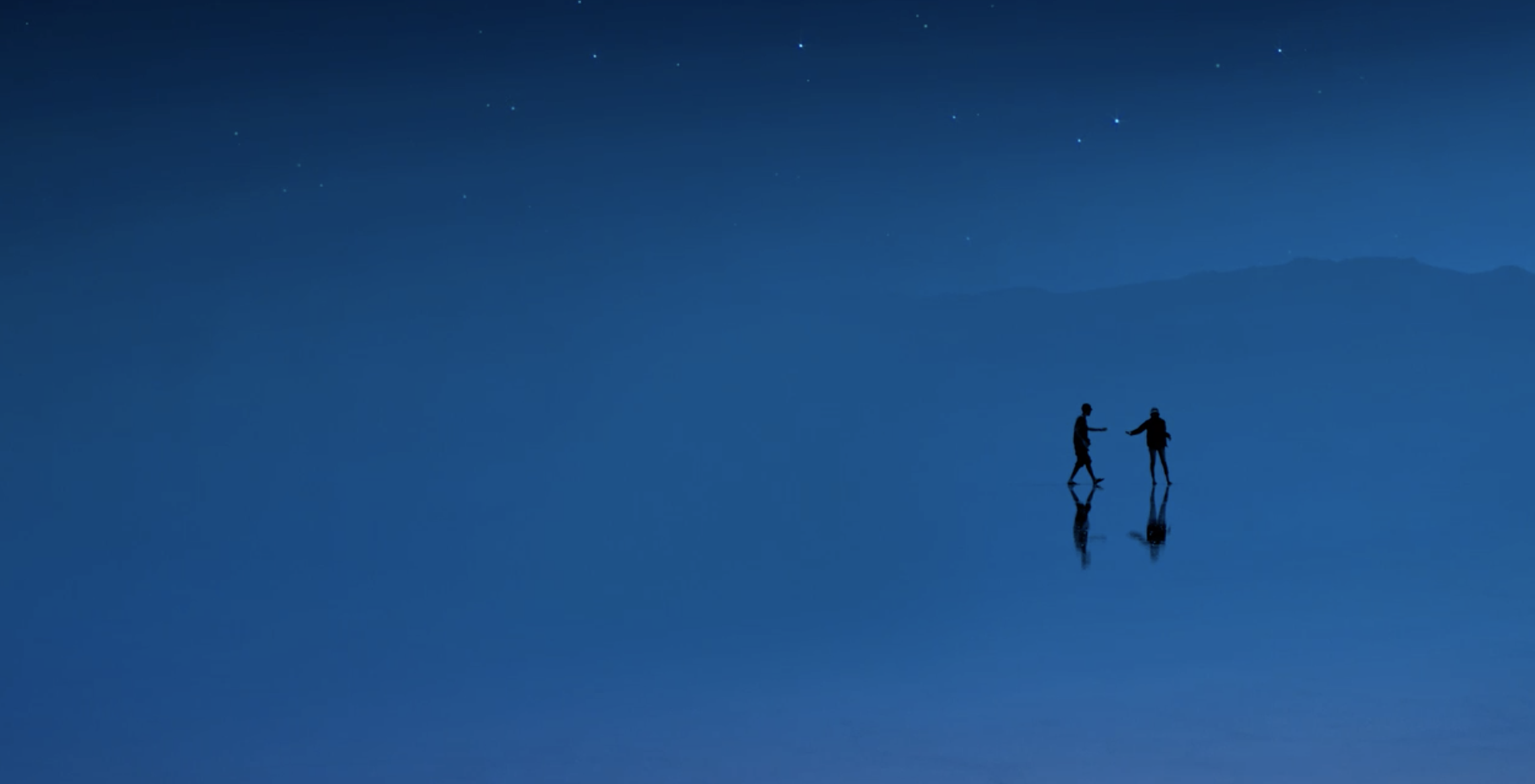
Last week Wednesday, Pantone unveiled their 2020 Color of the Year: Classic Blue. This will be a color much used next year by interior designers, graphic designers, other visual artists, and manufacturers to meet the latest color trends for interiors, furniture, accents, fashion, packaging, and much, much more.
In this article, I will share some tips and tricks on how to update your interior with this color, and how to use images with Classic Blue as a trendy asset for your home or office.
About Pantone and the Pantone Color of the Year
Who or what is Pantone?
Most people know Pantone from the colorful Pantone Guides: the fans of sheets with color swatches that designers, painters, product developers, and basically any individual who wants to do something with color uses to "color match" specific colors.
Pantone is a wholly-owned subsidiary of X-Rite, Inc., and a provider of professional color language standards and digital solutions. Pantone services clients around the world through three business divisions: Pantone Standards, the Pantone Color Institute, and Pantone Lifestyle.
What is the Color Of The Year?
The Pantone Color Institute annually declares a particular color "Color of the Year" based on color trends, color studies, and the input from color professionals. Each Color of the Year is considered a significant color direction for products. As such, the Color of the Year impacts every industry: luxury brands, furniture, accessories, automotive; basically all fields of art, design, and manufacturing.
Classic Blue 19-4052
The Pantone Color of the Year 2020 is Classic Blue. Pantone defines Classic Blue as "instilling calm, confidence, and connection, this enduring blue hue highlights our desire for a dependable and stable foundation on which to build as we cross the threshold into a new era."
How to match Classic Blue in RBG, CMYK, and other color models

Image Source: http://www.perbang.dk/rgb/1D4E89/
Pantone Colors are important to artists, designers, and manufacturers because they are part of a standardized color matching system. Each individual color swatch in those nice fans has a unique reference number. As a result, individuals in different locations can reference a Pantone numbered color and be assured that their counterparts understand exactly what colors they are referring to without further explanation or directions needed.
It can be a challenge of course when the artist or designer uses a different program or works in a different color model than Pantone. Printers for example usually work with the CMYK (Cyan, Magenta, Yellow, Key) model, while photographers and web artists usually work in an RGB (Red, Green, Blue) model. Fortunately, there are companies that solved this problem and provide color code conversion tools like this one.
How to use Classic Blue in interiors
Now that you know what the 2020 Color of the Year is, you can apply several techniques to update your interior with this new color:
Walls:
You can go big and bold, and color your walls Classic Blue. This will make a dramatic statement and will look great when you, for example, apply it to one wall. You can achieve this by painting the whole wall or use stencils or wallpaper to apply patterns in Classic Blue.
Furniture:
A second way to update your interior with the 2020 Color of the Year is to use furniture. A chair, sofa, or cabinet in Classic Blue definitely will create a focal point in your interior.
Accents:
Finally, and probably less expensive than the other two options, you can work with accents to update your interior with the 2020 Color of the Year. Some strategically placed Classic Blue cushions and pillows, some ornaments with that color, even some purple flowers will help you create a contemporary styled interior that matches the latest color trend. And of course, after all, this is a photography blog, you can use photographs.
Photos with Classic Blue
When you consider updating your interior with photos and the color Classic Blue, you have several options available:
Matting and Framing:
Instead of using an image with Classic Blue in it, you might consider using a Classic Blue frame. Or use a black (or any other color frame) and place the image in a Classic Blue mat to achieve the accent color you are looking for. This works great with black and white images, and also can be very well applied when the image used has a color scheme that is complementary to, or contrasting with, Classic Blue.
Color in photos:
You can use images that have Classic Blue or similar colors in it (think for example of an image of a nice blue flower). Or, to create a dramatic effect and focal point, use images that have color palettes contrasting or complementary to Classic Blue.
Toned and Split-Toned photos:
A specific way of using images with Classic Blue is the use of toned and split-tone colored photos. Toned images are created by adding one single color to an image. Split-toning basically is adding two different colors to the highlights and shadows of an image.
Now go ahead and bring some Classic Blue in your life
As shown in this article, there are multiple ways to incorporate Classic Blue in your interior, and I hope it provided you with some good ideas and inspiration to update your interior with the 2020 Color of the Year.
Share in the Comments sections below what you are going to do to bring some more Classic Blue into your li

A Cure For Boring Hotel Rooms
How Documentary Style Branding Photography Can Improve The Guest Experience
Over the years my day job has provided me with many ‘opportunities’ to stay in hotels…
How Documentary Style Branding Photography Can Improve The Guest Experience
Over the years my day job has provided me with many ‘opportunities’ to stay in hotels.
And except for, maybe, of one or two outstanding exceptions I need to say that hotels and hotel rooms, in general, are very boring.
Partially because of the standard layout of the rooms (how creative can you be designing one room, with one or two beds, and a shower/bathroom?).
Partially because of the pictures and other art on the walls: usually run-of-the-mill images or abstract paintings that have no connection with the hotel, its people, or its environment
Would imagery in hotels not be more engaging when it would show, for example, the people who work in the hotel in a documentary, street photography style?

That would connect the rooms and the guest experience more directly with what is happening in the hotel, and it would provide the hotel an opportunity to recognize and celebrate the people who make the guest’s stay comfortable and pleasant:
Showing hotel staff being dedicated, having fun at work, doing a great job;
Showing how much work hotel staff puts in every day to provide the guests with a great experience;
It would allow a peek behind the scenes, and on a subconscious level provide reassurance to the guests that they are well cared for.
Examples of this type of photography can be:
Cooks in the kitchen
Maids making the beds
The pool guards
Setting the dinner table
Using this type of documentary/street photography style images not only can be used to increase the room environment; this style can also be used throughout the hotel: corridors, lobby, lounges, etcetera.
In addition, documentary-style photography can be used to link the hotel to its (immediate) surroundings: e.g. the valet boys at work, or showing a picture of the cook in the kitchen next to a picture of the cook shopping for fresh groceries; or show people participating in activities near the hotel.

The type and style of these images also can be adjusted to align with the branding of the hotel and the lifestyle of your guests. For example sportive, classic, modern, or black-and-white versus color. The possibilities are endless, and the results would make for a more enjoyable hotel stay.
Let's no longer settle for the standard boring hotel images, let's work towards a fresh and engaging style.

Learning From The Masters: Saul Leiter
Saul Leiter: The Man Who Brought Me Back To Color
Saul Leiter (3 December 1923 - 26 November 2013) was an American photographer who was active from…
Saul Leiter: The Man Who Brought Me Back To Color
Saul Leiter (3 December 1923 - 26 November 2013) was an American photographer who was active from the mid-1940s until his death in 2013.
Leiter was in the first instance mostly known for his fashion photography for Vogue, Harper's Bazaar and other big magazines. His personal work, which was mostly in color, was only discovered and printed in the later stages of his life, from the 1990's onward, and only really recognized and appreciated after his death.
Searching for more information on several photographers whose work I admire, I discovered the documentary below. It has many take-aways I learned from Leiter's work and his life.
From a photographic perspective, the biggest discovery was for me how he captured color. While I have been focusing on black-and-white photography for the last couple of years, his work showed me the beauty of color work and enticed me to start experimenting with color photography again.
His use of color in composition is very abstract. The human form, for example, even when recognizable is often transferred to an abstract that complements the composition of the image rather than being the subject of the image.
But it is not only his technical approach to photography and his immense body of work that inspires me.
In the video, he shares his, what I would like to call, philosophical approach to photography. Although being a bit the 'grumpy old man' type in the documentary - and keep in mind that this was filmed just one year before he passed away - he has a lot of good life lessons for the aspiring photographer and professional alike.
He displays a lot of humility about his work and his own importance. And I like how he also downplays the importance of other people: "a window covered with raindrops interests me more than a photograph of a famous person."
And although he recognizes that "nothing in photography is new", his continuous search for beauty kept him creating images until the end of his life, "enjoying taking pictures, not caring too much what others think of your work."
To me, his is a great example of continuous development, continuous looking for subject matter. As he said "everything is suitable to be photographed. Everything is a photograph" and "photography teaches you to look and appreciate all kind of things."
He just "enjoy[ed] catching certain moments", and is that not the essence of street photography?!
In No Great Hurry - 13 lessons in life with Saul Leiter
A 2012 documentary by Tomas Leach; shared on YouTube in 2019 by Pixeldust

Picture This, Ms. Sontag
Did Susan Sontag Use Predictive Analytics in the 1970s?
Having heard a lot about her writings, I recently bought a Kindle copy of Susan Sontag's essay collection…
Did Susan Sontag Use Predictive Analytics in the 1970s?
Having heard a lot about her writings, I recently bought a Kindle copy of Susan Sontag's essay collection 'About Photography'.
Reading through these essays is hard work and I have to admit that I need to re-read some of the paragraphs more than one time, trying to grasp what she actually is saying.
In her first essay, 'In Plato's Cave' [1], Sontag paints a quite critical picture of what photography is, or at least according to her had become in the 1970s. Which, on a side note, makes it remarkable to me that someone with her point of view on photography later ended up in a relationship with one of the most prolific portrait photographers of this era [2].
Although I disagree with a lot of her observations and conclusions about photography, I need to admit that some of these interestingly still are valid after 40 years. It even makes me wonder if Ms. Sontag was using some secret predictive analytics tool that helped her to make observations in the early 1970s which still hold truth for the current state of photography.

Let's have a look at some of her observations (quotes from the book in the gray boxes), and how they relate to today's photography.
“from its start, photography implied the capture of the largest possible number of subjects”
Remember, this is an observation made in the early 1970's when there was only film photography, which was limiting the number of images people took on a daily basis: 135 film usually has 24 or 36 images on a roll and, depending on the camera used, 120 and other medium format film could produce as less as 8 images per roll.
Today we not only have digital cameras with high capacity memory cards, but we also have phones that are capable of taking high-quality images. And we are using them: an indication of the number of images currently taken can be that more than 100 million photos and videos are taken and posted on a daily basis on Instagram only! [source: Omnicore]
And we not only capture enormous amounts of images, the same phones that enable us to capture on the go can also store all these images to be carried around and viewed at a later time. Or, in Sontag's words (and remember, written about 1970 when we only had prints to carry around):
“The most grandiose result of the photographic enterprise is to give us the sense that we can hold the whole world in our heads - as an anthology of images.
with still photographs the image is also an object, light-weight, cheap to produce, easy to carry about, accumulate, store.”
Susan Sontag not only had 'prophetic' views about capturing and keeping images. She also had some remarkably modern observations about the impact of photography.
“a promise inherent in photography from its very beginning: to democratize all experiences by translating them into images”
With today's capabilities to capture and share images, Sontag's observation seems to still make a lot of sense. Sharing images is now far easier than 40 years ago when the only means to show your images were in printed or slide format.
We snap images on the go and within seconds they are available for viewing globally. I can share my experience with the whole world, and the whole world can immediately enjoy and take part in my experience. From a 'sharing' perspective everyone's experiences have become more democratic indeed: nobody can complain that they don't know how it looks standing on the outer rim of a cliff, or on the middle of a railroad, or on the ledge of a bridge.

The question is valid, however, whether this actually is democratization of the experiences. The most viewed and shared, and re-shared, images are those from individuals called 'influencers'. They create, and sometimes actually make a living of sharing remarkable images that make people want to have the same experience. Most of us, however, can not take the same image or actually have the same experience. So is the experience actually democratized, or is it on the contrary made more elitair? In other words, are images being shared to provide an experience to the audience, or just to show off and make our audience 'following' us?
This immediately ties into another passage from Sontag's essay:
“Photographs alter and enlarge our notions of what is worth looking at and what we have a right to observe.”
What we see most, what is published by the most renowned influencers, what we repeatedly see on a daily (hourly?) basis on Instagram and other social media is influencing what we should look at. It seems that we have created and are stuck in this endless sequence where images from people with the most followers are seen most, and as a consequence we are looking for images from people with a lot of followers, which leads to many more people following, which triggers people specifically looking at images from these 'influencers'. Are you still with me?
And, like Sontag, I think correctly, observed, it is not only influencing what is worth looking at, it also influences what we have a right to observe. It is the other side of the same coin: where influencers share their remarkable experiences, their audience is becoming entitled to be included in all these experiences. The image now becomes the experience.
This raises for me the question of whether we actually still care about what we create images of?
Yes, fortunately we still have photographers who create images with integrity: because they want to share a vision, or document in an honest manner what is happening in the world. Looking, however, at what we find on Instagram, Twitter, Facebook, etcetera, raises the question: do people take images because they care about something, or are most of the images only taken to show that we can take them; to be seen, irrespective of subject matte or quality; to get 'followers'?
As mentioned above, reading through Sontag's essay is hard work, and it sometimes seems that I am not the only one who has a hard time to find the direction her prose is leading us. Sometimes even the author herself seems to be lost and changing direction.
Compare for example this passage:
“what is written about a person or an event is frankly an interpretation, as are handmade visual statements, like paintings and drawings. Photographed images do not seem to be statements about the world so much as pieces of it, miniatures of reality that anyone can make or acquire.”
With this one:
“although there is a sense in which the camera does indeed capture reality, not just interpret it, photographs are as much an interpretation of the world as painting and drawings are.”
I am fully aligned with Sontag on the second of these two statements.
Yes, photographs in principle capture what is reality during a sliver of time. But it is not the capturing that defines the final image, it is what the photographer does with the captured image in post-production.
Today the term 'post-production' immediately creates associations with Lightroom, Photoshop, ON1, Capture One, and similare image processing tools. But we should not forget that already in Sontag's lifetime, already since the beginning of photography, photo manipulation was possible and done. Even in a traditional darkroom, techniques like cropping, dodging, burning, and removing parts of an image were possible. Take as an example one of the most iconic images ever, Ansel Adams' "Moonrise, Hernandez", which was printed and reprinted multiple times by its creator untill Adams finally achieved a print he thought came nearest to his original vision.
And this is only using the image as an interpretation of the world by adding, deleting, resizing, and other darkroom techniques. In addition, the photographer can use images as interpretations of the world around her by adding titles, narratives and stories, guiding the viewer to her interpretation of the scene.
Returning to Sontag's observations from the 1970s and how they relate to today's world where most images are being viewed and shared online, I want to end with what for me is one of the most remarkable passages from her essay 'In Plato's Cave':
“Photography becomes a rite of family life just when...the very institution of the family starts undergoing radical surgery.”
”As...the nuclear family, was being carved out of a much larger family aggregate, photography came along to memorialize, to restate symbolically, the imperiled continuity and vanishing extendedness of family life.”
”A family’s photograph album is generally about the extended family - and, often, is all that remains of it.”
For better or worse, our traditional family setup is even more dramatically changing than it was in Sontag's time. Traditional family patterns are changing and being replaced with new ones, some of which probably were unthinkable of 40 years ago.
And this triggers the question of whether this could be the real reason for the popularity of Facebook, Instagram, and other social media. Are we (and here I use 'we' in a very broad sense) looking for family connections that we no longer have in the real world? Are we in our fast-paced culture not connecting enough with our real family, and are we looking for substitutes? Are we replacing our traditional families and family albums with our Facebook, Instagram, and Twitter families and albums?

Sontag triggers a lot of thoughts, and irrespective of whether I agree or not agree with Sontag's observations, reading this first essay in Sontag's 'In Plato's Cave' collection left me with very mixed feelings.
I can't agree with her world view and the over-critical approach to photography she displays in this essay, but I have to admire her for her capability to capture and pinpoint some core observations about photography that are still valid after all these years.
Notes:
1. Although the original story is by Plato, it was actually was a lesson from Socrates [back to paragraph]
2. Annie Leibovitz [back to paragraph]

Who Are You?
Getting To The Essence Of My Photography
Last week I started reviewing and rearranging my portfolio. This was partly because I wanted to make the…
Getting To The Essence Of My Photography
Last week I started reviewing and rearranging my portfolio. This was partly because I wanted to make the website experience better and to provide easier access to images that viewers might want to buy, and partly because I just had too many images on the site. Some culling was dearly needed.
Doing this forced me to have a close look at each image, asking "why" I would keep it.
Some images I eventually decided to keep just because they are great to print and display on your wall. Those in the Wildlife and Still Life & Abstract sections for example.

With regard to the other images that made it through the selection process, I, however, realized that there was another, and more important reason I want to keep and share these: they directly or indirectly tell the stories of people.
From the time I was a kid, I always wondered: "who built this church or castle", "who lived here", "who used this tool"? Of course, I was (and still am) awed and impressed by grand architecture and cities, and I am very much interested in history in general.

My questions, however, were and are more related to common and unknown people. Not about the architect who designed a whole city or a grand cathedral, but about the bricklayer or carpenter who actually made the grand design happen. You might find this weird, but walking by an old church and looking at the brickwork I often wonder who actually put a certain brick in that wall. Who was this person? What kind of life had he?
This curiosity is not restricted to buildings. Take for example my images of WW2 Military Aircraft: it is not only about the beauty of the aircraft design. I am interested in the men who flew these machines and the ordeals they went through during and after the war.
Buildings, aircraft, cars, objects: they all have tangible connections to people. Makers, builders, operators, users.
And then, of course, there are the images that actually show people. Alone, or interacting with each other. There always are the questions: what are they doing, what are they thinking?
Reading back what I wrote above, I recognize that this connection with people, and trying to know and understand how they lived, also is the reason why I write my Haiku and Pic Tales. I try to imagine what people think and how and why they act in relation to the world around them. Maybe a Walter Mitty effect?
Having realized that the actual subjects of my photography (visible or implicated) are people and becoming increasingly confident of actually photographing people, I can see my work moving away from fine art / abstract images towards more people-focused documentary and essay-style work. Two examples of this approach are the projects After The Soul Is Gone, and A Morning At The Market.
To reflect this shift in focus in my web site setup, I now present my images in three distinct groups: Fine Art Prints, Stories, and Projects.
The first group contains my traditional portfolio of cities and architecture, landscapes, still lives and abstracts, street scenes, cars, trains, and aircraft;
The Stories group links to the Pic Tales, Haiku, and Essays published in blog posts;
The third section contains projects that specifically focus on people and human nature.
This renewed focus for my work will provide additional challenges for the next two years. I don't have the feeling and confidence yet that in South Africa I can wander around with my camera and take pictures on the street. I, therefore, need to discover how I can realize my newfound (or maybe: better formulated) creative vision within the restrictions and restraints of living here.
So the question in the title of today's blog post now actually leads toward two answers.
Who are you: who is it that I try to find in my images. Who are the people who built, used, operated, or are visible in the frame? What are they doing, what did they think?
Who are you: who am I as a photographer, what do the images I capture say about me? Why am I asking these questions: is it my interest in history, my interest in other human beings, my urge to challenge the viewer and ask questions? Or a mixture of all of the above?
It will be an interesting journey going forward.
Thanks for reading.
Eric

The Photo Book And Body Of Work
What Tales From The Black Box Learned Me About My Body Of Work
In December 2018 I finished my photo book Tales From The Black Box. It contains eighteen PicTales with…
What Tales From The Black Box Learned Me About My Body Of Work
In December 2018 I finished my photo book Tales From The Black Box. It contains eighteen PicTales with accompanying images that previously have been published on this blog.
While honestly in the first instance not deliberately done (I basically just wanted to produce a nice photo book with some of my PicTales) I realized that the selected images are actually quite consistent in approach and execution, and can be considered to represent a good overview of my body of work.
In this post, I will explore:

What is a Body Of Work
An artist's 'body of work' can usually be defined by a collection of artwork which demonstrates an overall consistency and signature style. Although an artist's style can change over time, which also changes their body of work, it usually can be said that there are a certain consistency and cohesion in the work produced.
This consistency and cohesion can be accomplished through:
style;
subject matter;
execution of the work;
the intent of the work.

Tales From The Black Box as Body Of Work
After finishing Tales From The Black Box and reviewing the result, it dawned on me that the images and stories actually represent what I really want to accomplish with my photography and that it actually is a quite cohesive group of work. By selecting the PicTales for this book, I more or less accidentally curated my own body of work.
Style:
Although they probably not can be categorized as 'street' or 'documentary' photography, all images capture aspects of life and objects that can be encountered while 'walking around'. There is no studio work involved, no use of models, and no orchestrated set up of scenes.
Subject matter:
Most of the images tell stories about people, without actually showing people. Although present in some images, people while key to the story are more used as props than as the immediate subject matter. It is the accompanying story that explains how the image relates to people.
Execution:
All images are executed in black and white, and with 4:5 or 1:1 aspect ratios. Depending on the storyline the PicTales have only one image or a series of images. The main consistent factor, of course, is that all PicTales are images combined with stories
Intent:
All image-story combinations are intended to trigger thoughts and ideas, as mentioned in my artist's statement, and explained in the Foreword of the book:
Any photo camera is basically just a black box.
From the most simple pinhole camera to the most sophisticated digital camera: nothing more than a black box with a hole on one side to allow light to enter, and a medium on the other side to capture this light and create an image.
Of course, the technical sophistication of the camera and the medium used have a big influence on the look of the image. And with the current state of image processing technology, that look can be even more altered afterward.
I specifically use the word 'look' of the image, and not 'quality'. When we talk about quality, we are conducting a technical assessment of the image. For me, however, the look of an image is far more interesting because it translates directly into emotion: the emotional response from the viewer to the image.
The role of the photographer is to show what we can not see: to show a different point of view, to share a specific feeling with the viewer, to extract a specific response from the viewer.
While it is possible to enjoy photographic images based on their look only, adding a story to an image allows the photographer to direct and change the viewer's emotional response. Image and story then become mutually dependent: the story will be stronger because of the image, the emotional impact of the image will change because of the story.

Consequences for my images, this website, and blog
Looking at the consistency of the images selected for Tales From The Black Box and that realizing they can be considered to represent a good overview of my body of work, I am now seeing that I am actually developing a photographic style I like and want to refine.
As I mentioned in last week's article I want to use the limitations on equipment and time available as they will be set by my relocation to South Africa, to focus on specific subjects and types of photography, and learn, learn, learn.
Now, with the insights obtained from Tales From The Black Box, I also know what photography style, subject matter, execution, and intent I want to develop further and learn more about.
This also will have an impact on this website and blog.
I need to review all images on the site and decide whether they fit into my preferred style, whether they are a consistent part of my body of work. This might result in deleting some of the current images, and possibly regrouping other.
It also will mean that I definitely need to continue writing PicTales, Haiku, and Essays in order to maintain the consistency in intent. As a consequence, the content of the blog will grow in these areas while more general art and photography articles will get less focus.
I hope you enjoyed this insight in my thoughts regarding my body of work, and how this will impact my future photography, learning, website content, and blog articles.
Subscribe to this blog to learn more and stay updated on new PicTales, Essays, Haiku, and other articles by clicking the link below.