

The Case For Film
Will Artificial Intelligence aid the revival of film photography?
Since the inception of photography, photographers have manipulated images to show something different from what they initially captured when pushing the shutter button…
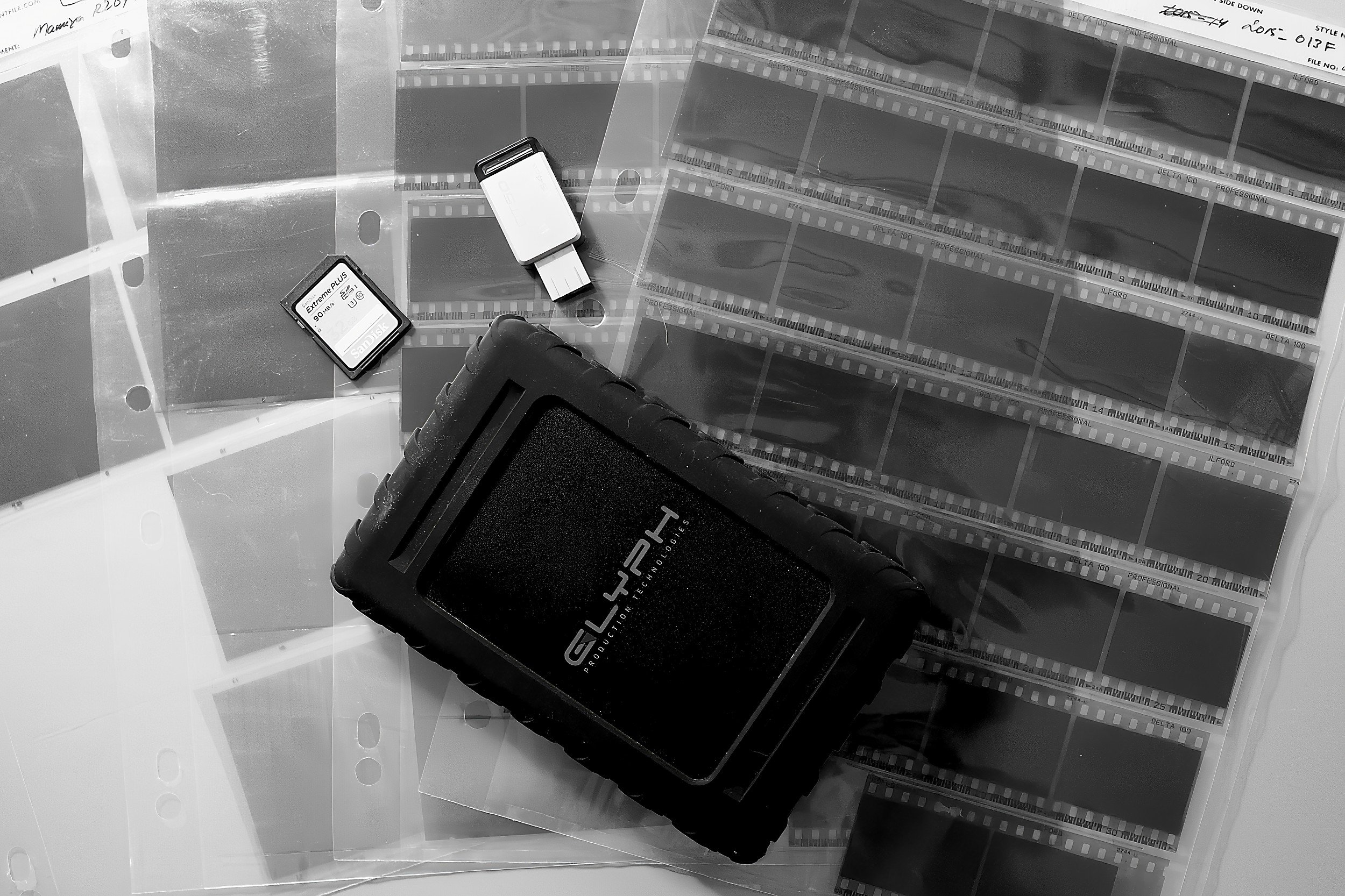
Will Artificial Intelligence aid the revival of film photography?
Since the inception of photography, photographers have manipulated images to show something different from what they initially captured when pushing the shutter button.
And since Niépce created the first photographic image, the evolution of technology has made it increasingly easy for us to change the original image.
Initially, photographers could only do this in the wet darkroom, with techniques like dodging and burning, hiding parts of the negative or stacking negatives.
Now, in the digital age, after scanning a negative or working directly with a file from a digital camera, photographers can easily remove or add objects, change colors, distort images, add filters to create specific moods, and make a multitude of other changes to the original image.
And while digital photo editing tools have been around for several decades, the latest development in image creation and manipulation is a total game changer: text-to-image Artificial Intelligence (AI).
AI can do more than manipulate an image: it can create a photo without needing an actual subject, using program instructions (not totally accurate, of course: text-to-image AI uses databases with millions of images made of real objects or people).
While still in its infancy, developments are going extremely fast, and we already see AI being used to create photo-like images of portraits, landscapes, food, and pictures in the style of the old masters of painting.
Since photographers using Photoshop already led to controversies, AI has the potential for even more debate.
What images can we trust?
Digital photography increased the challenge of answering this question because digital photos don't exist: they are only a bunch of specifically arranged zeroes and ones. Not even that: they are bits stored in a magnetic region on a disk or as electrical charges on an SSD.
And while we can ask the trust question regarding any photo altered with editing software, the use of AI to create images out-of-thin-air makes this question even more critical.
Digital photography, as I pointed out in a previous article, still needs a subject that reflects, absorbs, or blocks light to create a picture. Therefore, we still would have that subject against which we can check the 'truthfulness' of the created image. With AI, we don't even have that.
We are entirely at the mercy of the binary gods.
It is probably not without reason that image fact-checking is now a common practice on social media and other communication channels.
Photos created on film, in stark contrast, are tangible from the start.
A roll of film base with a light-sensitive emulsion is exposed to light and then chemically developed, creating a negative film strip you can hold in your hand! And while it is possible to alter that negative (e.g., with markers or acid), it would bear clear evidence.
Therefore, any final image that starts on film, whether printed in a wet darkroom or scanned and edited with photo editing software, is backed up by a negative that provides tangible proof of the image as the photographer initially captured it.
Consequently, I can see the revival of film photography, which has been going on for several years now, becoming even more vital for specific genres. Especially with people for whom the image's truthfulness is critical:
Crime and other photography that needs 100% proof of not being manipulated;
Documentary photography and news photography;
Art collectors;
Museums and students: to see what the original image was and what the photographer has edited to achieve his vision or message.
Will artists, and other professional and hobby photographers, now flock in swarms back to film photography?
I don't think so.
Digital photography is too far evolved and has too many positive aspects: going back to film will not be practical from a workflow perspective for most photographers.
And while I don't use it, AI, the newest member of the image creation family, is, in my opinion, an excellent development. It is a new tool that has its rightful place in the complete range of visual arts.
Entirely digital art also has found its place in the photography and public art world: look only at the fact that NFTs achieve (sometimes extremely) high price points.
However, like the written proof of authenticity that photographers add to their prints, the tangible film negative could become the new proof of authenticity for those photos that require it.
And as such, the increased digitization of art through AI could be an additional stimulus for photographers in specific genres to go back to film.

Finding Focus
THE NEXT STAGE IN MY PHOTOGRAPHIC EVOLUTION, OR: HOW TRYING PURE STREET PHOTOGRAPHY HELPED ME TO FIND MY ROAD AHEAD
While I explored different photographic genres over the years, since moving to the US and being driven by my passion for people, I have come home to my true passion: documentary-style street photography and essays.

THE NEXT STAGE IN MY PHOTOGRAPHIC EVOLUTION, OR: HOW TRYING PURE STREET PHOTOGRAPHY HELPED ME TO FIND MY ROAD AHEAD
Have you ever looked at a vintage photograph and wondered who the people in that image were, how they lived, and how the cities seemed so different then?
As you can read on my About page, I grew up in a small village in the Netherlands, and when I got my first point-and-shoot camera in the early 1970s, I could not foresee that it would ignite a lifelong passion for photography.
While I explored different photographic genres over the years, since moving to the US and being driven by my passion for people, I have come home to my true passion: documentary-style street photography and essays.
When I talk about documentary-style photography, I don't mean documenting the 'big' things: famine, the US border crisis, global warming, deforestation.
Of course, if I get the chance, I will take images at a Women's March or similar events I might be able to attend (or stumble upon), but in general, I am more interested in the mundane of daily life.
Creating stories about regular people who make up the diverse population of my adopted country, showing how a small town looks today and the people in it; documenting small events like car shows that show the enthusiasts who come together there and create a unique culture; people at a horse race track, dancing, eating, gambling, having fun; telling the story of a master craftsman, who creates beautiful objects with his tools.
While maybe mundane, these all are unique pockets of the world we live in and the people who inhabit it. And when I do take pictures at events, I am more interested in the individuals attending (the proponents, the opponents, and the spectators) than in the event itself because I firmly believe that the individual stories provide the human connection to those events.
For some time, I thought creating and focusing on pure street photography images would satisfy my urge to tell these stories. So I started making what I thought were nice street photos and joined street photography groups on Facebook and Instagram.
The critique I received from experts in the field was an eye-opener and made me more critical about my and other photog's street images. And the more I learned about street photography, the more I (tried to) create street photography, and the more I looked at other photogs street photography, I found it unsatisfactory, boring, disappointing, and repetitive. So many images tagged as street photography are not, and I often saw a lot of copy-cats (how many iterations of pictures of people walking through a patch of light in an area otherwise in darkest shadow can one create?).
Understand me well: pure street photography is excellent, and I love looking at those images! But it also is rare and challenging to create.
Pure street photography is very much dependent on a decisive moment, and I realized there is so much more than the decisive moment: I want to capture a current moment, documenting in 1/125th of a second the sociohistorical situation of a particular place at a specific time. Wow, those are big words! But you probably understand what I ideally want to achieve.
Capturing a 'decisive moment' for me is a bonus, not a goal. There is so much more to show, achieve, share, and create awareness of that might not be captured when focusing on the decisive moment. Instead, I want to tell that broader story, which can be about people, a place, or an event and which, for obvious reasons, in most cases, is a combination of these.
While I like to work on projects to create photo essays, you can ask if a single 'snapshot' also can tell this broader story.' I think so. But I also want to explore how that single image relates to other pictures looking for patterns in human behavior.
Reading photo books helps me understand what I want to create.
On my journey to finding my focus, I have 'met' several current and past photographers whose work has influenced my thoughts about what I want to achieve and how to achieve it: Eugène Atget, W. Eugene Smith, Jill Friedman, Bob Friedlander, Helen Levitt, Robert Frank, Inge Morath, Sally Mann, O.N. Pruitt, Berenice Abbott, Jacob Riss, Dorothea Lange, Lewis Hine, the photographers who took the images in Lost London, Elliott Erwitt, and many others.
As mentioned above: making a good street photo is challenging. Is this next stage in my photographic evolution possibly a flight because it is too complicated?
To answer my question: No, composition, situation, image quality, light, and all other ingredients that make a pure street photo are also crucial to making the documentary-style photos and essays I (want to) create.
As I mention in my artist’s statement, inspired by a quote from Anais Nin, I want to share not the obvious but what we usually are unable to see: when I document, what can I show that others might not see?
Are you familiar with the phrase "write down to remember"? I want to "photograph to remember" and to help others remember. Now and, hopefully, in the future. While I create images and stories for me and my current audience, it would be great if I could make the 'vintage images of the future.' If even only one.
Looking back at the images I created over the years, especially since I live in the USA, it is not surprising that my journey is taking me in this direction. But with the help of the critique I received, seeing what current and past photographers create(d), and looking at street photography on social media, I have found the focus I was missing.
Now that I know better what type of images I want to create, I also can better define the tools I want to use. So while my camera setup underwent some changes last year, my main tools will continue to be the Fujifilm X-Pro1 and the Leica M4. Both with 35mm (or equivalent) lenses.
Why these?
Both are (relatively) small and discreet cameras and very well suited for the work described above, most of which still will happen on the streets.
Digital has all the positive assets we have learned to appreciate over the last couple of decades and cannot miss from any photographer's toolkit.
But why film?
First, even after scanning, film still has that unique look that is very difficult to emulate in digital post-processing.
Secondly, because of its limitations, working with film makes me more aware of the 'why' and 'what' to photograph.
And thirdly. There is no third. I do not use film because it 'makes me slow down.'
Of course, it slows me down: hand-metering light, manual focusing, manual film transport, only 36 images before I have to rewind and change the roll manually. And I will remember every time before pressing the shutter release button that every picture on film is far more expensive than one taken with the X-Pro1.
Now here is a curve ball.
Talking about film, I ponder using medium format for my documentary-style work. But that is a story for another day.
My journey is not over yet, and I still have a long way to go, but I have found focus and a road ahead.

Getting The Shot: 5 Reasons For Shooting With Film In 2021
My Considerations For Continuing To Shoot With Film
Now, almost two years further on the road, it is time for me to reassess whether I want to continue shooting with film going forward…

My Considerations For Continuing To Shoot With Film
When I started this blog back in 2015, I published several articles to explain why I recommend photographers to try or continue shooting with film.
In 2018 I summarized why I still shot film then.
In 2019 I added a new digital camera to my toolbox (the Fujifilm X100F) and another film camera (the Leica M4).
Film is relatively expensive to use, as compared to shooting digital and I have to annually assess (convince myself) whether I want to continue using it. So now, almost two years further on the road, it is time for me to reassess whether I want to continue shooting with film going forward.
First, let's go back to the main reasons I mentioned in the past for shooting with film and see if these are still valid.
The need to be disciplined and follow a set process
It is essential to follow specific sequences to capture an image with most film cameras: from setting shutter speed and aperture to framing and focusing your subject.
The need to know your photography theory
Still valid! And very much related to the first reason mentioned above. To get the exposure you want, you need to know how shutter speed and aperture will impact the result. You also need to know the specifics of the film you are using, whether it is a reversal film or a slow black and white emulsion.
Film is just better for some shots
I love shooting with medium format cameras. For my fine-art images (link to ArtPal), medium format provides excellent results with its shallow depth of field and great details. Digital medium format backs, however, are quite expensive and create huge digital files that my computer can't handle.
Also, some grain effects (for example, as achieved when shooting an ISO 3200 film) are almost impossible to reproduce with a digital camera or post-processing.
And talking about post-processing: once you have mastered a specific film and camera combination, it is my experience that it is possible to get consistent results with not much post-processing needed after scanning the negatives. And who wants to spend more time behind their computer than necessary?
In conclusion, based on my assessment: I still want to continue shooting with film.
And there is one more reason I have not mentioned yet, which is the most important: I just love to work with film cameras!
Let's be clear: there is no need to shoot film. It is a personal choice.
I love it: the process, the results.
I love handling a film camera, going through all the actions to ensure all settings are correct. It is just more fun than working with a digital camera, even if you are shooting a DSLR or mirrorless camera in 'full manual' mode.
So do I want to continue shooting with film in 2021? Yes!
Both digital and film have their merits, and, depending on the situation, I choose a specific medium and method of creating images. I am lucky I can experience both worlds, with as my main go-to cameras for daily use the trinity Fujifilm X-Pro1, Fujifilm X100F, and Leica M4.
And keep in mind: whatever medium you use for creating images; in the end, it is not the tool that is important. Far more important is going out and creating at all.