

Beyond the Cars: Photography as a Window into the People and Communities that Surround Car Shows
How Photography Can Tell the Story of Car Shows As A Social Phenomenon
Since their conception, cars have captured the interest of all kinds of people: those who are interested in design, those who are interested in racing, people who are interested in mechanics and engines, those who like to show off with fancy cars, and individuals who collect cars, to name a few.

How Photography Can Tell the Story of Car Shows As A Social Phenomenon
Finally, finally, finally! I have finished my essay on car shows and the people who attend them!
It seems to me that an increasing number of car shows are happening in our country. During summer, there is at least one every weekend in every city and town, and often additional events during weeknights. And this appears to be the same in South Carolina (where I used to live), New York (which I now call home), or any other State, according to the announcements I see on social media.
Initially, I was made aware of these events by my daughter, who, for her final project, "The Soul of the Classic Car," for her BFA in photography from Winthrop University, focused on details of vintage cars.

I also may be particularly aware of them because I owned a Mazda Miata for some time, and looking at other small sports cars on display was fun.
As a result, while I am not a gearhead (I couldn't point out an alternator if my life depended on it), I have visited several car shows over the last three years. In the first instance, I did this partially because I owned that Miata, but the main reason for continuing to go to these shows was because I am intrigued by their social aspect.
A Photographer's Paradise
Car shows provide excellent opportunities for photographers to capture stunning images.
They may focus on photographing individual vehicles and capturing each car's unique design and details (as my daughter did), or they may catch the event's overall atmosphere, including the crowds, vendors, and other attractions.
These events are also excellent for trying various photography techniques, such as close-up shots of car details, panoramic views of the entire event, or capturing the vehicles in motion on the road or track. In post-production, photographers may give their photos a nostalgic feel or use other editing techniques that show the beauty and style of the cars they photographed.
Some photographers, like me, may even specialize in capturing the human element of car shows, focusing on the interactions between enthusiasts, collectors, and other car fans.
The latter group of photogs, and even more specifically, photographers interested in social-documentary, can capture various images that tell the story of the event and its attendees: they may focus on documenting the people who attend the event, including the collectors, enthusiasts, families, and vendors—for example, capturing portraits of attendees and candid shots of them interacting with the vintage cars on display.
In addition to documenting the people directly, a social-documentary photographer may also focus on images of the cars while telling the personal stories behind each vehicle. Or they can record the different activities at the show, such as competitions, demonstrations, or presentations.
Whatever the photographic genre they specialize in, photographers at car shows have a unique opportunity to capture the essence of automotive history and design, share that beauty with the world through their images, and highlight the significance of cars in American culture and history.
I am passionate about capturing stories and experiences of people and events through my camera lens. Therefore as a documentary-style photographer at car shows, I aim to capture the event and its attendees in a way that gives the viewer a sense of the atmosphere and the unique culture and community surrounding the cars.
And while I am often struck by the beauty of the cars on display, I am even more interested in the people who attend the show. So often, I approach attendees, introducing myself and asking about their stories and experiences with classic cars. Everyone has a unique story: about their first car, a restoration project, or the history behind the vintage vehicles on display.
I can spend an entire day taking pictures and talking with attendees, documenting their experiences and stories. I love to capture images of families enjoying the event, collectors admiring classic cars, and enthusiasts discussing the intricacies of vintage car design. Since I am there, I also take close-up shots of the cars, focusing on their unique features and design elements.

Some thoughts about the future of this social phenomenon
Visiting these events, I always wonder whether these car shows are part of a dying culture - specifically, those focused on vintage cars.
Not immediately, but how about 10 or 20 years from now? Most cars from the 1970s onwards, which by then will be 'vintage,' don't have the exciting designs that the vehicles from the 1940s through 1960s have. And even further in the future, will people get excited to see a 'vintage' Tesla?
Car enthusiasts will likely find ways to keep the current oldtimers running. I have seen vehicles from the 20s at car shows; keeping a 1950s car running for a few more decades might be doable.
And because the newer models and electric vehicles are less exciting, there will likely be more demand and enthusiasm to keep the oldies on the road and for enthusiasts to come together to enjoy them.
Is the current abundance of car shows a flare-up of a dying phenomenon, or will they survive despite, or maybe because, of the boring contemporary models and current EV developments? The future will tell.
For now, I hope my photos will help conserve some of the history and culture of the car-enthusiast community.

Photography Skills and Project Management
How my photography makes me better at my day job
Working with people is essential to my day job and documentary-style photography. From one-on-one meetings to global zoom meetings, from capturing a general street scene to documenting protests. Therefore…
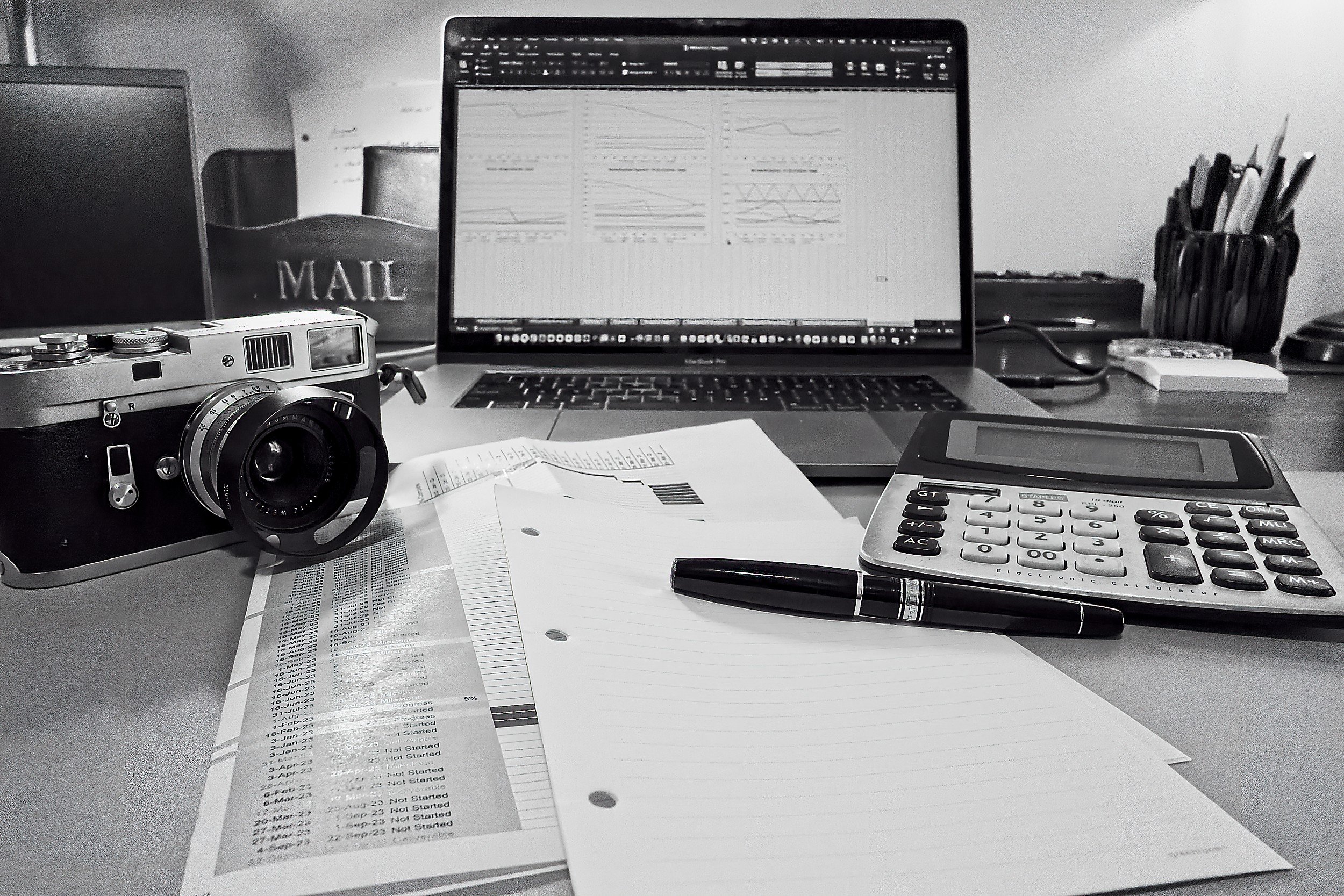
How My Photography Makes Me Better At My Day Job
Working with people is essential to my day job and documentary-style photography. From one-on-one meetings to global zoom meetings, from capturing a general street scene to documenting protests.
Therefore, relating to people and understanding why they are doing and reacting as they do is crucial for success in both hobby and professional life.
After re-reading my article about finding focus, I realized that the skills I need to succeed at social documentary-style photography are also crucial for my day job, which mainly focuses on leading and executing projects with global teams.
In this article, I explain why these skills are essential for my social photography and how continuously developing them will also make me more successful at my day job.
Having a vision
While I sometimes go out on the streets to capture images of whatever piques my interest, I often have specific photos I want to take in mind. Whether for a long-term project, I am working on or going to a particular event, I want to document that day.
Having a vision of what I want to accomplish with my photography is important because it helps me define the images I need to create. And although I need to stay flexible in my approach, without a vision (e.g., the idea for a specific essay), I could quickly lose direction and create many images without working towards the final result I want to achieve.
This vision is also essential to explain to others and myself what I want to achieve with a photo project. Which ultimately translates into an artist's statement.
Similarly, having a vision for the projects I am working on at my day job is critical to focus on the final objectives and being able to explain the 'why,' the purpose, principles, and intended outcomes of each project.
Observing
Being a good observer is critical for documentary-style photography: to see what is going on, what to capture, and to be aware of my surroundings.
If I focus on one scene only or capture an image too quickly, I might lose out on other photos. For example, more could be going on than I noticed in the first instance, or a scene might develop. And sometimes, it is more interesting to capture what is behind me (e.g., people reacting to a situation) than the main event itself.
Being aware of my surroundings is also vital for safety reasons. For example, people around me might not be happy with me taking pictures, or someone could use unattentiveness to my environment as an opportunity to take my bag.
When working with teams in my corporate role, observing is essential to be aware of the team's mood and reactions in meetings. It helps me to ensure everyone is participating and understand who is supportive and who objects to ideas and topics discussed.
Observing is also very important for change management: knowing who supports, who is indifferent, and who objects to proposed change is essential to decide what actions to take or what additional communication is necessary.
Seeing patterns
Looking back at images created for a specific project or as stand-alone street candids, I always look for patterns to understand how they relate to each other.
It allows me to see trends and behavior patterns, triggering ideas for essays or a themed set of images that are an addition to my body of work. Seeing patterns is also crucial to building a consistent image flow within an essay or collection of images to create stories with a clear start, middle, and ending.
Similarly, understanding behavior patterns in my work environment enables me to understand group dynamics and the 'why' of people's actions: as an extension of observing, it helps me during meetings and making decisions to improve change management efforts.
When reviewing processes, awareness of patterns supports using and optimizing synergies and increasing efficiency and effectiveness for global operations.
Being creative in finding solutions and answers
Creativity is a skill any photographer should have - including those specializing in social-documentary style images.
And while creativity and finding solutions are essential for getting the composition and using the aperture and shutter speed that best supports the mood I want to create, they are also vital to find the right approach to each situation.
For example, how to get to a spot where I can get the best possible picture of a scene while staying safe and not interfering with the situation. Or how to best approach people I want to photograph without disturbing their activity.
A creative mindset to find solutions is also essential for my professional work to stimulate out-of-the-box thinking for me and others. Defining how to improve processes and simplify things needs a solution-minded approach for which we often need to break through established thinking patterns and change how we look at delivering services.
Creativity also is vital to find ways to bring people and minds together: depending on the team setting and the topic to review, different techniques are needed to get results, be it following a structured meeting agenda, brainstorming, or having open discussions.
Seeing and listening to stories
The stories I see and create are my "why" for focusing on this genre of photography.
Sometimes I see stories while walking the streets, taking one or two images of a situation. In other instances, I am working on a project and deliberately creating sets of pictures that tell a specific story. And sometimes, I look back at individual images and realize they, combined, tell a story bigger than each photo on its own.
In my work, listening to input from several team members, often from different cultures, helps me to understand what the outcome of a specific project will mean for them. Especially understanding how they will react to change is essential. Understanding the stories they tell also helps me find solutions that will work for specific groups and the global team simultaneously.
Telling stories, explaining things
Not only is listening to and seeing stories vital for my photography and project management job, but the other side of the coin is as essential.
With my photography, I need to keep my audience in mind and create and present my images in the best possible way to show them the why, what, who, when, and how of what happened that I found essential to capture in images.
Similarly, when leading change projects, it is required that I can explain clearly to different audiences the why, what, how, and when of change and how the change will impact people and processes.
I often use analogies to help people visualize things and understand what will change and why. An additional perk of being a photographer is that I have a visual library in my head that helps me develop those stories.
Staying open-minded and objective
As a documentary-style photographer, I must be open-minded to tell my subjects' stories as objectively as possible. However, as I explained in a previous article, no photographer is one hundred percent objective: by choosing the angle of the picture, choosing what to include and what to exclude from the frame, by selecting apertures and shutter speeds that create a specific mood, they bring in subjectivity.
Therefore, it is necessary to recognize this subjectivity bias to be as objective as possible in depicting the action captured, especially for social-documentary photography.
The same necessity applies to my day job: working with people with different knowledge levels, cultural backgrounds, and change-mindedness, I constantly need to be aware not to be judgemental and bring my thoughts and ideas immediately to the foreground.
I first need to understand and acknowledge why people are making certain assumptions or are change averse before I can answer any questions.
Also, I need to be aware of not falling into the trap of the 'not invented here' syndrome myself and not reject any ideas only because I did not come up with them.
Bringing it all together: seeing the bigger picture
All skills mentioned above help me see the bigger picture (no pun intended), whether working on a photography project or leading a process change project.
Having a vision is indispensable for keeping the end goal in mind while working through the day-to-day activities to reach those goals. Irrespective if it is taking, culling, sequencing, editing, and post-processing pictures, working on detailed project plans, having meetings, or drafting documents.
The ability to see the concept, strategy, and final objective and simultaneously roll up my sleeves and do the work is necessary to succeed in both my day job and photography.
And that need for skillfulness is what I like most in my photographic endeavors and my corporate job: I call it "having the agility to quickly move between the balcony and the dancefloor."

Finding Focus
THE NEXT STAGE IN MY PHOTOGRAPHIC EVOLUTION, OR: HOW TRYING PURE STREET PHOTOGRAPHY HELPED ME TO FIND MY ROAD AHEAD
While I explored different photographic genres over the years, since moving to the US and being driven by my passion for people, I have come home to my true passion: documentary-style street photography and essays.

THE NEXT STAGE IN MY PHOTOGRAPHIC EVOLUTION, OR: HOW TRYING PURE STREET PHOTOGRAPHY HELPED ME TO FIND MY ROAD AHEAD
Have you ever looked at a vintage photograph and wondered who the people in that image were, how they lived, and how the cities seemed so different then?
As you can read on my About page, I grew up in a small village in the Netherlands, and when I got my first point-and-shoot camera in the early 1970s, I could not foresee that it would ignite a lifelong passion for photography.
While I explored different photographic genres over the years, since moving to the US and being driven by my passion for people, I have come home to my true passion: documentary-style street photography and essays.
When I talk about documentary-style photography, I don't mean documenting the 'big' things: famine, the US border crisis, global warming, deforestation.
Of course, if I get the chance, I will take images at a Women's March or similar events I might be able to attend (or stumble upon), but in general, I am more interested in the mundane of daily life.
Creating stories about regular people who make up the diverse population of my adopted country, showing how a small town looks today and the people in it; documenting small events like car shows that show the enthusiasts who come together there and create a unique culture; people at a horse race track, dancing, eating, gambling, having fun; telling the story of a master craftsman, who creates beautiful objects with his tools.
While maybe mundane, these all are unique pockets of the world we live in and the people who inhabit it. And when I do take pictures at events, I am more interested in the individuals attending (the proponents, the opponents, and the spectators) than in the event itself because I firmly believe that the individual stories provide the human connection to those events.
For some time, I thought creating and focusing on pure street photography images would satisfy my urge to tell these stories. So I started making what I thought were nice street photos and joined street photography groups on Facebook and Instagram.
The critique I received from experts in the field was an eye-opener and made me more critical about my and other photog's street images. And the more I learned about street photography, the more I (tried to) create street photography, and the more I looked at other photogs street photography, I found it unsatisfactory, boring, disappointing, and repetitive. So many images tagged as street photography are not, and I often saw a lot of copy-cats (how many iterations of pictures of people walking through a patch of light in an area otherwise in darkest shadow can one create?).
Understand me well: pure street photography is excellent, and I love looking at those images! But it also is rare and challenging to create.
Pure street photography is very much dependent on a decisive moment, and I realized there is so much more than the decisive moment: I want to capture a current moment, documenting in 1/125th of a second the sociohistorical situation of a particular place at a specific time. Wow, those are big words! But you probably understand what I ideally want to achieve.
Capturing a 'decisive moment' for me is a bonus, not a goal. There is so much more to show, achieve, share, and create awareness of that might not be captured when focusing on the decisive moment. Instead, I want to tell that broader story, which can be about people, a place, or an event and which, for obvious reasons, in most cases, is a combination of these.
While I like to work on projects to create photo essays, you can ask if a single 'snapshot' also can tell this broader story.' I think so. But I also want to explore how that single image relates to other pictures looking for patterns in human behavior.
Reading photo books helps me understand what I want to create.
On my journey to finding my focus, I have 'met' several current and past photographers whose work has influenced my thoughts about what I want to achieve and how to achieve it: Eugène Atget, W. Eugene Smith, Jill Friedman, Bob Friedlander, Helen Levitt, Robert Frank, Inge Morath, Sally Mann, O.N. Pruitt, Berenice Abbott, Jacob Riss, Dorothea Lange, Lewis Hine, the photographers who took the images in Lost London, Elliott Erwitt, and many others.
As mentioned above: making a good street photo is challenging. Is this next stage in my photographic evolution possibly a flight because it is too complicated?
To answer my question: No, composition, situation, image quality, light, and all other ingredients that make a pure street photo are also crucial to making the documentary-style photos and essays I (want to) create.
As I mention in my artist’s statement, inspired by a quote from Anais Nin, I want to share not the obvious but what we usually are unable to see: when I document, what can I show that others might not see?
Are you familiar with the phrase "write down to remember"? I want to "photograph to remember" and to help others remember. Now and, hopefully, in the future. While I create images and stories for me and my current audience, it would be great if I could make the 'vintage images of the future.' If even only one.
Looking back at the images I created over the years, especially since I live in the USA, it is not surprising that my journey is taking me in this direction. But with the help of the critique I received, seeing what current and past photographers create(d), and looking at street photography on social media, I have found the focus I was missing.
Now that I know better what type of images I want to create, I also can better define the tools I want to use. So while my camera setup underwent some changes last year, my main tools will continue to be the Fujifilm X-Pro1 and the Leica M4. Both with 35mm (or equivalent) lenses.
Why these?
Both are (relatively) small and discreet cameras and very well suited for the work described above, most of which still will happen on the streets.
Digital has all the positive assets we have learned to appreciate over the last couple of decades and cannot miss from any photographer's toolkit.
But why film?
First, even after scanning, film still has that unique look that is very difficult to emulate in digital post-processing.
Secondly, because of its limitations, working with film makes me more aware of the 'why' and 'what' to photograph.
And thirdly. There is no third. I do not use film because it 'makes me slow down.'
Of course, it slows me down: hand-metering light, manual focusing, manual film transport, only 36 images before I have to rewind and change the roll manually. And I will remember every time before pressing the shutter release button that every picture on film is far more expensive than one taken with the X-Pro1.
Now here is a curve ball.
Talking about film, I ponder using medium format for my documentary-style work. But that is a story for another day.
My journey is not over yet, and I still have a long way to go, but I have found focus and a road ahead.
Forever Young
Washington, DC | 11th Street NW | July 2014
Bob Dylan, Rod Stewart, Alphaville, and probably many others sang about it. Movies have been made about it.
Staying forever young: a wish that many people need to have.

Washington, DC | 11th Street NW | July 2014
Bob Dylan, Rod Stewart, Alphaville, and probably many others sang about it. Movies have been made about it.
Staying forever young: a wish that many people need to have.
If we must believe the music and film industries.
And cosmetics and clothing firms are playing well too.
Helping people to stay forever young.
Or at least: helping people feel they can stay forever young.
Or at least: making people feel they need to stay forever young.
Madrileñas
Madrid, Spain | Plaza Platería de Martinez | August 2019
Something that always strikes me in Spain is the strong and articulated women. Irrespective of social status or age, they are Present, with a capital P.

Madrid, Spain | Plaza Platería de Martinez | August 2019
Something that always strikes me in Spain is the strong and articulated women.
Irrespective of social status or age, they are Present, with a capital P.
After a stroll through Madrid's famous National Botanical Garden, my wife and I decided we earned some tapas and a refreshing drink. Since it was summer, most bars and restaurants had tables outside on the street, and we quickly found one near the botanical garden and the Prado museum.
While getting seated, I could not ignore these three ladies sitting at a table next to ours.
They were involved in deep conversation. One of the ladies passionately articulated her thoughts on a particular topic, while the other two listened with great attention.
I would have loved to eavesdrop to hear what they were so animated talking about, but that is not something one does. Also, my Spanish is not so good that I could fully understand what she said.
HOWEVER, what I could do was take my trustworthy Leica M4 and seize an image of this beautiful trio.
This photo might not capture a 'decisive moment', but, as I explained previously, street photography is not always about the decisive moment and is far more.
This image, for me, represents a typical situation that someone easily can encounter in Madrid. Or in any town and city of Spain.
Three ladies are having a great afternoon, enjoying some food and drinks and discussing current events, maybe talking about global wars and inflation, or gossiping about the new girlfriend of one of their sons.
Not The Decisive Moment
Street Photography Is Social Documentary Photography
Writing last week's blog posts about the book Lost London: 1870-1945 made me realize that there is an easily overlooked aspect of street photography.
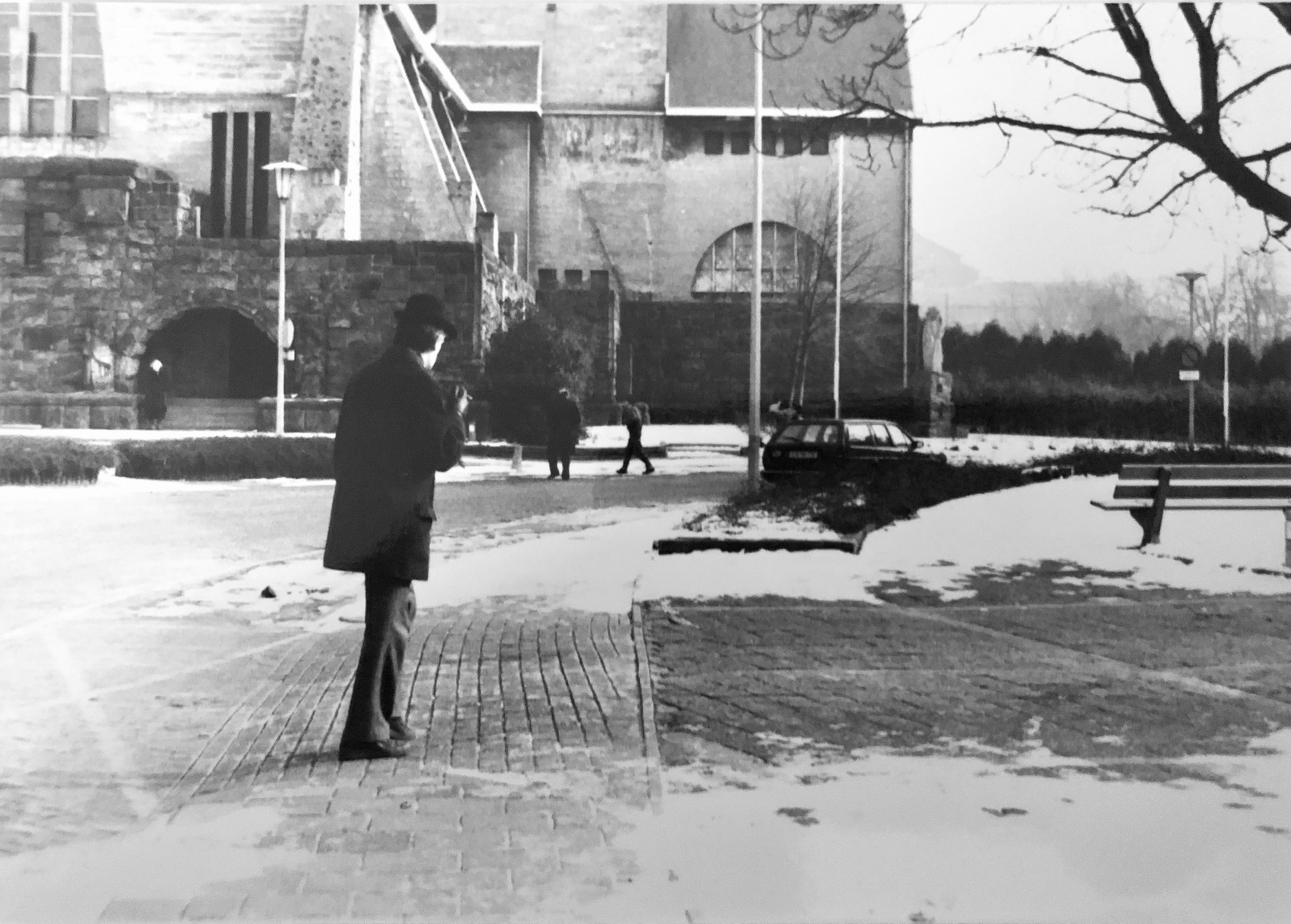
Image courtesy and copyright Amei Manten
Street Photography Is Social Documentary Photography
Writing last week's blog posts about the book Lost London: 1870-1945 made me realize that there is an easily overlooked aspect of street photography.
Every street photographer wants to capture a specific moment and create that 'one' image that will enthuse the world. With Olympians like Henri Cartier-Bresson, Vivian Mayer, Elliot Erwitt, and so many others as examples, we street photographers try to emulate their vision, their images, and their success.
But street photography is so much more, and street images can mean much more to our audience.
Street photography is not and does not always have to be about the decisive moment.
The images in Lost London: 1970-1945 made me realize that there is so much more to these pictures than the decisive moment. These images capture a particular place during a specific time that has a special meaning for contemporary viewers.
Allow me to explain this with an example of an image not related to the book.

Image courtesy and copyright Amei Manten
Recently I posted an image from the small village my wife and I grew up in on Facebook. My then-girlfriend, now wife, created the picture in the mid-1980s as part of a photography assignment while studying at the University of Leiden (the Netherlands).
It is quite an ordinary image: a village street with a woman.
However, posting this image on Facebook had a surprising result. Numerous people commented on the street and the buildings, with many trying to figure out who the woman in the picture was.
This result and the images from the book Lost London: 1870-1945 made me realize that street photography always is a form of social documentary photography. With or without a decisive moment captured, street images provide contemporary viewers and later generations insights into our environment's current state; it captures the Zeitgeist.

Image courtesy and copyright Amei Manten
The look of the streets, the buildings that may change or totally disappear in the future, the people, the clothes they wear, their occupation, and other details of daily life we at this moment take for granted but will be of interest later.
This realization gave me a feeling of calmness.
I no longer have that unsatisfied urge to hunt or fish for the decisive moment when creating street images. Instead, I am more aware of my surroundings and what my image might mean to future viewers. Maybe they lived in this specific area I am capturing; perhaps I captured one of their family members in my frame.
Street photography, for me, now is more about capturing the current state, and it's not only about the decisive moment.
I still will look out for it, and if and when I capture such a moment: outstanding, excellent! But, if not, I move on with the knowledge that at least I captured something from which future viewers can learn how the world looked today.