
Not The Decisive Moment
Street Photography Is Social Documentary Photography
Writing last week's blog posts about the book Lost London: 1870-1945 made me realize that there is an easily overlooked aspect of street photography.
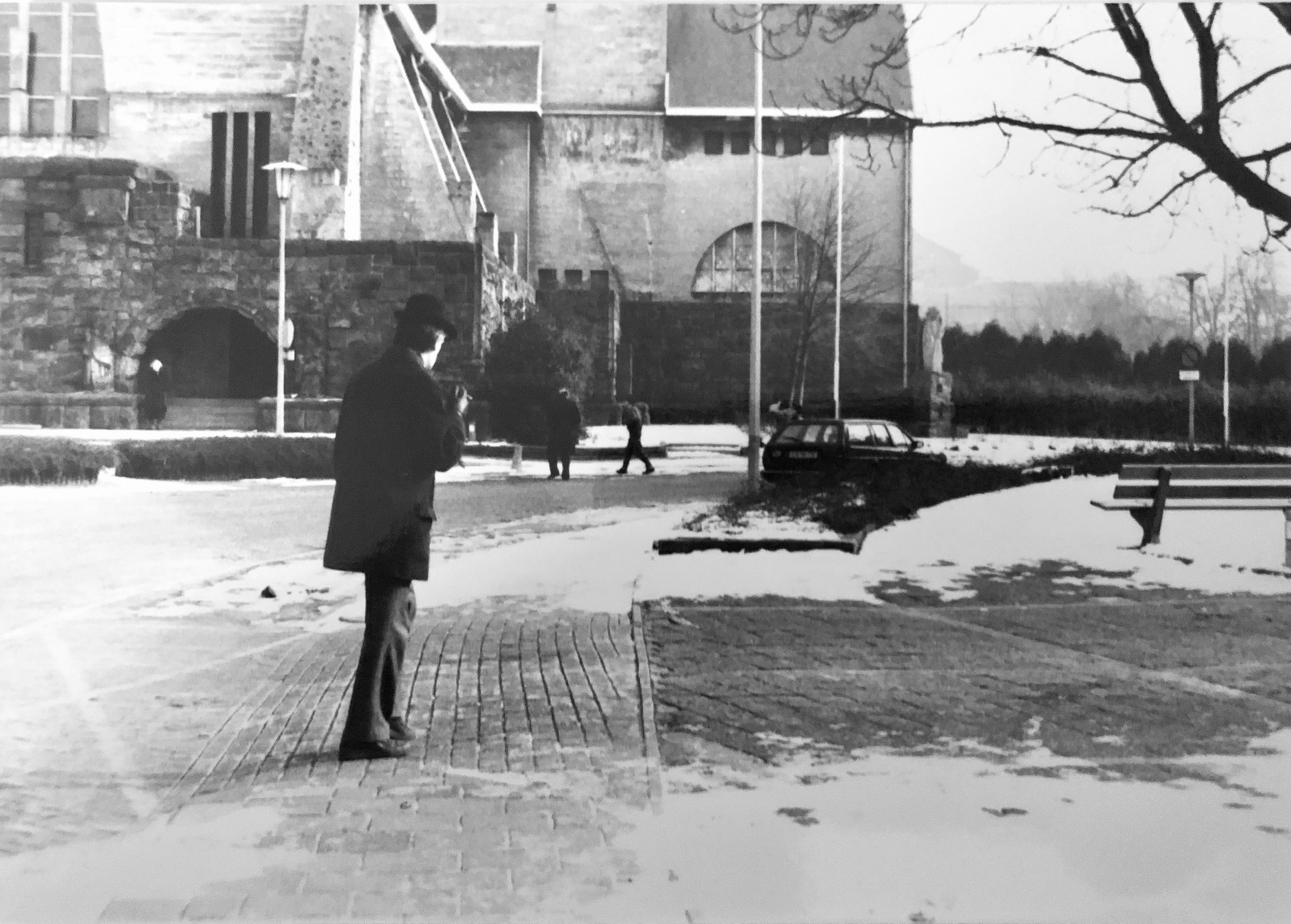
Image courtesy and copyright Amei Manten
Street Photography Is Social Documentary Photography
Writing last week's blog posts about the book Lost London: 1870-1945 made me realize that there is an easily overlooked aspect of street photography.
Every street photographer wants to capture a specific moment and create that 'one' image that will enthuse the world. With Olympians like Henri Cartier-Bresson, Vivian Mayer, Elliot Erwitt, and so many others as examples, we street photographers try to emulate their vision, their images, and their success.
But street photography is so much more, and street images can mean much more to our audience.
Street photography is not and does not always have to be about the decisive moment.
The images in Lost London: 1970-1945 made me realize that there is so much more to these pictures than the decisive moment. These images capture a particular place during a specific time that has a special meaning for contemporary viewers.
Allow me to explain this with an example of an image not related to the book.

Image courtesy and copyright Amei Manten
Recently I posted an image from the small village my wife and I grew up in on Facebook. My then-girlfriend, now wife, created the picture in the mid-1980s as part of a photography assignment while studying at the University of Leiden (the Netherlands).
It is quite an ordinary image: a village street with a woman.
However, posting this image on Facebook had a surprising result. Numerous people commented on the street and the buildings, with many trying to figure out who the woman in the picture was.
This result and the images from the book Lost London: 1870-1945 made me realize that street photography always is a form of social documentary photography. With or without a decisive moment captured, street images provide contemporary viewers and later generations insights into our environment's current state; it captures the Zeitgeist.

Image courtesy and copyright Amei Manten
The look of the streets, the buildings that may change or totally disappear in the future, the people, the clothes they wear, their occupation, and other details of daily life we at this moment take for granted but will be of interest later.
This realization gave me a feeling of calmness.
I no longer have that unsatisfied urge to hunt or fish for the decisive moment when creating street images. Instead, I am more aware of my surroundings and what my image might mean to future viewers. Maybe they lived in this specific area I am capturing; perhaps I captured one of their family members in my frame.
Street photography, for me, now is more about capturing the current state, and it's not only about the decisive moment.
I still will look out for it, and if and when I capture such a moment: outstanding, excellent! But, if not, I move on with the knowledge that at least I captured something from which future viewers can learn how the world looked today.
Hello Mrs. Cartier-Bresson
Greenville, SC | S Main St - W McBee Ave | January 2022
When I saw this lady walking towards me, I almost froze. Where did I see those sunglasses before?

Greenville, SC | S Main St - W McBee Ave | January 2022
When I saw this lady walking towards me, I almost froze.
Where have I seen those sunglasses before?
Could it be?
Is it her?
If only HCB was here, he would be able to tell
61 years... impossible, it can't be her...
Maybe her daughter?
Paying Attention
Washington, DC | Lincoln Memorial | August 2014
One of the joys of street photography, actually the reason I think most street photographers do what they do, is observing people…

Washington, DC | Lincoln Memorial | August 2014
One of the joys of street photography, actually the reason I think most street photographers do what they do, is observing people.
People on their own, in small groups, or, as in this image, in large groups of individuals who are not in any way related to each other than for the fact that they are coincidentally in the same place at the same time.
When visiting the Lincoln Memorial in 2014 (obviously very much during pre-pandemic times) I noticed that most visitors are not really paying attention to the statue of the great man. Several were walking around in circles like lost in the vast space of the Memorial building, some were talking in groups, and quite a few were busy taking selfies with their omnipresent phones.
Except…
Except for this one woman, who stood still in the middle of the moving, chattering and self-focused crowd.
She was looking at the image of President Lincoln. Paying attention. As if to say: “What can you tell me. What can you teach me.”
And isn’t that what we all should do more often? Paying attention. Putting the phone away. Stop talking. Stop being focused on ourselves. And just pay attention.