
Did I Save These Images?
Saving Or Ruining Film Images In Post Processing
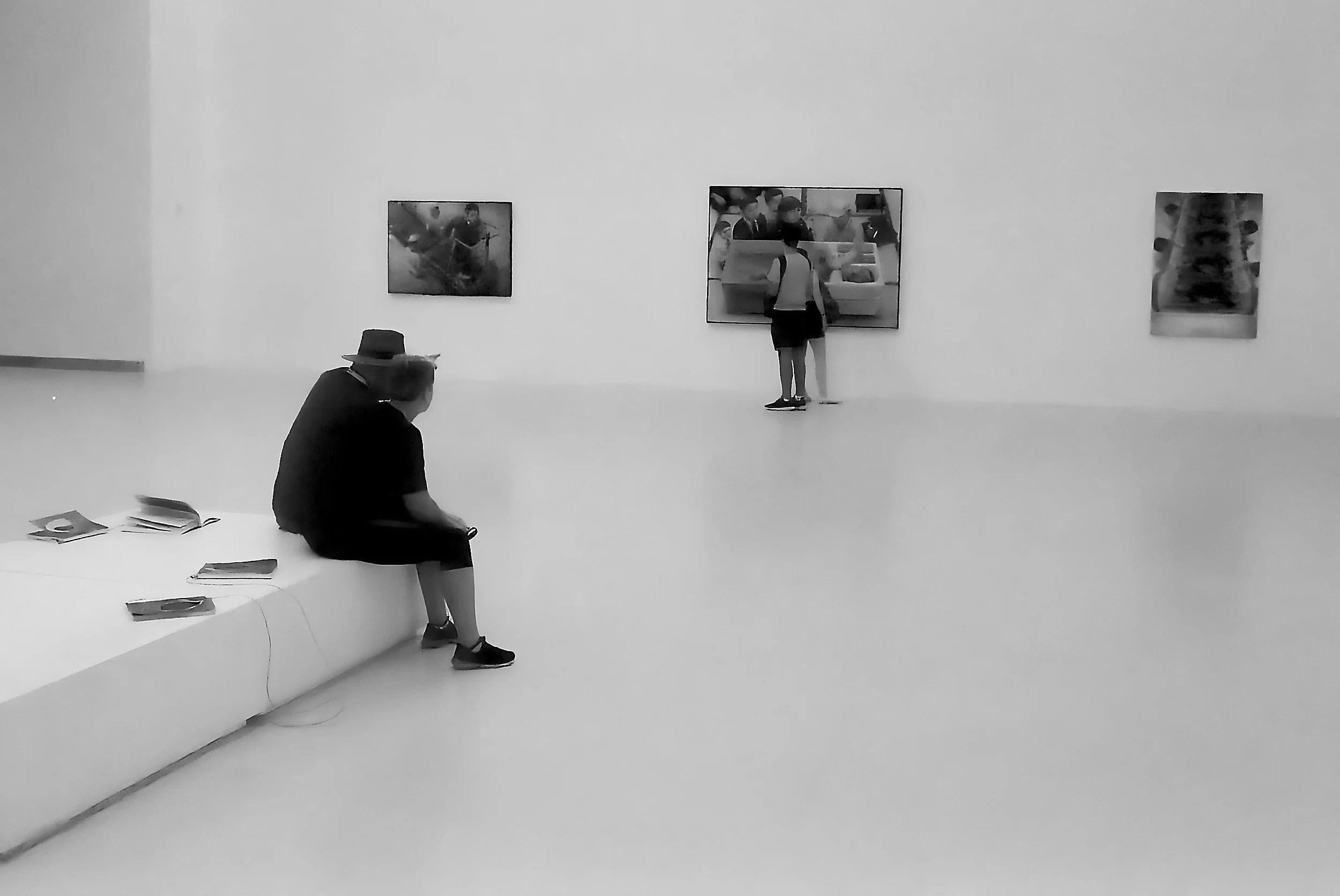
While visiting the Palacio de Cristal in Retiro Park in Madrid, Spain, in 2019 I made several images with my Leica M4 and Delta 400 film.
Saving Or Ruining film Images In Post Processing
While visiting the Palacio de Cristal in Retiro Park in Madrid, Spain, in 2019 I made several images with my Leica M4 and Delta 400 film.
The Leica at that moment was quite new to me - I purchased it just a month before in South Africa - and working with an external light meter or guessing my exposure settings with the sunny-16 rule was not something I was very much used to yet.
As a consequence, several images turned out to be quite under-exposed. Resulting in thin and grainy negatives, which showed clearly in the scans I got back from the lab.
I played around with the digital versions of these images, first in Lightroom and later in the 2019 version of ON1 I, but never really to my satisfaction.
We are in 2024 now, and ON1 got some major and interesting upgrades, including Brilliance AI and an updated version of their NoNoiseAI and TackSharpAI tools.
This encouraged me to revisit these images and put them through the ON1 works.
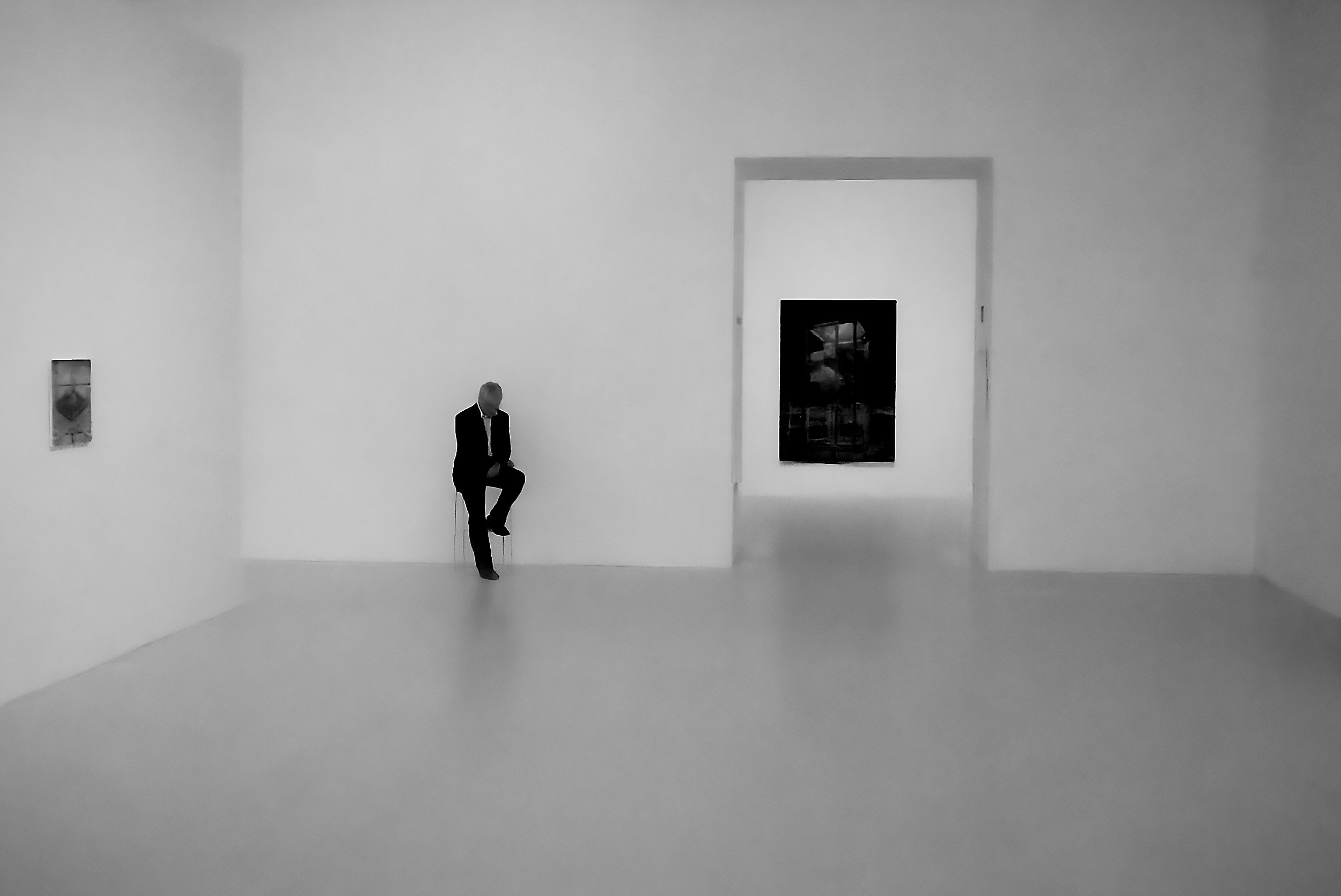
And to be honest: I like the results. While I admit they absolutely have a very processed look to them now, to my opinion this has created a look that pleases my eye: very clean, very slick, almost graphic.
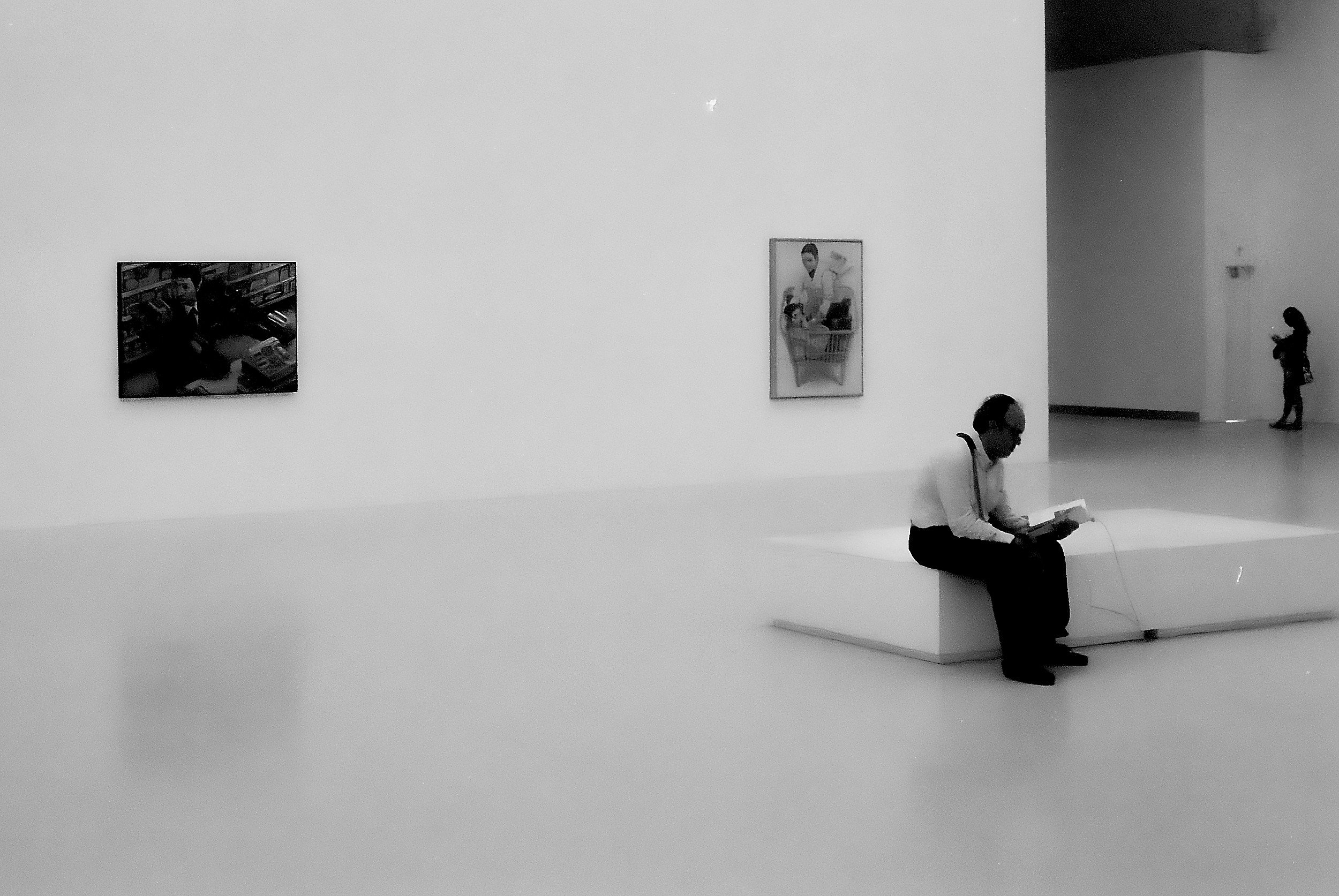
I wonder what you think of this: did I manage to save these images, or did I only make a bad (underexposed and grainy) photo worse in another way?
Capturing the Essence of Tranquility: Round Lake, NY
Discovering Serenity Through the Lens of High-Contrast Monochrome
Nestled amidst the picturesque Adirondack Mountains of upstate New York lies a hidden gem: Round Lake…

Discovering Serenity Through the Lens of High-Contrast Monochrome
Introduction
Nestled amidst the picturesque Adirondack Mountains of upstate New York lies a hidden gem: Round Lake.
This pristine body of water has long inspired photographers like me, beckoning us to capture its enchanting beauty. In this essay, I will talk about Round Lake's location, history, and significance while also recounting my experience of capturing its ghostly charm on an early morning shrouded in fog.
A Natural Oasis
Round Lake is strategically located within Saratoga County, just 12 miles south of Saratoga Springs. Near the Adirondack Park Preserve, this location contributes significantly to its allure. The lake covers approximately 356 acres, with an average depth of 7 feet. Its small size provides an intimate and tranquil atmosphere, making it a perfect destination for nature enthusiasts and photographers.

The lake's shoreline is lined with lush, leafy forests, predominantly composed of northern hardwoods such as maple and beech trees. These trees create a splendid backdrop, especially during autumn when their leaves burst into fiery red, orange, and gold shades.


The lake's diverse flora and fauna create a vibrant ecosystem, making it a hot spot for wildlife photography: its crystal-clear waters abound with aquatic life. From bass to perch, the fishing opportunities are abundant, attracting anglers yearly. Additionally, Round Lake is renowned for its ecologically sensitive practices, ensuring its natural beauty remains unspoiled for future generations.

A Historical Gem
Round Lake's history is as rich as its natural beauty. This glacially formed lake has existed for thousands of years, serving as a vital resource for indigenous people and early settlers.
The lake was initially known as "Ondariquoit," a name derived from the Native American Iroquoian language, which means "round lake." The Iroquois regarded this place as sacred, often visiting it for its abundant fish and pristine waters.
In the 19th century, Round Lake gained fame as a spiritual retreat for the Methodist Church. In 1867, it became the permanent home of the Chautauqua Institution, a center for adult education, religion, and the arts.
Today, Round Lake's history is cherished by those who appreciate its serene ambiance.
The Magic of Early Morning Fog
One of the most enchanting aspects of Round Lake is its propensity for early morning fog. While this natural phenomenon can occur at any time of the year, it is most common during the spring and autumn months, when the temperature fluctuations between night and day are most pronounced. This unique weather pattern creates a magical and ethereal atmosphere that is a photographer's dream.

Fog diffuses the sunlight, softening harsh shadows and creating a gentle, diffused glow that bathes the landscape in a delicate embrace. The mist envelops everything in a mysterious veil, obscuring distant objects and transforming even the most familiar scenes into something otherworldly. This captivating effect draws photographers from far and wide, hoping to capture Round Lake's timeless beauty in a new and gorgeous light.
I had the privilege of experiencing Round Lake's foggy mornings several times. Each visit brought new challenges and opportunities, and I'd like to share some insights into my experiences:
Preparation: Early mornings can be chilly, even during the warmer months, so I always dress in layers. Proper clothing ensures comfort during extended shooting sessions. I also check my camera gear the night before, ensuring everything is clean and in working order.
Timing: Timing is crucial when photographing in foggy conditions. I typically arrive at the lake before sunrise to scout locations and set up my equipment. The predawn light, often characterized by a deep blue hue, adds an enchanting quality to the fog.
Composition: Composition is critical in capturing the essence of Round Lake's fog. The mist can be used to create depth and mood in the photographs. Elements like trees and rocks can serve as foreground elements that emerge from the haze, adding depth and interest to the image.
Long Exposures: I sometimes use long exposure techniques to accentuate the dreamy quality of the fog. This blurs any ripples on the water's surface, creating a sense of serenity and tranquility. It also captures movement in the mist, adding a dynamic element to the photographs.
Patience: Fog is a dynamic phenomenon whose density can change rapidly. Patience is essential when waiting for the perfect moments to capture the desired mood and atmosphere.
One of my most memorable experiences at Round Lake was during an exceptionally dense, foggy morning in early October.
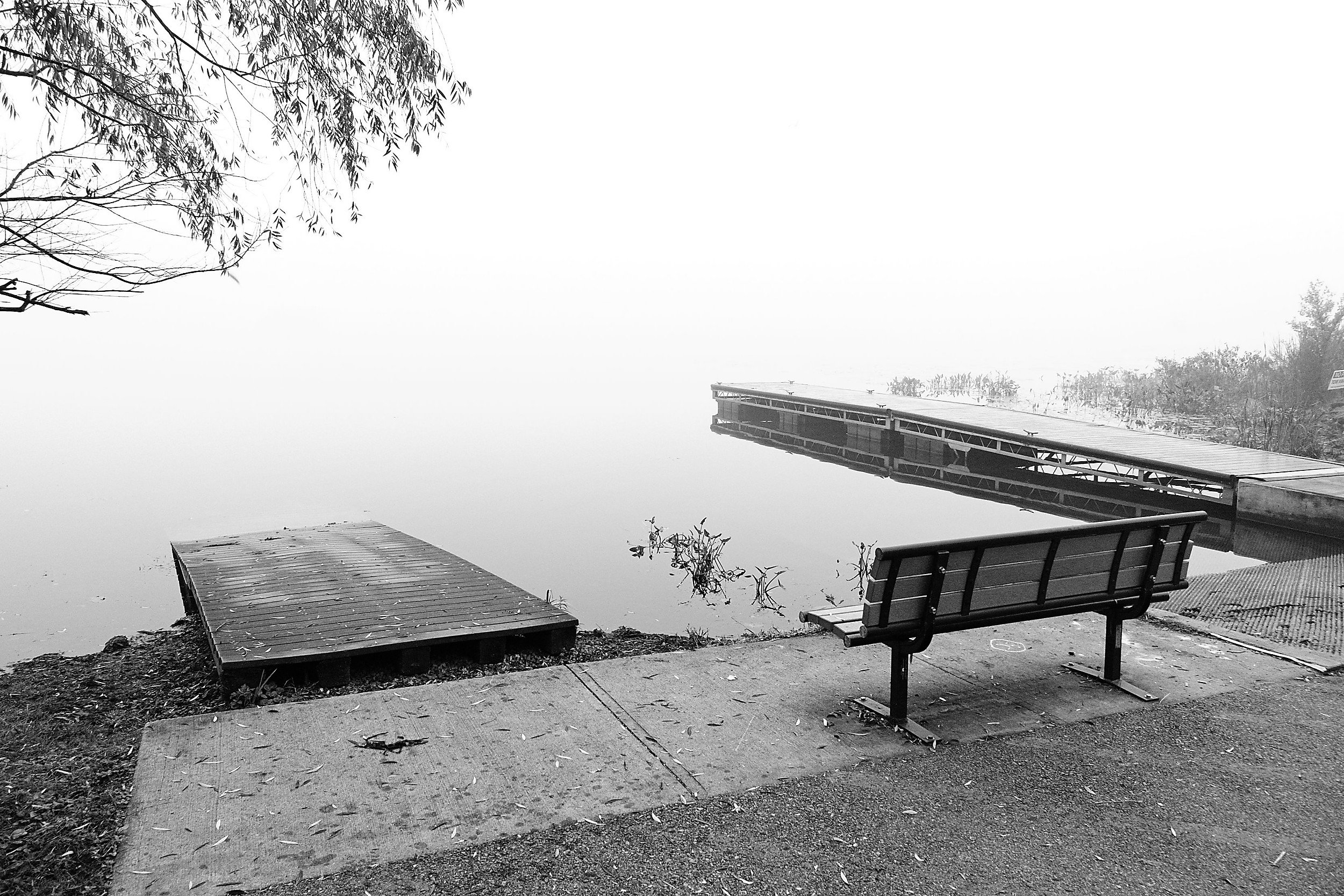
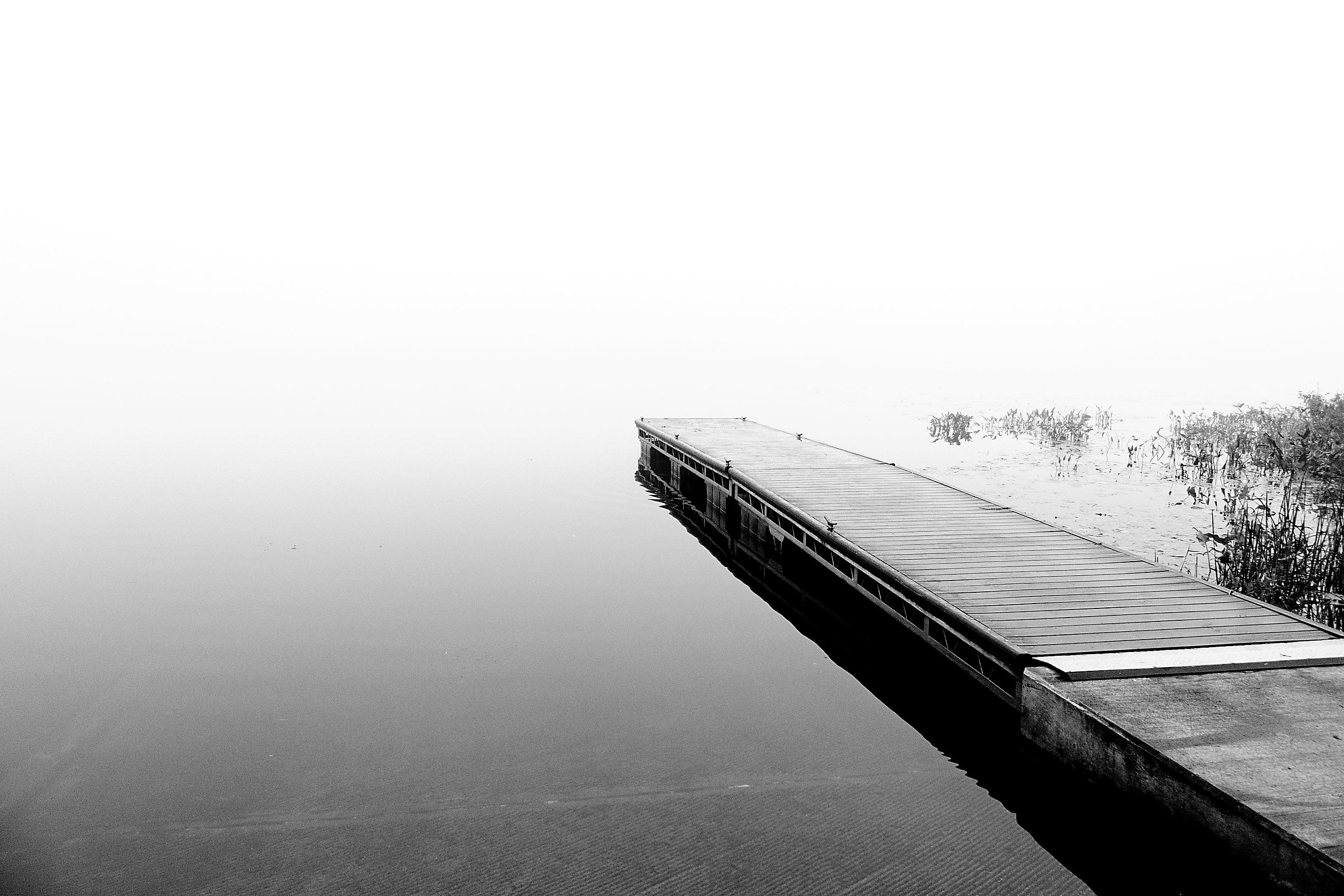
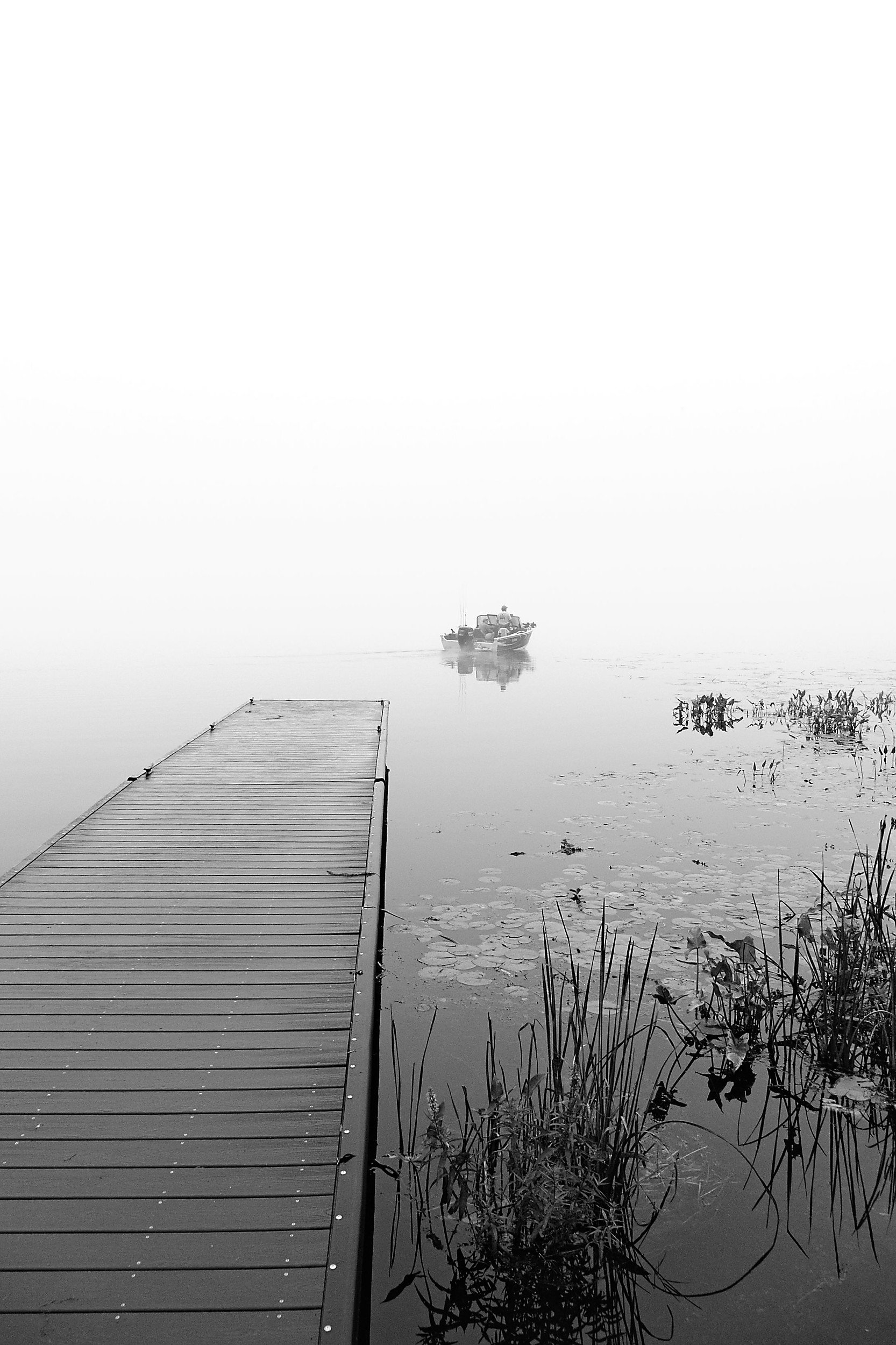
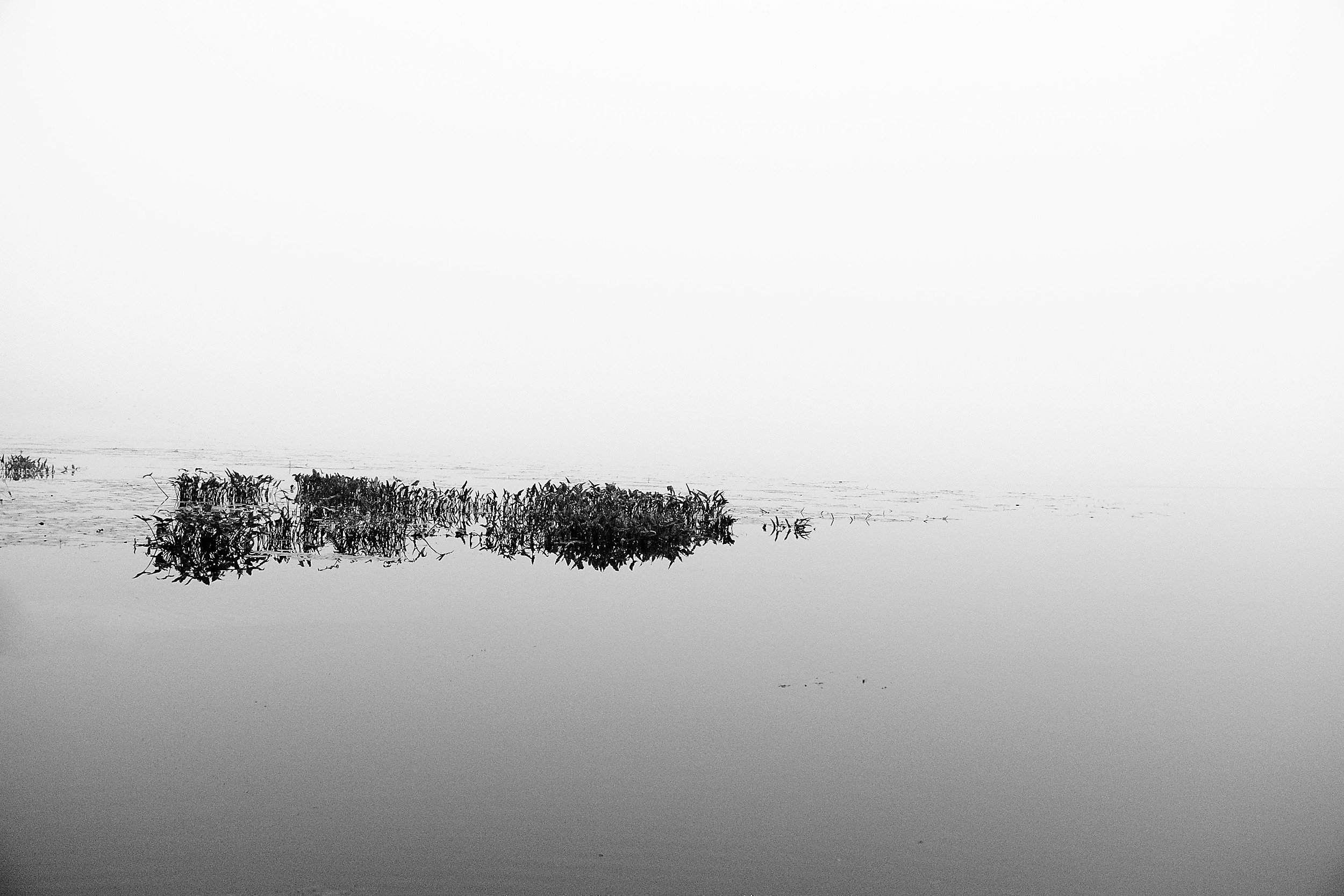
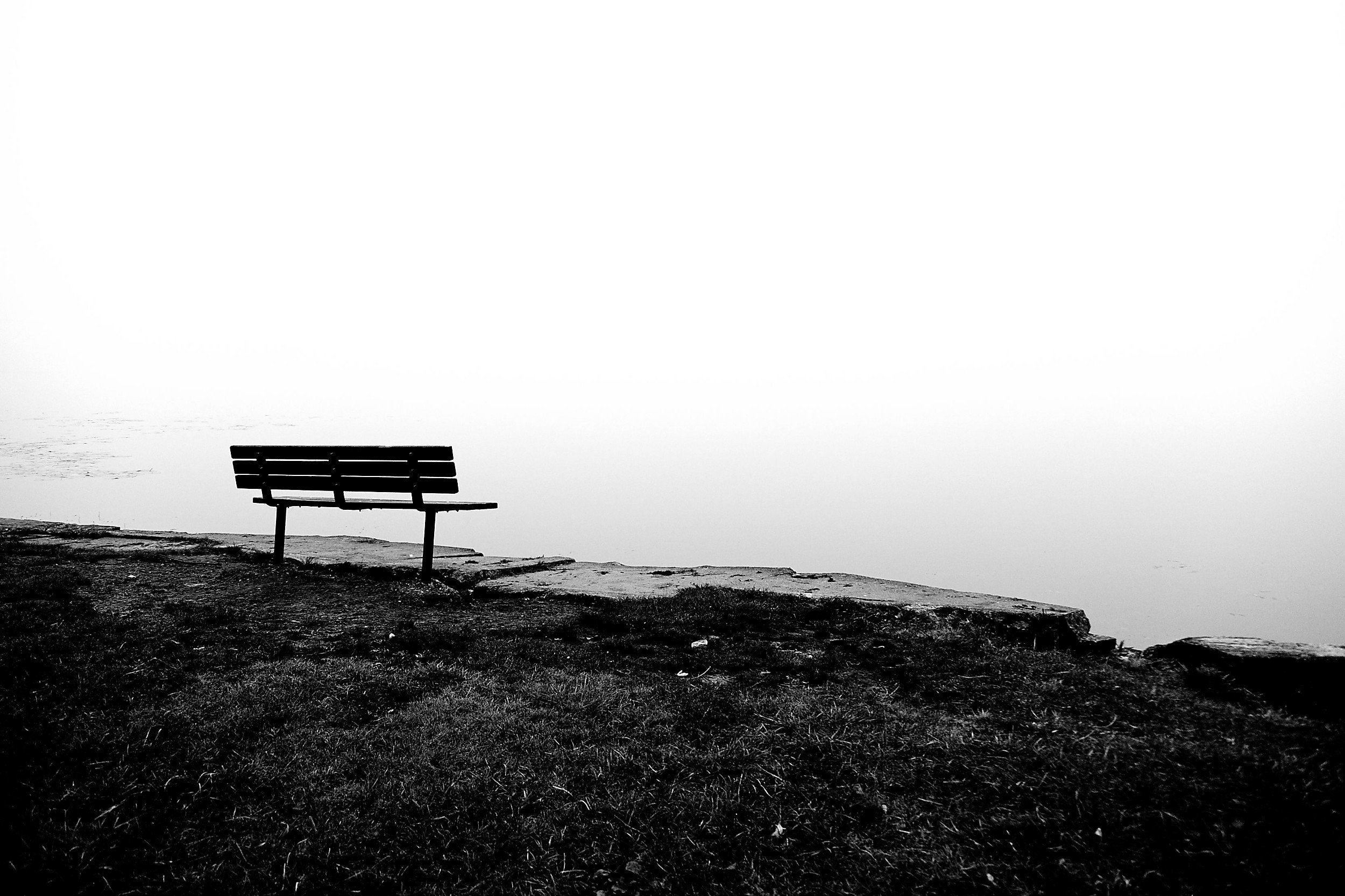
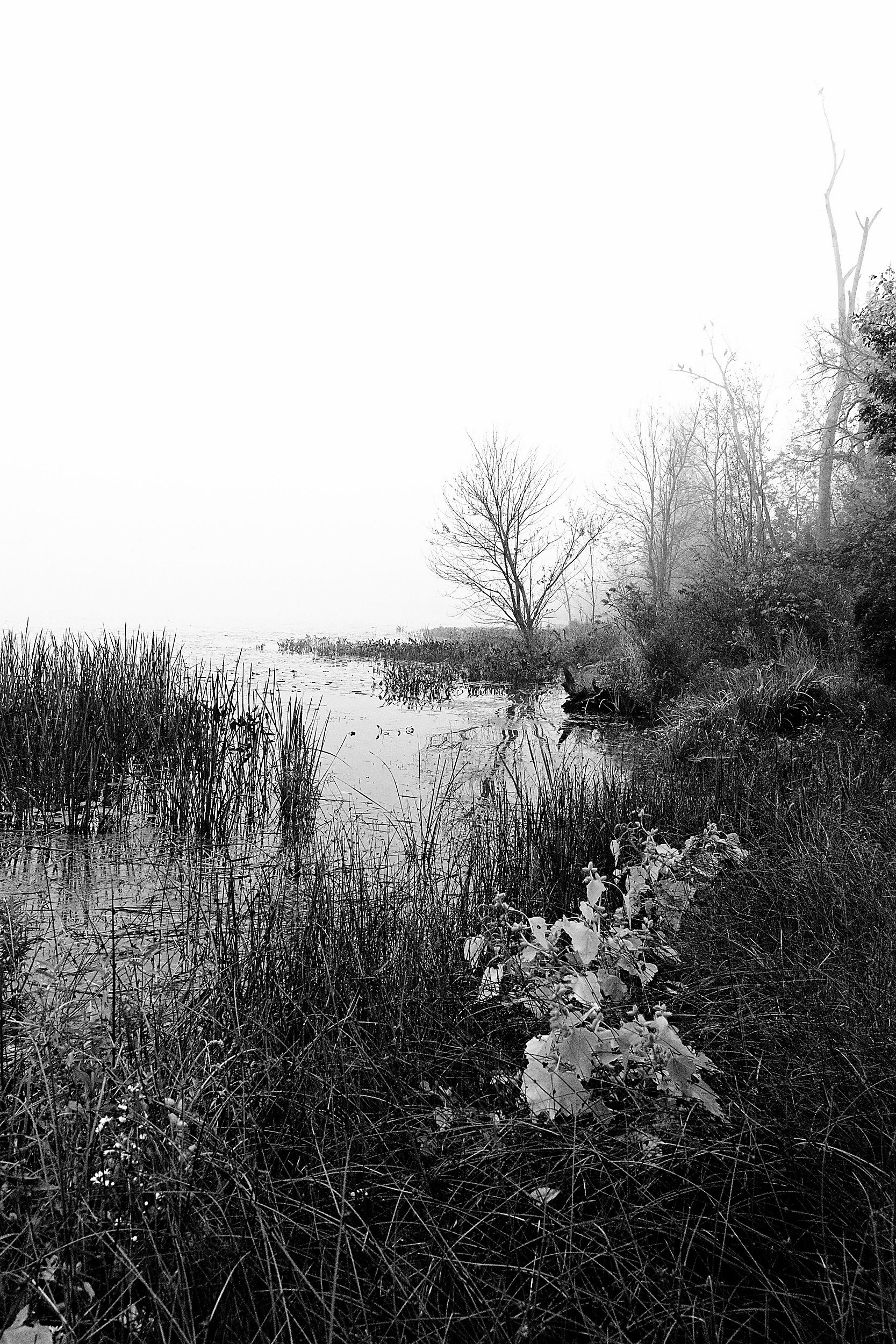
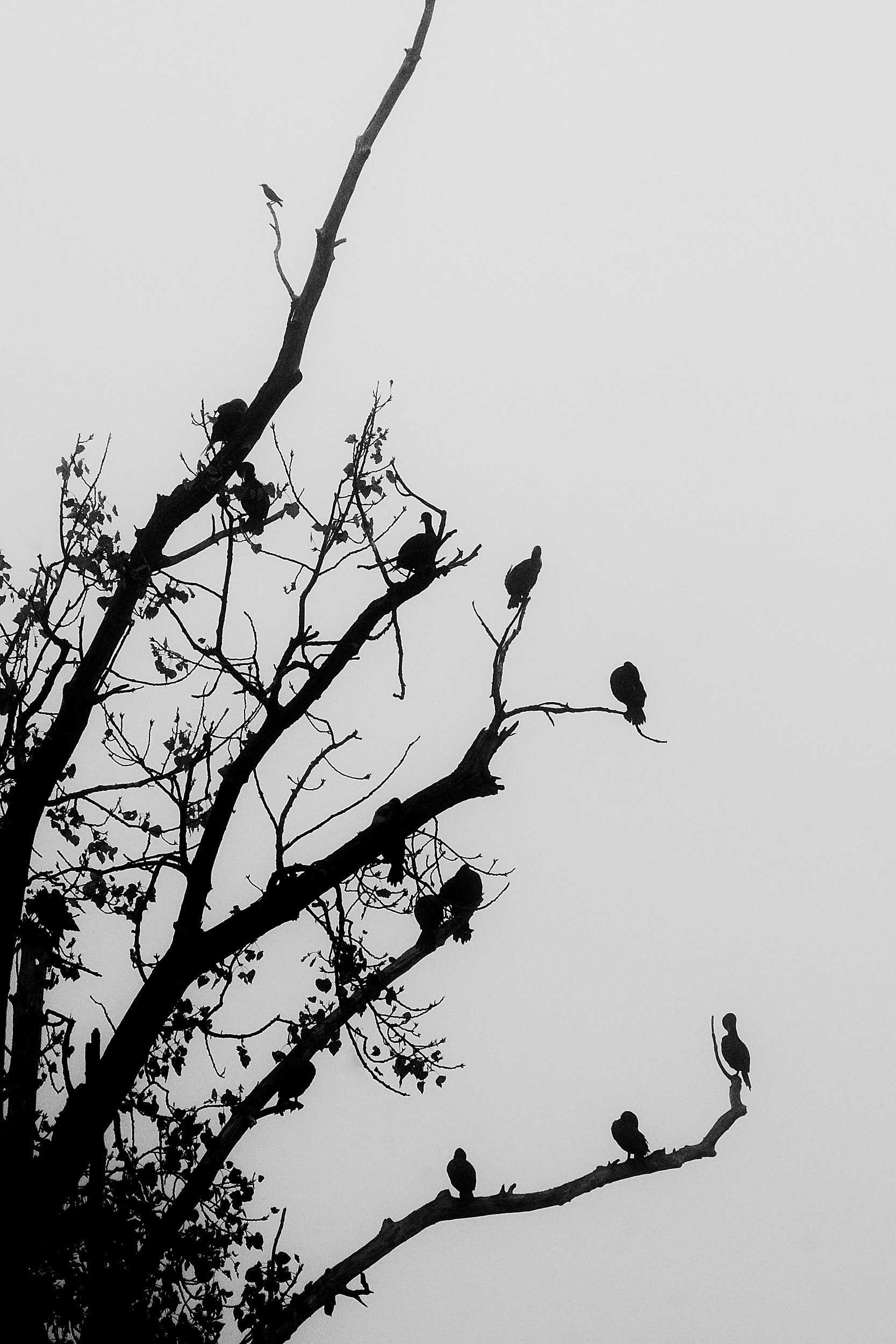
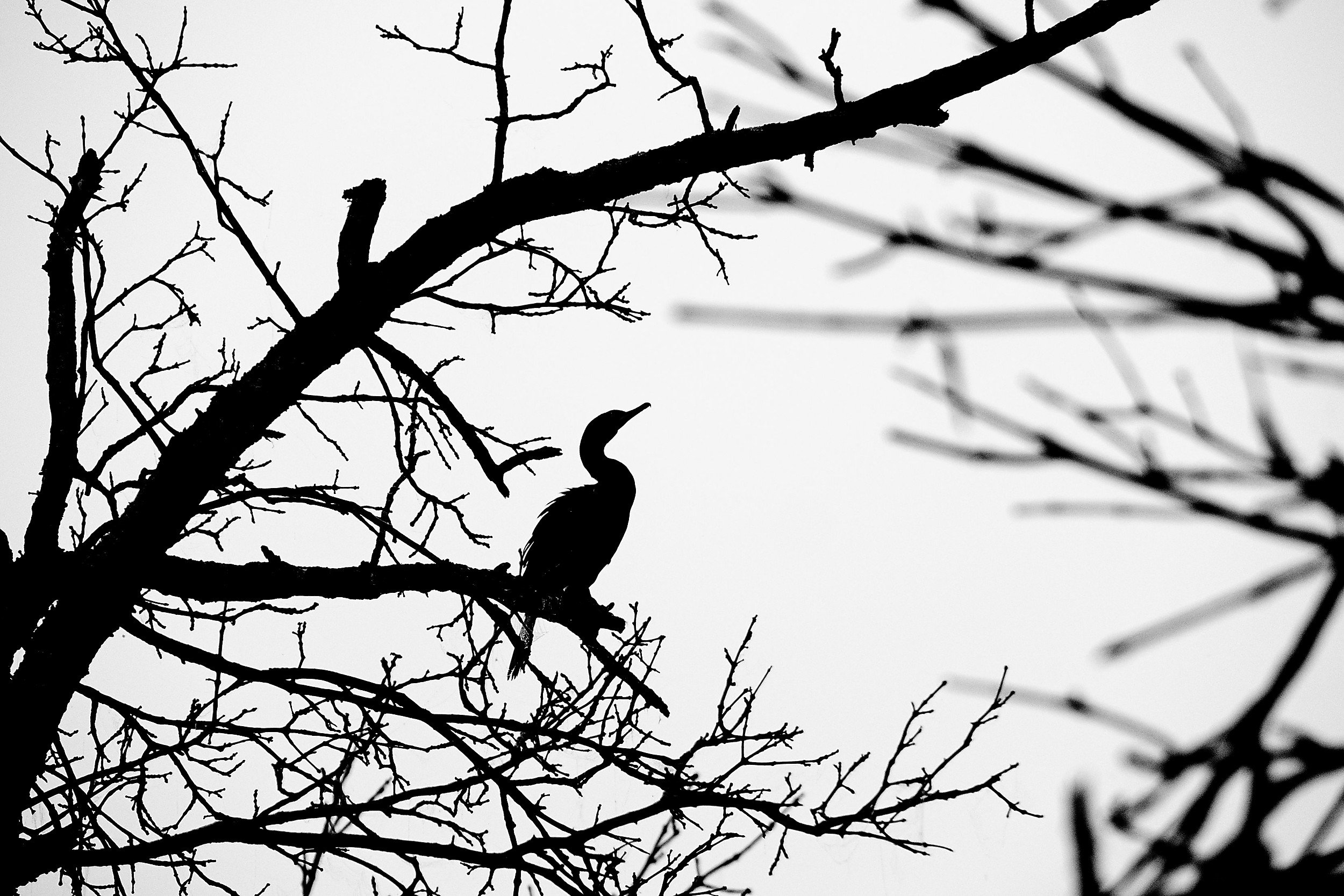
My initial objective was to capture the moment when the sun would start clearing up the fog, creating that incredible golden shine I had seen here before under similar circumstances. However, As it happened, the fog was very dense, and the sun didn't show all day. I, therefore, changed my intent and used the whiteness of the mist to create the contrasty black-and-white images I am sharing here.

I edited the raw images in ON1 with some basic adjustments:
basic image enhancements
converting to black and white
increasing the 'whites'
increasing contrast
While I could not create the images I originally had in mind, I am pleased with the final result.
Conclusion
Round Lake, NY, is a hidden gem that has captivated photographers and nature enthusiasts for generations. Its rich history, natural beauty, and the magic of early morning fog make it a truly remarkable destination. As a landscape photographer, I have had the privilege of capturing its essence during this foggy morning, which left me with a deeper appreciation for the timeless charm of this serene oasis.
Round Lake's history, from its indigenous roots to its role as a spiritual retreat and educational center, is a testament to its enduring significance. Its location near the Adirondack Park Preserve ensures the preservation of its natural beauty for future generations to enjoy. And the fog that envelops it during the early hours of the day transforms it into a realm of enchantment, where every photograph becomes a work of art.

As I continue to explore Round Lake and document its ever-changing beauty, I am reminded of the importance of preserving such natural treasures. Through photography, we capture the essence of these places and inspire others to appreciate and protect them. With its rich history and captivating fog, Round Lake will remain a source of inspiration and wonder for those seeking the natural world's magic.

Beyond the Cars: Photography as a Window into the People and Communities that Surround Car Shows
How Photography Can Tell the Story of Car Shows As A Social Phenomenon
Since their conception, cars have captured the interest of all kinds of people: those who are interested in design, those who are interested in racing, people who are interested in mechanics and engines, those who like to show off with fancy cars, and individuals who collect cars, to name a few.

How Photography Can Tell the Story of Car Shows As A Social Phenomenon
Finally, finally, finally! I have finished my essay on car shows and the people who attend them!
It seems to me that an increasing number of car shows are happening in our country. During summer, there is at least one every weekend in every city and town, and often additional events during weeknights. And this appears to be the same in South Carolina (where I used to live), New York (which I now call home), or any other State, according to the announcements I see on social media.
Initially, I was made aware of these events by my daughter, who, for her final project, "The Soul of the Classic Car," for her BFA in photography from Winthrop University, focused on details of vintage cars.

I also may be particularly aware of them because I owned a Mazda Miata for some time, and looking at other small sports cars on display was fun.
As a result, while I am not a gearhead (I couldn't point out an alternator if my life depended on it), I have visited several car shows over the last three years. In the first instance, I did this partially because I owned that Miata, but the main reason for continuing to go to these shows was because I am intrigued by their social aspect.
A Photographer's Paradise
Car shows provide excellent opportunities for photographers to capture stunning images.
They may focus on photographing individual vehicles and capturing each car's unique design and details (as my daughter did), or they may catch the event's overall atmosphere, including the crowds, vendors, and other attractions.
These events are also excellent for trying various photography techniques, such as close-up shots of car details, panoramic views of the entire event, or capturing the vehicles in motion on the road or track. In post-production, photographers may give their photos a nostalgic feel or use other editing techniques that show the beauty and style of the cars they photographed.
Some photographers, like me, may even specialize in capturing the human element of car shows, focusing on the interactions between enthusiasts, collectors, and other car fans.
The latter group of photogs, and even more specifically, photographers interested in social-documentary, can capture various images that tell the story of the event and its attendees: they may focus on documenting the people who attend the event, including the collectors, enthusiasts, families, and vendors—for example, capturing portraits of attendees and candid shots of them interacting with the vintage cars on display.
In addition to documenting the people directly, a social-documentary photographer may also focus on images of the cars while telling the personal stories behind each vehicle. Or they can record the different activities at the show, such as competitions, demonstrations, or presentations.
Whatever the photographic genre they specialize in, photographers at car shows have a unique opportunity to capture the essence of automotive history and design, share that beauty with the world through their images, and highlight the significance of cars in American culture and history.
I am passionate about capturing stories and experiences of people and events through my camera lens. Therefore as a documentary-style photographer at car shows, I aim to capture the event and its attendees in a way that gives the viewer a sense of the atmosphere and the unique culture and community surrounding the cars.
And while I am often struck by the beauty of the cars on display, I am even more interested in the people who attend the show. So often, I approach attendees, introducing myself and asking about their stories and experiences with classic cars. Everyone has a unique story: about their first car, a restoration project, or the history behind the vintage vehicles on display.
I can spend an entire day taking pictures and talking with attendees, documenting their experiences and stories. I love to capture images of families enjoying the event, collectors admiring classic cars, and enthusiasts discussing the intricacies of vintage car design. Since I am there, I also take close-up shots of the cars, focusing on their unique features and design elements.

Some thoughts about the future of this social phenomenon
Visiting these events, I always wonder whether these car shows are part of a dying culture - specifically, those focused on vintage cars.
Not immediately, but how about 10 or 20 years from now? Most cars from the 1970s onwards, which by then will be 'vintage,' don't have the exciting designs that the vehicles from the 1940s through 1960s have. And even further in the future, will people get excited to see a 'vintage' Tesla?
Car enthusiasts will likely find ways to keep the current oldtimers running. I have seen vehicles from the 20s at car shows; keeping a 1950s car running for a few more decades might be doable.
And because the newer models and electric vehicles are less exciting, there will likely be more demand and enthusiasm to keep the oldies on the road and for enthusiasts to come together to enjoy them.
Is the current abundance of car shows a flare-up of a dying phenomenon, or will they survive despite, or maybe because, of the boring contemporary models and current EV developments? The future will tell.
For now, I hope my photos will help conserve some of the history and culture of the car-enthusiast community.

Never Too Old To Play
New York City NY | Hester St. Playground | Feb 2019
New York City's China Town area is a treasure trove for street photographers and cultural experiences.

New York City, NY | Hester St. Playground | February 2019
New York City's China Town area is a treasure trove for street photographers and cultural experiences.
I noticed two gentlemen near the Hester Street playground playing the Chinese game of Xiangqi.
I didn't know if they played for toothpicks, hard dollars, or fun, but they were having a good time, and the bitter cold temperature didn't bother them.
Several onlookers were sitting and standing around their table, undoubtedly providing their advice for the next move.
Unfortunately, I had to move on and never got to know who won.

Teamwork
Greenville, SC | N Main St | January 2022
Walking on Greenville's, SC, Main Street, I saw these two workers repairing a wall…

Greenville, SC | N Main St | Jan 2022
Walking on Greenville's, SC, Main Street, I saw these two workers repairing a wall.
Working with their backs to the sidewalk, they seemed unaware of the people walking by. Focused on the task at hand, they quietly went about it, working together and getting the job done.
The public also did not notice them, indicated by the woman whose reflection is visible in the window in the background—going on with their daily chores, busy being busy. Not deliberately ignoring the workers, but not interested.
And is that not what generally is the case?
We all go about our busy lives without paying attention to the people around us.
It seems we are more interested in the actions and lives of movie stars, social media authorities, and other so-called 'influencers' than in the real people around us.
This thought inspired me to start working on a new project about real people: manual workers, parents, emergency services personnel, shoppers, office workers, etcetera.
In the upcoming weeks, I will need to flesh out the details: where to focus on possibly, what type of images, medium (film, digital, or both).
More to come.
Forever Young
Washington, DC | 11th Street NW | July 2014
Bob Dylan, Rod Stewart, Alphaville, and probably many others sang about it. Movies have been made about it.
Staying forever young: a wish that many people need to have.

Washington, DC | 11th Street NW | July 2014
Bob Dylan, Rod Stewart, Alphaville, and probably many others sang about it. Movies have been made about it.
Staying forever young: a wish that many people need to have.
If we must believe the music and film industries.
And cosmetics and clothing firms are playing well too.
Helping people to stay forever young.
Or at least: helping people feel they can stay forever young.
Or at least: making people feel they need to stay forever young.
Madrileñas
Madrid, Spain | Plaza Platería de Martinez | August 2019
Something that always strikes me in Spain is the strong and articulated women. Irrespective of social status or age, they are Present, with a capital P.

Madrid, Spain | Plaza Platería de Martinez | August 2019
Something that always strikes me in Spain is the strong and articulated women.
Irrespective of social status or age, they are Present, with a capital P.
After a stroll through Madrid's famous National Botanical Garden, my wife and I decided we earned some tapas and a refreshing drink. Since it was summer, most bars and restaurants had tables outside on the street, and we quickly found one near the botanical garden and the Prado museum.
While getting seated, I could not ignore these three ladies sitting at a table next to ours.
They were involved in deep conversation. One of the ladies passionately articulated her thoughts on a particular topic, while the other two listened with great attention.
I would have loved to eavesdrop to hear what they were so animated talking about, but that is not something one does. Also, my Spanish is not so good that I could fully understand what she said.
HOWEVER, what I could do was take my trustworthy Leica M4 and seize an image of this beautiful trio.
This photo might not capture a 'decisive moment', but, as I explained previously, street photography is not always about the decisive moment and is far more.
This image, for me, represents a typical situation that someone easily can encounter in Madrid. Or in any town and city of Spain.
Three ladies are having a great afternoon, enjoying some food and drinks and discussing current events, maybe talking about global wars and inflation, or gossiping about the new girlfriend of one of their sons.
Paying Attention
Washington, DC | Lincoln Memorial | August 2014
One of the joys of street photography, actually the reason I think most street photographers do what they do, is observing people…

Washington, DC | Lincoln Memorial | August 2014
One of the joys of street photography, actually the reason I think most street photographers do what they do, is observing people.
People on their own, in small groups, or, as in this image, in large groups of individuals who are not in any way related to each other than for the fact that they are coincidentally in the same place at the same time.
When visiting the Lincoln Memorial in 2014 (obviously very much during pre-pandemic times) I noticed that most visitors are not really paying attention to the statue of the great man. Several were walking around in circles like lost in the vast space of the Memorial building, some were talking in groups, and quite a few were busy taking selfies with their omnipresent phones.
Except…
Except for this one woman, who stood still in the middle of the moving, chattering and self-focused crowd.
She was looking at the image of President Lincoln. Paying attention. As if to say: “What can you tell me. What can you teach me.”
And isn’t that what we all should do more often? Paying attention. Putting the phone away. Stop talking. Stop being focused on ourselves. And just pay attention.
Passersby
Greenville, SC | S Main St | September 2021
This black and white image of two people in silhouette in downtown Greenville, SC probably depicts one of the most interesting parts of street photography…

Greenville, SC | S Main St | September 2021
This black and white image of two people in silhouette in downtown Greenville, SC probably depicts one of the most interesting parts of street photography.
We take pictures of strangers without knowing anything from them. Are they are happy or sad, rich or poor, on vacation or walking to work. We don’t know…
We take their pictures, but they are like silhouettes to us: we don't see the details of their lives.
Conversation
Greenville, SC | S Main St - N Court St | September 2021
As a street photographer, I always wonder about the background of the people in my photographs: who are they,…

Greenville, SC | S Main St - N Court St | September 2021
As a street photographer, I always wonder about the background of the people in my photographs: who are they, where do they come from, what are they thinking?
When looking at the man and woman sitting together here and both looking straight ahead, I could create two different stories: one of them being annoyed with each other and not wanting to talk, and one of them being so comfortable with each other that no words are needed to communicate.
I prefer the latter.

Why Subjects Need Space
To Crop Or Not To Crop, The Question Is
I need to think more about when to crop my images and when not. Reducing what the viewer can see of the subject of an image to the bare minimum can take away from the message that I want to share.
To Crop Or Not To Crop, The Question Is
I need to think more about when to crop my images and when not. Reducing what the viewer can see of the subject of an image to the bare minimum can take away from the message that I want to share.
Why I Sometimes Crop Images
While I challenge myself to get my composition right when taking a picture for my social documentary-type images, I sometimes still feel the need to crop the image for a better (very subjective indeed) result.
The reason to crop images, for me, can be one of two:
I want to change the aspect ratio of the image, or
I want the viewer to see something special.
The first reason is basically for esthetics: I really love images in the 4:5 aspect ratio and an added perk is that 4:5 images print great on letter-sized paper.
The main reason I would crop an image in post-production, however, is to ensure that the viewer sees what I want them to see. When reviewing some Street Candid images, I feel that the viewer would benefit from some guidance for what to look at to fully understand why I took the picture.
Why Cropping Doesn’t Always Result In A Better Picture
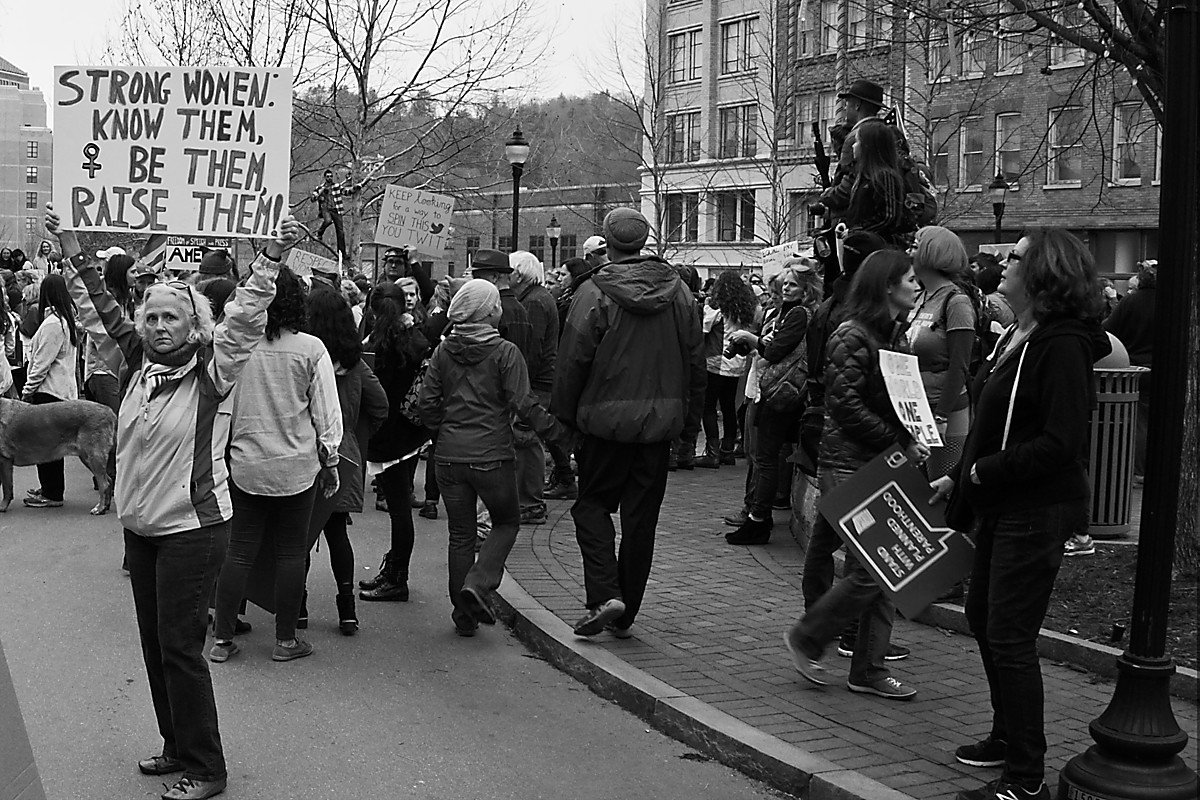
It is the second reason I want to talk a bit more about today. After reading the feedback I got on my initial publication of the image “Alley Leg”, I realized that cropping with the intent to show the viewer something special that I saw when creating the image, can actually work adversely
Because I 'zoom' too far into the subject I want to show, the viewer does not see, can not see why I want to show it.
If I want to show something important, the viewer doesn't grasp the importance.
If I want to show something funny, the viewer doesn't grasp the joke.
The reason for this is that I eradicated the context from what I wanted to show.


I saw that something was important because I saw it in its context. I saw that something was funny because I saw it in a specific context. By cropping, I removed the context. And as a consequence, the viewer has no clue about what I actually want to show!
This, of course, is not always the case. Sometimes cropping can help to remove distracting elements from the image. And limited cropping might help to just improve the composition sufficiently to make the image more interesting.
And Sometimes Cropping Is Just “Not Done”
As I mentioned above, for my social documentary-type images I challenge myself to get my composition right in-camera. The main reason for this, as I explained in a previous article, is that I want to be as unbiased as possible when showing the viewer what happened during the events I documented. And although there always will be some subjectivity (whenever you take a picture you always have to decide what to show in the frame and what not), this challenge helps me to provide an as objective as possible record of what happened.
Good examples are the two images at the top of this article that are from the same event: one cropped, and one uncropped. Do you ‘read’ each image differently?

In Focus: Bargain Found
The Joy of Finding a Bargain at a Madrid Market
This image was created during a stroll in sunny Madrid, Spain, in August 2019…

The Joy Of Finding A Bargain At A Madrid Market
Background Story
This image was created during a stroll in sunny Madrid, Spain, in August 2019.
I used my home leave from my assignment to South Africa to spend a week in Madrid with my wife, prior to traveling on to The Hague, the Netherlands, for some time with my youngest daughter.
Madrid has an abundance of squares (plazas), shopping streets, small back alleys, and parks to explore. The weather was great that week and we enjoyed a couple of days strolling through the beautiful capital of Spain.
That particular day we visited several open-air street markets, where a large diversity of goods was being sold. Fruit, vegetables, meat, fish, musical instruments, potter, leatherware, shoes, t-shirts, artisan bread, cheese, handheld fans, bags, tools; you name it, they sold it. And fabrics of course.
A fabrics stall at a market is always interesting to observe. Often the merchandise is just laying on a table or on the ground, and prospective buyers are picking it up, holding it to the light, and showing it to each other to determine if it is the right quality, size, and color for whatever they are creating at home.
And always there is this hope to find a real bargain.
As you can imagine, this creates numerous situations to make a photo. And this was just the right one for me.
How It Was Made
Only a couple of weeks earlier I was fortunate to purchase a just CLA’d Leica M4 and a Summaron 35mm f/2.8 lens for a very reasonable price. And since my wife brought my Voigtländer VCII lightmeter from home, I was experimenting with the camera, lens, lightmeter combination.
As you will know by now, I love black and white images and I had my favorite film, Ilford Delta 400, loaded.
Why It Works
The subject matter of this image is right up my alley: the busyness of the market, people interacting with each other, and the play of light and shadows.
The main subject is formed by the two hugging women in the center of the frame.
The pile of fabric and the piece held up by the lady to the left create a nice diagonal, leading the viewer’s eye through the composition.
The small tree and its support to the right and the larger tree to the left frame the main subjects of the image, while at the same time creating sub-frames for other points of interest: see the walking man perfectly framed by the small tree and the wooden support? This was a nice bonus that I only discovered after getting the film back from the lab.
As always, the light plays a major factor in making this image work for me. The harsh sunlight to the left and right of the group of women, with the shadows on the street in the foreground and the dark leaves of the trees, provides an additional frame for the main subject.
All parts work together to create several frames around the center of the image, focusing the view towards the two women in the center.
How Can This Image Be Used
There are several ways to use an image like this in a commercial setting.
There might be a hotel nearby that can use this image to show their guests the area they are located at, and how close they are to classical Madrid markets.
And the City of Madrid could use it to show prospective visitors its relaxed but lively street life and market culture, ideally for tourists who want to experience the real Spanish.
Although countries and cities are opening up after what hopefully was the worst of the Covid-19 / Coronavirus impact it might be a while until we can strolling the markets of Madrid again. Until then, images like this one will remind us of the better times to come.

In Focus: Food Envy
Pre-Pandemic Diners In The Hague
We all remember those carefree pre-pandemic afternoons and evenings when we could stroll the streets…

Pre-Pandemic Diners In The Hague
Background Story
We all remember those carefree pre-pandemic afternoons and evenings when we could stroll the streets without face masks and go to restaurants to enjoy a good meal without being restricted in how many friends to meet. Don’t we?
This image was created during a warm summer evening stroll in The Haag (Den Haag), The Netherlands, in August 2019.
I had spent a week in Madrid, Spain, with my wife and now enjoyed the additional time off with my youngest daughter who just moved for her studies to this lovely city in the Netherlands.
I stayed in the Park Centraal Hotel which is in a beautiful 160-year-old building. And in the Molenstraat and neighboring streets immediately outside the hotel are several small shops, restaurants, and eateries.
Tourists and locals alike enjoyed dining inside and on the terraces outside. The relaxed atmosphere, the darkening sky, and the light inside the restaurants created a tableau that depicted the typical Dutch “gezelligheid”. While this can be translated with “cosiness”, the Dutch word encompasses more: a general feeling of wellbeing and safety.
I find it always amusing to see how passersby look at people eating outside. In fact, they might not be as much interested in the diners as well as in the food on their plates. Are they deciding what they want to order themselves? Or are they going to an eatery which they anticipate has a less enjoyable menu; are they a bit envious maybe? Is food envy a concept?
Anyhow. The environment was right, the people were at the right place. And I made the photo.
How It Was Made
It was only in January of that year that I purchased the Fujifilm X100F, and I was still experimenting with its settings and discovering its capabilities.
I love black and white images (did you notice that all images on this website are monochrome?) and in this instance, I used the Acros standard camera preset.
Although I actually like that preset very much, when editing the image I selected the ON1 preset for Ilford Delta 400. I just love that film and I also wanted to check how the built-in preset would compare to scans from actual film images.
Why It Works
First of all, I like the subject matter.
A small city street with restaurants and outside diners. People passing by; what are they thinking?
Are the passers-by envious of the diners? Are the diners disturbed by the people walking in the street?
Then there are the leading lines that lead the viewer’s eye through the image.
The curb and the awnings are perfect examples of converging lines, anchored in the bottom right corner by the blackboard with snack offerings.
And, finally, the light. Ah, the light!
The combination of pre-sunset light and the soft incandescent light from the restaurants, creating that special atmospheric mood that is so typical of lazy summer evenings.
I can just not get enough of it.
How Can This Image Be Used
Images like this can well be used in a commercial setting.
Humphrey’s Restaurant might use it to connect their customers to the location (unfortunately their restaurant in the Molenstraat has been closed, but at the time of writing of this article they still operate a restaurant in Scheveningen, near The Hague), or to show them the great ambiance they have.
The Park Centraal Hotel can use this image to show their guests the nice area they are located at, and how close they are to restaurants and nightlife.
And the City of The Hague could use it to show prospective visitors how a big city can offer coziness and a safe environment to spend the evening.
With the current Covid-19 / Coronavirus-related restrictions in place, it might be a while until we can enjoy dining out in the Molenstraat again. But the time will come that we are allowed again! Until then, images like this will remind us how great having dinner outside with friends is.

In Focus: Mobsters
Party-Goers In Black And White
When I saw this group standing in the street between the Westin and the old courthouse building, I was…
Party-Goers In Black And White
Background Story
I love living near Greenville, South Carolina. It is very walkable, and it has several districts that are great for the types of images I like to create. Greenville's downtown area has the right mix of shops, restaurants, and parks to generate some hustle and bustle while maintaining that small-town USA feeling.
And there is always something going on.
I love to stroll Greenville's streets, looking for situations that could make interesting subjects for my Street Candids series. On this particular day, I noticed a group of party-goers standing in a street near the famous Westin Hotel on Main.
How It Was Made
I worked with the Canonet QL17 rangefinder camera, loaded with Ilford Delta 100, a fine-grained film excellently suited for that day's sunny conditions.
After taking some pictures of the old Greenville News building on Main, I roamed some time in the area around The Westin Poinsett, the old Chamber of Commerce building, and the clock and fountains at the crossing of Main and Court Street.
When I saw this group standing in the street between the Westin and the old courthouse building, I was immediately intrigued. I walked towards them and composed the image to include parts of the road and create leading lines.
In post-processing, I cropped the original image to the 1:1 aspect ratio to ensure the group of men was in the center of the image and to emphasize the leading lines in the composition.
Why It Works
I like this image for several reasons.
First of all, the subject matter. A group of men in black suits, standing in an alley-like street. What are they talking about? What are they: party-goers, members of a band, or maybe...?
Zooming in, a man is visible standing in front of and facing the group. Is he a photographer taking a group picture? Or is he confronting the group; are they confronting him?
Then the image's mood: to me, it looks intriguing and maybe even a bit intimidating. The contrast between the black and white areas in the image increases the dramatic feeling: the suits, the walls, the shadow in the street.
Lastly, the crop I used: changing the image to a square format enhanced the leading lines and increased the group's focus in the middle.
One Additional Thought
While this is one of my Street Candids I like best, looking at the image triggered some thoughts regarding the decisions I made regarding capturing and presenting the image.
One of the strengths of photography is also one of its most significant challenges: by choosing a specific composition, the photographer decides what their audiences will see and influence their audiences' conclusions and emotional response to the image.
Using a specific film or film-simulation while capturing a scene or making certain adjustments to the image during processing, the photographer can add a certain mood to the picture.
The photographer can even more impact how people will look at the image and experience it by adding a caption.
Concerning this image, the men might have been wedding guests or maybe even the groom and his best men. Or perhaps it was a bunch of guys attending some other formal event.
However, by capturing them this way, using a specific film, and adding a caption, I turned them into something very different.
How easy, or difficult, is it for you to view this image as I present it now to see them as something else than a group of 1930's gang members? To what extend is your initial reaction to and assessment of this picture influenced by the choices I made?
These observations and questions take us back to how "straight" straight photography is, or to what extent it can be; which is something for a separate article.
In Focus: Watering Hole
Street Photography As An Urban Safari
Going out with the intent to create street candids sometimes reminds me of being on a safari…

Street Photography As An Urban Safari
Going out with the intent to create street candids sometimes reminds me of being on a safari.
An essential part of the fun when my family and I went on a safari in South Africa was the excitement of searching for wildlife before actually seeing any animals. The increased awareness of your surroundings and watching for any movement that could indicate a lion, elephant, giraffe, or one of the many antelopes.
Walking the streets of a city in search of candid street photos provides me the same excitement. Continually looking at people and their behavior, in the hope that something worthwhile photographing occurs.
A couple of months ago (this image is pre-Covid; hence the high number of people close together), I roamed the streets of downtown Greenville, SC, and noticed this group of people playing with the water of a fountain on Main Street.
The scene immediately reminded me of animals gathered around a watering hole as I have seen on safaris in South Africa. Even the person to the right fits nicely in the scene, appearing to stand on guard for the group.
I like how this image worked out and how it reminds me that going out for street photography is like being on an urban safari.