Am I A Photographer Who Writes, Or A Writer Who Takes Pictures?
Why it is easier for me to create stories to images, than creating images for stories
In my post Why I Combine Photography With Stories, I explained why I use storytelling techniques to…
Why it is easier for me to create stories to images, than creating images for stories

In my post Why I Combine Photography With Stories, I explained why I use storytelling techniques to share my fine art images with the public.
As mentioned in that post: it is my artistic vision, triggered by a quote from Anais Nin, that my role as a photographer is to show and share what we usually do not see.
Reviewing that blog post, however, made me realize that it might not be always clear for my viewers and readers what my main interest and focus is: being a photographer, or being a writer.
I love to observe the world around me and create beautiful images based on the impressions I get.
Most of the time I let these images tell their own stories.
Sometimes, however, I use stories to share what I see in the images I create and to invite the viewer to see the same, to join me on a journey of discovery.
In those cases, it can happen that the moment I push the shutter release button I already know what story I am going to write.
More often, I look at an existing image and see a new or different story emerge.
In some cases, however, I work on projects where I start with the story in mind and then need to create images that support the story. And to be honest: I am often struggling with these projects.
For me, it is easier to see a scene and it’s sometimes hidden message, or to look at an existing photograph and see a new story, than creating images that support a pre-existing story or message.
It is not that I don’t know what I want to tell and share, or that I don’t know what type of images I need to support the written story. The challenge, for me, working this way, is that having the story already in my mind creates restrictions regarding the subject, type, and the number of images to create.
I don’t really know why this is.
Maybe working from a pre-conceived story is too restrictive for my visual mind? Maybe I’m just too lazy to work hard finding scenes and images to an existing story? Maybe I’m too easily bored with an existing story? Maybe in my mind, the story is complete once the words are added to it, and I don’t see a need to then create images to support the story?
Although it is not really clear to me why it is easier for me to create stories to images than creating images for stories, it makes me realize once again why I create images at all: not primarily for the stories, they tell, but just because they are beautiful. And although there is a real danger here to start a ‘chicken or egg’ discussion, I know that for me creating beautiful images is the real reason I make photographs; stories are just the icing on the cake.
Yes, I am a photographer first, and a writer second.
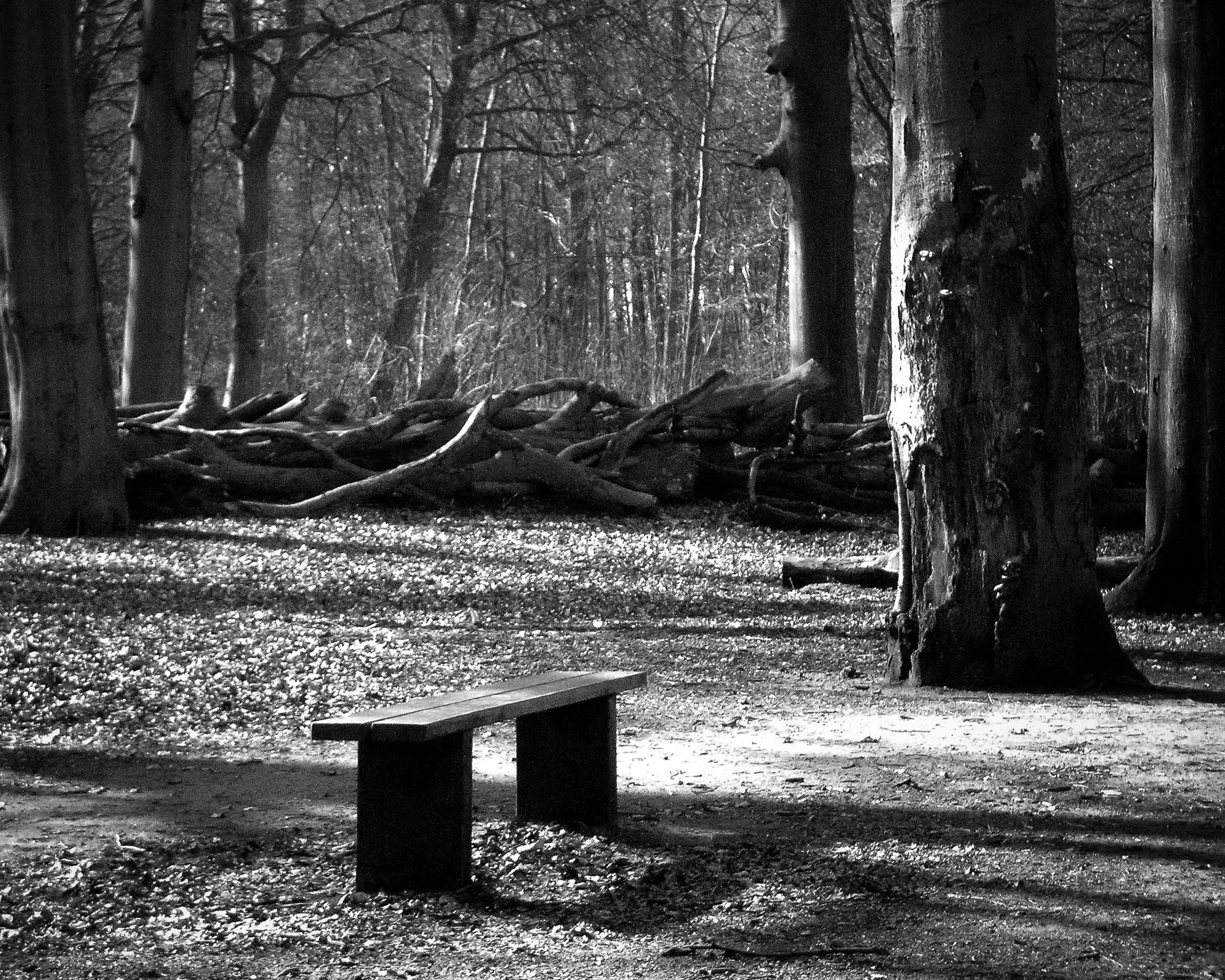
A Bench In A Park (A Haiku)
A bench in a park
empty but for…
A Bench In A Park
A bench in a park
empty but for the mem'ries
of lovers kissing

Where To Find Reedy River's Secret Worlds
Maps Of A Mysterious World Below Reedy River
I love maps…
Maps Of A Mysterious World Under Reedy River
I love maps.
Already when I was a kid I loved looking at maps. Tracking all the roads and other lines with my fingers, wondering where these would go and how the places on the maps would look in real life.

A map to me always holds a promise of adventure and discovery.

A couple of weeks ago, I was walking downtown Greenville (South Carolina). It was a rather hot day, and I enjoyed getting some cooler air near Reedy River in Falls Park. Although still not recommended for swimming and wading, the river is much more cleaner now than it must have been during the heydays of textile industry in Greenville. Families were picnicking on the meadow at the bottom of the falls, and some elderly folks were enjoying the sight from a bench.

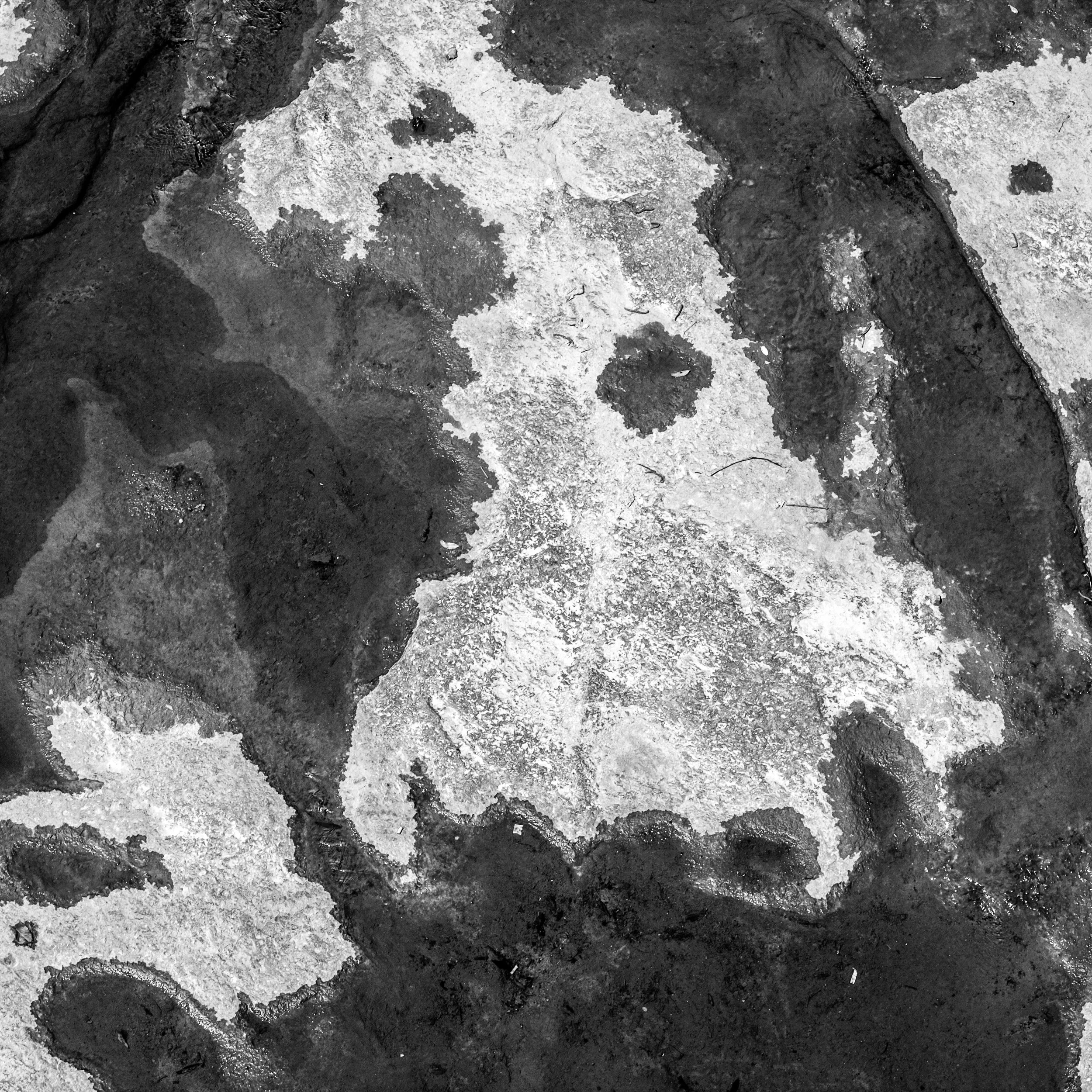
Walking back, I had to cross the river over the South Main Street bridge and looking down I noticed the flat rocky bottom of the river. Because there was not much water in the river, the bottom was partially dry. And I thought how much the rock and some of the still wet patches on it reminded me of maps. There in front of me, on the rocky river floor, the geography of an undiscovered world was visible.

Usually hidden by the flowing water, the dark and light patches on the rock looked like rivers, lakes, and mountain ranges on abstract maps.

A mysterious new world, waiting to be explored.

Where Once Through Taylors' Halls
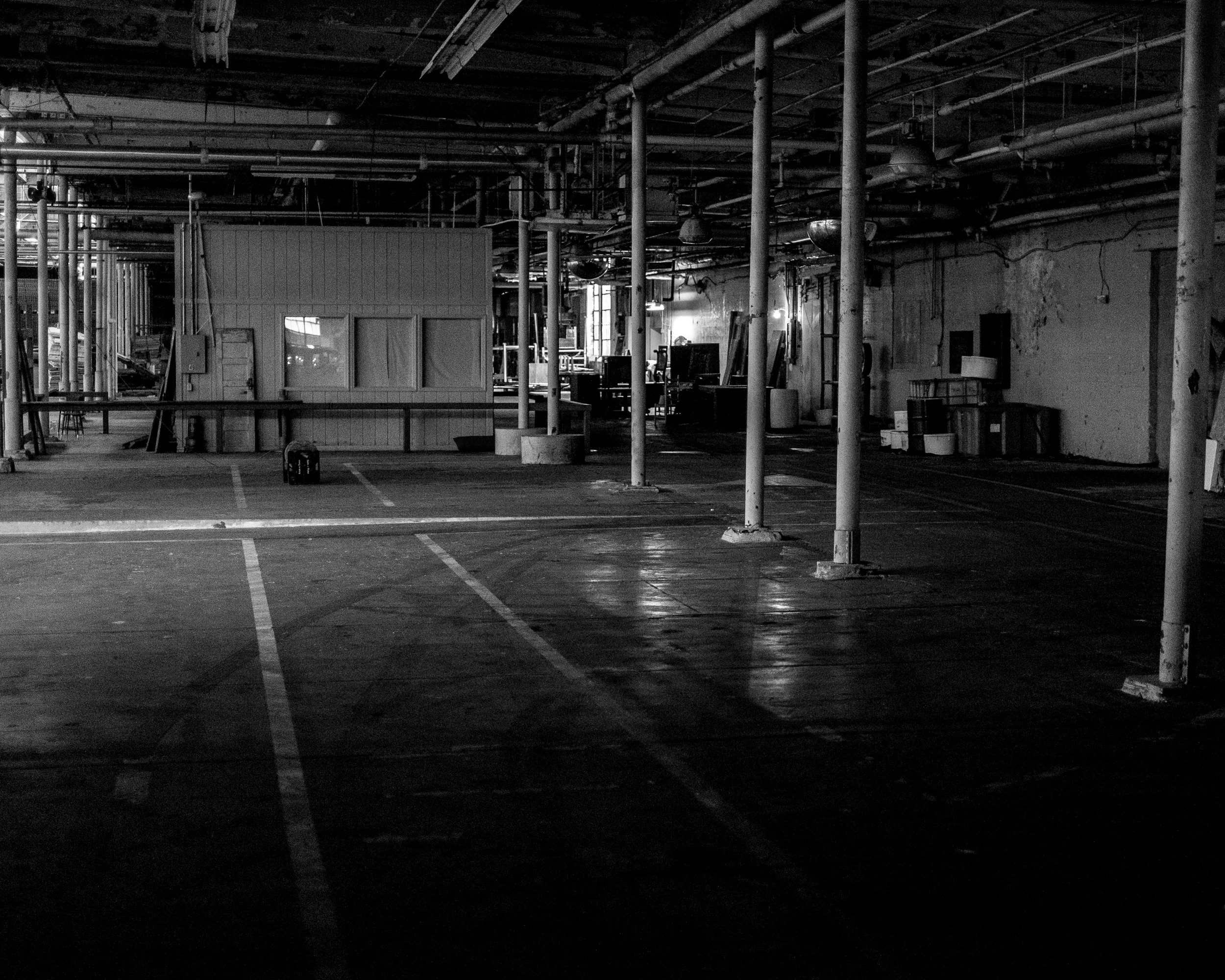
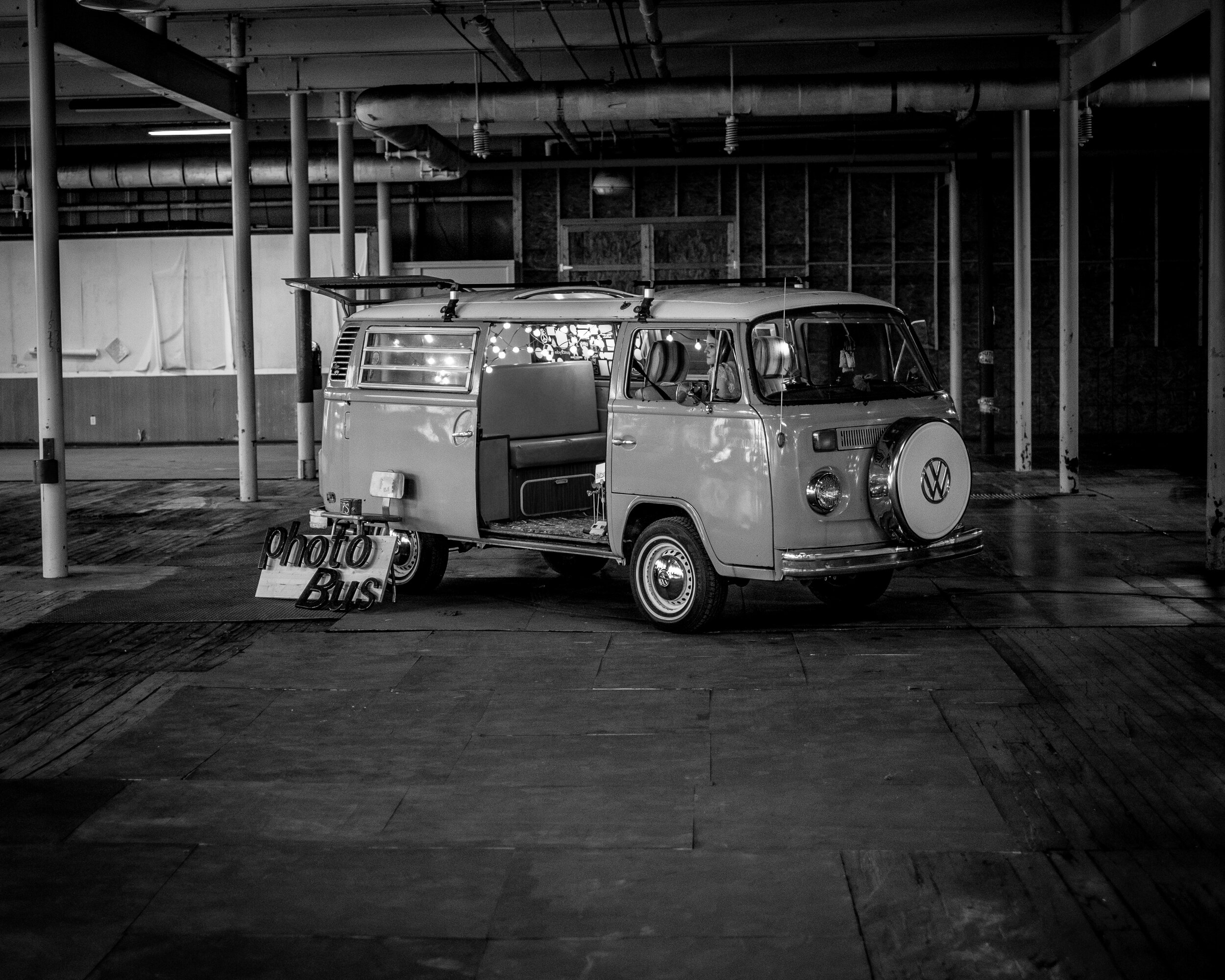
Where once through Taylors' halls
The sound of mighty weavers…
Where once through Taylors' halls
The sound of mighty weavers
Filled the air with Southern snow
Empty spaces now prevail

A wandering soul
A harbinger of better times
Exploring opportunities
To bring these vaults to life again

Gleaming floors lie in waiting
For new creators
To transform the past
Capturing the present
Liberty And Justice For All
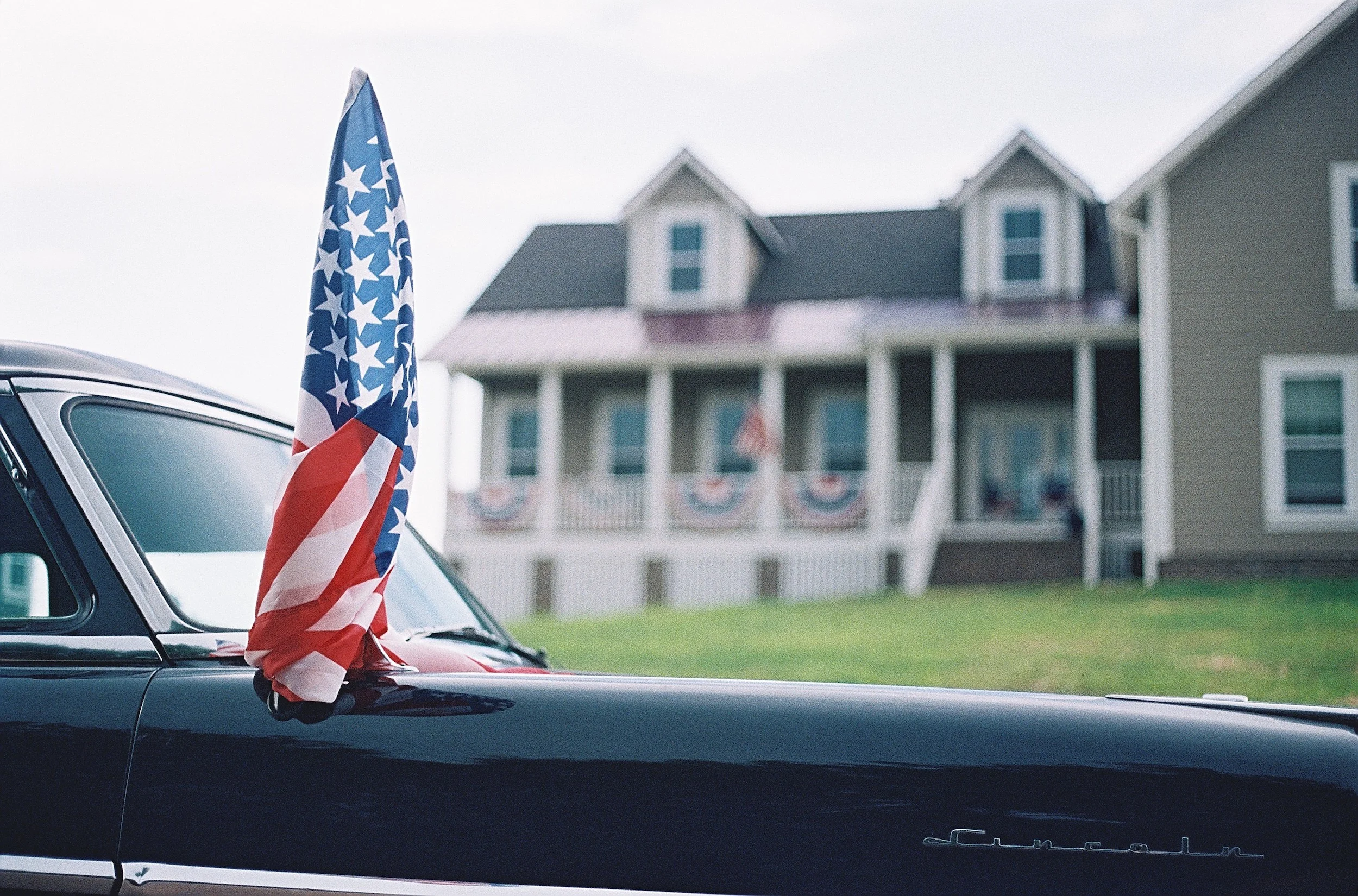
Liberty And Justice For All
Catching the gleam of early rays…
Catching the gleam of early rays
This symbol
Reminds a nation
How dearly contested to establish
And dearly contested to hold together
It was and is
One nation, still united?
Liberty
For all, or one-sided?
the Flag
Makes proud and reminds
About our pledge
To justice...

You Bought A Fine Art Photography Print, What Now?
Matting, Framing and Displaying Fine Art Photography Prints
You decided that you wanted to have some art in your house…
Matting, Framing and Displaying Fine Art Photography Prints
You decided that you wanted to have some art in your house.
You decided that you wanted to have photographic art in your house.
Maybe you even decided you wanted to become a collector of fine art photography.
So you bought a fine art photography print.
What now?
To enjoy your print in the best way for years to come you need to have it matted, framed and displayed correctly.
Use the links below to jump to the specific sections after the break:
Matting and Framing fine art photography
Displaying fine art photography
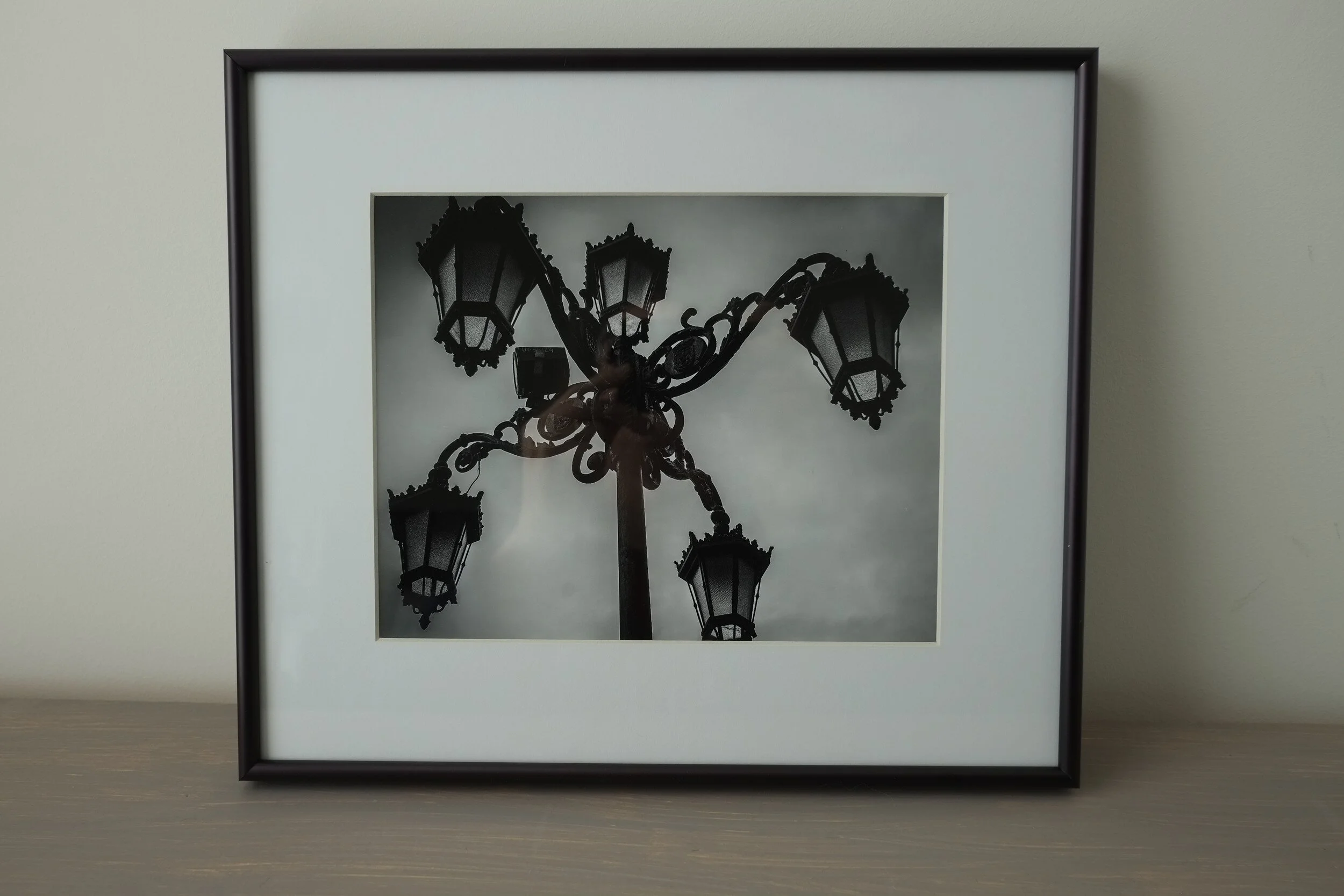
Matting and Framing fine art photography
You just purchased a fine art photography print in a gallery, or at an art fair, and took it home. Or maybe you bought it online and had it just delivered. You are excited, you unwrap it, admire the quality of the print, and are enjoying the colors or the tonality of the monochrome print. And then you realize you want to display it in your home or office.
If the print came matted and framed, I assume it was professionally done and you can go directly to the next step and decide how and where to display your print. If you are not sure, however, about the quality of the mat or frame your print came with, you should have this reviewed by a professional framer who can advise if re-matting or re-framing is needed.
Sometimes, however, prints do not come framed or even matted. And your first step should be to take care of this.
Matting
Each fine art photography print should be matted and framed to protect it from dust, dirt, and light.
The first step in this process is matting: the print is placed between a backboard and a mat. This not only will help to display the print at its best by making it stand out from its surroundings, it also is necessary to prevent the glass of the frame touching the print.
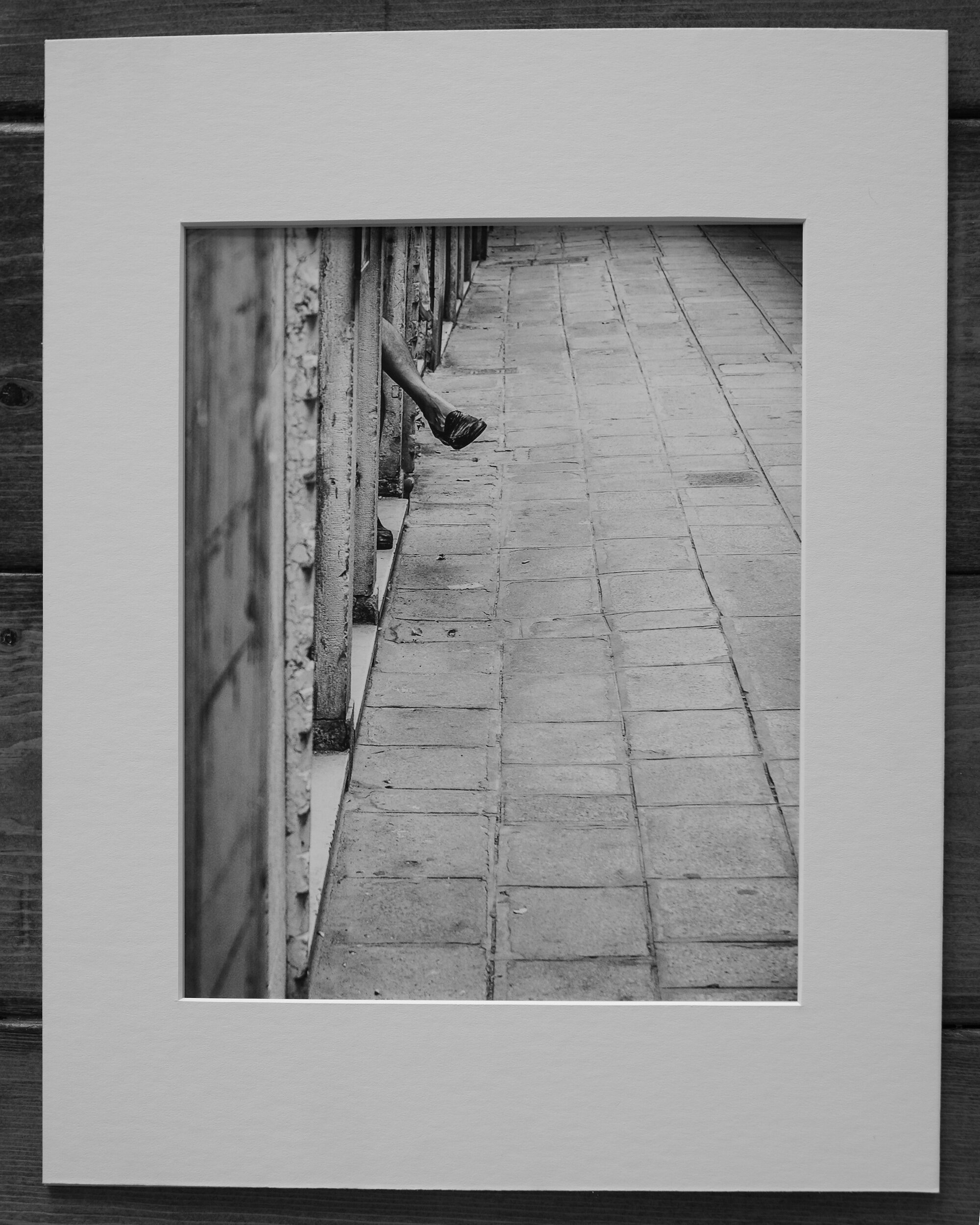
A convenient way to take care of matting and framing is to have it done by an experienced framer. In the USA shops like Hobby Lobby, Michaels, and Frame Warehouse have framing specialists who do a great job at a reasonable price.
If you buy un-matted prints on a regular basis, or if you create your own prints, you might consider investing in a mat cutter and do it yourself. It is relatively easy and inexpensive.
Whatever option you choose, there are some things you need to be aware of.
First, you need to decide what size and color mat you want, and what size the mat border and mat window should be.
A lot of this, of course, depends on your taste. Most photographic prints are framed with a white or off-white mat because this provides a nice clean look and the least distraction from the print itself. In some cases, however, it might be appropriate to use a colored mat. Using a color, for example, that matches the color scheme of the print. Or with black-and-white images, a black mat might add drama to the overall effect. It is also possible to use a colored mat with white cutting edges or to use two mats slightly different in size to create depth to the framing. This is an area where a framing shop can advise and show different settings.
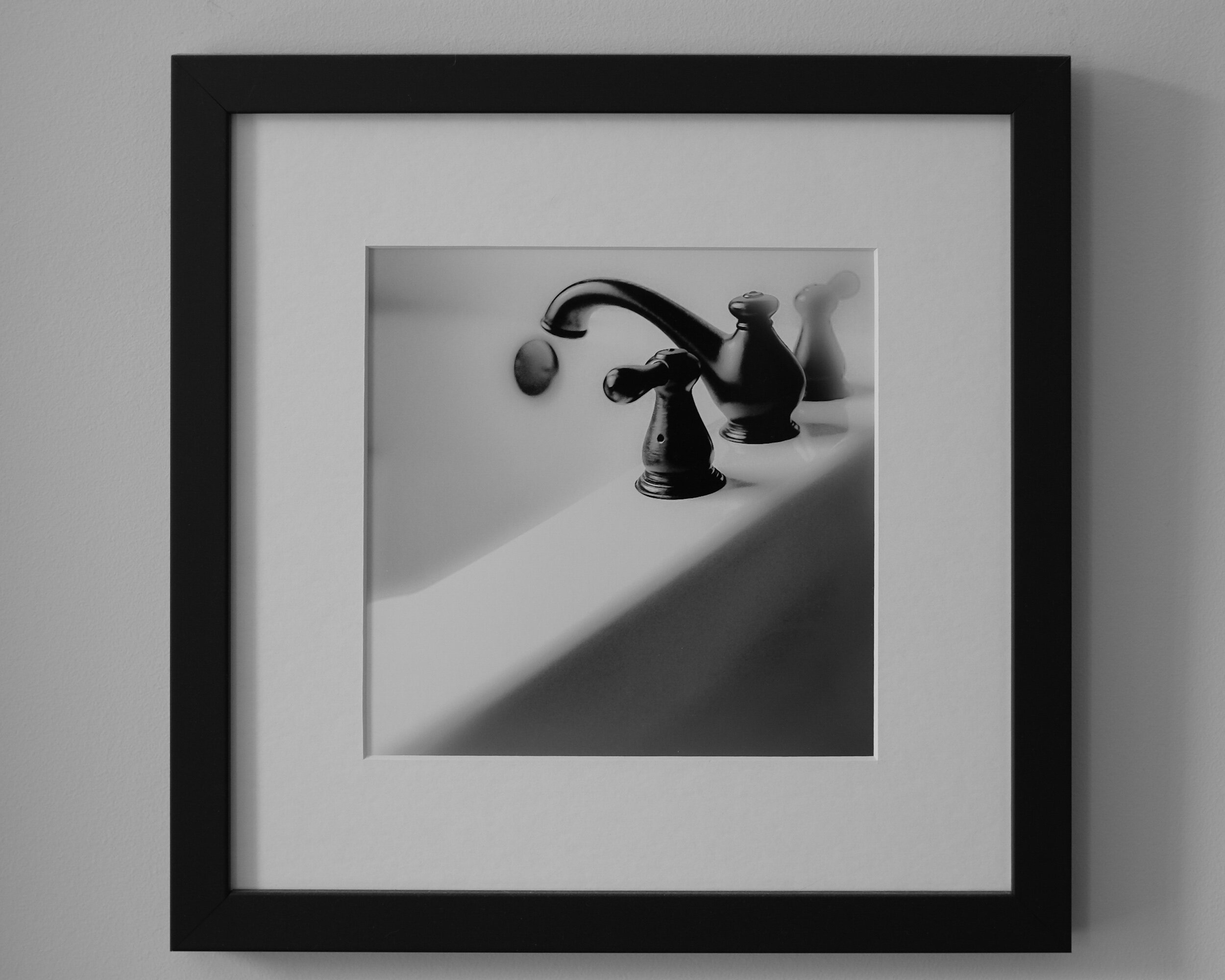
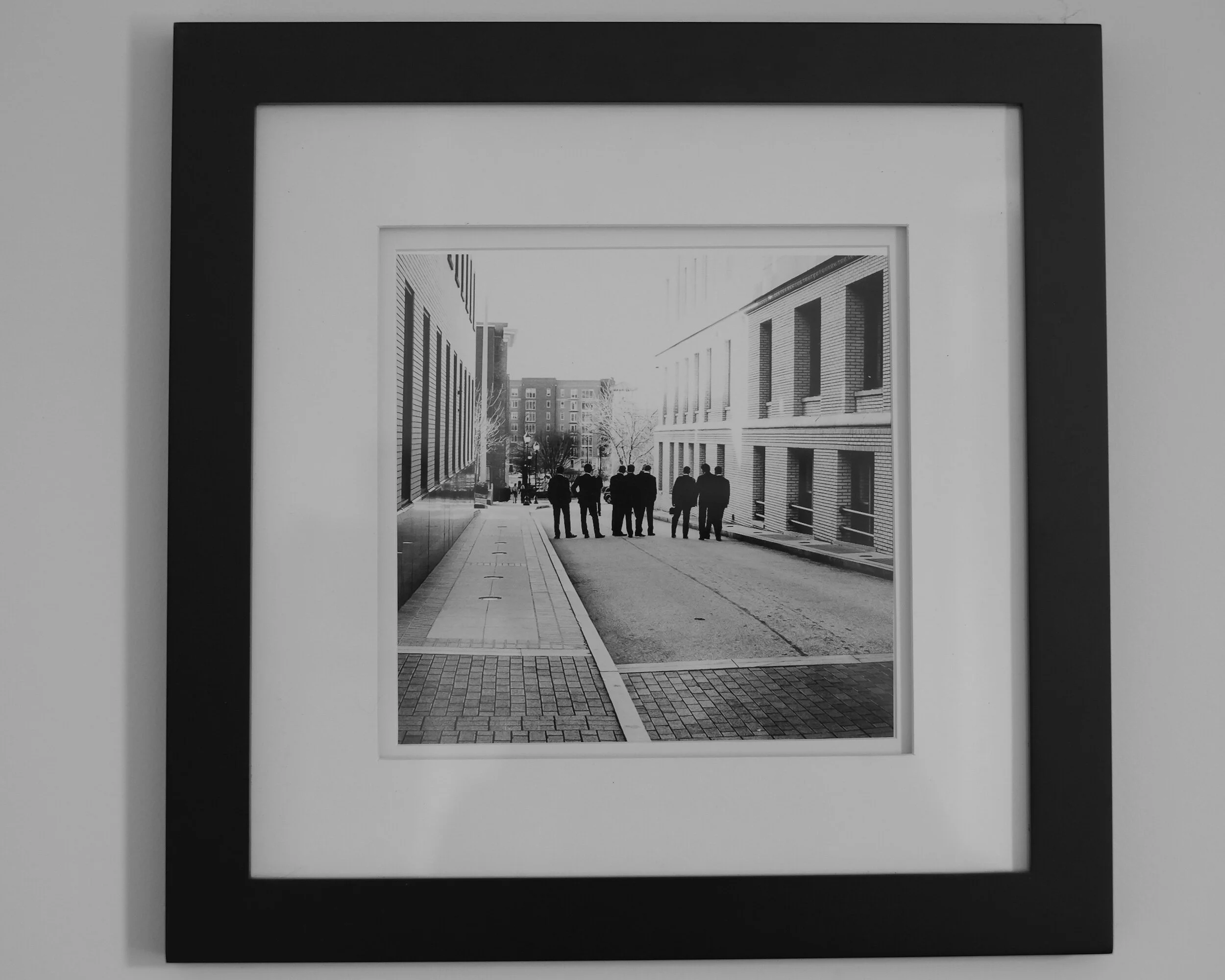
With regard to the size of the mat, you should also consider if the mat window will be exactly the size of the print, or slightly bigger. Limited edition, signed prints can have the signature and other information written under the image. It is a matter of preference if you want to show or not show these. If the image is printed on deckle-edged paper (paper with ragged or feathered edges) you might want to have the window of the mat a bit bigger on all four sides to show the paper edges.
If you choose for a mat window that matches the size of the print, you need to keep in mind that the mat window usually will be slightly smaller than the print size (1/16 to 1/8 inches on all four sides) to ensure the print will be fully enclosed by the mat.
You also need to decide on how the print will be mounted to the backboard. The best way is to use photo corners. This allows the print to ‘breathe’: whatever environment you will display your prints in, and irrespective of how closed the frame is, there always will be some impact from humidity. Having the print loosely fitted with photo corners will allow it to expand and extract without creating wrinkles. If needed, the photo corners can be strengthened with mounting or hinging tape (just make sure the tape does not touch the print).
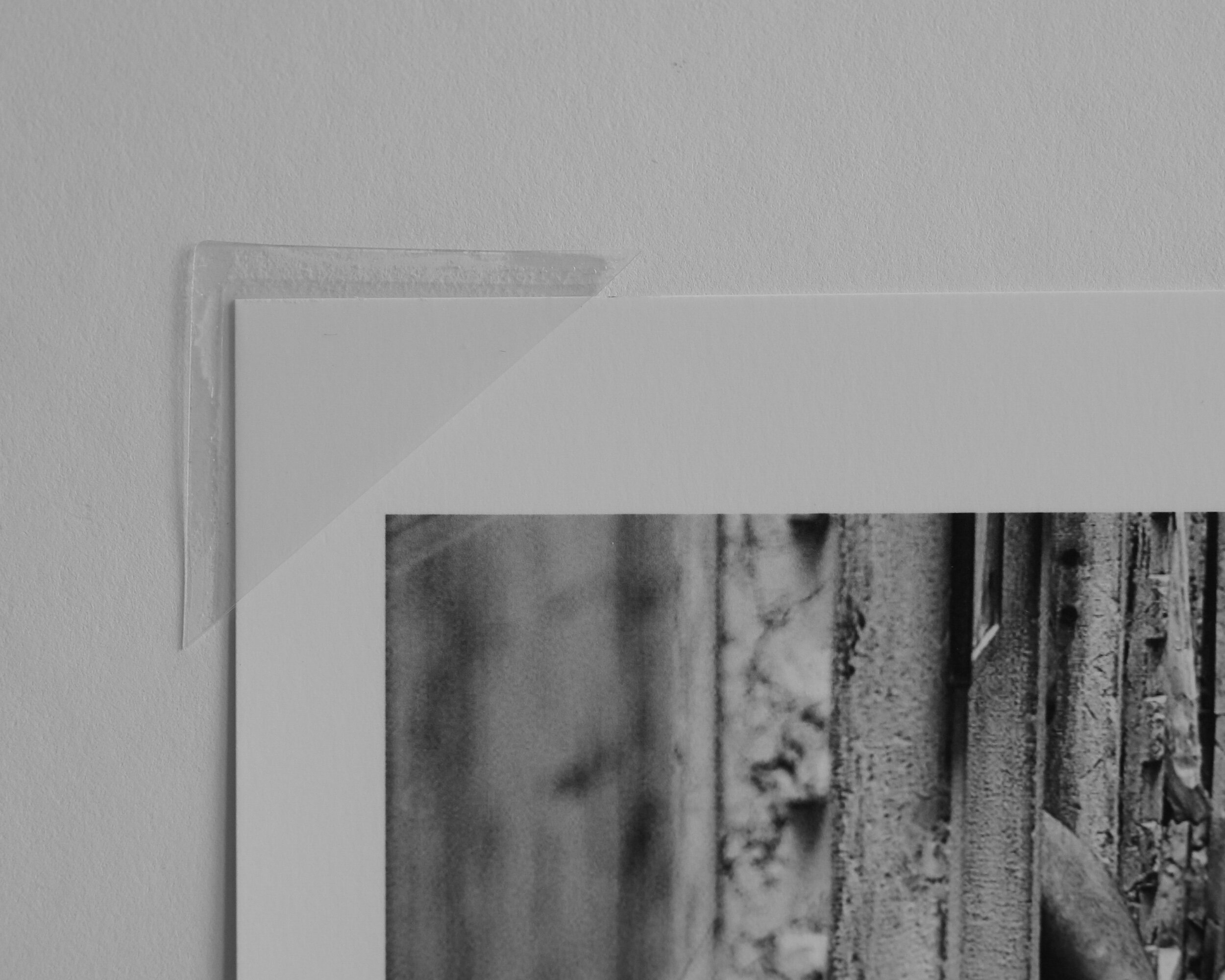
Alternatively, you can mount the print to the backboard with mounting tape. This, however, I do not recommend because you are attaching something to the back of the print that might be difficult to remove, which might impact the value of the print and at the least will make it more difficult in case you want to re-mat the print in the future.

One point of caution: whatever you do, do not dry-mount your print to the backboard!
With dry-mounting, the print is permanently fixed to the backboard. This not only can impact how the print looks (in some instances the structure of the backboard can be visible through the print); dry-mounting is not considered an archival safe way to mount prints and it definitely diminishes the value of your print.
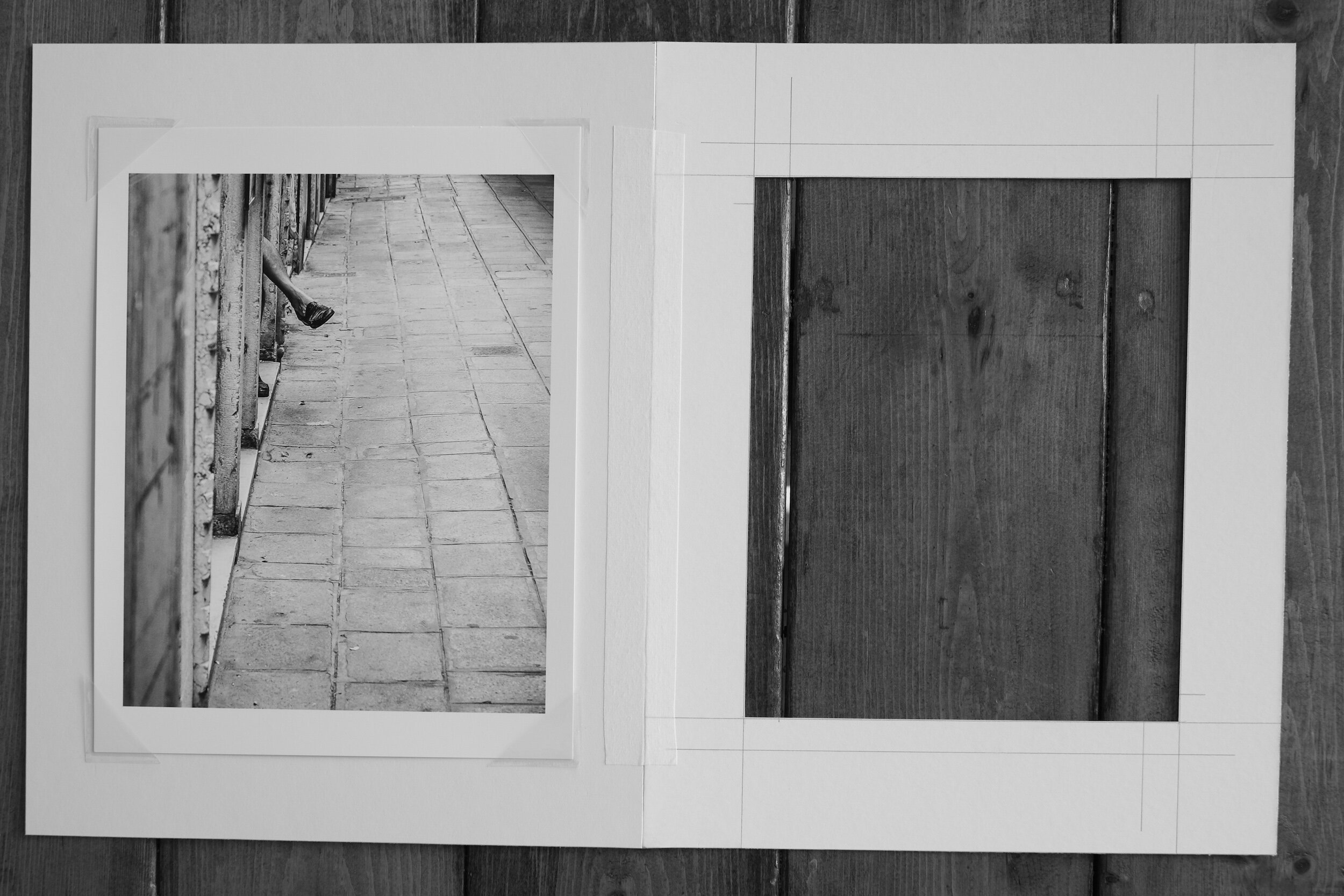
Lastly, and this might be a no-brainer, but don’t forget to always use archival quality (acid-free) materials. The acidity of regular paper and board will impact your print in the long-term and lead to discolorations.
Framing
The next step in preparing your print for display is framing.
The frame serves two purposes. The first is to protect the print from dust, dirt, and light. The second is to display the print in the best possible manner.
In order to protect the print from light and dust, the frame will be closed at the front with glass or acrylic.
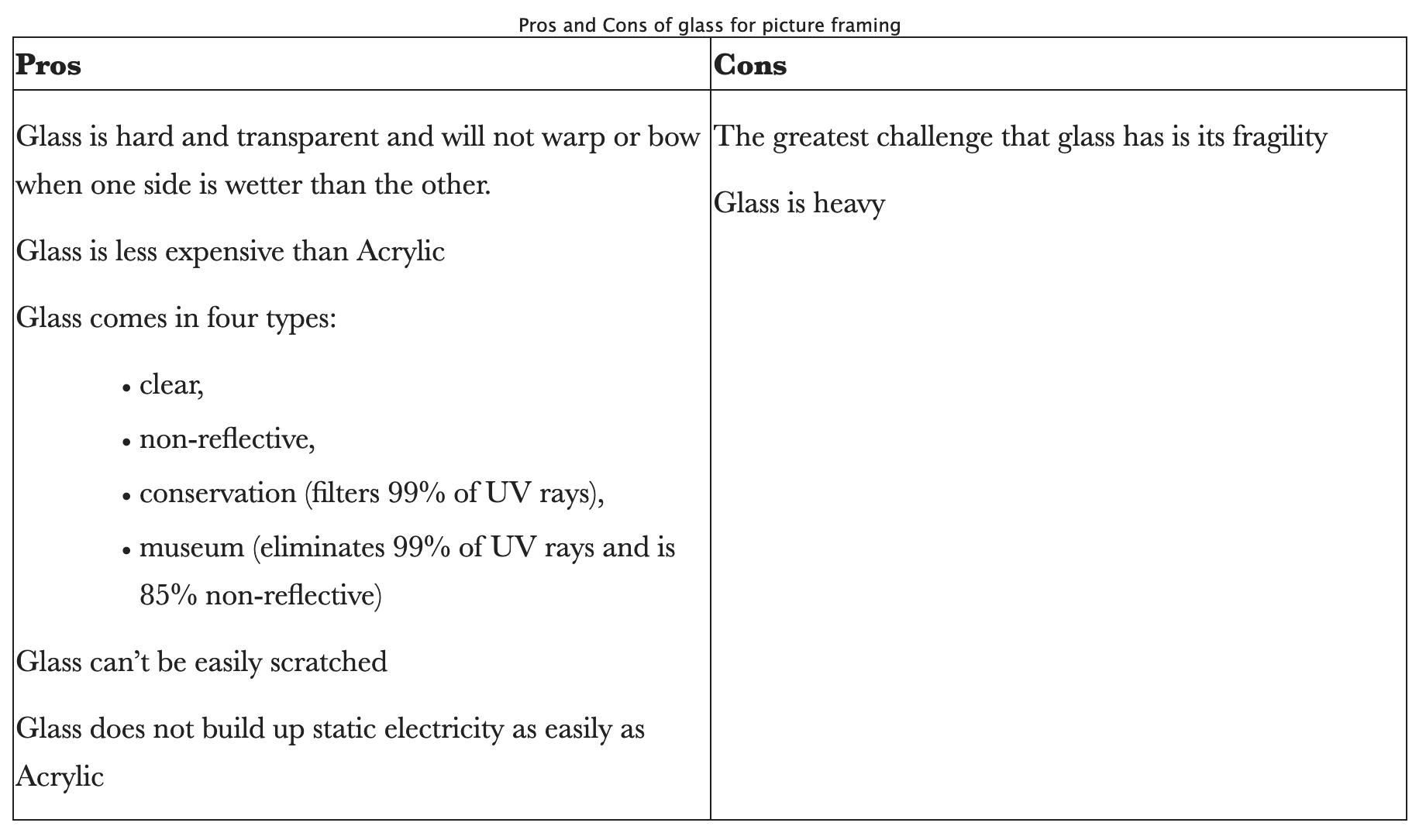
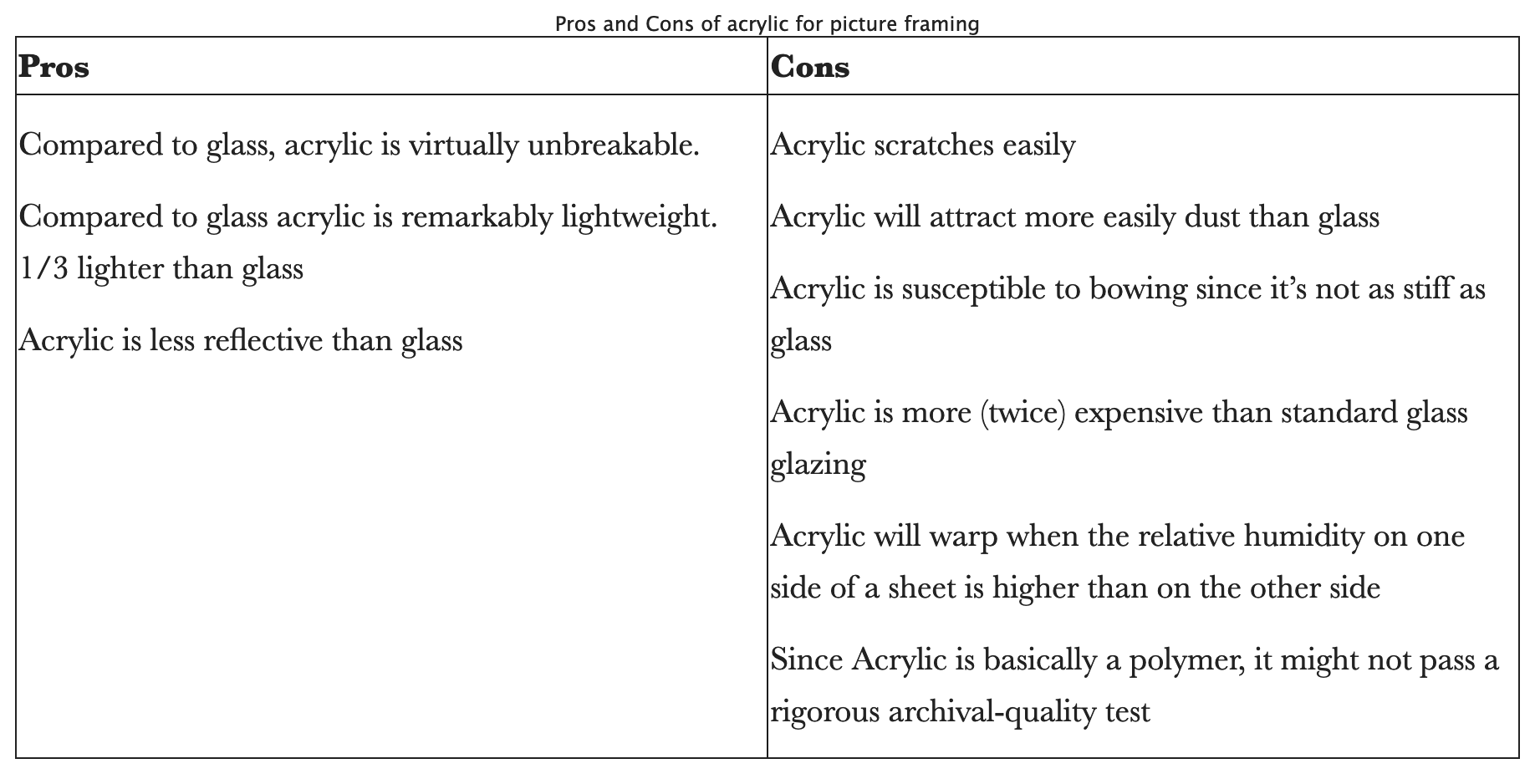
My personal preference is to use conservation or museum quality glass. Acrylic, however, can be considered a good alternative. To help you make the choice that best suits your needs the tables below provide the pros and cons of both.
The front glass and the mounted and matted print will be placed in a frame that holds everything together. The frame will also need to match the print to display it in the best possible manner.
Frames are available in a multitude of materials, colors, and sizes. My preferred frame is a simple, unadorned, black frame that size-wise (width) matches the size of the print and the mat borders. The material of the frame can be wood or metal. This sometimes also is called gallery framing.
Depending on the color scheme of the print, the subject of the image, and of course your personal preference, nothing, however, prevents you from using very broad frames, colored frames, ornamental frames, etcetera. The choices are practically unlimited.
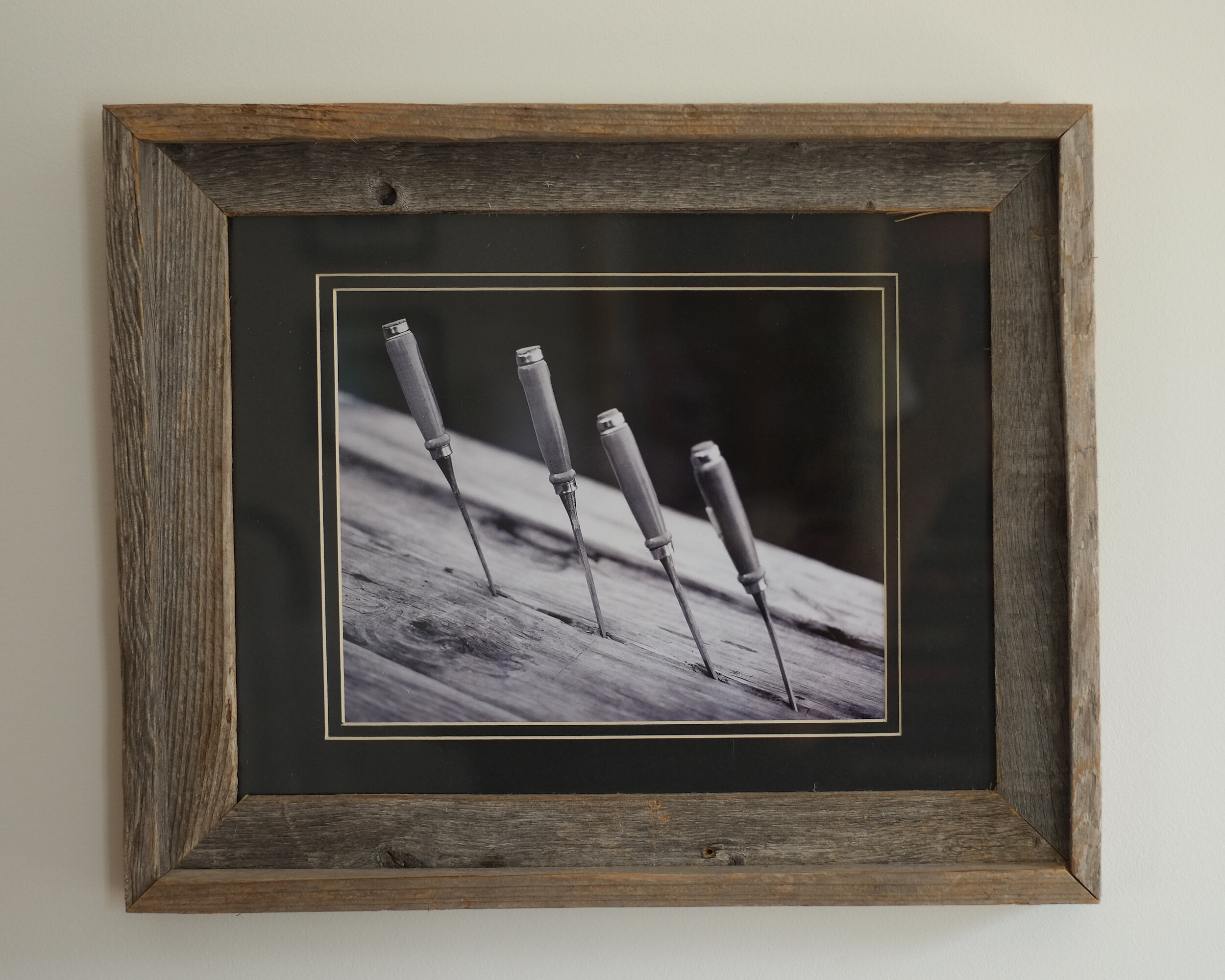
I actually have a couple of black and white prints of chisels mounted in reclaimed wooden frames. The wood of the frames matches and adds to the structure of the wood in the prints, which in this case enhances the impact of the print.
Displaying fine art photography
Now you have a matted and framed photographic print ready for display.
The usual way to display your print would be hanging it on a wall. Depending on the size of the framed print, and whether it is part of a series, you might consider hanging it on its own to create a specific focal point or arrange it within a group of prints.
I have created this Pinterest Interior Design board, to provide some ideas on how to group framed prints.
Another way, however, to display one or more framed prints is to put them on a shelf. Since you don’t need to put any nails in your walls or install expensive rail systems, you might consider this when you want to be more flexible with your displays, for example when you have several prints you want to change on a regular basis.
However you want to display your framed prints, keep in mind that it is always best to avoid direct light, even when you invested in conservation or museum grade glass for framing.
Sunday Morning Anticipation
Sunday Morning Anticipation
Early Sunday morning…
Sunday Morning Anticipation
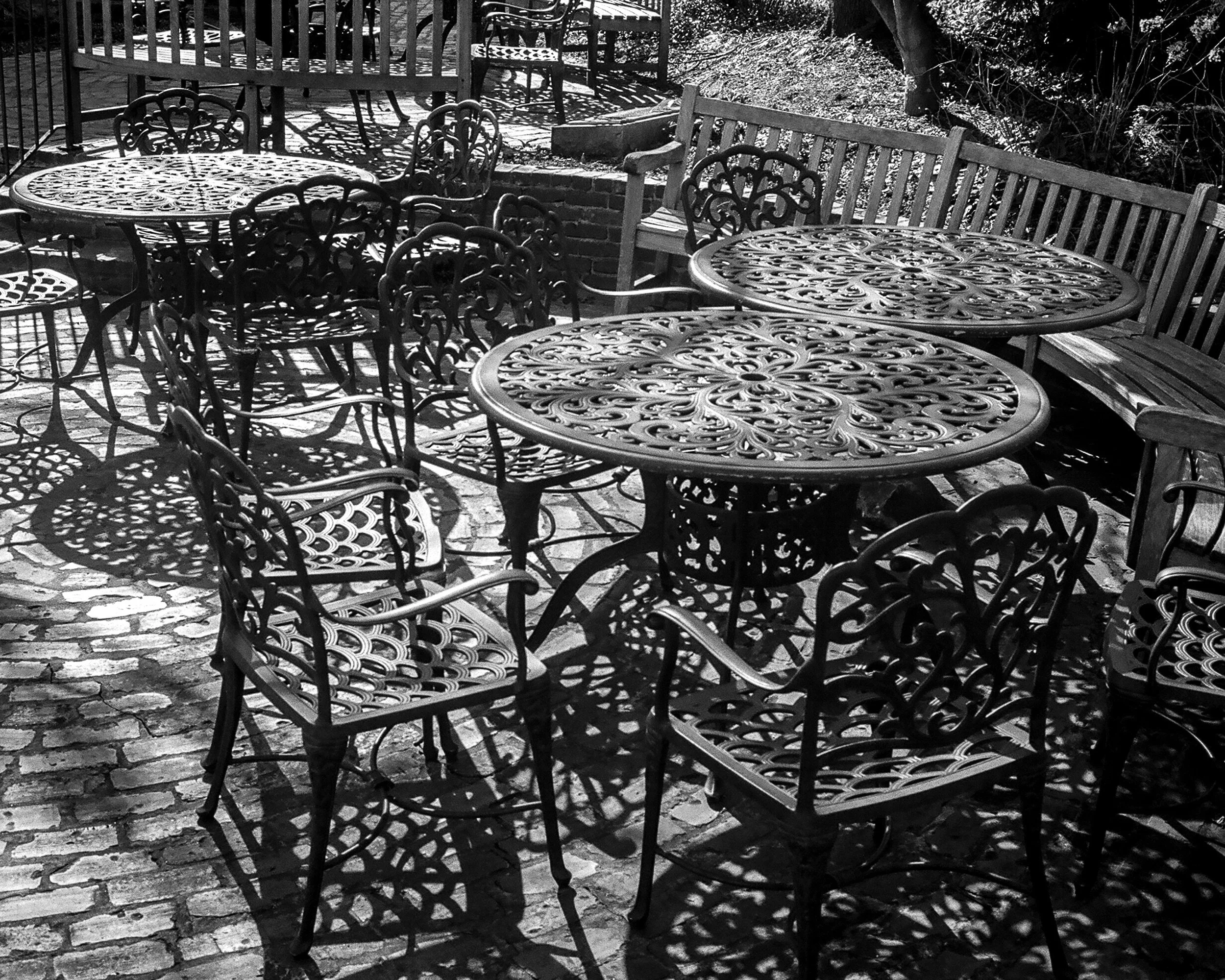
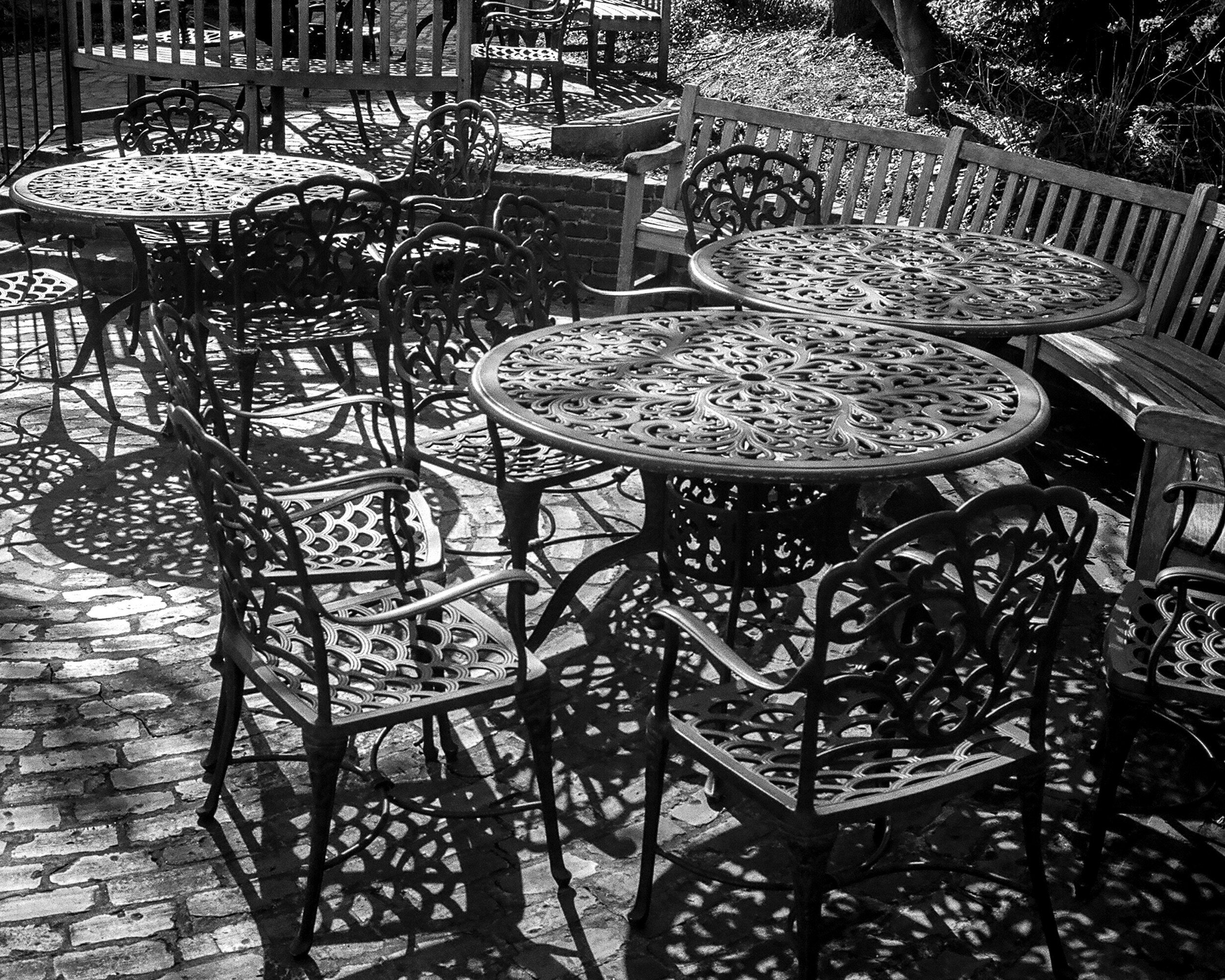
Early Sunday morning
Everyone still in church
Tables cleaned, waiting
for patrons to come
Anticipation of clinking
cutlery, and cheerful
conversations
Everything is ready
for savory dishes, glasses of wine
But not yet
All is quiet still
Soon they'll be here
When There Is No Color Anymore
When There Is No Color Anymore
When there is no color anymore…
When There Is No Color Anymore
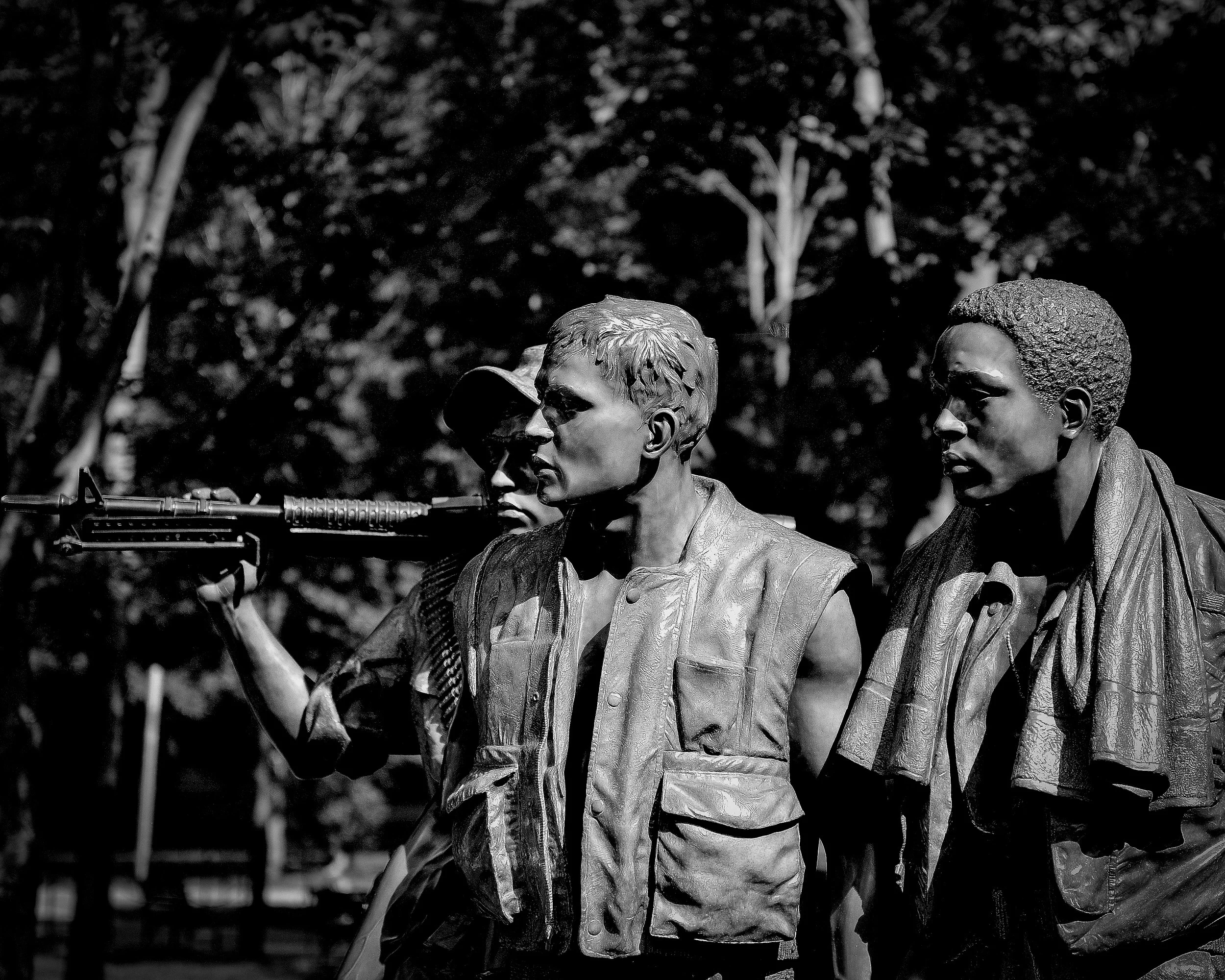
When there is no color anymore
When ancestry is forgotten
When we're all covered in the same brown mud
When we color the earth with the same red blood
When we cry together, holding each other's arms
When we stand together, shielding each other from harm
When we think about our homes; how different they might be
And still, we all know what in our minds we see
When we fight together in a faraway war
Who then, dares to speak, who wasn't here,
About how different we are
About all those things we shouldn't share
Who then, doesn't want to see
That fighting together made us blind
For any race, but humankind
And the only place we want to be
Is at home,
At rest,
In peace

After The Soul Is Gone
Grainy Fragments Of Fading Memories
Early 2016, after my mother suffered a couple of consecutive strokes that triggered accelerated loss of…
Grainy Fragments Of Fading Memories
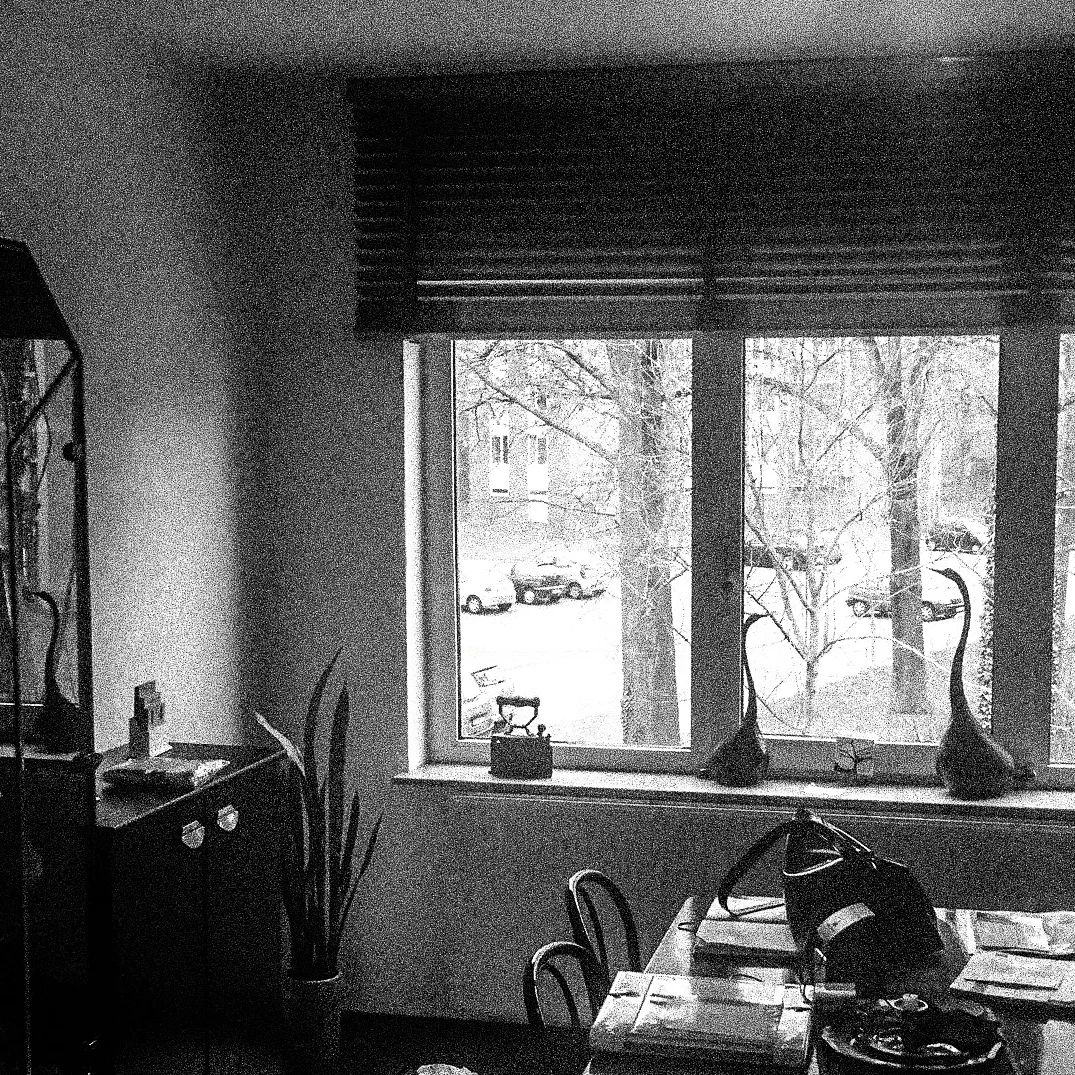
Early 2016, after my mother suffered a couple of consecutive strokes that triggered accelerated loss of memory (dementia? Alzheimer's?), she needed to move into an assisted living facility.
My sister and I had the difficult task to empty the apartment where she had lived for almost 50 years since July 1968.
Although mom already cleared out quite some stuff after my dad passed away in 2010, there were still furniture, some clothes, books, pots and pans, ornaments, and other loose ends of her daily life.
We had to sort through these remains of a full life and decide what to keep, what could be donated or should be trashed.
It was a strange experience: going through cabinets and boxes, finding photographs, mementos, and other memories, among more mundane artifacts. An intimate peek into the last days of my mother's life as an independently living person.
Most striking, however, was that everything except the most personal items was reduced to just ‘objects’. The personal connection was almost totally non-existent: the soul of everything was gone.
Before I left, I took several pictures to create some final memories from the place where my mom and dad, my sister, and I lived for so many years. Looking back at these, however, I see only an empty shell. I still have my memories to cherish, of course, but the pictures of the apartment are just what they are: pictures of an empty apartment, devoid of the personality that made it a home.
I wanted to create memories but instead documented loss, like collecting grainy fragments of my mother's fading memory...


Socrates' Shadow
Socrates' Shadow
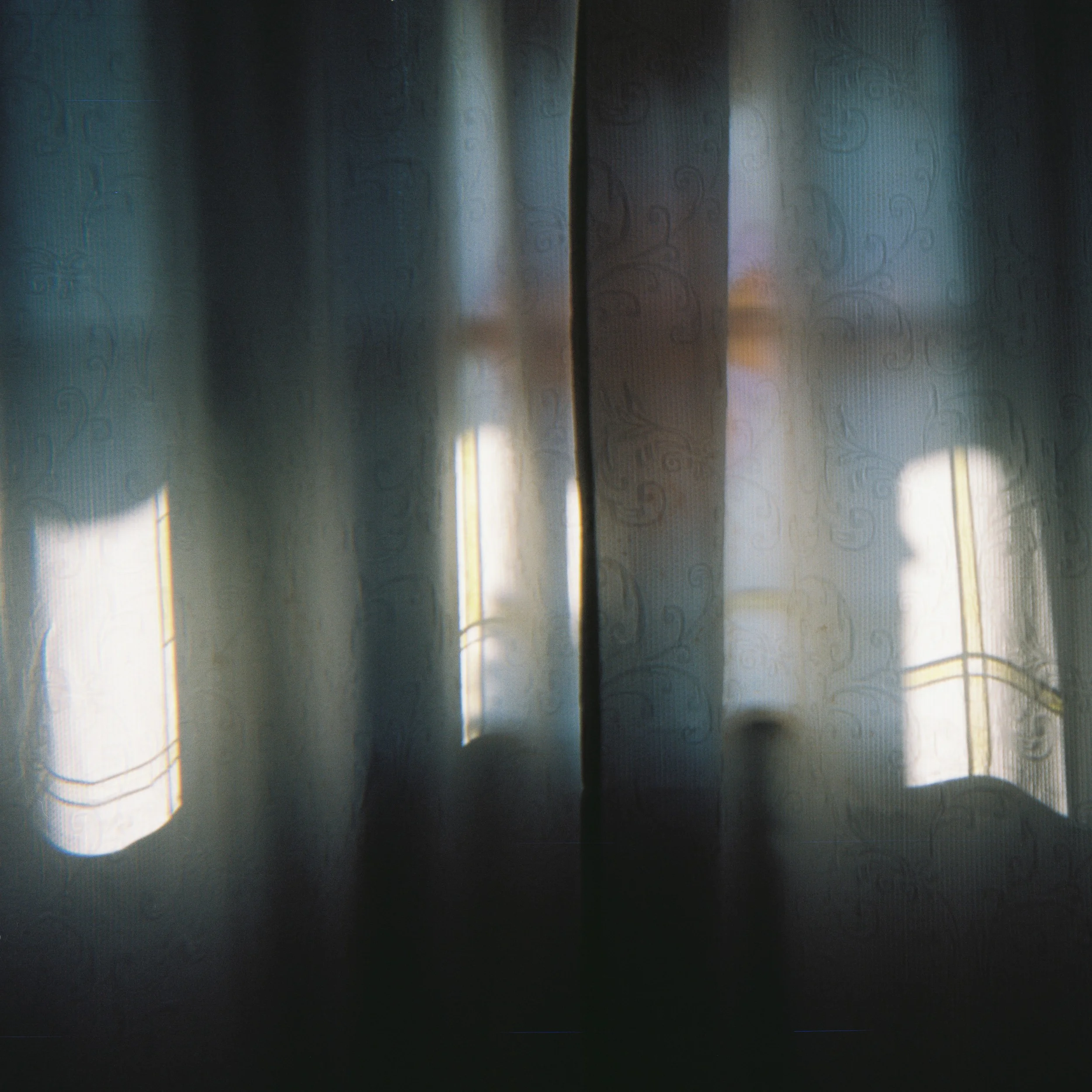
Pleated squares of light…
Socrates' Shadow
Pleated squares of light
Subtle patterns, colors softened,
forms implied
Photons caught on emulsive,
transformed into digits
Do we see what we see?
My camera, my cave

How To Become A Collector Of Fine Art Photography
Anyone with an interest in fine art photography can become a collector
Photography has come a long way since its inception and has established itself as a recognized and…
Anyone with an interest in fine art photography can become a collector
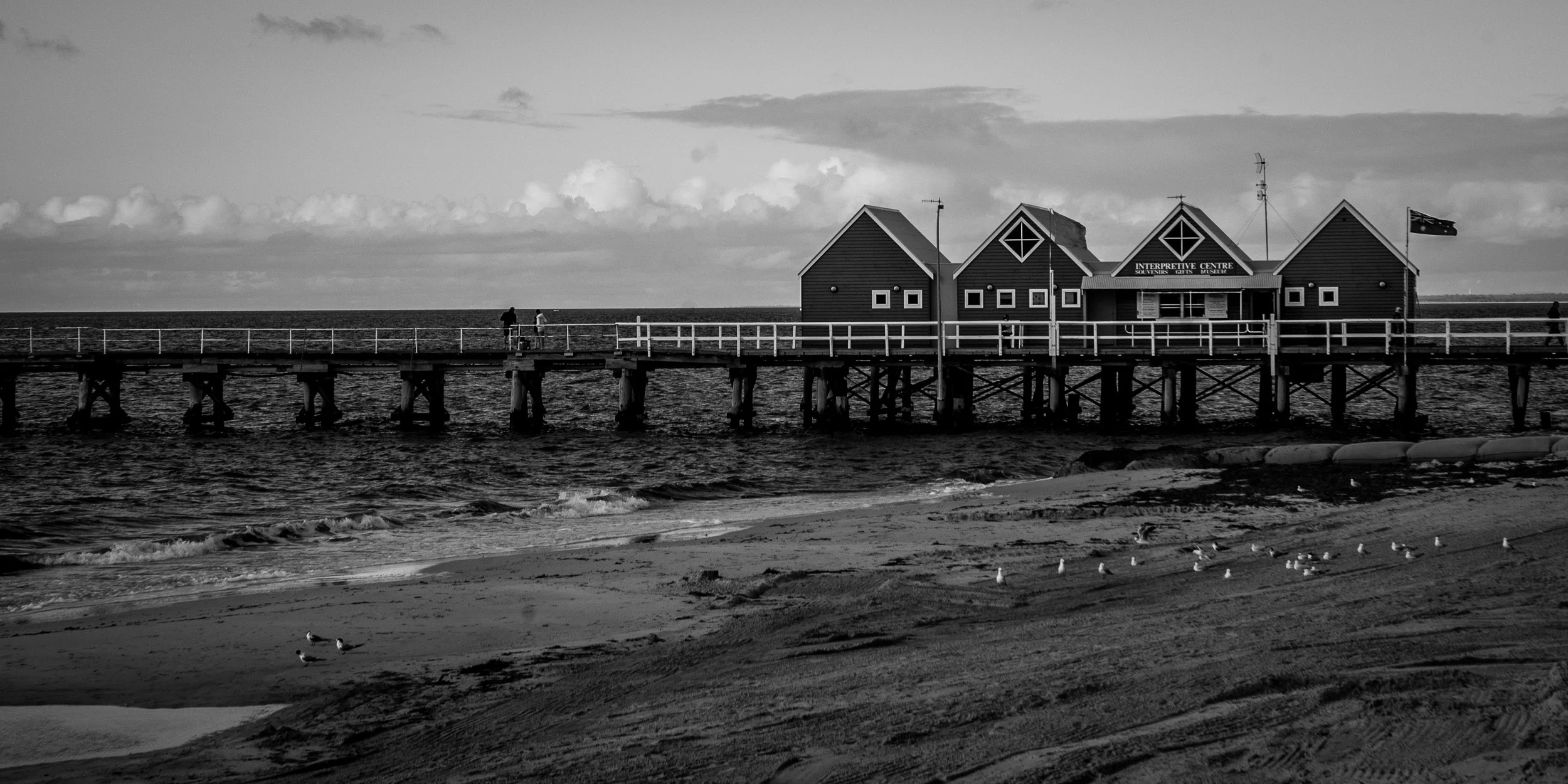
Photography has come a long way since its inception and has established itself as a recognized and appreciated form of art. And although there still is some discussion in certain circles about where precise photography falls in the spectrum of art, it specifically during the last three decades has become an area of focus for art collectors and investors in art.
So how then can you become a collector of fine art photography prints?
Read further after the break.

I have two easy to follow recommendations.
Buy what you like
There is a wide range of photography genres to choose from; street photography, conceptual photography, architectural photography, documentary photography, to name a few. Furthermore, individual photographers, individual artists within each genre of photography have their own style, their own way to express themselves. And although not all genres and photographic styles are called ‘fine art’ per se, the genres and styles do not specifically determine whether photography is worth collecting or not.
This leads to my first recommendation with regard to becoming a collector of (fine art) photography: as with all art, buy photography because you like it and it moves you.
You should buy fine art photography prints, not because someone else thinks it is a great image, or because someone else thinks it is a good investment. If a specific photographic print doesn’t appeal to you personally: don’t buy it.
My second recommendation after the break.
Get educated
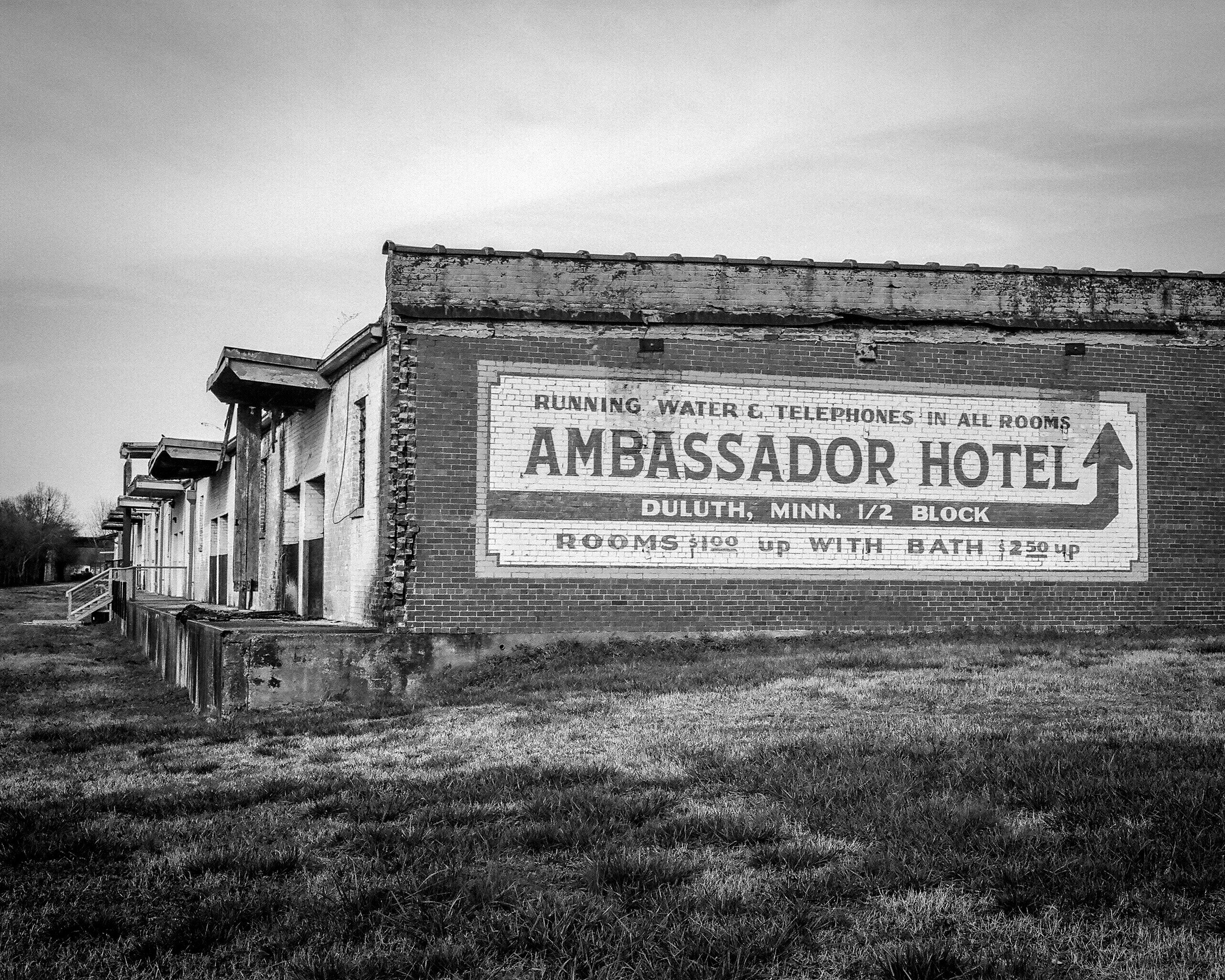
Deciding what type of photography you like is of course not possible without knowing what is out there and actually looking at different genres and styles. My second recommendation, therefore, is to get knowledgeable about photography.
Galleries
Start visiting art galleries: to get a good feeling and overview of the different photographic genres, the type of images that appeal to you, and the photographers that create images and prints you like. And visit as many as you can.
When I talk about galleries in this context, I mean actual brick-and-mortar galleries. Not only can gallery staff be helpful guides in your photography art education, there is also a big difference between seeing a print in real life as compared to viewing an image on-screen.
Actually, make sure you subscribe to the mailing list of one or more galleries in order to get invited to their openings and special events. These not only provide great opportunities to get to know the photographers and see their tangible prints, these events also provide opportunities to get in touch with and talk to other (aspiring) collectors of photography.
I am very fortunate to live near Greenville, SC which has a great concentration of galleries. And although all represent great artists, I specifically like the Artists Guild Gallery of Greenville which represents artists who work in several media, including photography, and the SE Center for Photography, which is a gallery specialized in photography only.
While I urge you to visit brick-and-mortar galleries, you certainly also need to visit online galleries. There are several art sites I recommend you check out because of their excellent offerings of fine art photography, or the role they can play in your fine art photography education.
More after the break.

Museums and Art Centers
Other great resources for becoming more knowledgeable about fine art photography and collecting are art museums and (non-profit) art centers. Maybe you have one or more of these in your area displaying photography or offering photography courses. Make sure you visit and join these; sometimes curators give talks about the art of photography, and on collecting art, or they even have specific courses on these subjects available.
Art Fairs
Other opportunities to see photography and meet artists are art fairs and art expos. A great example is the annual Artisphere event here in Greenville, SC where multiple artists – including photographers – have their work on display and for sale, and during which galleries have extended opening times to the public.
Books and Magazines
And of course, there is literature: many books have been written about art and collecting art in general, and about collecting fine art photography specifically. Read them, see what their authors have to say about specific photographic genres, learn how to ‘read’ an image.
And there are the photobooks and magazines: many photographers have produced photobooks about their projects, there are magazines that showcase photographers, and discuss their work.
Take Action
So what is holding you back? Go out, visit galleries, museums, and art fairs. Read books and discover new photography in magazines. Talk to gallery owners and other collectors. And buy your first fine art photography print to start your collection.
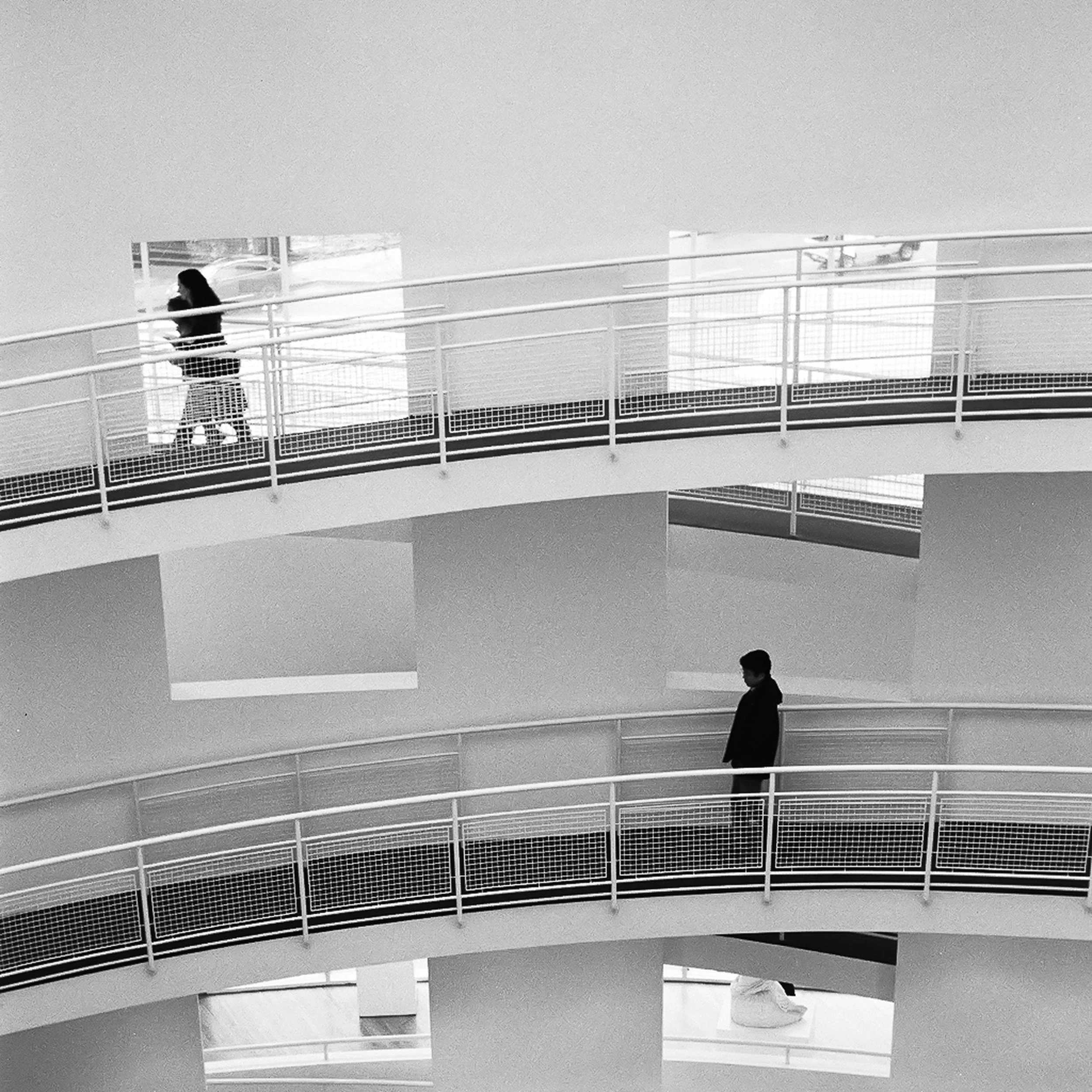
Can You See Me Now? (A Haiku)
Can You See Me Now?
Hello, Peekaboo…
Can You See Me Now?
Hello, Peekaboo
Unconscious museum play
Hiding in plain sight

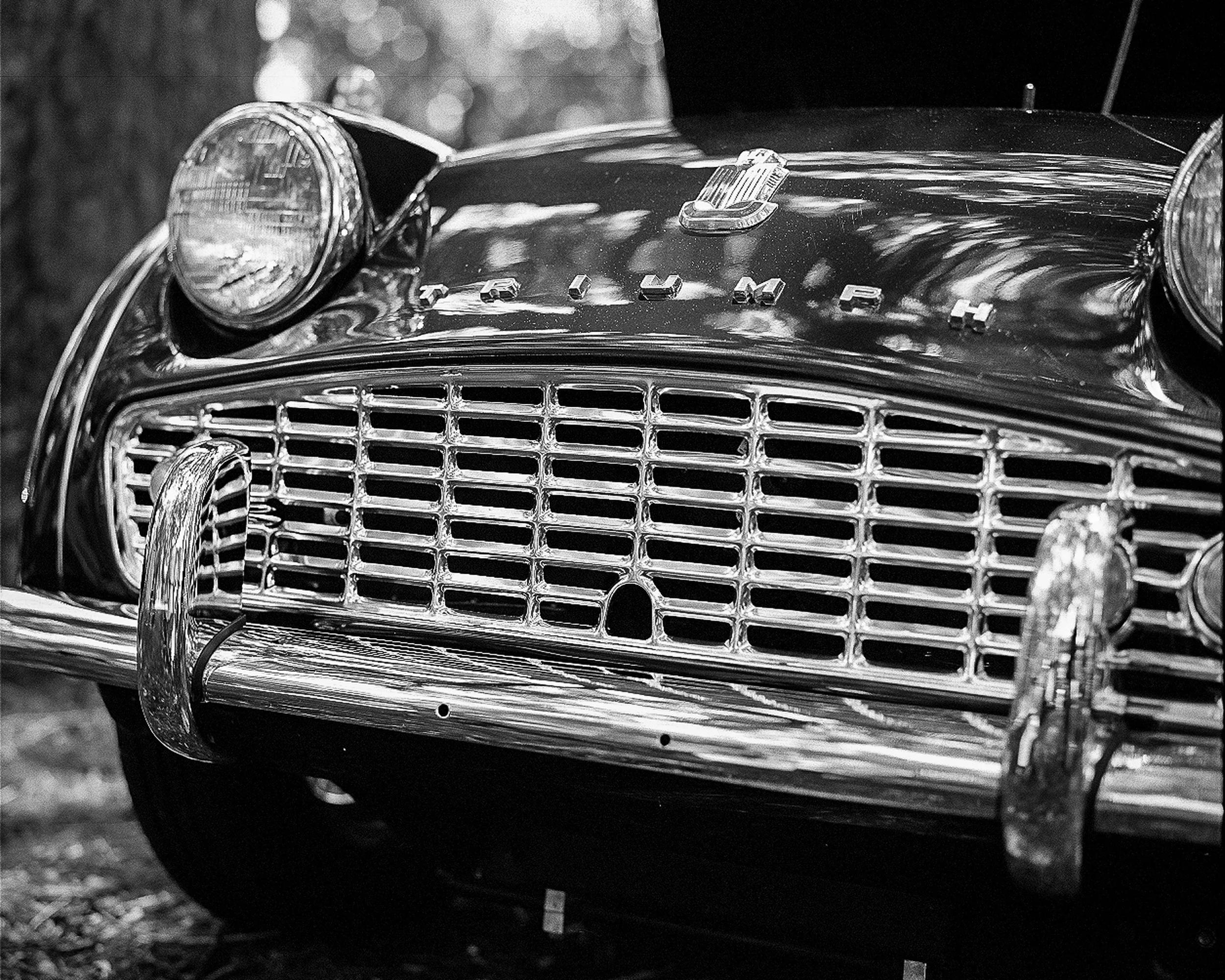
Image of the Month: Triumph
Images Of A Vintage Triumph Car To Soothe A Terrible Experience
Last week was a really bad week…
Images Of A Vintage Triumph Car To Soothe A Terrible Experience
Last week was a really bad week.
While stopped at a traffic light with my 2002 Mustang convertible, a car hit me from behind and pushed me into a third car. I was sandwiched, all three cars were terribly damaged, and at the end of the week the Mustang was officially a 'total loss'.
A 2002 Mustang V6 convertible is not a vintage car (yet), but I liked this car very much. It is not really a muscle car like its newer versions, but it felt more like the American version of an MG, or other small sports car. It rattled, made noises, and was quirky.
And now it is gone...
Luckily my oldest daughter finishes her last week of technical college this week, and we are able to shuffle cars until she goes to university in August. My wife now drives my daughter's car, and I drive my wife's Kia Sorento. Not a bad car, but...you know...
To soothe the pain a bit, I went back to some images of a vintage Triumph I created in 2014.

I made these images at the Gallabrae: the Scottish Games that each year are held on the grounds of Furman University. Besides the games, the music, the food, and the Border Collie demonstrations, it also features a British Car show. The smooth lines, shining paint, and gleaming chrome of the vintage British sports cars on display provide great photo opportunities.
The 2014 Gallabrae was the first time I took the Mamiya RZ67 Pro II outside to shoot handheld. Although this is a heavy camera (aka "The Beast") with a mirror slap that equals the recoil of a small rifle, the mass of the camera dampens the mirror slap sufficiently to allow handholding with shutter speeds as slow as 1/60 of a second.
So this month's "Image of the Month" actually is a set of several images.

The film I used that day was Kodak Portra 400. A very versatile color film, which in 120 size and with the Mamiya creates about 6x7 centimers size negatives. I like this format very much, because the 6:7 aspect ratio of the negatives can be resized with almost no cropping to the 4:5 aspect ratio which I prefer for my prints.
But "wait!" you will say, "you mentioned you used a color film, while the images I see here are black and white?!"

That is correct. While most of the images I made that day look great in the colors Portra creates, for the car images the colors in the backgrounds and reflections were too distracting. I converted them to black and white in Lightroom, which resulted in more balanced images focusing on the details of the cars.
I am very pleased with the final results of the images above, and other images of cars I made that day, which are included in my Vintage Cars portfolio.
And looking at them today makes me forget, at least for a moment, the loss of the pony car.
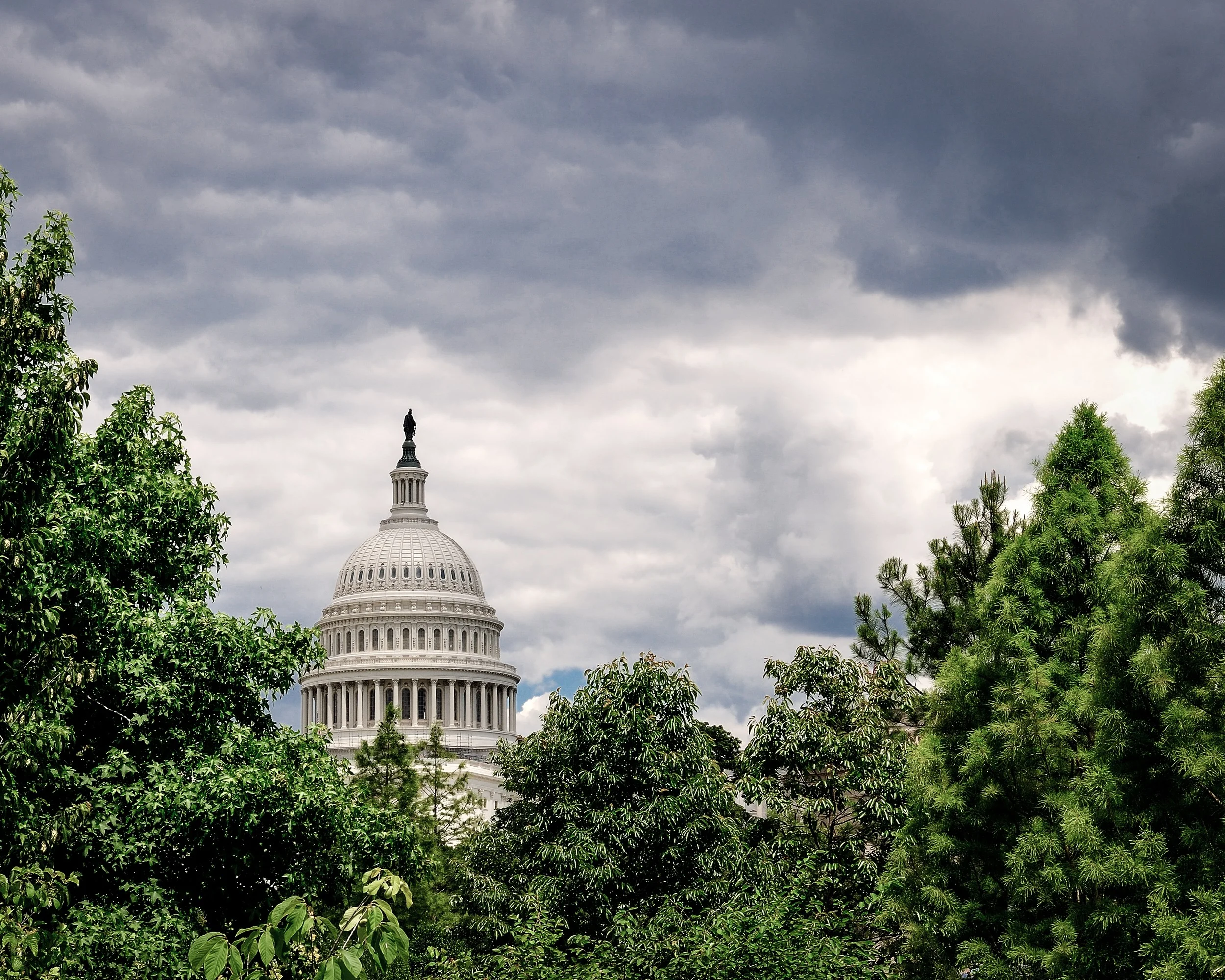
We, The People
We, The People
Have selected you,…
We, The People
Have selected you,
541 wise women and men
Do you remember us?
You can't hide behind the bushes
Freedom is watching you


5 Resources Every Collector Of Fine Art Photography Should Know
Pay attention to these sites if you are a collector of fine art photography, or want to become one
Collecting Fine Art Photography is easier today than it ever has been, with a plethora of web-based…
Pay attention to these sites if you are a collector of fine art photography, or want to become one
Collecting Fine Art Photography is easier today than it ever has been, with a plethora of web-based galleries that offer prints from renowned and emerging photographers. Since the early 2000's multiple new internet-only art galleries have emerged, and existing brick-and-mortar galleries are now offering their art collections online too.
While art has become more accessible, and the offering of art (including fine art photographic prints) for sale has become broader this way, this also means that making a selection from this enormous number of online art sites is extremely difficult.
I want to share five art sites I believe you really should follow: because they offer excellent collections of fine art photography, and/or because they offer something else that will help you build and expand your collection of fine art photography prints.
Saatchi Art
Based in Los Angeles, this internet extension of Saatchi art auctioneers is if not the largest, at least one of the world's top five largest online art providers.

Saatchi Art is a typical example of a two-way approach: artists can submit their artworks for sale, providing collectors a huge collection of art to choose from.
Saatchi also provides free art advisory services, with an art curator selecting around 30 works for you to browse through online, based on your needs and preferences.
Why should you follow Saatchi?
the site has a huge collection of photographic art, which provides a large source to select from and the opportunity to see a broad gamut of different styles in one place;
it offers art in a broad price range;
it offers open edition and limited edition prints;
artist participation is not juried or curated, but the site offers curated selections;
the site has great background stories about art and artists;
it offers great art-education articles;
Saatchi Art offers free art advisory to collectors.
Disclaimer: although I am currently not selling any photographic prints through SaatchiArt, I am registered with their program with the intent to sell limited edition prints in the near future.
Blink Art
Another great site for photography collectors is Blink Art. This is a division of and linked with ADC Art Design Consultants, a Cincinnati based art consulting firm.

Blink Art is a marketing tool and sales platform for artists, providing buyers with a broad range of excellent quality artworks. Although it is built on the same concept as Saatchi Art, the threshold for artists to participate is higher because they need to be accepted by Blink Art's jury which consists of art and design professionals and the Blink Art design, production, and marketing team.
Why should you follow Blink Art?
the site offers a large collection of photographic art;
all artwork is curated;
it offers art in a broad price range;
the site is an excellent general source for art and interior design information;
Blink Art offers art consulting through ADC Art Design Consultants.
ARTmine
This site is owned and managed by Agora Gallery in Chelsea (New York City) and as such a typical example of an internet-based art gallery and shop that is an extension of a brick-and-mortar gallery.

As a consequence, the art work on sale through ARTmine is only from artists represented by Agora.
Why should you follow ARTmine?
the limited number of represented artists helps focusing when selecting photography prints;
all artwork is curated, with a high quality threshold for artists to join;
the 'Collectors Corner' blog provides great advise for starting and seasoned collectors;
ARTmine provides a Sketchup plugin, that allows placing and using of artwork in Sketchup models. This might be of interest for collectors who work with interior designers or architects.
Artsy
This site follows a concept quite different from the previous ones. Artsy does not specifically have art from represented artists or from artists who are selling directly through their site.

While showcasing works of art, both Artsy operates as a link between prospective buyers and galleries: each page of a specific artwork displays a form to contact the gallery through which the artwork is for sale. In addition, Artsy provides links to art auctions, galleries, and art fairs.
Why should you follow Artsy?
the site provides an immense collection of photographic art;
it provides direct links to galleries and to 'live' art auctions;
it has great art education articles;
Artsy has developed the Art Genome Project: an unique way to group art according to specifications, supporting the selection tool when browsing for art.
ArtBusiness.com
This is a rather unique site when compared to the other art sites mentioned above. Although ArtBusiness.com, lead by Alan Bamberger, offers art brokering services by commission, unlike the other sources listed above, its main focus and services are not on selling art.

The main objective of ArtBusiness.com is providing advising and consulting services for collectors and artists. The main services for collectors are art appraisals and art consulting and marketing.
Why should you follow ArtBusiness.com?
the site has an excellent and extensive repository of articles for collectors;
because ArtBusiness.com's main objective is not selling art, it can operate as a truly independent art advisor;
it provides good reviews of books and other tools for art collectors.
As mentioned above, these are only five of the gazillion of art sales and advisory sites currently available.
Should you explore other sites? Definitely yes!
Should you only visit online galleries and ignore brick-and-mortar galleries? Definitely not!
The traditional galleries, with their displays and wine-and-cheese openings are an important link within the infrastructure to get art seen by the public, and to get art sold. It is different to see an artwork in real life as compared to online only, and the gallery owners are an invaluable source of knowledge and advise, and I will provide some recommendations in a future post.
For now, have fun exploring the sites I recommended above and start building or expanding your collection of fine art photography prints.
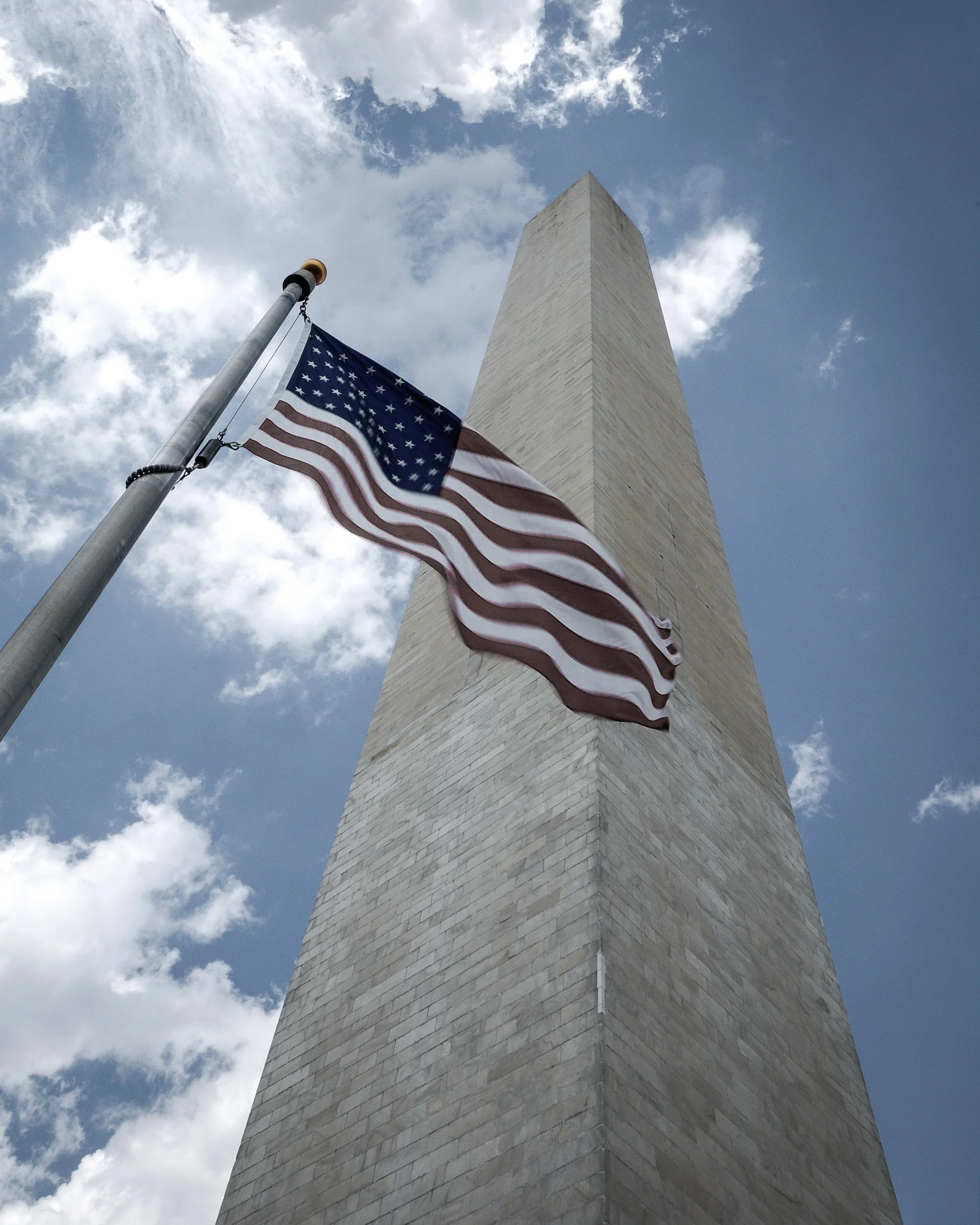
Still United
Still United
Discussions galore…
Still United
Discussions galore
One pledge, one flag, one country
E Pluribus est
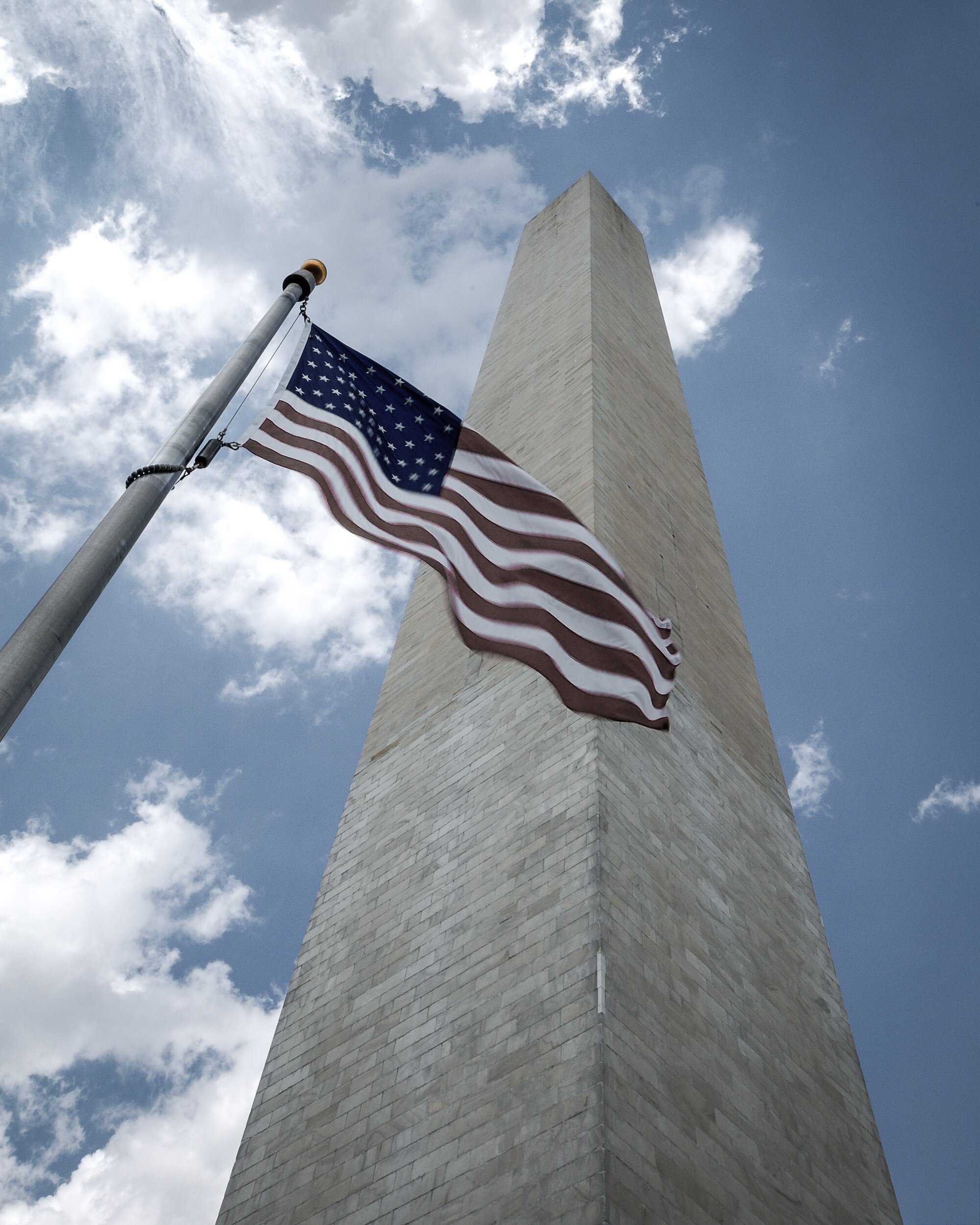
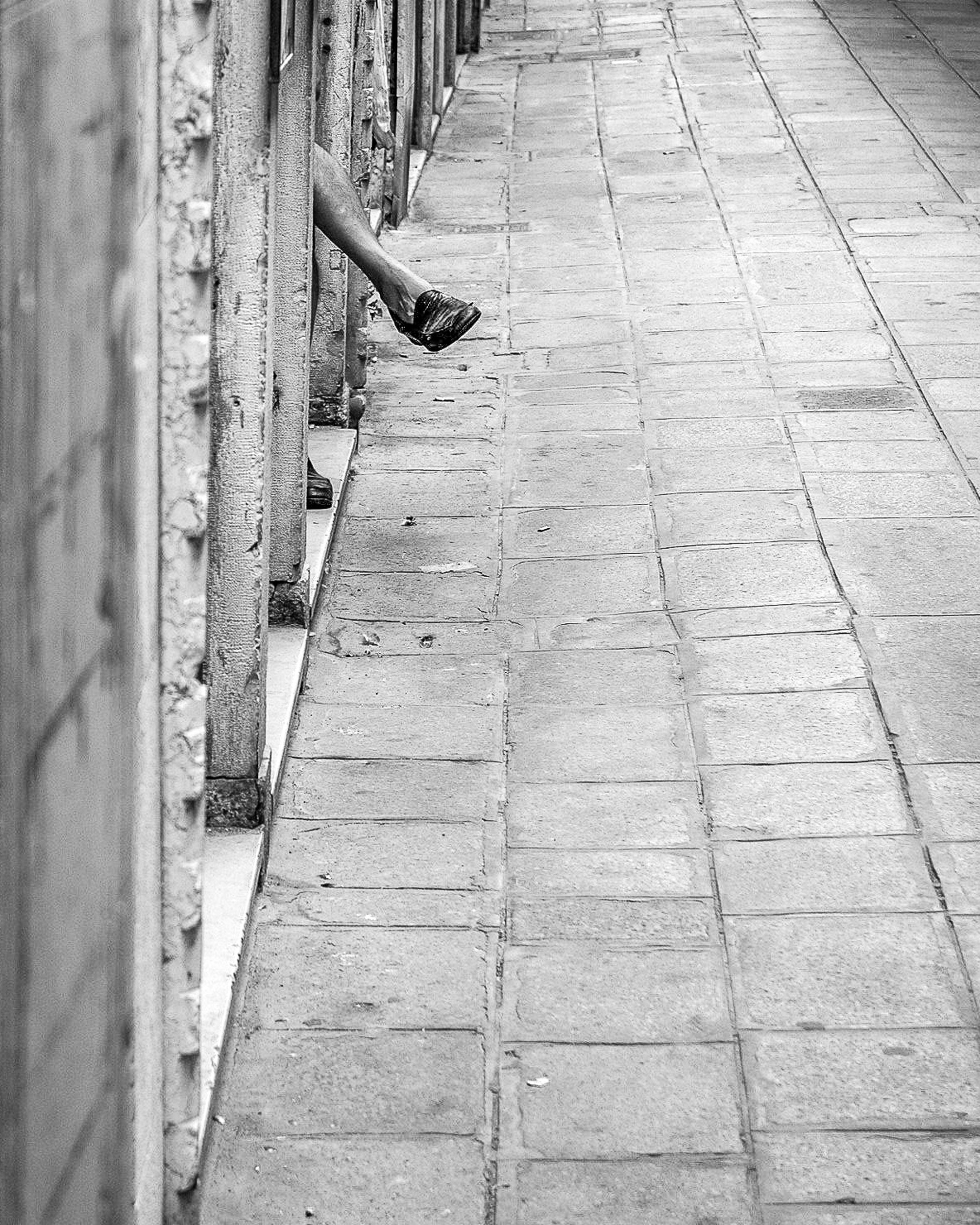
Image of the Month: Alley Leg
Alley Leg: A Curious Find On Venice's Streets
The picture to create this month's "Image of the Month" was taken in the summer of 2006, in the city of…
Alley Leg: A Curious Find On Venice's Streets
The picture to create this month's "Image of the Month" was taken in the summer of 2006, in the city of Venice, Italy.
At the time we didn't know yet, but the summer of 2006 would be our last summer vacation in Europe; in February 2007 we moved to Spain, and after living in Australia and South Africa we ended up settling in South Carolina, USA.
We wanted to see Rome, and we drove down from the Netherlands to Italy. First staying a couple of days in the lakes area of northern Italy, before spending a week in Rome. Then we drove to the middle of Italy, spending some days there, and finishing our vacation in Venice.
Some of the images I created in Italy are included in the book Old World Charm.
Venice is a great city to explore on foot. And to take pictures of course. The weather was not the best while we were there: it was hot, but most of the time overcast and we had some rain. The rain didn't bother us however - we were used spending most of our summer vacations in England - and the cloudy sky actually provided great, even light to take pictures.
We had been roaming the streets of Venice for a while already, and we had just had some great Italian icecream when I noticed this leg sticking out of the open doors of a taverna. Without thinking I aimed my camera, and shot. As it happened, the leg had an owner who retracted it immediately after I got the picture; there was no second chance.

Back at home, and going through the hundreds of pictures I took during that vacation, the Alley Leg immediately came to mind. I recognized the potential this image had, but wasn't really sure what to do with it. I converted it from color to black and white, which improved it. Unfortunately I did that in an irreversible way, so the color original is lost forever. Something was still missing however, and I didn't know what. As a consequence I never printed or published it. So there it sat for about twelve years...
Until a couple of weeks ago.
Looking through the collection of images I selected for further development, I stumble again on Ally Leg. And then it dawned to me what I needed to do.
The main adjustment I had to make, besides some additional enhancements to the black and white rendering, was cropping the image to get rid of the people in the background and the distracting reflections on the left. As with most other images in my portfolio, the crop I selected was the 4:5 aspect ratio which I find very pleasing to the eye. As a result the lines of the pavement, lead the eye directly to the leg sticking out of the vertical lines of the wall to the left. It creates focus, where I think the focus needs to be.
Below is a side-by-side comparison of the original image and the final result.


The final result: a funny image with an unexpected subject, in a certain way symbolizing the Italian way of life. The Dolce Vita of people relaxing and enjoying life.
- - - - - - -
I hope you enjoyed this background story about the creation of Alley Leg. Don't forget to subscribe, to ensure you will receive new information like this delivered to your email inbox the moment they are published.
Pastel Railroad
Pastel Railroad
Abandoned, discarded…
Pastel Railroad
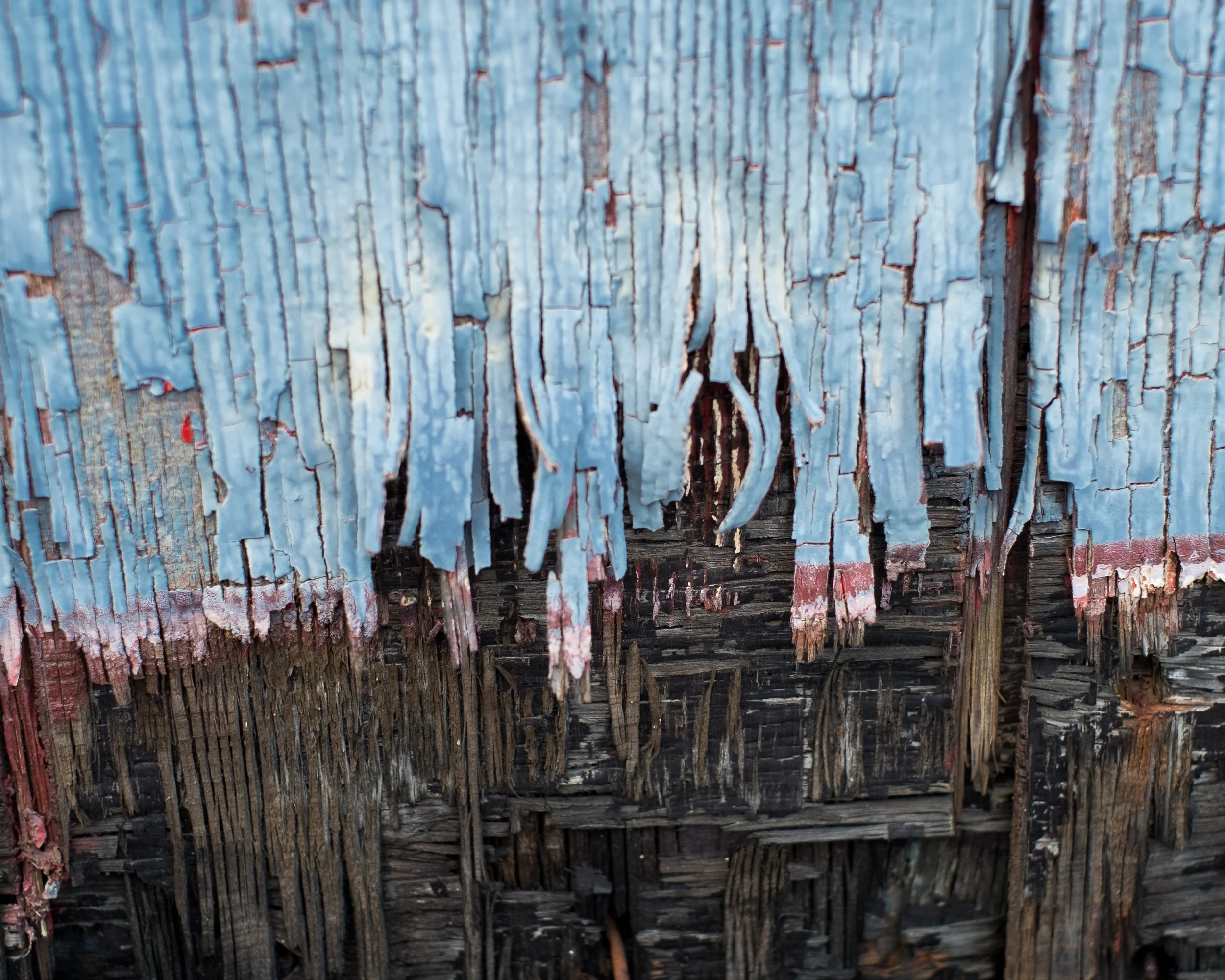
Abandoned, discarded
Broken, chipped, and flaking

No more trips,
No more passengers
The voices of laughing children can be imagined
Men with mustaches, ladies in crinolines

Years of rain has washed all soot away
Bright, functional colors have changed
into soft pastels
Pleasing to the eye
Pleasing to the memory


Why I Combine Photography With Stories
Creating New Perspectives Through The Lens of Photographic Stories
I am a storyteller. I have always been…
Creating New Perspectives Through The Lens of Photographic Stories
I am a storyteller. I have always been.
From an early age, I enjoyed making up and telling stories to my sister, cousins, nephews, nieces, and later my children. I loved it when I drew them into my fantasy worlds, seeing their eyes growing big with anticipation of what would happen next. And even now, that they are older, I manage to come up with stories and explanations that are unbelievable, but not to them.
Sometimes people ask me why I use storytelling techniques to share my fine art images with the public. It could be far easier to just have a simple portfolio website, or offer my images for purchase on a straightforward art selling website like FineArtAmerica. The question made me think, and go back to the reason why I create photographic images at all.
When I started photographing, years ago, I literally took pictures of everything. I experimented with different points of view, creating images of landscapes and still lifes, photographing scale models, and even tried portrait and model photography with my sister as the model (or maybe better: victim). I literally made hundreds of slides with my first camera, an Agfa Iso Rapid 1-C, which created small, square format slides. And I burned through quite some film with my first slr, a Ricoh. Later when going digital I did a lot of wildlife and nature photography.
And although I think the images were not bad at all, I felt something was missing…
Light Bulb Moment
If you are like me, you like and look for the unexpected, for the deeper meaning or reasons behind what you see.
Call me slow, but it has not been since quite recently, when I looked into starting this blog, that the light bulb went on and that I realized what was missing: I need to combine the images I create with stories.
It was a real eye-opener when I stumbled on this quote from Anais Nin: "The role of a writer is not to say what we all can say, but what we are unable to say".
I realized that I not just want to share the obvious, but what we usually are unable to see. Or to change the quote above a bit: My role as a photographer is not to share what we all can see, but what we are unable to see.
I am very visually oriented. In my office at work I have a huge whiteboard that I use to draw pictures and diagrams to explain my thoughts and ideas to others, and to myself. Images and visualization are key to my thinking process. There are many ways to share my vision: one way is through images, another way is through words. I combine both to create a stronger message. Images enhance and strengthen the story, and vice-versa.
When starting this blog, and having discovered the Anais Nin quote, I realized what I needed to do with my images to create something that resonates with my feelings: use stories to share what I see in these images and to invite the viewer to see the same, to be on the same journey of exploration with me. Using images and words to help me to understand, appreciate, and share the world as it presents itself to me.
You see a car, for example, but I see the family driver who has a long history with the car and the family. Who remembers big family events as part of his history with the car.

You see a parking garage, but I see the attendant, who is always there, being helpful, and providing service. Day in, day out, and always friendly.

You see a field of flowers. I see and feel the crisp early spring wind, which reminds me that these flowers are very vulnerable and will be gone within a couple of days.

The Story Formats
The best way for me to tell these stories, and to communicate my thoughts and feelings about my images, is through Haiku, PicTales, and Photo Essays.
Haiku and PicTales are short emotional connections to images: they represent my immediate thoughts and feelings reflecting on the images.
Essays are the results of long-term projects, more in-depth explorations of the world around me, and my feelings and thoughts about this world. They usually are also more image-focused than word-focused.
These different story formats help me to understand what I see, looking beyond the obvious, and to share these new perspectives with my audience. To share my vision of the world, to teach people, to entertain, to make people think. When we look at things from a different perspective we learn not only about the object or topic, but also about ourselves. Although different in nature, each of these formats allows me to express my observations about the natural and built environments, and the importance and impact of human interaction with their environments and with each other; helping me to understand why we are as we are.
Looking only at the images, some can be called landscape, abstract, wildlife, or street photography. For me, however, the subject is only the trigger for the story. And although each image has its merit on its own, the image complemented with the story makes it for me what it is: a reflection of my deepest thoughts.
The main story can be told with words (Haiku, PicTales) or mostly with pictures (Essays). In both instances, it is the combination that makes my stories unique.
I am a storyteller. I have always been.