
Did I Save These Images?
Saving Or Ruining Film Images In Post Processing
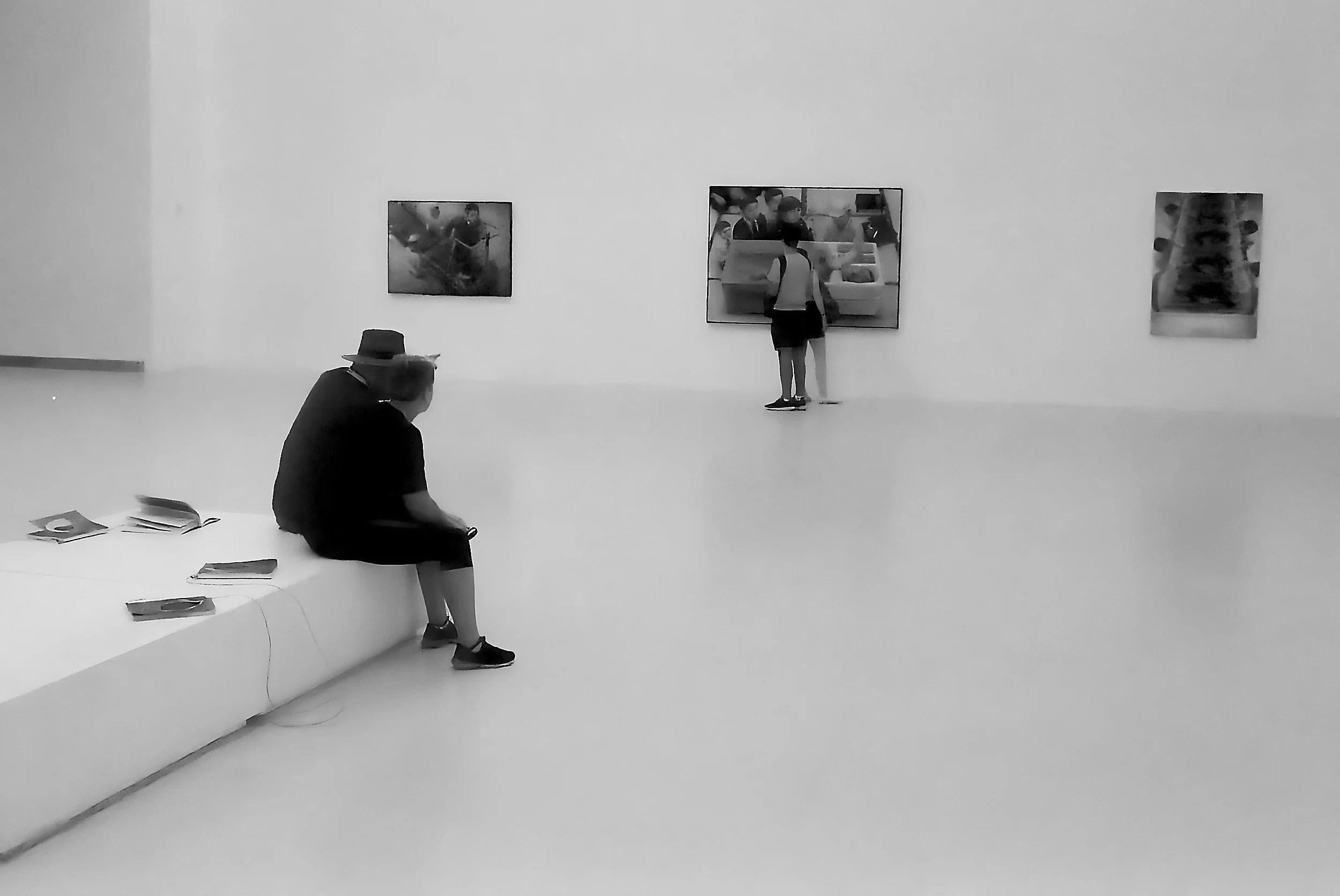
While visiting the Palacio de Cristal in Retiro Park in Madrid, Spain, in 2019 I made several images with my Leica M4 and Delta 400 film.
Saving Or Ruining film Images In Post Processing
While visiting the Palacio de Cristal in Retiro Park in Madrid, Spain, in 2019 I made several images with my Leica M4 and Delta 400 film.
The Leica at that moment was quite new to me - I purchased it just a month before in South Africa - and working with an external light meter or guessing my exposure settings with the sunny-16 rule was not something I was very much used to yet.
As a consequence, several images turned out to be quite under-exposed. Resulting in thin and grainy negatives, which showed clearly in the scans I got back from the lab.
I played around with the digital versions of these images, first in Lightroom and later in the 2019 version of ON1 I, but never really to my satisfaction.
We are in 2024 now, and ON1 got some major and interesting upgrades, including Brilliance AI and an updated version of their NoNoiseAI and TackSharpAI tools.
This encouraged me to revisit these images and put them through the ON1 works.
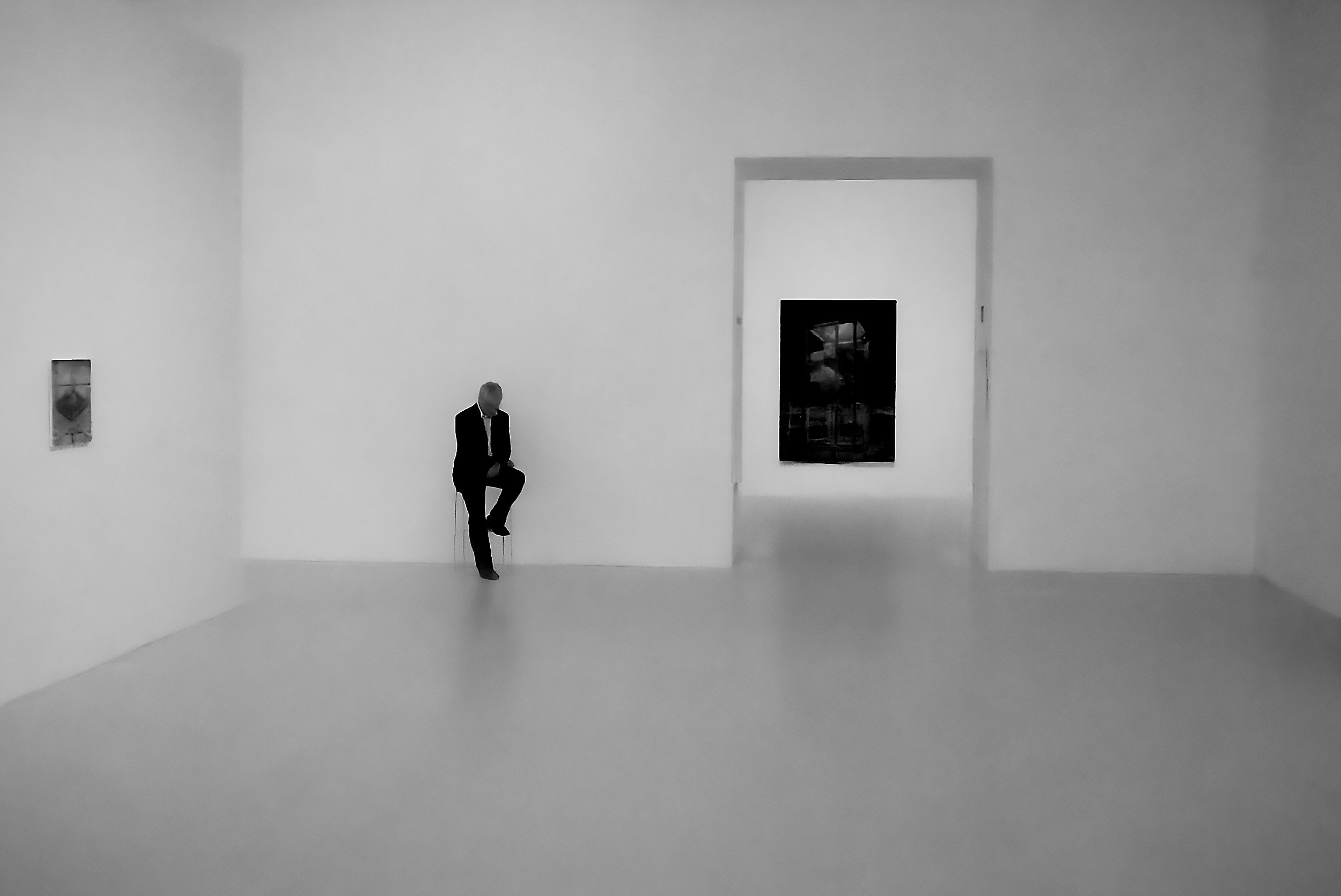
And to be honest: I like the results. While I admit they absolutely have a very processed look to them now, to my opinion this has created a look that pleases my eye: very clean, very slick, almost graphic.
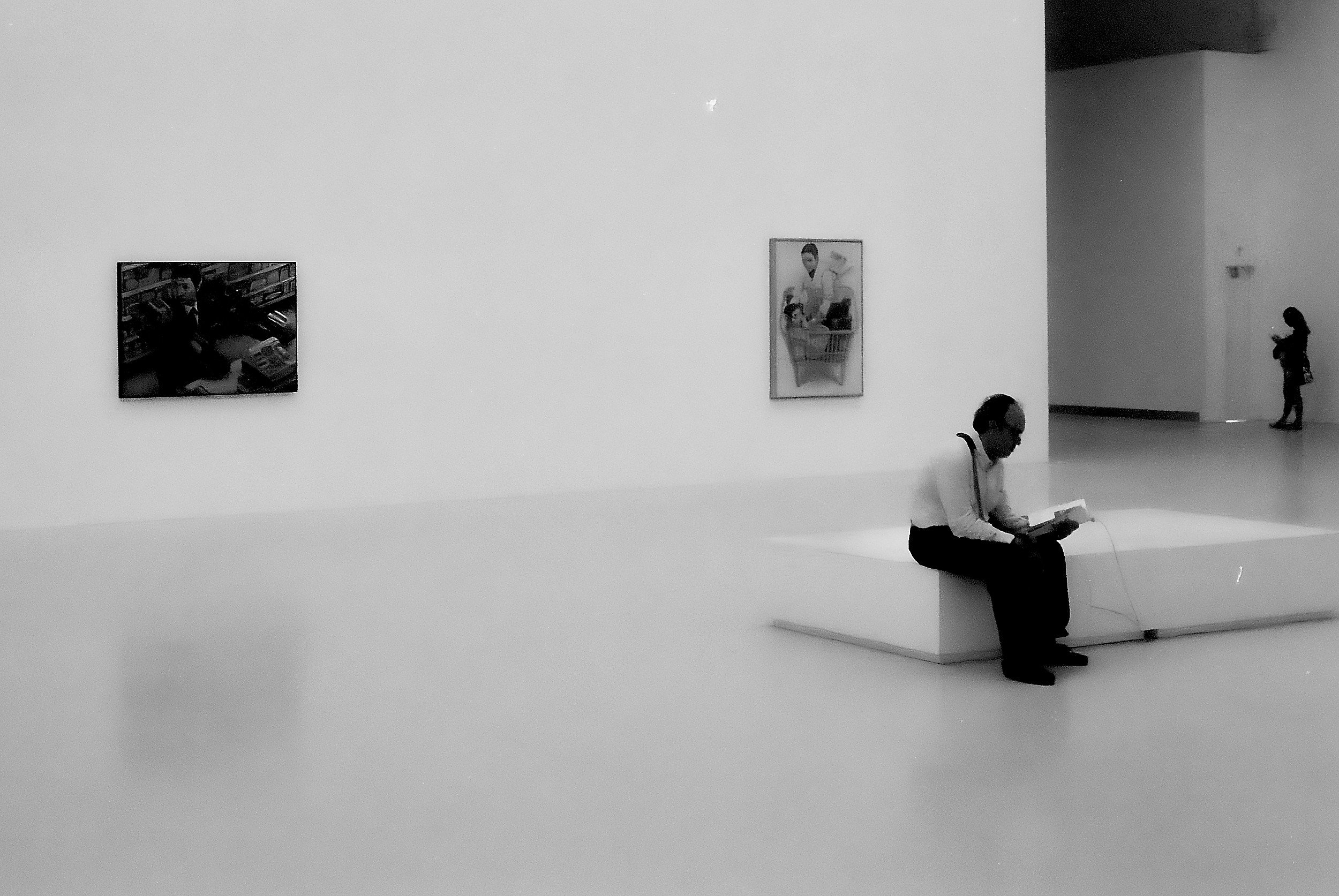
I wonder what you think of this: did I manage to save these images, or did I only make a bad (underexposed and grainy) photo worse in another way?

Never Too Old To Play
New York City NY | Hester St. Playground | Feb 2019
New York City's China Town area is a treasure trove for street photographers and cultural experiences.

New York City, NY | Hester St. Playground | February 2019
New York City's China Town area is a treasure trove for street photographers and cultural experiences.
I noticed two gentlemen near the Hester Street playground playing the Chinese game of Xiangqi.
I didn't know if they played for toothpicks, hard dollars, or fun, but they were having a good time, and the bitter cold temperature didn't bother them.
Several onlookers were sitting and standing around their table, undoubtedly providing their advice for the next move.
Unfortunately, I had to move on and never got to know who won.
Not The Decisive Moment
Street Photography Is Social Documentary Photography
Writing last week's blog posts about the book Lost London: 1870-1945 made me realize that there is an easily overlooked aspect of street photography.
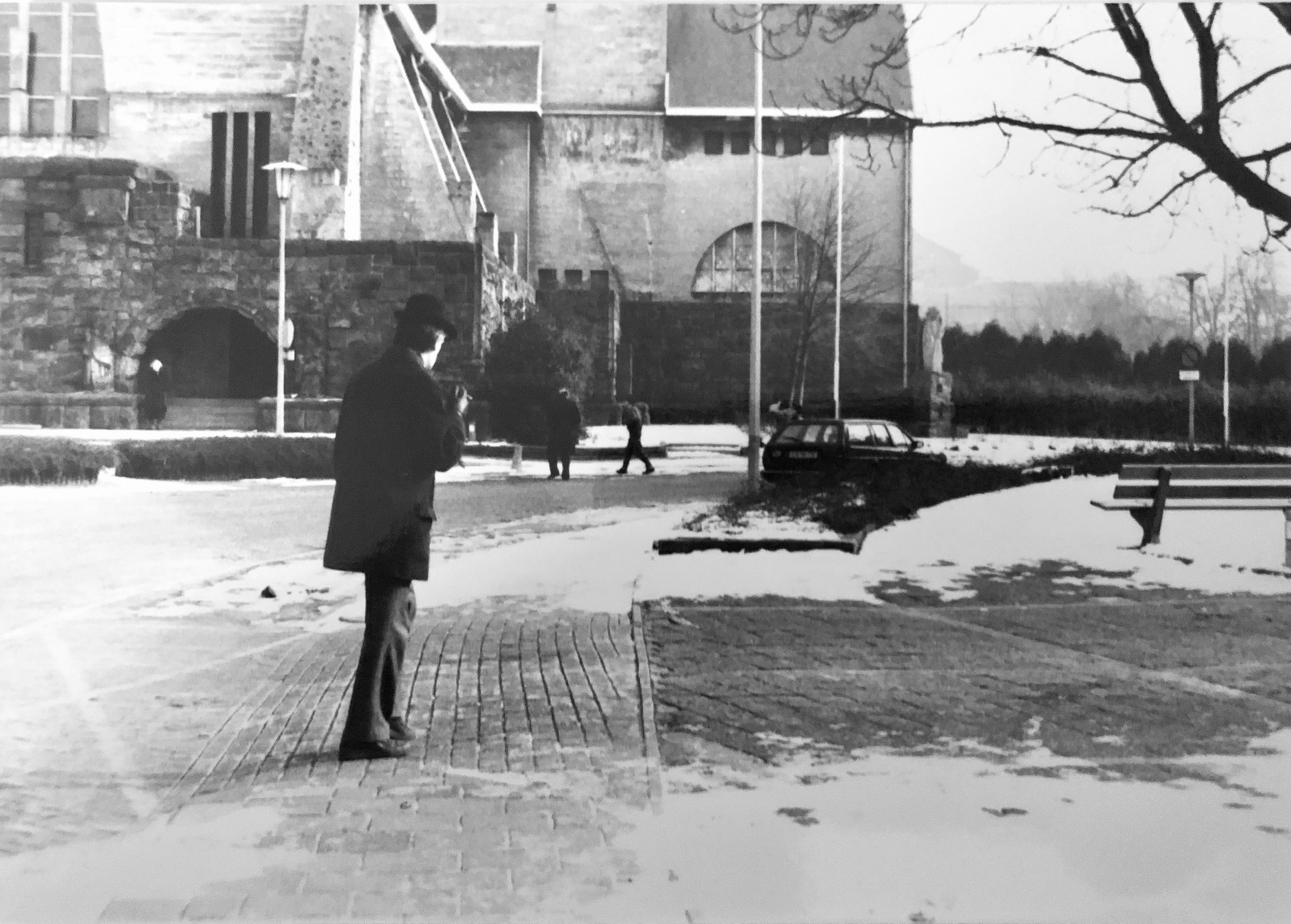
Image courtesy and copyright Amei Manten
Street Photography Is Social Documentary Photography
Writing last week's blog posts about the book Lost London: 1870-1945 made me realize that there is an easily overlooked aspect of street photography.
Every street photographer wants to capture a specific moment and create that 'one' image that will enthuse the world. With Olympians like Henri Cartier-Bresson, Vivian Mayer, Elliot Erwitt, and so many others as examples, we street photographers try to emulate their vision, their images, and their success.
But street photography is so much more, and street images can mean much more to our audience.
Street photography is not and does not always have to be about the decisive moment.
The images in Lost London: 1970-1945 made me realize that there is so much more to these pictures than the decisive moment. These images capture a particular place during a specific time that has a special meaning for contemporary viewers.
Allow me to explain this with an example of an image not related to the book.

Image courtesy and copyright Amei Manten
Recently I posted an image from the small village my wife and I grew up in on Facebook. My then-girlfriend, now wife, created the picture in the mid-1980s as part of a photography assignment while studying at the University of Leiden (the Netherlands).
It is quite an ordinary image: a village street with a woman.
However, posting this image on Facebook had a surprising result. Numerous people commented on the street and the buildings, with many trying to figure out who the woman in the picture was.
This result and the images from the book Lost London: 1870-1945 made me realize that street photography always is a form of social documentary photography. With or without a decisive moment captured, street images provide contemporary viewers and later generations insights into our environment's current state; it captures the Zeitgeist.

Image courtesy and copyright Amei Manten
The look of the streets, the buildings that may change or totally disappear in the future, the people, the clothes they wear, their occupation, and other details of daily life we at this moment take for granted but will be of interest later.
This realization gave me a feeling of calmness.
I no longer have that unsatisfied urge to hunt or fish for the decisive moment when creating street images. Instead, I am more aware of my surroundings and what my image might mean to future viewers. Maybe they lived in this specific area I am capturing; perhaps I captured one of their family members in my frame.
Street photography, for me, now is more about capturing the current state, and it's not only about the decisive moment.
I still will look out for it, and if and when I capture such a moment: outstanding, excellent! But, if not, I move on with the knowledge that at least I captured something from which future viewers can learn how the world looked today.
Book Review: Lost London 1870-1945 by Philip Davies
How A Photo Book With Old Images Impacted My Photography
I was lucky enough to stumble upon this book while browsing the bargains area of Barnes & Noble. It is a photo book with old images from London, United Kingdom, taken between 1870 and 1945, providing a unique insight into how the city and its inhabitants looked during those years.

How A Photo Book With Old Images Impacted My Photography
Introduction
I was lucky enough to stumble upon this book while browsing the bargains area of Barnes & Noble.
It is a photo book with old images from London, United Kingdom, taken between 1870 and 1945, providing a unique insight into how the city and its inhabitants looked during those years.
Philip Davies has curated the images in the book, an architectural historian who - from 2005 to 2011 was the Planning and Development Director for London and South-East England at English Heritage.
From the dust jacket: "Lost London 1870-1945 is a spectacular collection of more than 500 of the best images from the formor London County Council archive of photographs... Most have been never published before. Taken to rovide a unique recored of whole districts of London as they were vanisching, each of the photographs is a full-plate image, a stunning work of art in its own right."
Published: 2009
Publisher: Transatlantic Press
ISBN: 978-0-9557949-8-8
Size: 11 6/8" x 9 7/8" x 1 1/2"
Review
The book has 14 sections, with the photo sections arranged according to period and city areas:
Foreword by HRH The Duke of Gloucester
Author's Note
Introduction - The Lost City - Images of London 1870-1945
Chapter One - Urban Penumbra - The City fringe
Chapter Two - Engine of Commerce - The City of London
Chapter Three - Between Two Cities - Holborn and Strand
Chapter Four - Imperial Capital - Westminster and the West End
Chapter Five - City Of Dreadful Night - The East End
Chapter Six - London-Over-The-Water - South London
Chapter Seven - Urban Villages - Villas and leafy gardens
Chapter Eight - Zenith 1918-39 - Sovereign of cities
Chapter Nine - Catastrophe 1940-1945 - A city in ruins
Index
Acknowledgements
The first thing that struck me was that the quality of the images is remarkable. They have great detail and excellent tonality. We only wish future generations can view our currently mainly electronically created images with the same quality after one or two hundred years.

Lost London 1870-1945, page 71
The book also provides a great history of photography in London in its Introduction. Not only its 'why' but also its 'how.'
"Photography was not easy in London. Henry Dixon recorded how he had to obtain a photograph in a crowded street by removing a wheel from a wagon, and while his assistant pretended to mend it, he photographed his subject from under the canvas." [pp. 24-25]
The images also show how the photographers had to work the light to create their photos: look at how buildings in the background are over-exposed due to the exposure time needed for foreground objects.

Lost London 1870-1945, page 23
The book's main objective is to create a sense of urgency with the viewers of the importance of preserving architectural gems. To paraphrase from the Foreword: This kind of photography emphasizes the task of English Heritage (and similar organizations in other countries!) to preserve the best of historic buildings, help the general public understand why they should be kept, and increase the understanding of the significance of these buildings for our history.
For me, however, the value and importance of the book and the photographs go far further than this. The images of the streets, buildings, and people provide us with a unique insight into how people lived during the period covered by the book. It is a true social documentary trove and "Spanning a period of 75 years from the mid 1870s to 1945, [the photographs] depict a world in transition." [p. 9]
"Some of the physical impacts of these profound changes can be seen in these photographs - the arrival of tramlines, the progressive replacement of horse-drawn vehicles by motor cars,..." [p. 27]

Lost London 1870-1945, pages 202-203
While Davies, in his Introduction, does a great job to explain the importance of the images from an architectural history perspective and while he provides us with a socio-economic reference frame for the period covered, it is the images themselves that tell that story best.
"As primary sources of historical evidence, [the photographs] are by their very nature impartial, and bear witness to past places or events, undistorted by the interpretation of their creator." [p. 9]
One of my first reactions was Eugene Atget coming to mind when first browsing through the images: the streets, sometimes with and sometimes without people. Important in that context is that "[The images] have been selected to show the commonplace rather than the great-set pieces,....which conveys so vividly the actual feel of London as it then was..." [p. 9] and they are "important documents of social and topographical history,..." [p. 9]

Lost London 1870-1945, page 69
Consequently, I dare say that Davies did for the multiple photographers whose images he used in the book what Berenice Abbott did for Eugène Atget.
Other images reminded me of Lewis Hine with their harsh directness and focus.

Lost London 1870-1945, page 14
Conclusion and Recommendation
This book is a monumental document about one of the world's great cities and about the photographers who documented the changes in London over 75 years.
It provides a unique, intimate insight into the status of London's buildings and streets and the lives of its inhabitants.
In conclusion, this is a remarkable document, and it has very much influenced my view about street and social documentary photography. Creating images of the places I visit, I also try as much as possible to have my photographs as impartial and undistorted by my interpretation of the scenes I observe as possible.
Hello Mrs. Cartier-Bresson
Greenville, SC | S Main St - W McBee Ave | January 2022
When I saw this lady walking towards me, I almost froze. Where did I see those sunglasses before?

Greenville, SC | S Main St - W McBee Ave | January 2022
When I saw this lady walking towards me, I almost froze.
Where have I seen those sunglasses before?
Could it be?
Is it her?
If only HCB was here, he would be able to tell
61 years... impossible, it can't be her...
Maybe her daughter?
Paying Attention
Washington, DC | Lincoln Memorial | August 2014
One of the joys of street photography, actually the reason I think most street photographers do what they do, is observing people…

Washington, DC | Lincoln Memorial | August 2014
One of the joys of street photography, actually the reason I think most street photographers do what they do, is observing people.
People on their own, in small groups, or, as in this image, in large groups of individuals who are not in any way related to each other than for the fact that they are coincidentally in the same place at the same time.
When visiting the Lincoln Memorial in 2014 (obviously very much during pre-pandemic times) I noticed that most visitors are not really paying attention to the statue of the great man. Several were walking around in circles like lost in the vast space of the Memorial building, some were talking in groups, and quite a few were busy taking selfies with their omnipresent phones.
Except…
Except for this one woman, who stood still in the middle of the moving, chattering and self-focused crowd.
She was looking at the image of President Lincoln. Paying attention. As if to say: “What can you tell me. What can you teach me.”
And isn’t that what we all should do more often? Paying attention. Putting the phone away. Stop talking. Stop being focused on ourselves. And just pay attention.

In Focus: Bargain Found
The Joy of Finding a Bargain at a Madrid Market
This image was created during a stroll in sunny Madrid, Spain, in August 2019…

The Joy Of Finding A Bargain At A Madrid Market
Background Story
This image was created during a stroll in sunny Madrid, Spain, in August 2019.
I used my home leave from my assignment to South Africa to spend a week in Madrid with my wife, prior to traveling on to The Hague, the Netherlands, for some time with my youngest daughter.
Madrid has an abundance of squares (plazas), shopping streets, small back alleys, and parks to explore. The weather was great that week and we enjoyed a couple of days strolling through the beautiful capital of Spain.
That particular day we visited several open-air street markets, where a large diversity of goods was being sold. Fruit, vegetables, meat, fish, musical instruments, potter, leatherware, shoes, t-shirts, artisan bread, cheese, handheld fans, bags, tools; you name it, they sold it. And fabrics of course.
A fabrics stall at a market is always interesting to observe. Often the merchandise is just laying on a table or on the ground, and prospective buyers are picking it up, holding it to the light, and showing it to each other to determine if it is the right quality, size, and color for whatever they are creating at home.
And always there is this hope to find a real bargain.
As you can imagine, this creates numerous situations to make a photo. And this was just the right one for me.
How It Was Made
Only a couple of weeks earlier I was fortunate to purchase a just CLA’d Leica M4 and a Summaron 35mm f/2.8 lens for a very reasonable price. And since my wife brought my Voigtländer VCII lightmeter from home, I was experimenting with the camera, lens, lightmeter combination.
As you will know by now, I love black and white images and I had my favorite film, Ilford Delta 400, loaded.
Why It Works
The subject matter of this image is right up my alley: the busyness of the market, people interacting with each other, and the play of light and shadows.
The main subject is formed by the two hugging women in the center of the frame.
The pile of fabric and the piece held up by the lady to the left create a nice diagonal, leading the viewer’s eye through the composition.
The small tree and its support to the right and the larger tree to the left frame the main subjects of the image, while at the same time creating sub-frames for other points of interest: see the walking man perfectly framed by the small tree and the wooden support? This was a nice bonus that I only discovered after getting the film back from the lab.
As always, the light plays a major factor in making this image work for me. The harsh sunlight to the left and right of the group of women, with the shadows on the street in the foreground and the dark leaves of the trees, provides an additional frame for the main subject.
All parts work together to create several frames around the center of the image, focusing the view towards the two women in the center.
How Can This Image Be Used
There are several ways to use an image like this in a commercial setting.
There might be a hotel nearby that can use this image to show their guests the area they are located at, and how close they are to classical Madrid markets.
And the City of Madrid could use it to show prospective visitors its relaxed but lively street life and market culture, ideally for tourists who want to experience the real Spanish.
Although countries and cities are opening up after what hopefully was the worst of the Covid-19 / Coronavirus impact it might be a while until we can strolling the markets of Madrid again. Until then, images like this one will remind us of the better times to come.

In Focus: Food Envy
Pre-Pandemic Diners In The Hague
We all remember those carefree pre-pandemic afternoons and evenings when we could stroll the streets…

Pre-Pandemic Diners In The Hague
Background Story
We all remember those carefree pre-pandemic afternoons and evenings when we could stroll the streets without face masks and go to restaurants to enjoy a good meal without being restricted in how many friends to meet. Don’t we?
This image was created during a warm summer evening stroll in The Haag (Den Haag), The Netherlands, in August 2019.
I had spent a week in Madrid, Spain, with my wife and now enjoyed the additional time off with my youngest daughter who just moved for her studies to this lovely city in the Netherlands.
I stayed in the Park Centraal Hotel which is in a beautiful 160-year-old building. And in the Molenstraat and neighboring streets immediately outside the hotel are several small shops, restaurants, and eateries.
Tourists and locals alike enjoyed dining inside and on the terraces outside. The relaxed atmosphere, the darkening sky, and the light inside the restaurants created a tableau that depicted the typical Dutch “gezelligheid”. While this can be translated with “cosiness”, the Dutch word encompasses more: a general feeling of wellbeing and safety.
I find it always amusing to see how passersby look at people eating outside. In fact, they might not be as much interested in the diners as well as in the food on their plates. Are they deciding what they want to order themselves? Or are they going to an eatery which they anticipate has a less enjoyable menu; are they a bit envious maybe? Is food envy a concept?
Anyhow. The environment was right, the people were at the right place. And I made the photo.
How It Was Made
It was only in January of that year that I purchased the Fujifilm X100F, and I was still experimenting with its settings and discovering its capabilities.
I love black and white images (did you notice that all images on this website are monochrome?) and in this instance, I used the Acros standard camera preset.
Although I actually like that preset very much, when editing the image I selected the ON1 preset for Ilford Delta 400. I just love that film and I also wanted to check how the built-in preset would compare to scans from actual film images.
Why It Works
First of all, I like the subject matter.
A small city street with restaurants and outside diners. People passing by; what are they thinking?
Are the passers-by envious of the diners? Are the diners disturbed by the people walking in the street?
Then there are the leading lines that lead the viewer’s eye through the image.
The curb and the awnings are perfect examples of converging lines, anchored in the bottom right corner by the blackboard with snack offerings.
And, finally, the light. Ah, the light!
The combination of pre-sunset light and the soft incandescent light from the restaurants, creating that special atmospheric mood that is so typical of lazy summer evenings.
I can just not get enough of it.
How Can This Image Be Used
Images like this can well be used in a commercial setting.
Humphrey’s Restaurant might use it to connect their customers to the location (unfortunately their restaurant in the Molenstraat has been closed, but at the time of writing of this article they still operate a restaurant in Scheveningen, near The Hague), or to show them the great ambiance they have.
The Park Centraal Hotel can use this image to show their guests the nice area they are located at, and how close they are to restaurants and nightlife.
And the City of The Hague could use it to show prospective visitors how a big city can offer coziness and a safe environment to spend the evening.
With the current Covid-19 / Coronavirus-related restrictions in place, it might be a while until we can enjoy dining out in the Molenstraat again. But the time will come that we are allowed again! Until then, images like this will remind us how great having dinner outside with friends is.