
Did I Save These Images?
Saving Or Ruining Film Images In Post Processing
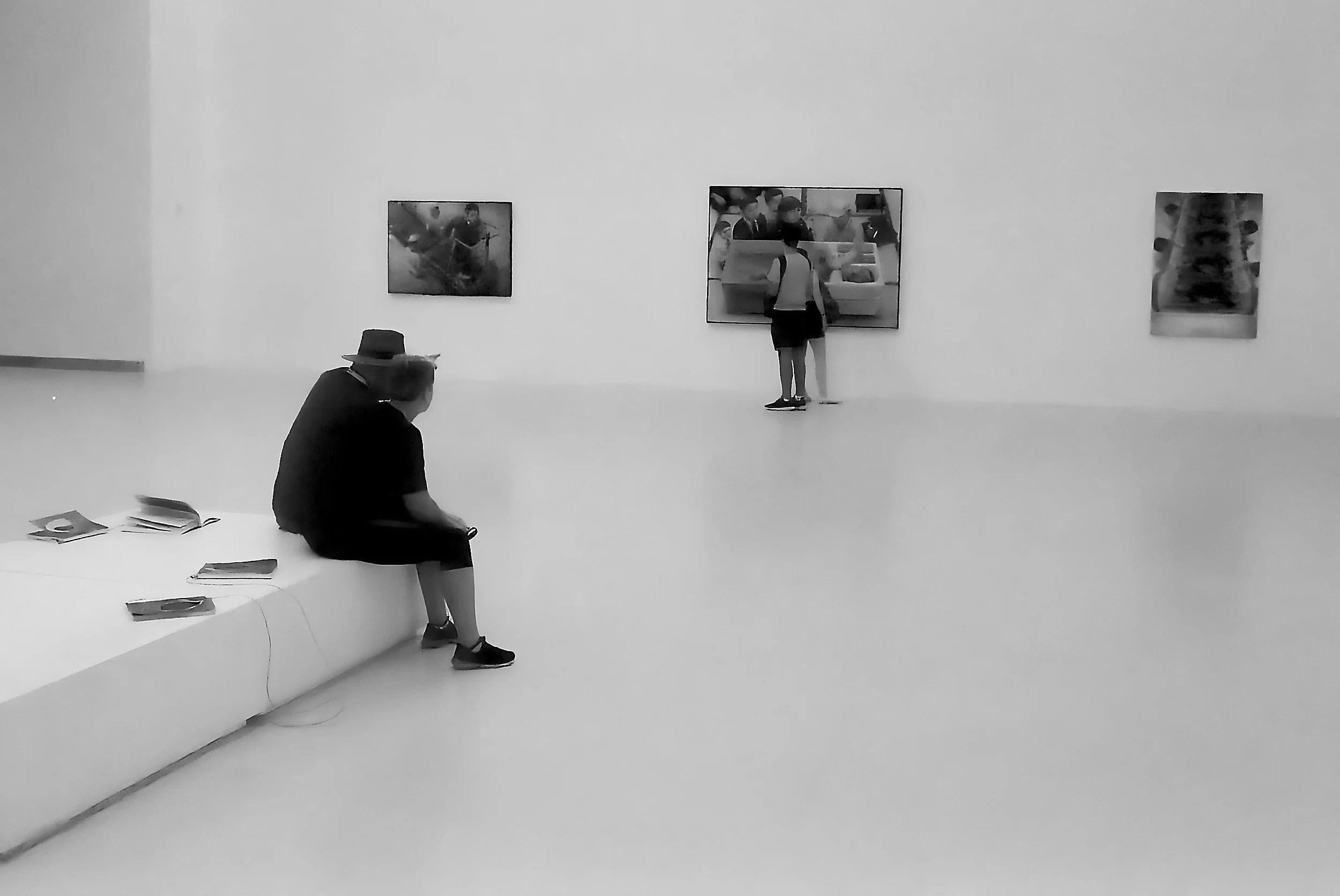
While visiting the Palacio de Cristal in Retiro Park in Madrid, Spain, in 2019 I made several images with my Leica M4 and Delta 400 film.
Saving Or Ruining film Images In Post Processing
While visiting the Palacio de Cristal in Retiro Park in Madrid, Spain, in 2019 I made several images with my Leica M4 and Delta 400 film.
The Leica at that moment was quite new to me - I purchased it just a month before in South Africa - and working with an external light meter or guessing my exposure settings with the sunny-16 rule was not something I was very much used to yet.
As a consequence, several images turned out to be quite under-exposed. Resulting in thin and grainy negatives, which showed clearly in the scans I got back from the lab.
I played around with the digital versions of these images, first in Lightroom and later in the 2019 version of ON1 I, but never really to my satisfaction.
We are in 2024 now, and ON1 got some major and interesting upgrades, including Brilliance AI and an updated version of their NoNoiseAI and TackSharpAI tools.
This encouraged me to revisit these images and put them through the ON1 works.
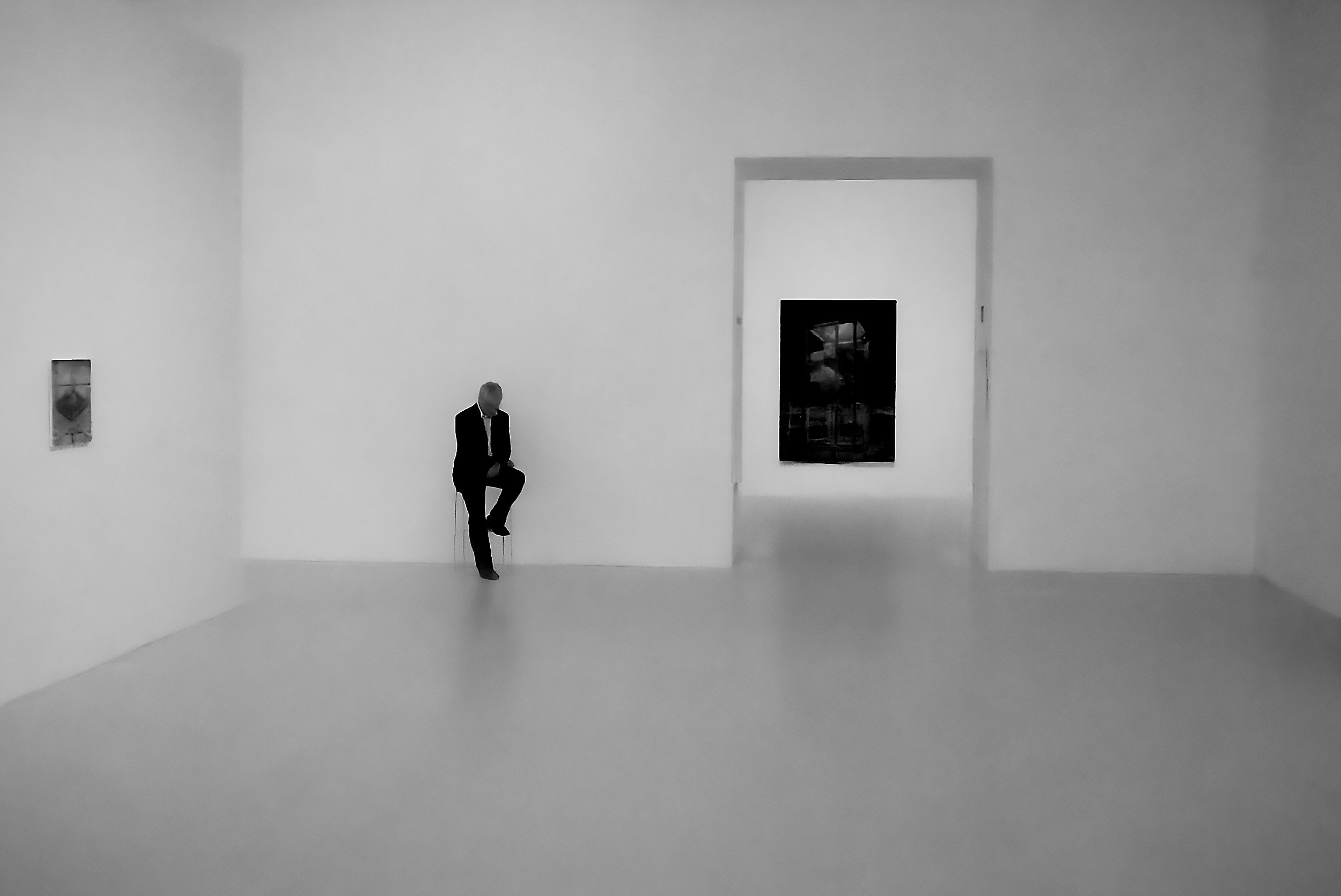
And to be honest: I like the results. While I admit they absolutely have a very processed look to them now, to my opinion this has created a look that pleases my eye: very clean, very slick, almost graphic.
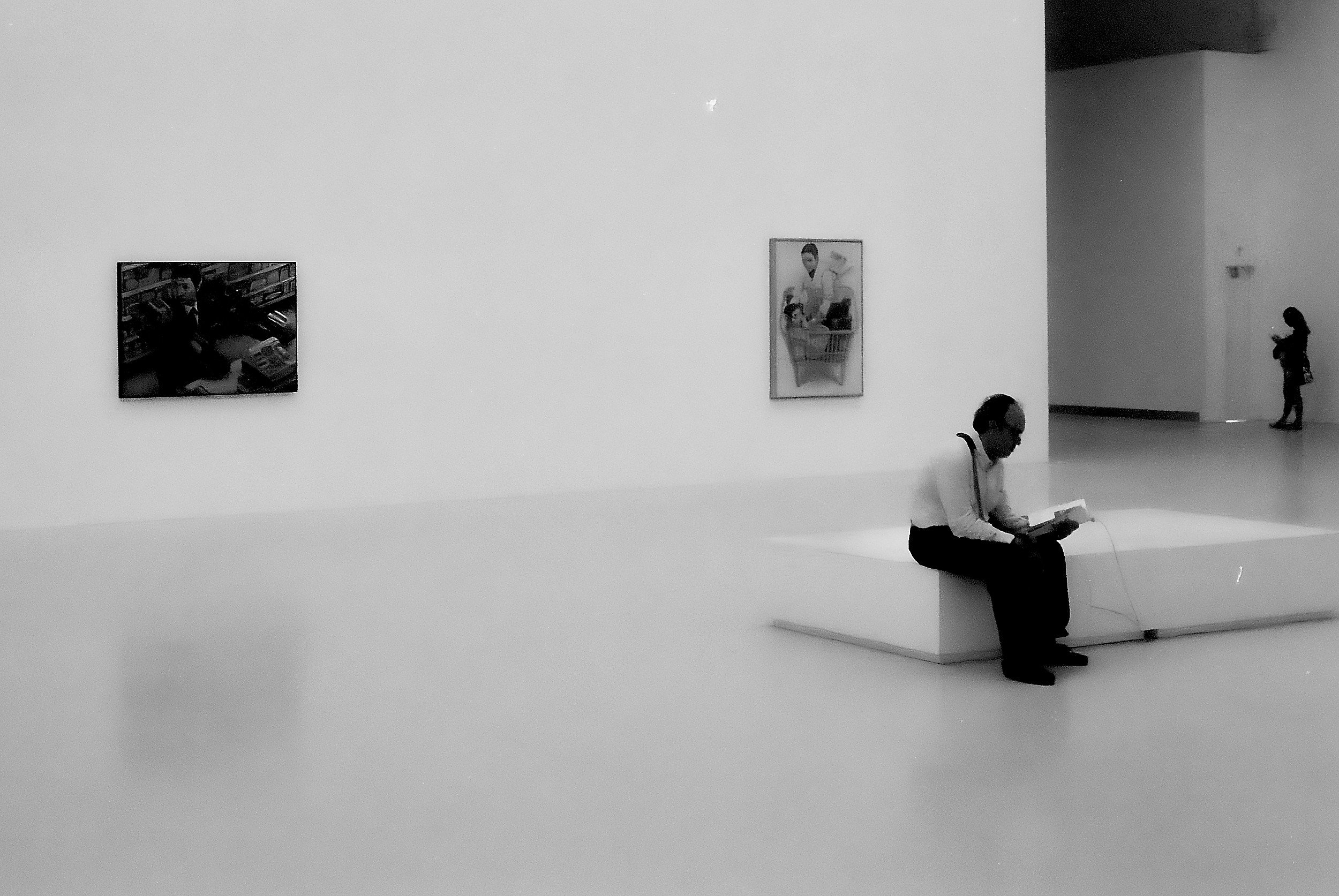
I wonder what you think of this: did I manage to save these images, or did I only make a bad (underexposed and grainy) photo worse in another way?
AI and Photography: Defining the Boundaries
Can AI-Generated Images Truly Qualify as Photography? A Barthesian Perspective
Generative Artificial Intelligence and Photography: if there is one area of controversy in the photographic world today, it is this one. Are AI-generated images photography? Should they be allowed to be submitted for photography contests? Can they be sold as photography?

Can AI-Generated Images Truly Qualify as Photography? A Barthesian Perspective
Generative Artificial Intelligence and Photography: if there is one area of controversy in the photographic world today, it is this one.
Are AI-generated images photography? Should they be allowed to be submitted for photography contests? Can they be sold as photography?
Introduction
Mike Johnston recently published a strong opinion on The Online Photographer website titled "AI Imaging is a Pox, a Fraud and a Thief.”
In the article, he states that:
“Photography in its most exalted form and practice is a means of investigating and appreciating the visual world, of commemorating what we are privileged to see; and as such it should have some sort of connection to the real, like a bear print in the woods is connected to the bear, or like a fossil had to be formed by an actual ancient trilobite. It has to have a trace of the real, left by the actual [bold by M|P]. The ligatures that bind it to truth (whether closely or loosely) are an essential and indivisible part of its nature, in the complete absence of which it is not itself. To be "photography," an imaging system, whether analog or digital, either by its nature or by virtue of the way it is deployed by a sentient human being, must respect the lens image, and, through the lens image, report to the viewer of the photograph, in some manner and to some degree, what actually might have existed in the world of appearances.
AI has nothing to do with photography, except as a means of flooding the culture with counterfeits—a flood that is dispiritingly likely to drown once and for all the benefits and the benevolences of the art and the craft we have learned over the years to love.”
The main reason why I agree with him and also think that AI-generated images should not be considered photography is his observation that "To be "photography," an imaging system, ..., must respect the lens image, and, through the lens image, report to the viewer of the photograph, ..., what actually might have existed in the world of appearances." [bold by M|P].
I already mentioned something similar in my blog post, Fine Art Defined, where I observed that:
“The interesting notion here is that, different from other art forms, photography to be creative needs an already existing creation; be this a man made object, a natural object or a living being. Whereas a painter by using the capturing medium (canvas, paint and whatever else the artists decides to use) can create a picture of a vase without an actual vase in existence, and the potter can create a formerly not existent vase by applying his creative medium, without light bouncing off an actually existing vase a photographic image of a vase is not possible.”
I posted that in 2015, long before generative AI was even a thing, and unbeknown to me at the moment, I actually was - in a far simpler way and in blissful ignorance of what this great philosopher wrote about the subject - paraphrasing what Roland Barthes said in 1980!
In his seminal work, "Camera Lucida," (which I only read recently - better late than never, I daresay), Barthes delves deep into the essence of photography, asserting that the uniqueness of the medium lies in its ability to capture the "that-has-been," or the intractable.
He emphasizes that a photograph's referent is the "necessarily real thing which has been placed before the lens," [bold by M|P], and this quality sets photography apart from other forms of representation.
Now, however, in the age of artificial intelligence (AI), we are confronted with a profound question: Can AI-generated images be considered true photography?
Spoiler Alert!
In this essay, I will explore the argument that AI-generated images (I deliberately do not call them photos) do not fully encapsulate the essence of traditional photography defined by Barthes and, therefore, in my opinion, never can or should be called photography.
The Nature of Photography's Referent
Barthes distinguishes the "photographic referent" from other systems of representation, asserting that in photography, one can never deny the existence of the captured subject. He argues that while painting can feign reality without actually having seen it and discourse can combine signs with "chimeras" as referents, photography uniquely captures an undeniable reality. It is this constraint that Barthes defines as the very essence of photography, what he names the "noeme" of the medium.
This noeme is the "That-has-been," signifying the subject's presence before the lens.
AI-Generated Images: An Examination
AI-generated images are products of computer algorithms and neural networks that create visuals without the direct presence of a physical subject. These algorithms analyze patterns and data to generate images that mimic the style and content of photographs.
While they, therefore, can create hyper-realistic scenes and subjects that, at a glance, are indistinguishable from traditionally captured photos, the fundamental question, however, arises if AI-generated images truly can be considered photography in the Barthesian sense.
The Absence of the "That-has-been"
One of the primary reasons AI-generated images cannot fully embody the essence of traditional photography is the absence of the "That-has-been." In photography, as we have seen above, the referent is the physical object or scene that existed in the real world and was captured by the camera. In contrast, AI-generated images lack this referent. They are not tied to a physical presence or a moment that has passed. Instead, they are a creation of algorithms and data, making their referent more abstract, virtual, and devoid of the immediate, undeniable reality that Barthes associates with traditional photography.
The Missing Interplay of Reality and the Past
Furthermore, the interplay of reality and the past, another crucial aspect of Barthes's definition of photography, is absent in AI-generated images.
Traditional photographs capture a specific moment in time, preserving it as an irrefutable "artifact of the past." AI-generated images, on the other hand, do not have a moment of origin in the same way. They are not the result of a subject's presence before a lens, and they do not carry the weight of the past in the same manner. Therefore, they lack the tension between presence and separation that defines photography's essence.
Conclusion
In light of Roland Barthes's exploration of photography's essence in "Camera Lucida," it becomes evident that AI-generated images do not align with the fundamental principles he outlined. The absence of the "That-has-been" and the missing interplay between reality and the past makes it impossible to categorize AI-generated images as traditional photography.
While AI-generated images may be technically impressive and visually compelling - and, in my opinion, absolutely deserve their place in the broad gamma of visual art - they lack the unique quality of capturing the "necessarily real thing." They are not bound to an undeniable reality that has been present before the lens.
Therefore, it is essential to recognize the distinction between photography, which embodies the essence of the "That-has-been," and AI-generated images, which depart from the core principles that have defined the medium since its inception.
Do you agree that AI-generated images are not photography and should not be passed off as such?
Capturing the Essence of Tranquility: Round Lake, NY
Discovering Serenity Through the Lens of High-Contrast Monochrome
Nestled amidst the picturesque Adirondack Mountains of upstate New York lies a hidden gem: Round Lake…

Discovering Serenity Through the Lens of High-Contrast Monochrome
Introduction
Nestled amidst the picturesque Adirondack Mountains of upstate New York lies a hidden gem: Round Lake.
This pristine body of water has long inspired photographers like me, beckoning us to capture its enchanting beauty. In this essay, I will talk about Round Lake's location, history, and significance while also recounting my experience of capturing its ghostly charm on an early morning shrouded in fog.
A Natural Oasis
Round Lake is strategically located within Saratoga County, just 12 miles south of Saratoga Springs. Near the Adirondack Park Preserve, this location contributes significantly to its allure. The lake covers approximately 356 acres, with an average depth of 7 feet. Its small size provides an intimate and tranquil atmosphere, making it a perfect destination for nature enthusiasts and photographers.

The lake's shoreline is lined with lush, leafy forests, predominantly composed of northern hardwoods such as maple and beech trees. These trees create a splendid backdrop, especially during autumn when their leaves burst into fiery red, orange, and gold shades.


The lake's diverse flora and fauna create a vibrant ecosystem, making it a hot spot for wildlife photography: its crystal-clear waters abound with aquatic life. From bass to perch, the fishing opportunities are abundant, attracting anglers yearly. Additionally, Round Lake is renowned for its ecologically sensitive practices, ensuring its natural beauty remains unspoiled for future generations.

A Historical Gem
Round Lake's history is as rich as its natural beauty. This glacially formed lake has existed for thousands of years, serving as a vital resource for indigenous people and early settlers.
The lake was initially known as "Ondariquoit," a name derived from the Native American Iroquoian language, which means "round lake." The Iroquois regarded this place as sacred, often visiting it for its abundant fish and pristine waters.
In the 19th century, Round Lake gained fame as a spiritual retreat for the Methodist Church. In 1867, it became the permanent home of the Chautauqua Institution, a center for adult education, religion, and the arts.
Today, Round Lake's history is cherished by those who appreciate its serene ambiance.
The Magic of Early Morning Fog
One of the most enchanting aspects of Round Lake is its propensity for early morning fog. While this natural phenomenon can occur at any time of the year, it is most common during the spring and autumn months, when the temperature fluctuations between night and day are most pronounced. This unique weather pattern creates a magical and ethereal atmosphere that is a photographer's dream.

Fog diffuses the sunlight, softening harsh shadows and creating a gentle, diffused glow that bathes the landscape in a delicate embrace. The mist envelops everything in a mysterious veil, obscuring distant objects and transforming even the most familiar scenes into something otherworldly. This captivating effect draws photographers from far and wide, hoping to capture Round Lake's timeless beauty in a new and gorgeous light.
I had the privilege of experiencing Round Lake's foggy mornings several times. Each visit brought new challenges and opportunities, and I'd like to share some insights into my experiences:
Preparation: Early mornings can be chilly, even during the warmer months, so I always dress in layers. Proper clothing ensures comfort during extended shooting sessions. I also check my camera gear the night before, ensuring everything is clean and in working order.
Timing: Timing is crucial when photographing in foggy conditions. I typically arrive at the lake before sunrise to scout locations and set up my equipment. The predawn light, often characterized by a deep blue hue, adds an enchanting quality to the fog.
Composition: Composition is critical in capturing the essence of Round Lake's fog. The mist can be used to create depth and mood in the photographs. Elements like trees and rocks can serve as foreground elements that emerge from the haze, adding depth and interest to the image.
Long Exposures: I sometimes use long exposure techniques to accentuate the dreamy quality of the fog. This blurs any ripples on the water's surface, creating a sense of serenity and tranquility. It also captures movement in the mist, adding a dynamic element to the photographs.
Patience: Fog is a dynamic phenomenon whose density can change rapidly. Patience is essential when waiting for the perfect moments to capture the desired mood and atmosphere.
One of my most memorable experiences at Round Lake was during an exceptionally dense, foggy morning in early October.
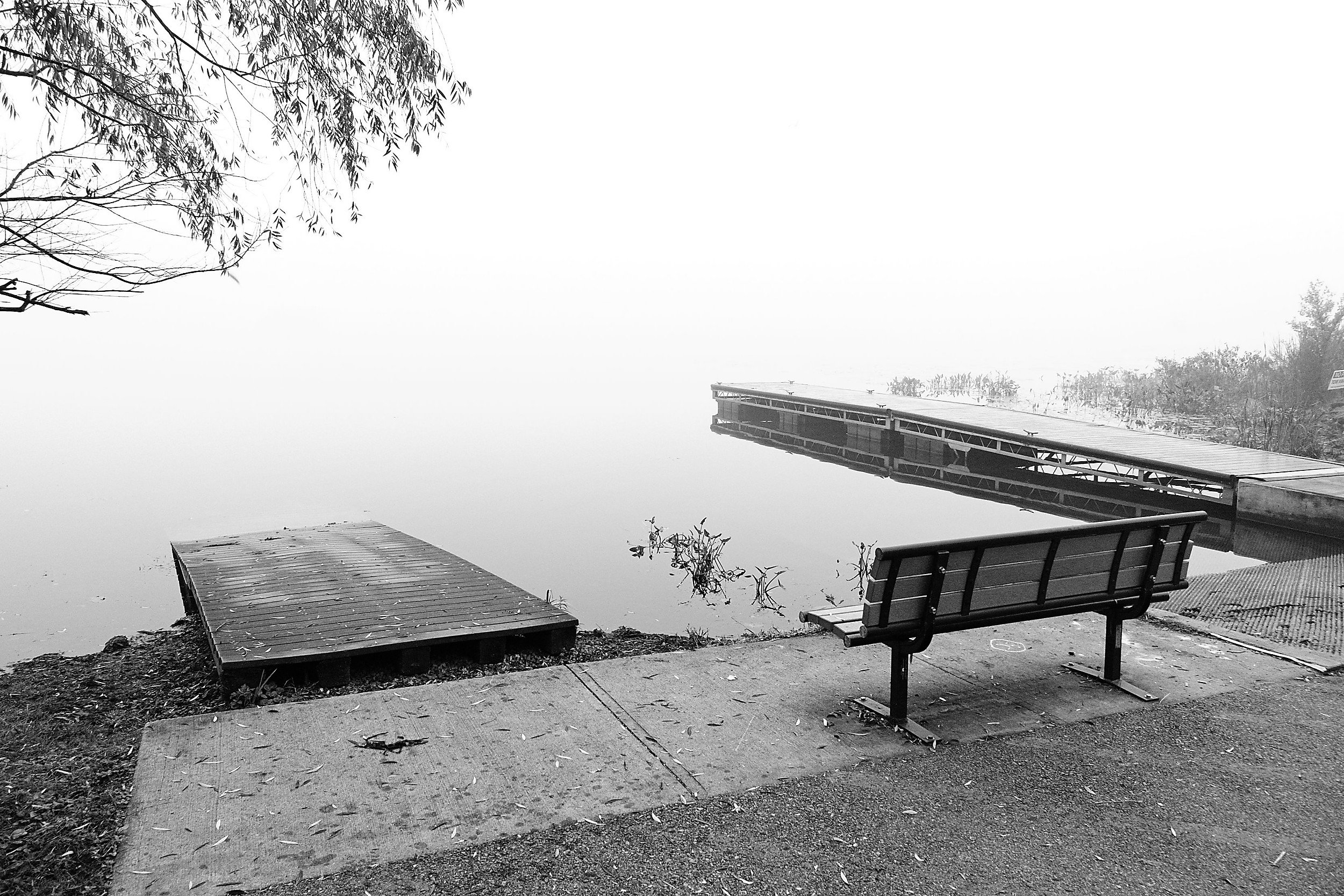
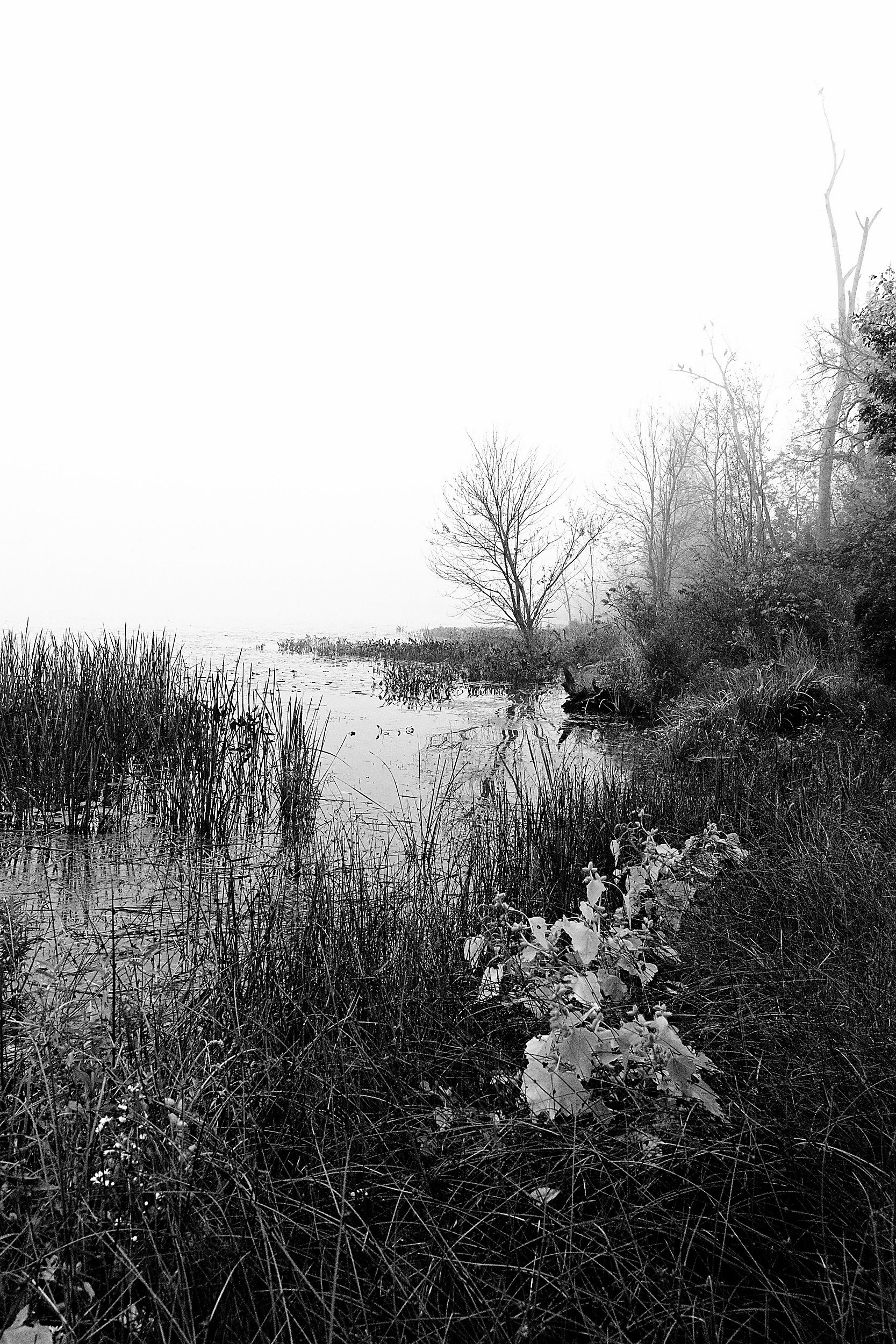
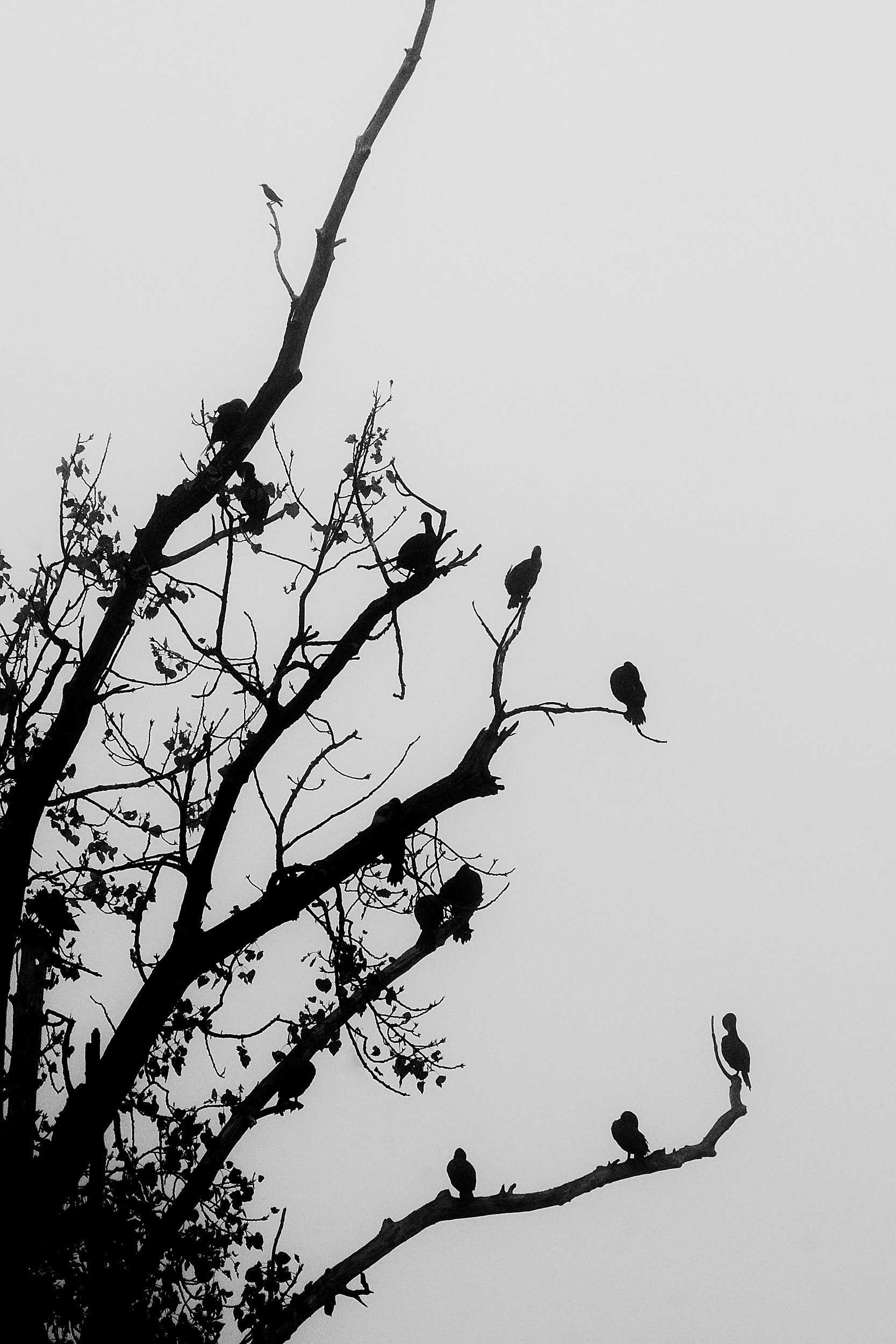
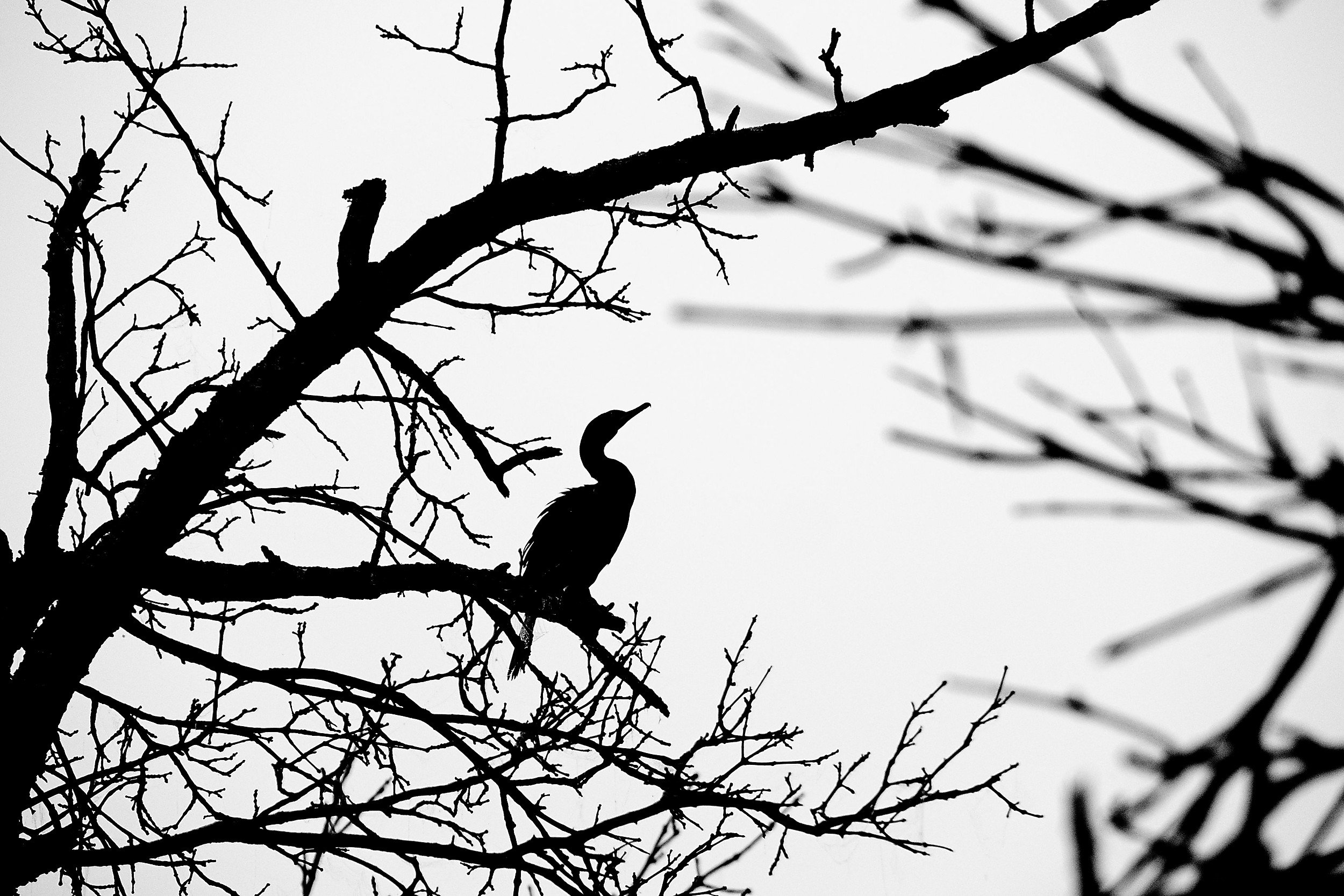
My initial objective was to capture the moment when the sun would start clearing up the fog, creating that incredible golden shine I had seen here before under similar circumstances. However, As it happened, the fog was very dense, and the sun didn't show all day. I, therefore, changed my intent and used the whiteness of the mist to create the contrasty black-and-white images I am sharing here.

I edited the raw images in ON1 with some basic adjustments:
basic image enhancements
converting to black and white
increasing the 'whites'
increasing contrast
While I could not create the images I originally had in mind, I am pleased with the final result.
Conclusion
Round Lake, NY, is a hidden gem that has captivated photographers and nature enthusiasts for generations. Its rich history, natural beauty, and the magic of early morning fog make it a truly remarkable destination. As a landscape photographer, I have had the privilege of capturing its essence during this foggy morning, which left me with a deeper appreciation for the timeless charm of this serene oasis.
Round Lake's history, from its indigenous roots to its role as a spiritual retreat and educational center, is a testament to its enduring significance. Its location near the Adirondack Park Preserve ensures the preservation of its natural beauty for future generations to enjoy. And the fog that envelops it during the early hours of the day transforms it into a realm of enchantment, where every photograph becomes a work of art.

As I continue to explore Round Lake and document its ever-changing beauty, I am reminded of the importance of preserving such natural treasures. Through photography, we capture the essence of these places and inspire others to appreciate and protect them. With its rich history and captivating fog, Round Lake will remain a source of inspiration and wonder for those seeking the natural world's magic.

Beyond the Cars: Photography as a Window into the People and Communities that Surround Car Shows
How Photography Can Tell the Story of Car Shows As A Social Phenomenon
Since their conception, cars have captured the interest of all kinds of people: those who are interested in design, those who are interested in racing, people who are interested in mechanics and engines, those who like to show off with fancy cars, and individuals who collect cars, to name a few.

How Photography Can Tell the Story of Car Shows As A Social Phenomenon
Finally, finally, finally! I have finished my essay on car shows and the people who attend them!
It seems to me that an increasing number of car shows are happening in our country. During summer, there is at least one every weekend in every city and town, and often additional events during weeknights. And this appears to be the same in South Carolina (where I used to live), New York (which I now call home), or any other State, according to the announcements I see on social media.
Initially, I was made aware of these events by my daughter, who, for her final project, "The Soul of the Classic Car," for her BFA in photography from Winthrop University, focused on details of vintage cars.

I also may be particularly aware of them because I owned a Mazda Miata for some time, and looking at other small sports cars on display was fun.
As a result, while I am not a gearhead (I couldn't point out an alternator if my life depended on it), I have visited several car shows over the last three years. In the first instance, I did this partially because I owned that Miata, but the main reason for continuing to go to these shows was because I am intrigued by their social aspect.
A Photographer's Paradise
Car shows provide excellent opportunities for photographers to capture stunning images.
They may focus on photographing individual vehicles and capturing each car's unique design and details (as my daughter did), or they may catch the event's overall atmosphere, including the crowds, vendors, and other attractions.
These events are also excellent for trying various photography techniques, such as close-up shots of car details, panoramic views of the entire event, or capturing the vehicles in motion on the road or track. In post-production, photographers may give their photos a nostalgic feel or use other editing techniques that show the beauty and style of the cars they photographed.
Some photographers, like me, may even specialize in capturing the human element of car shows, focusing on the interactions between enthusiasts, collectors, and other car fans.
The latter group of photogs, and even more specifically, photographers interested in social-documentary, can capture various images that tell the story of the event and its attendees: they may focus on documenting the people who attend the event, including the collectors, enthusiasts, families, and vendors—for example, capturing portraits of attendees and candid shots of them interacting with the vintage cars on display.
In addition to documenting the people directly, a social-documentary photographer may also focus on images of the cars while telling the personal stories behind each vehicle. Or they can record the different activities at the show, such as competitions, demonstrations, or presentations.
Whatever the photographic genre they specialize in, photographers at car shows have a unique opportunity to capture the essence of automotive history and design, share that beauty with the world through their images, and highlight the significance of cars in American culture and history.
I am passionate about capturing stories and experiences of people and events through my camera lens. Therefore as a documentary-style photographer at car shows, I aim to capture the event and its attendees in a way that gives the viewer a sense of the atmosphere and the unique culture and community surrounding the cars.
And while I am often struck by the beauty of the cars on display, I am even more interested in the people who attend the show. So often, I approach attendees, introducing myself and asking about their stories and experiences with classic cars. Everyone has a unique story: about their first car, a restoration project, or the history behind the vintage vehicles on display.
I can spend an entire day taking pictures and talking with attendees, documenting their experiences and stories. I love to capture images of families enjoying the event, collectors admiring classic cars, and enthusiasts discussing the intricacies of vintage car design. Since I am there, I also take close-up shots of the cars, focusing on their unique features and design elements.

Some thoughts about the future of this social phenomenon
Visiting these events, I always wonder whether these car shows are part of a dying culture - specifically, those focused on vintage cars.
Not immediately, but how about 10 or 20 years from now? Most cars from the 1970s onwards, which by then will be 'vintage,' don't have the exciting designs that the vehicles from the 1940s through 1960s have. And even further in the future, will people get excited to see a 'vintage' Tesla?
Car enthusiasts will likely find ways to keep the current oldtimers running. I have seen vehicles from the 20s at car shows; keeping a 1950s car running for a few more decades might be doable.
And because the newer models and electric vehicles are less exciting, there will likely be more demand and enthusiasm to keep the oldies on the road and for enthusiasts to come together to enjoy them.
Is the current abundance of car shows a flare-up of a dying phenomenon, or will they survive despite, or maybe because, of the boring contemporary models and current EV developments? The future will tell.
For now, I hope my photos will help conserve some of the history and culture of the car-enthusiast community.

Photography Skills and Project Management
How my photography makes me better at my day job
Working with people is essential to my day job and documentary-style photography. From one-on-one meetings to global zoom meetings, from capturing a general street scene to documenting protests. Therefore…
How My Photography Makes Me Better At My Day Job
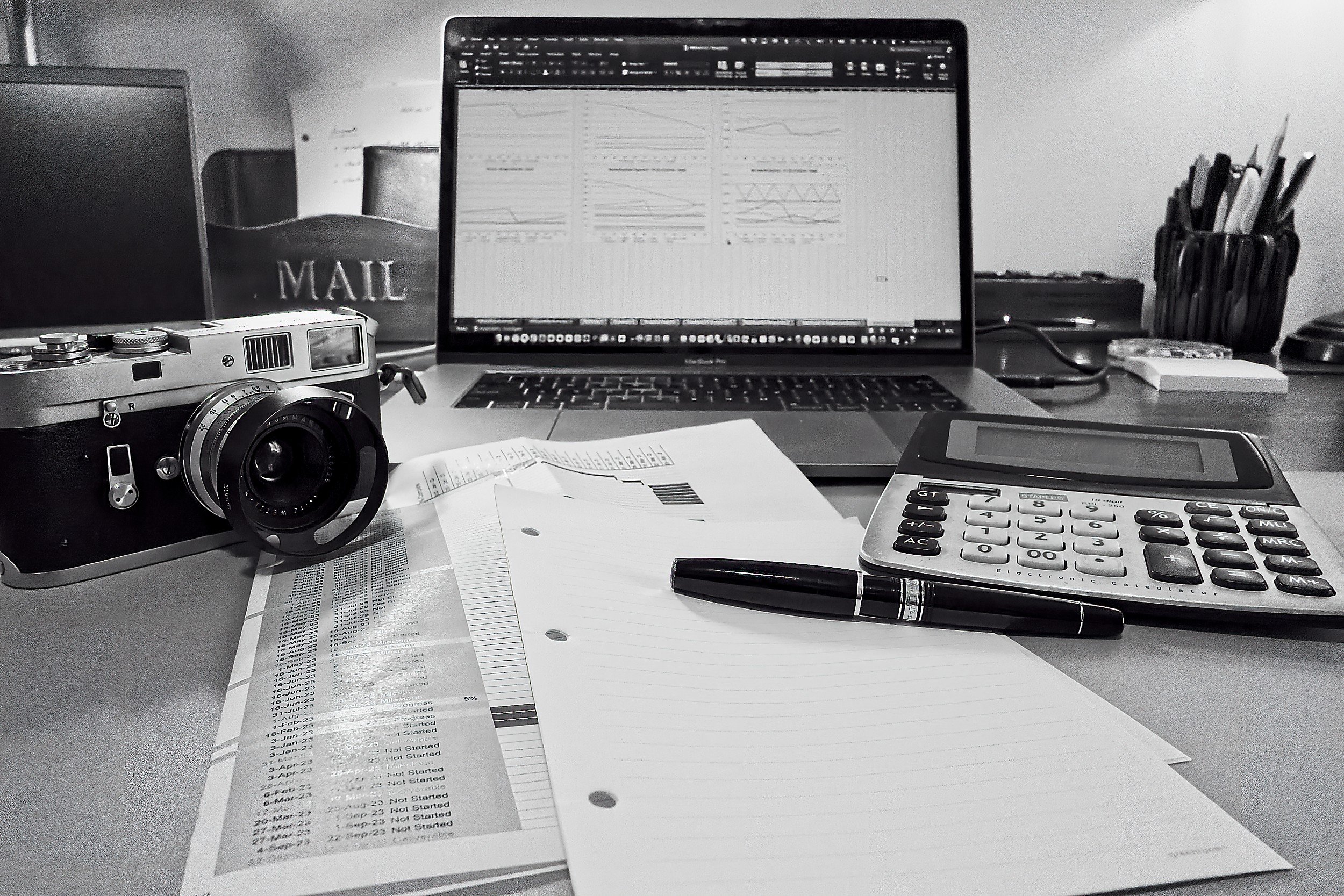
Working with people is essential to my day job and documentary-style photography. From one-on-one meetings to global zoom meetings, from capturing a general street scene to documenting protests.
Therefore, relating to people and understanding why they are doing and reacting as they do is crucial for success in both hobby and professional life.
After re-reading my article about finding focus, I realized that the skills I need to succeed at social documentary-style photography are also crucial for my day job, which mainly focuses on leading and executing projects with global teams.
In this article, I explain why these skills are essential for my social photography and how continuously developing them will also make me more successful at my day job.
Having a vision
While I sometimes go out on the streets to capture images of whatever piques my interest, I often have specific photos I want to take in mind. Whether for a long-term project, I am working on or going to a particular event, I want to document that day.
Having a vision of what I want to accomplish with my photography is important because it helps me define the images I need to create. And although I need to stay flexible in my approach, without a vision (e.g., the idea for a specific essay), I could quickly lose direction and create many images without working towards the final result I want to achieve.
This vision is also essential to explain to others and myself what I want to achieve with a photo project. Which ultimately translates into an artist's statement.
Similarly, having a vision for the projects I am working on at my day job is critical to focus on the final objectives and being able to explain the 'why,' the purpose, principles, and intended outcomes of each project.
Observing
Being a good observer is critical for documentary-style photography: to see what is going on, what to capture, and to be aware of my surroundings.
If I focus on one scene only or capture an image too quickly, I might lose out on other photos. For example, more could be going on than I noticed in the first instance, or a scene might develop. And sometimes, it is more interesting to capture what is behind me (e.g., people reacting to a situation) than the main event itself.
Being aware of my surroundings is also vital for safety reasons. For example, people around me might not be happy with me taking pictures, or someone could use unattentiveness to my environment as an opportunity to take my bag.
When working with teams in my corporate role, observing is essential to be aware of the team's mood and reactions in meetings. It helps me to ensure everyone is participating and understand who is supportive and who objects to ideas and topics discussed.
Observing is also very important for change management: knowing who supports, who is indifferent, and who objects to proposed change is essential to decide what actions to take or what additional communication is necessary.
Seeing patterns
Looking back at images created for a specific project or as stand-alone street candids, I always look for patterns to understand how they relate to each other.
It allows me to see trends and behavior patterns, triggering ideas for essays or a themed set of images that are an addition to my body of work. Seeing patterns is also crucial to building a consistent image flow within an essay or collection of images to create stories with a clear start, middle, and ending.
Similarly, understanding behavior patterns in my work environment enables me to understand group dynamics and the 'why' of people's actions: as an extension of observing, it helps me during meetings and making decisions to improve change management efforts.
When reviewing processes, awareness of patterns supports using and optimizing synergies and increasing efficiency and effectiveness for global operations.
Being creative in finding solutions and answers
Creativity is a skill any photographer should have - including those specializing in social-documentary style images.
And while creativity and finding solutions are essential for getting the composition and using the aperture and shutter speed that best supports the mood I want to create, they are also vital to find the right approach to each situation.
For example, how to get to a spot where I can get the best possible picture of a scene while staying safe and not interfering with the situation. Or how to best approach people I want to photograph without disturbing their activity.
A creative mindset to find solutions is also essential for my professional work to stimulate out-of-the-box thinking for me and others. Defining how to improve processes and simplify things needs a solution-minded approach for which we often need to break through established thinking patterns and change how we look at delivering services.
Creativity also is vital to find ways to bring people and minds together: depending on the team setting and the topic to review, different techniques are needed to get results, be it following a structured meeting agenda, brainstorming, or having open discussions.
Seeing and listening to stories
The stories I see and create are my "why" for focusing on this genre of photography.
Sometimes I see stories while walking the streets, taking one or two images of a situation. In other instances, I am working on a project and deliberately creating sets of pictures that tell a specific story. And sometimes, I look back at individual images and realize they, combined, tell a story bigger than each photo on its own.
In my work, listening to input from several team members, often from different cultures, helps me to understand what the outcome of a specific project will mean for them. Especially understanding how they will react to change is essential. Understanding the stories they tell also helps me find solutions that will work for specific groups and the global team simultaneously.
Telling stories, explaining things
Not only is listening to and seeing stories vital for my photography and project management job, but the other side of the coin is as essential.
With my photography, I need to keep my audience in mind and create and present my images in the best possible way to show them the why, what, who, when, and how of what happened that I found essential to capture in images.
Similarly, when leading change projects, it is required that I can explain clearly to different audiences the why, what, how, and when of change and how the change will impact people and processes.
I often use analogies to help people visualize things and understand what will change and why. An additional perk of being a photographer is that I have a visual library in my head that helps me develop those stories.
Staying open-minded and objective
As a documentary-style photographer, I must be open-minded to tell my subjects' stories as objectively as possible. However, as I explained in a previous article, no photographer is one hundred percent objective: by choosing the angle of the picture, choosing what to include and what to exclude from the frame, by selecting apertures and shutter speeds that create a specific mood, they bring in subjectivity.
Therefore, it is necessary to recognize this subjectivity bias to be as objective as possible in depicting the action captured, especially for social-documentary photography.
The same necessity applies to my day job: working with people with different knowledge levels, cultural backgrounds, and change-mindedness, I constantly need to be aware not to be judgemental and bring my thoughts and ideas immediately to the foreground.
I first need to understand and acknowledge why people are making certain assumptions or are change averse before I can answer any questions.
Also, I need to be aware of not falling into the trap of the 'not invented here' syndrome myself and not reject any ideas only because I did not come up with them.
Bringing it all together: seeing the bigger picture
All skills mentioned above help me see the bigger picture (no pun intended), whether working on a photography project or leading a process change project.
Having a vision is indispensable for keeping the end goal in mind while working through the day-to-day activities to reach those goals. Irrespective if it is taking, culling, sequencing, editing, and post-processing pictures, working on detailed project plans, having meetings, or drafting documents.
The ability to see the concept, strategy, and final objective and simultaneously roll up my sleeves and do the work is necessary to succeed in both my day job and photography.
And that need for skillfulness is what I like most in my photographic endeavors and my corporate job: I call it "having the agility to quickly move between the balcony and the dancefloor."
The Case For Film
Will Artificial Intelligence aid the revival of film photography?
Since the inception of photography, photographers have manipulated images to show something different from what they initially captured when pushing the shutter button…
Will Artificial Intelligence aid the revival of film photography?
Since the inception of photography, photographers have manipulated images to show something different from what they initially captured when pushing the shutter button.
And since Niépce created the first photographic image, the evolution of technology has made it increasingly easy for us to change the original image.
Initially, photographers could only do this in the wet darkroom, with techniques like dodging and burning, hiding parts of the negative or stacking negatives.
Now, in the digital age, after scanning a negative or working directly with a file from a digital camera, photographers can easily remove or add objects, change colors, distort images, add filters to create specific moods, and make a multitude of other changes to the original image.
And while digital photo editing tools have been around for several decades, the latest development in image creation and manipulation is a total game changer: text-to-image Artificial Intelligence (AI).
AI can do more than manipulate an image: it can create a photo without needing an actual subject, using program instructions (not totally accurate, of course: text-to-image AI uses databases with millions of images made of real objects or people).
While still in its infancy, developments are going extremely fast, and we already see AI being used to create photo-like images of portraits, landscapes, food, and pictures in the style of the old masters of painting.
Since photographers using Photoshop already led to controversies, AI has the potential for even more debate.
What images can we trust?
Digital photography increased the challenge of answering this question because digital photos don't exist: they are only a bunch of specifically arranged zeroes and ones. Not even that: they are bits stored in a magnetic region on a disk or as electrical charges on an SSD.
And while we can ask the trust question regarding any photo altered with editing software, the use of AI to create images out-of-thin-air makes this question even more critical.
Digital photography, as I pointed out in a previous article, still needs a subject that reflects, absorbs, or blocks light to create a picture. Therefore, we still would have that subject against which we can check the 'truthfulness' of the created image. With AI, we don't even have that.
We are entirely at the mercy of the binary gods.
It is probably not without reason that image fact-checking is now a common practice on social media and other communication channels.
Photos created on film, in stark contrast, are tangible from the start.
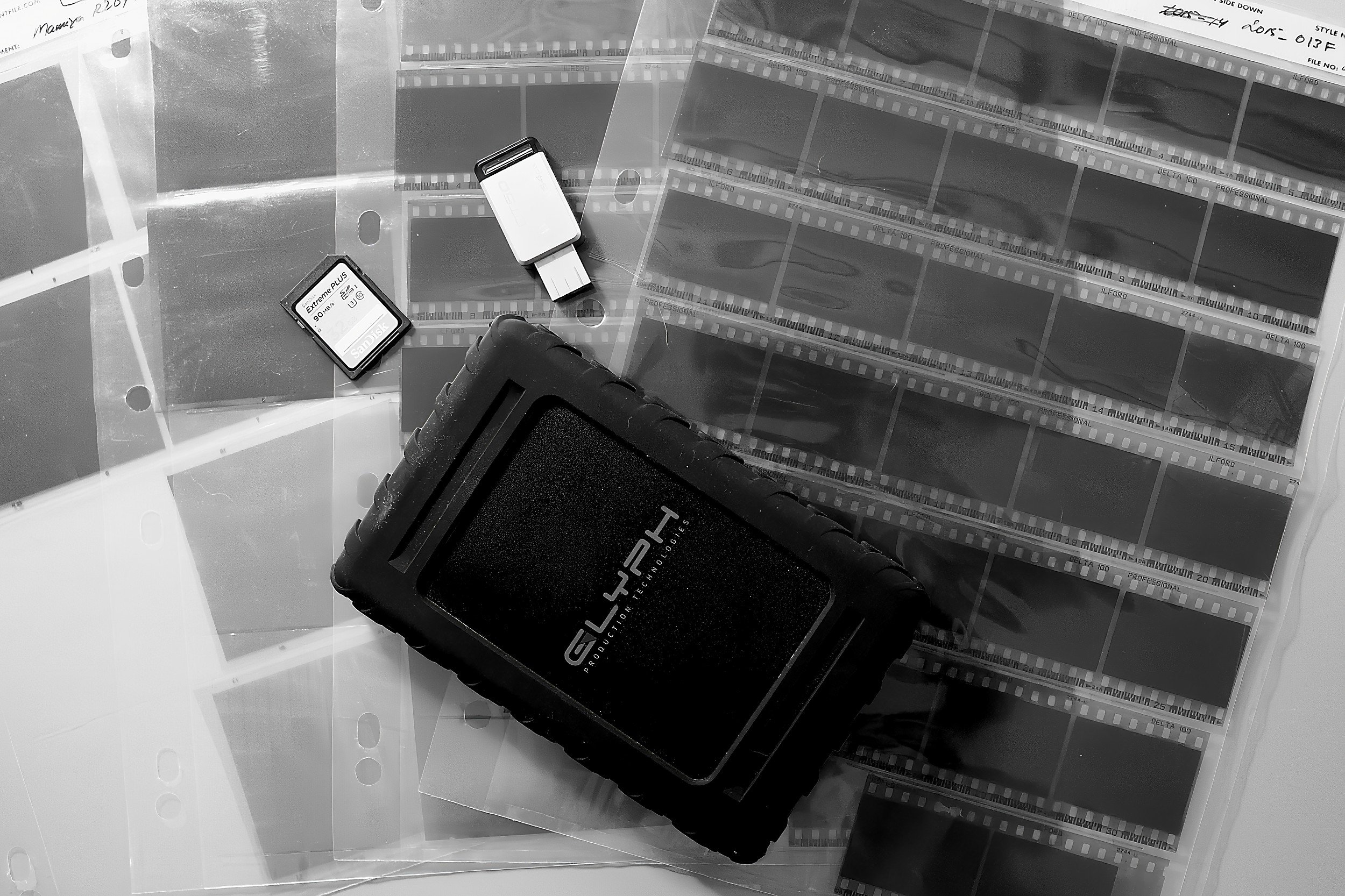
A roll of film base with a light-sensitive emulsion is exposed to light and then chemically developed, creating a negative film strip you can hold in your hand! And while it is possible to alter that negative (e.g., with markers or acid), it would bear clear evidence.
Therefore, any final image that starts on film, whether printed in a wet darkroom or scanned and edited with photo editing software, is backed up by a negative that provides tangible proof of the image as the photographer initially captured it.
Consequently, I can see the revival of film photography, which has been going on for several years now, becoming even more vital for specific genres. Especially with people for whom the image's truthfulness is critical:
Crime and other photography that needs 100% proof of not being manipulated;
Documentary photography and news photography;
Art collectors;
Museums and students: to see what the original image was and what the photographer has edited to achieve his vision or message.
Will artists, and other professional and hobby photographers, now flock in swarms back to film photography?
I don't think so.
Digital photography is too far evolved and has too many positive aspects: going back to film will not be practical from a workflow perspective for most photographers.
And while I don't use it, AI, the newest member of the image creation family, is, in my opinion, an excellent development. It is a new tool that has its rightful place in the complete range of visual arts.
Entirely digital art also has found its place in the photography and public art world: look only at the fact that NFTs achieve (sometimes extremely) high price points.
However, like the written proof of authenticity that photographers add to their prints, the tangible film negative could become the new proof of authenticity for those photos that require it.
And as such, the increased digitization of art through AI could be an additional stimulus for photographers in specific genres to go back to film.

Finding Focus
THE NEXT STAGE IN MY PHOTOGRAPHIC EVOLUTION, OR: HOW TRYING PURE STREET PHOTOGRAPHY HELPED ME TO FIND MY ROAD AHEAD
While I explored different photographic genres over the years, since moving to the US and being driven by my passion for people, I have come home to my true passion: documentary-style street photography and essays.
THE NEXT STAGE IN MY PHOTOGRAPHIC EVOLUTION, OR: HOW TRYING PURE STREET PHOTOGRAPHY HELPED ME TO FIND MY ROAD AHEAD
Have you ever looked at a vintage photograph and wondered who the people in that image were, how they lived, and how the cities seemed so different then?
As you can read on my About page, I grew up in a small village in the Netherlands, and when I got my first point-and-shoot camera in the early 1970s, I could not foresee that it would ignite a lifelong passion for photography.
While I explored different photographic genres over the years, since moving to the US and being driven by my passion for people, I have come home to my true passion: documentary-style street photography and essays.
When I talk about documentary-style photography, I don't mean documenting the 'big' things: famine, the US border crisis, global warming, deforestation.
Of course, if I get the chance, I will take images at a Women's March or similar events I might be able to attend (or stumble upon), but in general, I am more interested in the mundane of daily life.
Creating stories about regular people who make up the diverse population of my adopted country, showing how a small town looks today and the people in it; documenting small events like car shows that show the enthusiasts who come together there and create a unique culture; people at a horse race track, dancing, eating, gambling, having fun; telling the story of a master craftsman, who creates beautiful objects with his tools.
While maybe mundane, these all are unique pockets of the world we live in and the people who inhabit it. And when I do take pictures at events, I am more interested in the individuals attending (the proponents, the opponents, and the spectators) than in the event itself because I firmly believe that the individual stories provide the human connection to those events.
For some time, I thought creating and focusing on pure street photography images would satisfy my urge to tell these stories. So I started making what I thought were nice street photos and joined street photography groups on Facebook and Instagram.
The critique I received from experts in the field was an eye-opener and made me more critical about my and other photog's street images. And the more I learned about street photography, the more I (tried to) create street photography, and the more I looked at other photogs street photography, I found it unsatisfactory, boring, disappointing, and repetitive. So many images tagged as street photography are not, and I often saw a lot of copy-cats (how many iterations of pictures of people walking through a patch of light in an area otherwise in darkest shadow can one create?).
Understand me well: pure street photography is excellent, and I love looking at those images! But it also is rare and challenging to create.
Pure street photography is very much dependent on a decisive moment, and I realized there is so much more than the decisive moment: I want to capture a current moment, documenting in 1/125th of a second the sociohistorical situation of a particular place at a specific time. Wow, those are big words! But you probably understand what I ideally want to achieve.
Capturing a 'decisive moment' for me is a bonus, not a goal. There is so much more to show, achieve, share, and create awareness of that might not be captured when focusing on the decisive moment. Instead, I want to tell that broader story, which can be about people, a place, or an event and which, for obvious reasons, in most cases, is a combination of these.
While I like to work on projects to create photo essays, you can ask if a single 'snapshot' also can tell this broader story.' I think so. But I also want to explore how that single image relates to other pictures looking for patterns in human behavior.
Reading photo books helps me understand what I want to create.
On my journey to finding my focus, I have 'met' several current and past photographers whose work has influenced my thoughts about what I want to achieve and how to achieve it: Eugène Atget, W. Eugene Smith, Jill Friedman, Bob Friedlander, Helen Levitt, Robert Frank, Inge Morath, Sally Mann, O.N. Pruitt, Berenice Abbott, Jacob Riss, Dorothea Lange, Lewis Hine, the photographers who took the images in Lost London, Elliott Erwitt, and many others.
As mentioned above: making a good street photo is challenging. Is this next stage in my photographic evolution possibly a flight because it is too complicated?
To answer my question: No, composition, situation, image quality, light, and all other ingredients that make a pure street photo are also crucial to making the documentary-style photos and essays I (want to) create.
As I mention in my artist’s statement, inspired by a quote from Anais Nin, I want to share not the obvious but what we usually are unable to see: when I document, what can I show that others might not see?
Are you familiar with the phrase "write down to remember"? I want to "photograph to remember" and to help others remember. Now and, hopefully, in the future. While I create images and stories for me and my current audience, it would be great if I could make the 'vintage images of the future.' If even only one.
Looking back at the images I created over the years, especially since I live in the USA, it is not surprising that my journey is taking me in this direction. But with the help of the critique I received, seeing what current and past photographers create(d), and looking at street photography on social media, I have found the focus I was missing.
Now that I know better what type of images I want to create, I also can better define the tools I want to use. So while my camera setup underwent some changes last year, my main tools will continue to be the Fujifilm X-Pro1 and the Leica M4. Both with 35mm (or equivalent) lenses.
Why these?
Both are (relatively) small and discreet cameras and very well suited for the work described above, most of which still will happen on the streets.
Digital has all the positive assets we have learned to appreciate over the last couple of decades and cannot miss from any photographer's toolkit.
But why film?
First, even after scanning, film still has that unique look that is very difficult to emulate in digital post-processing.
Secondly, because of its limitations, working with film makes me more aware of the 'why' and 'what' to photograph.
And thirdly. There is no third. I do not use film because it 'makes me slow down.'
Of course, it slows me down: hand-metering light, manual focusing, manual film transport, only 36 images before I have to rewind and change the roll manually. And I will remember every time before pressing the shutter release button that every picture on film is far more expensive than one taken with the X-Pro1.
Now here is a curve ball.
Talking about film, I ponder using medium format for my documentary-style work. But that is a story for another day.
My journey is not over yet, and I still have a long way to go, but I have found focus and a road ahead.

Why You Should Use Third-Party Lenses on Fujifilm X-Series Cameras
It Is Probably Not For The Reason You Expect
In last week's article, I mentioned that I purchased a TTArtisan 23mm f/1.4 lens for my Fujifilm X-Pro 1…

It Is Probably Not For The Reason You Expect
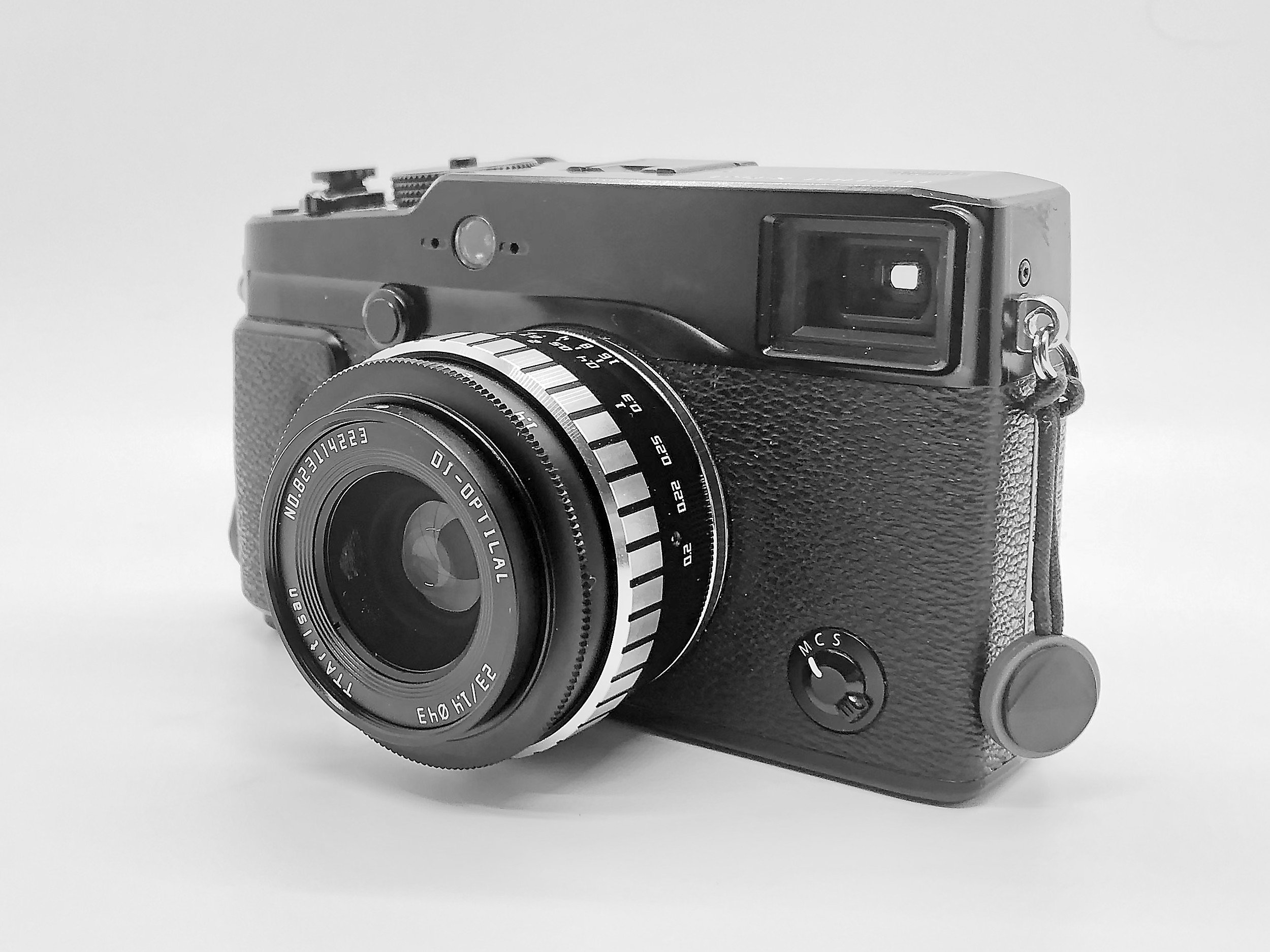
In last week's article, I mentioned that I purchased a TTArtisan 23mm f/1.4 lens for my Fujifilm X-Pro 1.
The initial motive for this purchase was to get a lens with a 35mm full-frame equivalent focal length. However, there is a second reason why I use this and other third-party lenses on the X-Pro 1.
And it is not about image quality.
Why I Use Third-Party Lenses on the Fujifilm X-Pro 1
While there are multiple third-party lenses with excellent image quality, I mainly use lenses other than Fujinon x-mount ones because these have distance and depth-of-field scales.
According to Fujifilm's overview of x-mount lenses, there are currently only three lenses with distance/depth-of-field scales: the 14mm f/2.8 R, the 16mm f/1.4 R WR, and the 23mm f/1.4 R.
While the 23mm would perfectly do the job and probably be easier since it would auto-focus, it also is about seven times the cost of the TTArtisan 23mm. So that would be an additional reason to go third-party.
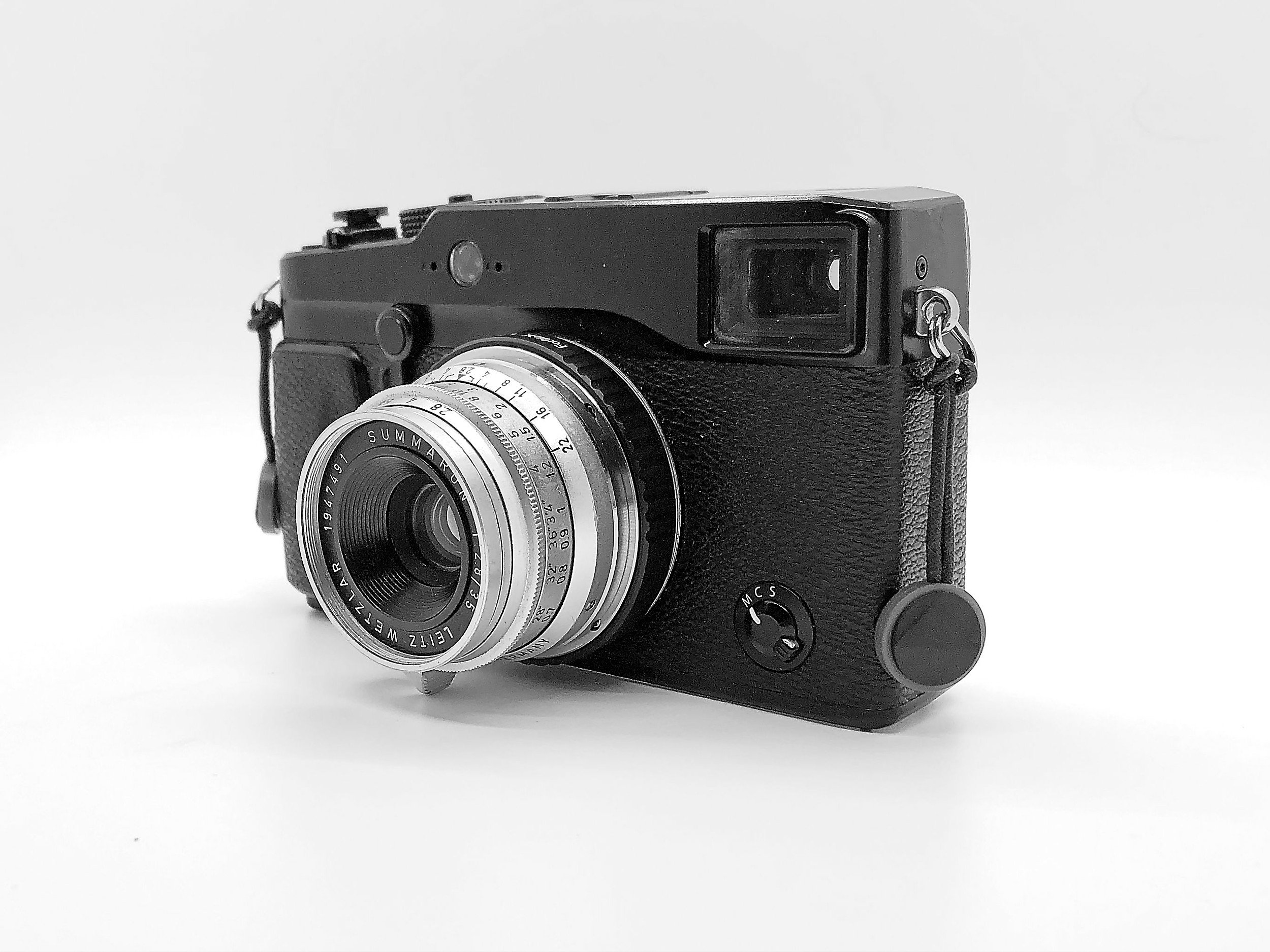
As mentioned last week, I added the 23mm to my toolbox for focal length consistency because it matches the 35mm full-frame equivalent of the Summaron on my Leica M4.
Sometimes, however, I want to use a slightly longer focal length. For example, when I do not want to get too close to my subjects or when I can not get close enough to them because of the actual situation.
In those cases, I want to use a lens with a full-frame equivalent focal length of (about) 50mm or 75mm.
For these instances, I have several third-party lenses available that can either be directly used on the Fujifilm X-Pro 1 or by using an adapter:
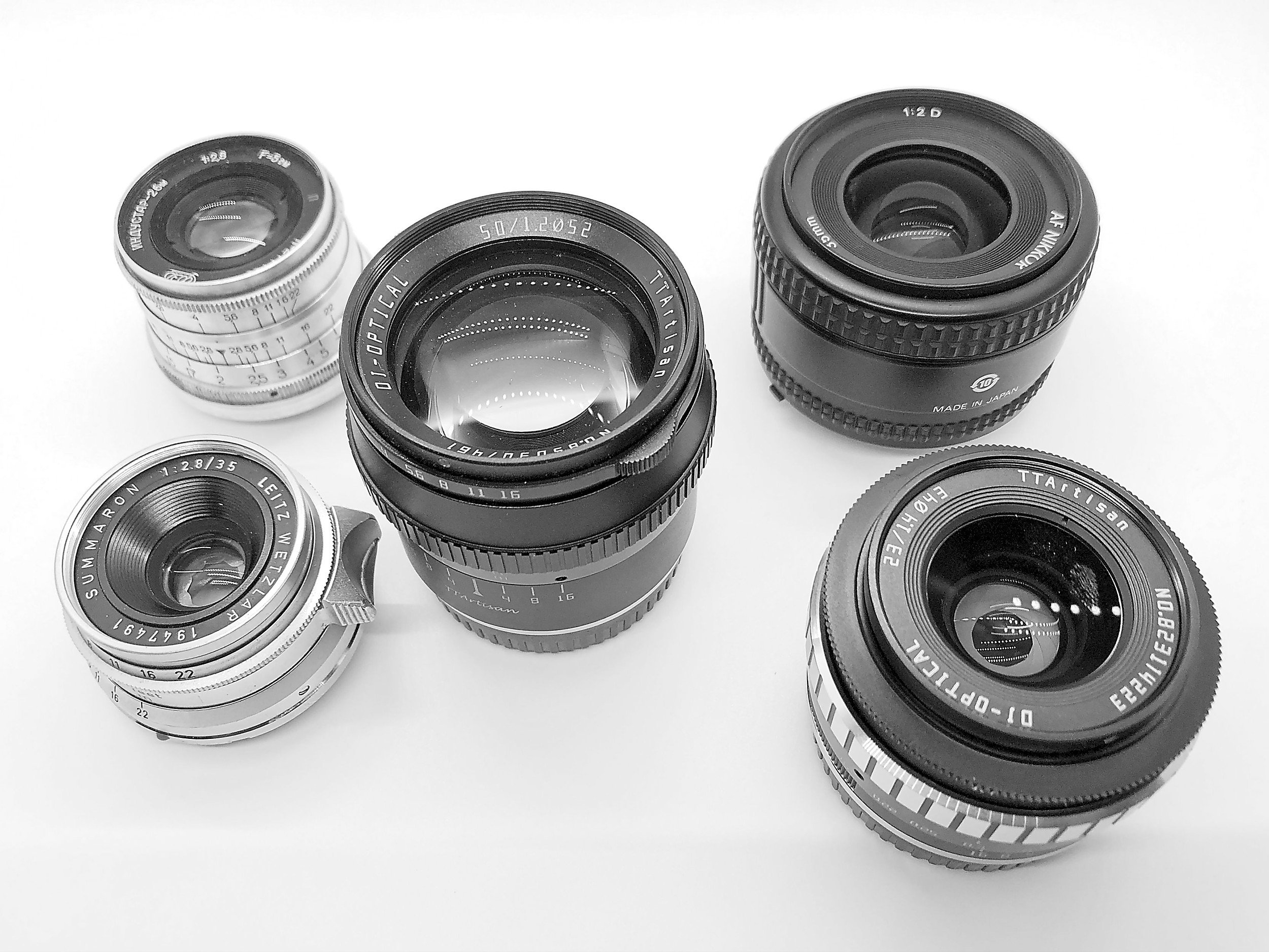
An AF Nikkor 35mm f/2.0D, which is a remains from my Nikon days
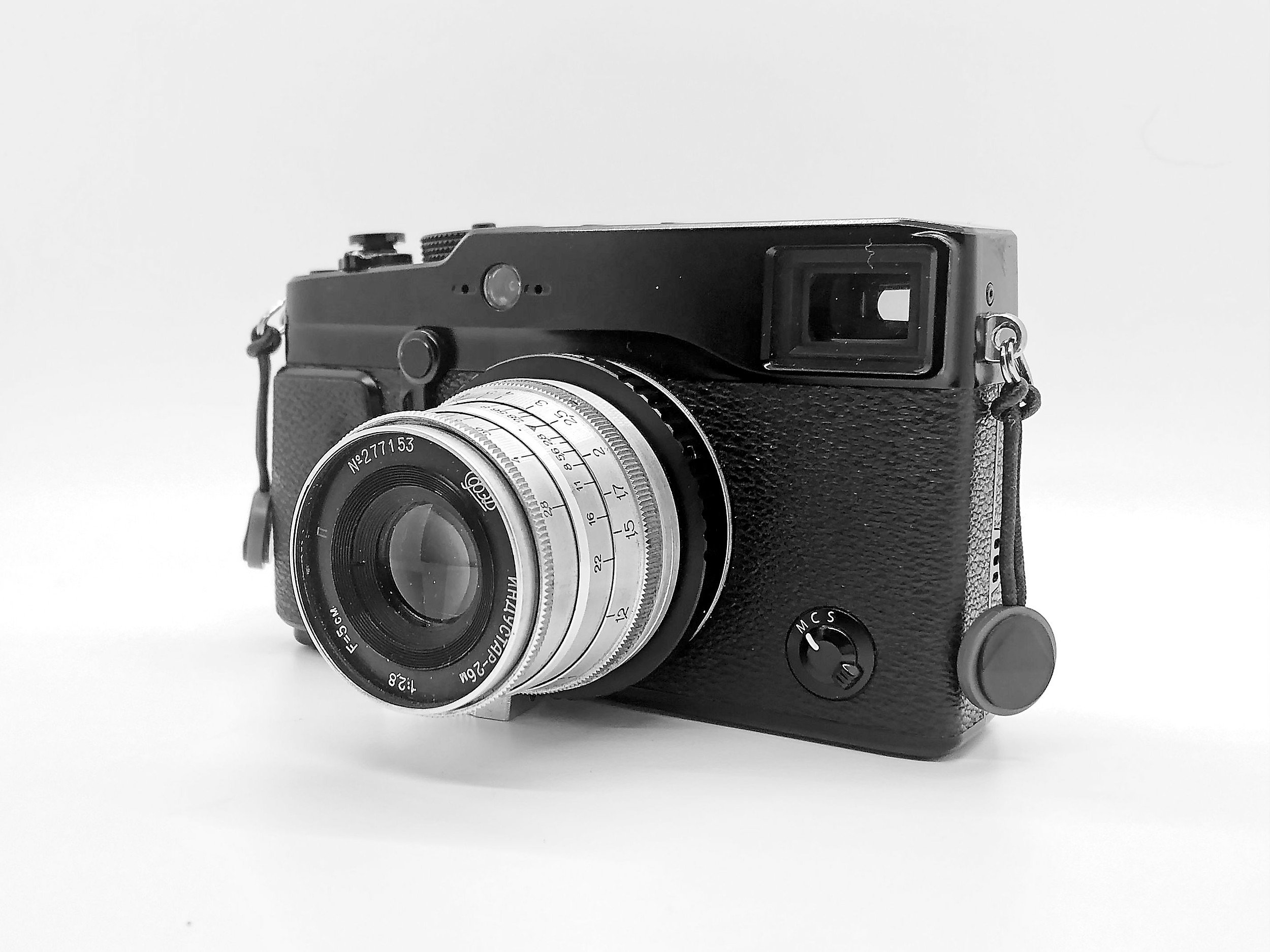
An Industar 26M 50mm f/2.8, which usually lives on the FED-2
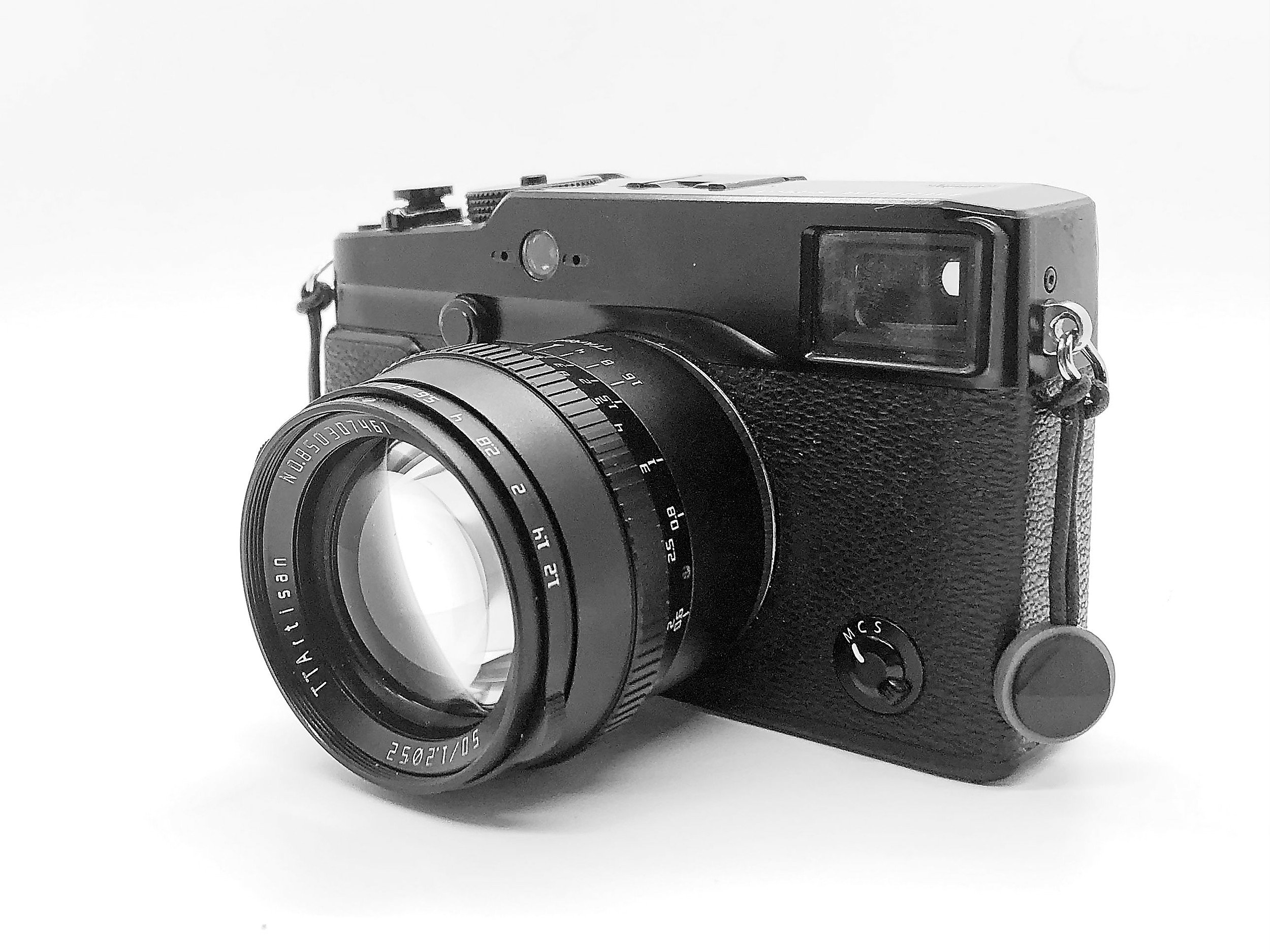
A TTArtisan 50mm f/1.2, with x-mount
And, of course, the Summaron 35mm f/2.8 from the M4
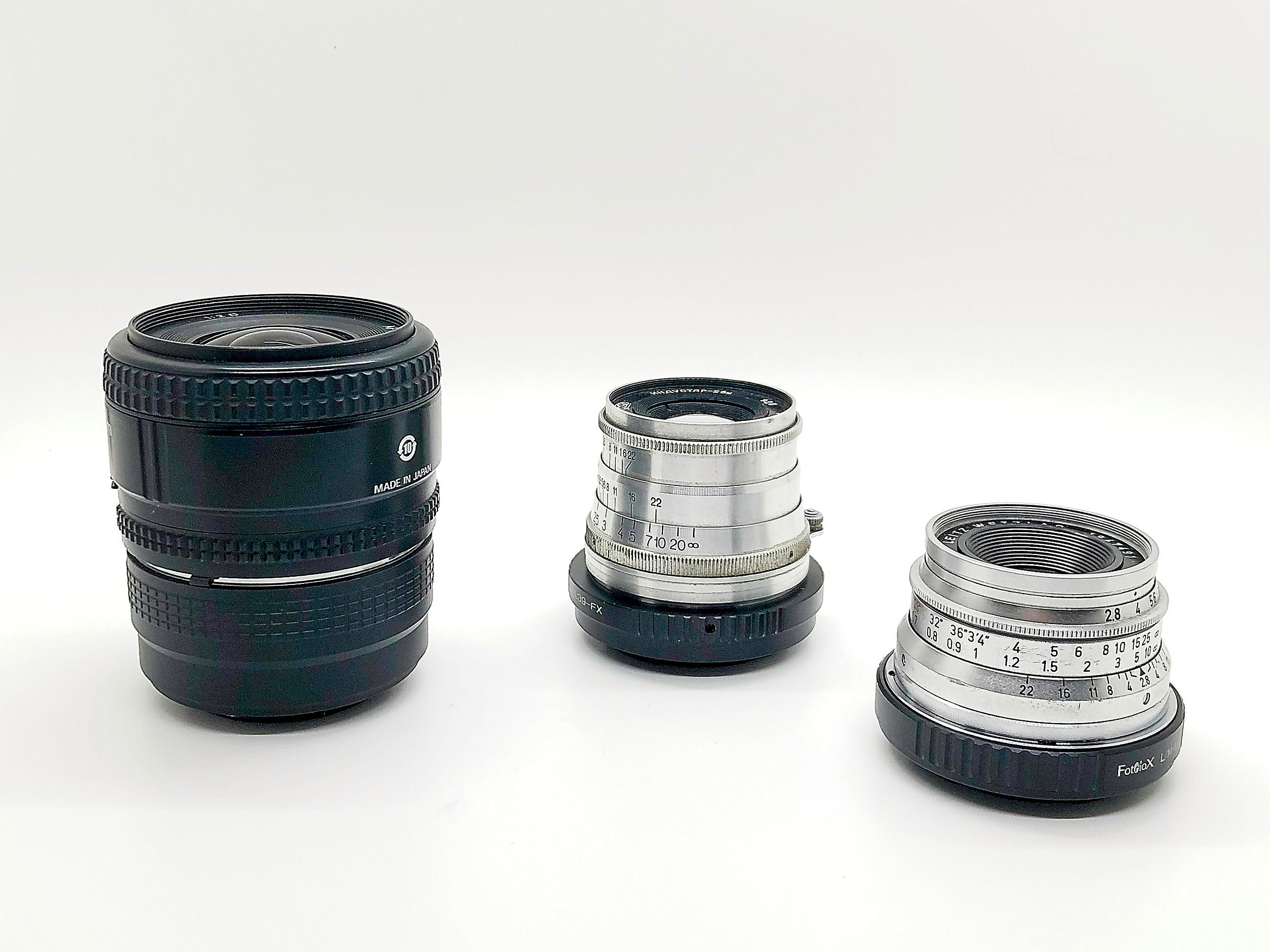
The x-mount TTArtisan goes directly on the X-Pro 1; I have specific adapters for the Nikkor, the Industar, and the Summaron.

Why Is A Depth-of-field Scale Important
As mentioned above, the depth-of-field scale is the main reason to use third-party lenses on a Fujifilm x-series camera.
This is important because it lets me use the zone and hyperfocal focusing techniques, allowing for extremely quick image-taking in the streets.
While all third-party lenses I have are either fully manual or only work as manual lenses on the X-Pro 1, zone-focusing with these lenses is quicker than autofocusing with Fujinon lenses!
If you don't know what zone-focusing is, you can read more about it in an article about zone-focusing with a Fujifilm x-series camera I published a while ago. In that article, you also can read how to zone-focus with x-series cameras when using lenses without depth-of-field scales (such as the fixed lens of the Fujifilm X100F).
How To Use Third-Party Lenses On A Fujifilm X-Series Camera
Since my third-party lenses only can be used as manual-focusing ones, I need to adjust several settings of the X-Pro 1.
First, set SHOOT WITHOUT LENS to 'ON' in Shooting Menu #3.
This allows for taking images without a Fujinon lens mounted.

Secondly, you can adjust the MOUNT ADAPTOR SETTING in Shooting Menu #3 to reflect the focal length of the lens you will be using. Note that this will not help or impact the actual use of the lens. This setting only registers the focal length of the lens you are using, which is then captured in the image's EXIF data.

Lastly, in Shooting Menu #5, I recommend setting MF ASSIST to PEAK. This will help get the correct focus using the Electronic View Finder (EVF). Focus peaking settings on the earlier x-series cameras, such as the X-Pro 1, are limited. The newer x-series cameras, however, have more extensive possibilities.

Notably, when zone-focusing with these manual lenses, I do not even have to use focus peaking and can actually use the Optical View Finder (OVF) of the X-Pro 1. However, especially with wider angle lenses, of course, I then need to be aware of possible parallax errors.
The Trinity Is No More
One Camera Is Gone, And It Is Probably Not The One You Would Expect
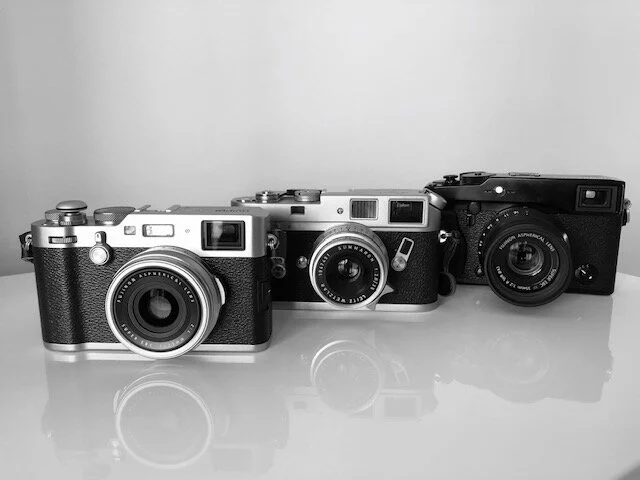
In 2019, I was fortunate to obtain two new cameras that were an excellent accompaniment to my Fujifilm X-Pro 1 and supplemented each other: a new Fujifilm X100F and a used Leica M4.
As I wrote, these three cameras became my Trinity.
One Camera Is Gone, And It Is Probably Not The One You Would Expect
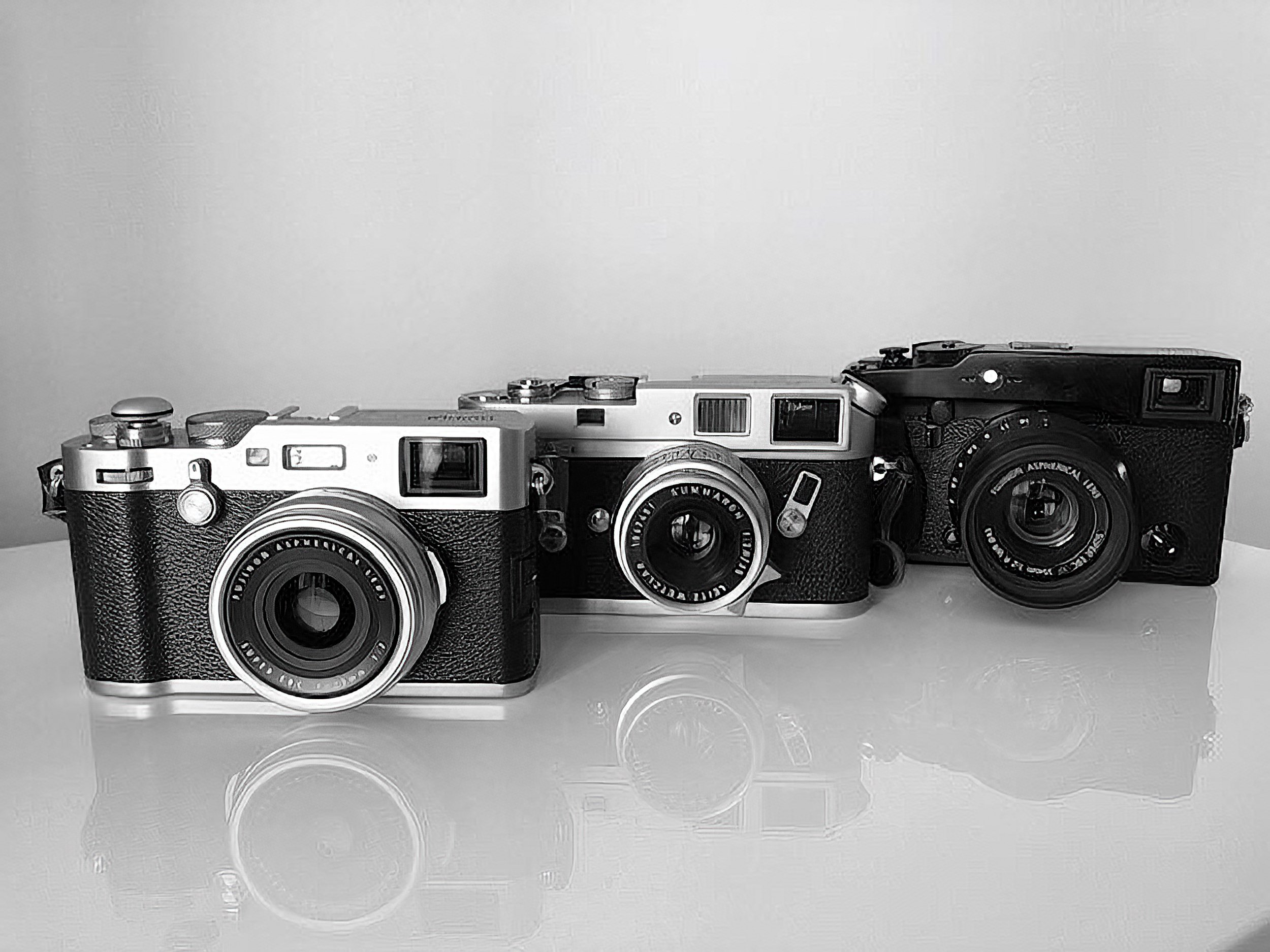
In 2019, I was fortunate to obtain two new cameras that were an excellent accompaniment to my Fujifilm X-Pro 1 and supplemented each other: a new Fujifilm X100F and a used Leica M4.
As I wrote, these three cameras became my Trinity.
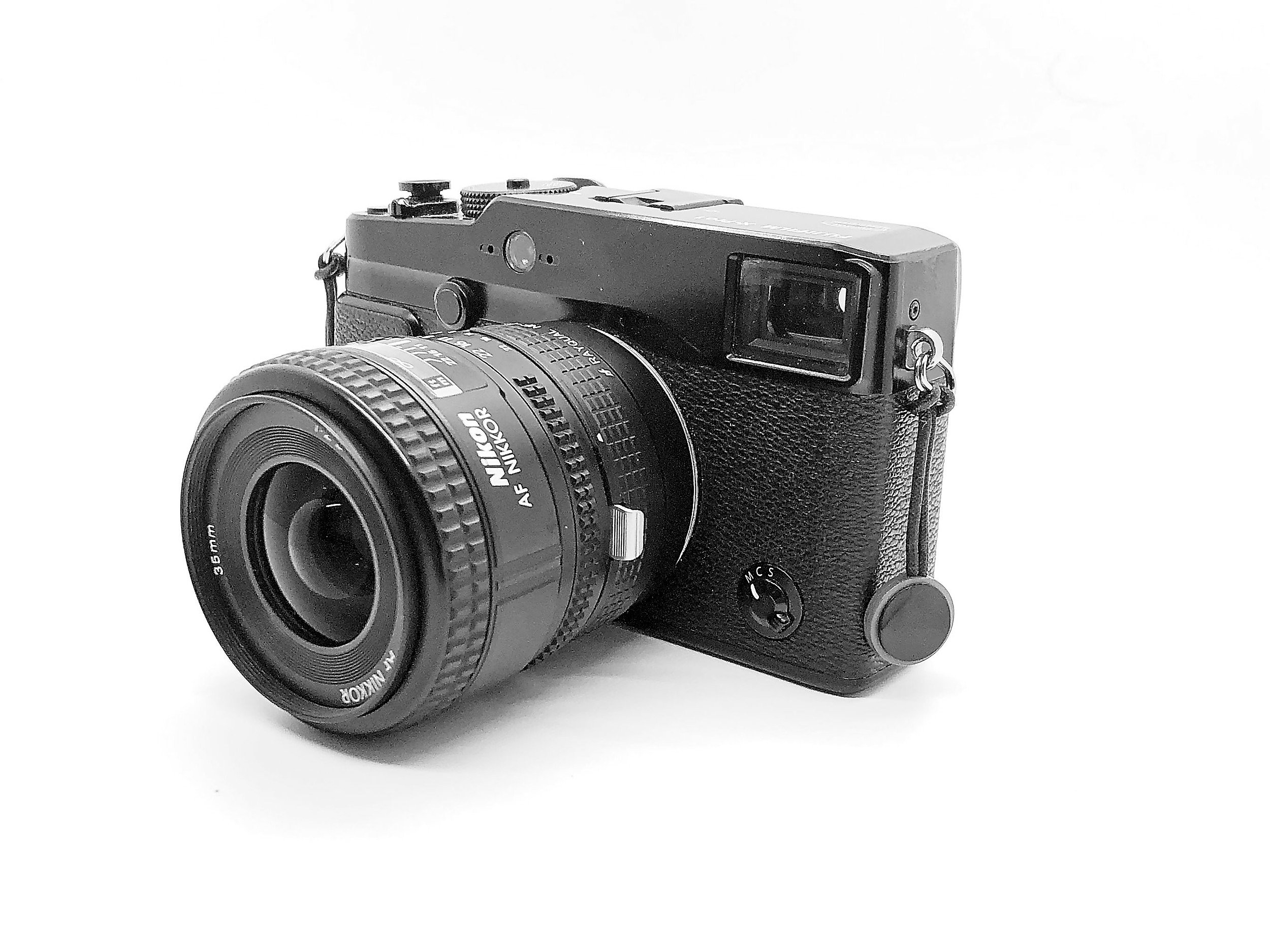
The X-Pro 1 was going to be my exchangeable-lens camera for when I wanted to create images with wide-angle (broader than 35mm full-frame equivalent) or longer lenses.
The X100F (with its 35mm full-frame equivalent lens) and the Leica M4 (with its 35mm Summaron) would be my daily go-to cameras, depending on whether I wanted to shoot digital or analogue.
This setup worked well; I created many street and social documentary-style images and essays with these three tools.
And now I broke the Trinity up.
What happened?
Did one of the cameras break? Did I not like any of them anymore?
Fortunately, none of those.
One of my daughters went to study abroad in September of this year and wanted to take a real camera with her. Although she has the ubiquitous iPhone, she wanted a real camera (insert dad doing a happy dance).
After researching several alternatives and the cost involved, I decided that I was going to give her the X100F.
Yup, I parted with this lovely camera to give my daughter an excellent tool and a fantastic shooting experience.
It is easy to set the Fujifilm X100F up as a 'point and shoot camera, and if she wants to go manual, that is still a possibility.
So there you have it: the X100F is no longer part of my daily toolkit.
While my daughter was thrilled with this decision - and she is making great memories with the X100F in Bonny Scotland - it gave me a challenge and an opportunity.
Without the X100F and its 23mm lens (35mm full-frame equivalent), I no longer had a direct digital match to the 35mm Summaron on the Leica M4. Because the only lenses I had for the X-Pro 1 were a Fujinon 18mm/1.2, a Fujinon 35mm/1.4, a Fujinon 35mm/1.2 XF, and a TTArtisan 50mm/1.2.
All great lenses, which I still use today, but none of them are a direct match to the 35mm angle of the Summaron.
Enter the TTArtisan 23mm/1.4
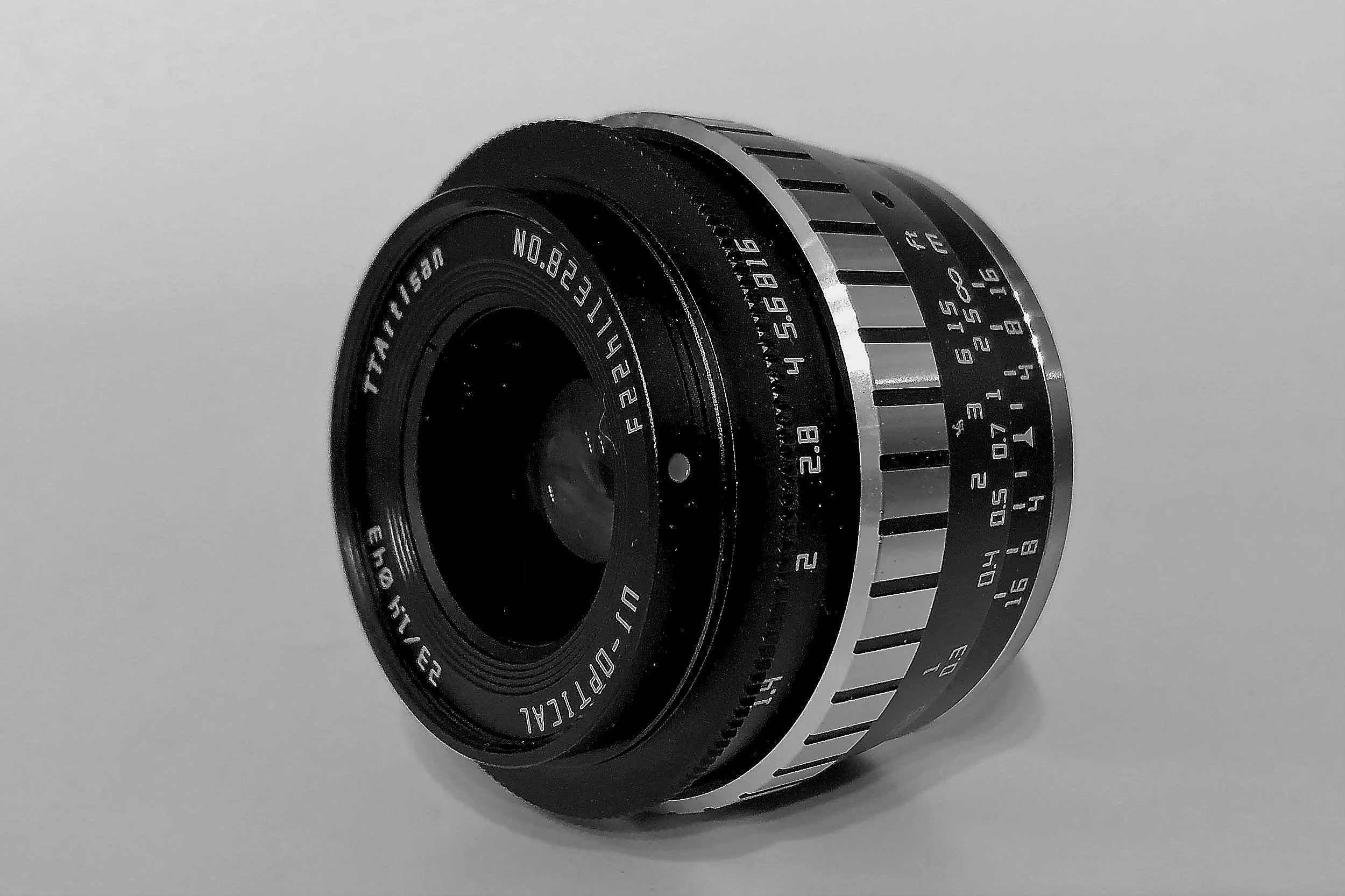
After some deliberation and research, I decided on this lens for several reasons.
It is extremely reasonably priced.
It is small.
It has a nice, solid feel to it.
It balances nicely on the X-Pro 1.
It looks cool.
And most importantly, it delivers excellent image results.
Considering this, I couldn't find a lens with a better price/quality ratio.
And there is another spec to this lens, which for me is essential: it has a distance/aperture scale which allows for zone and hyperfocal focusing! Unfortunately, the only Fujinon 23mm lens with this feature (the 23mm/1.4 R) is just over seven times more expensive.
[note: I have no affiliation with TTArtisan or Pergear, and I purchased this lens myself]
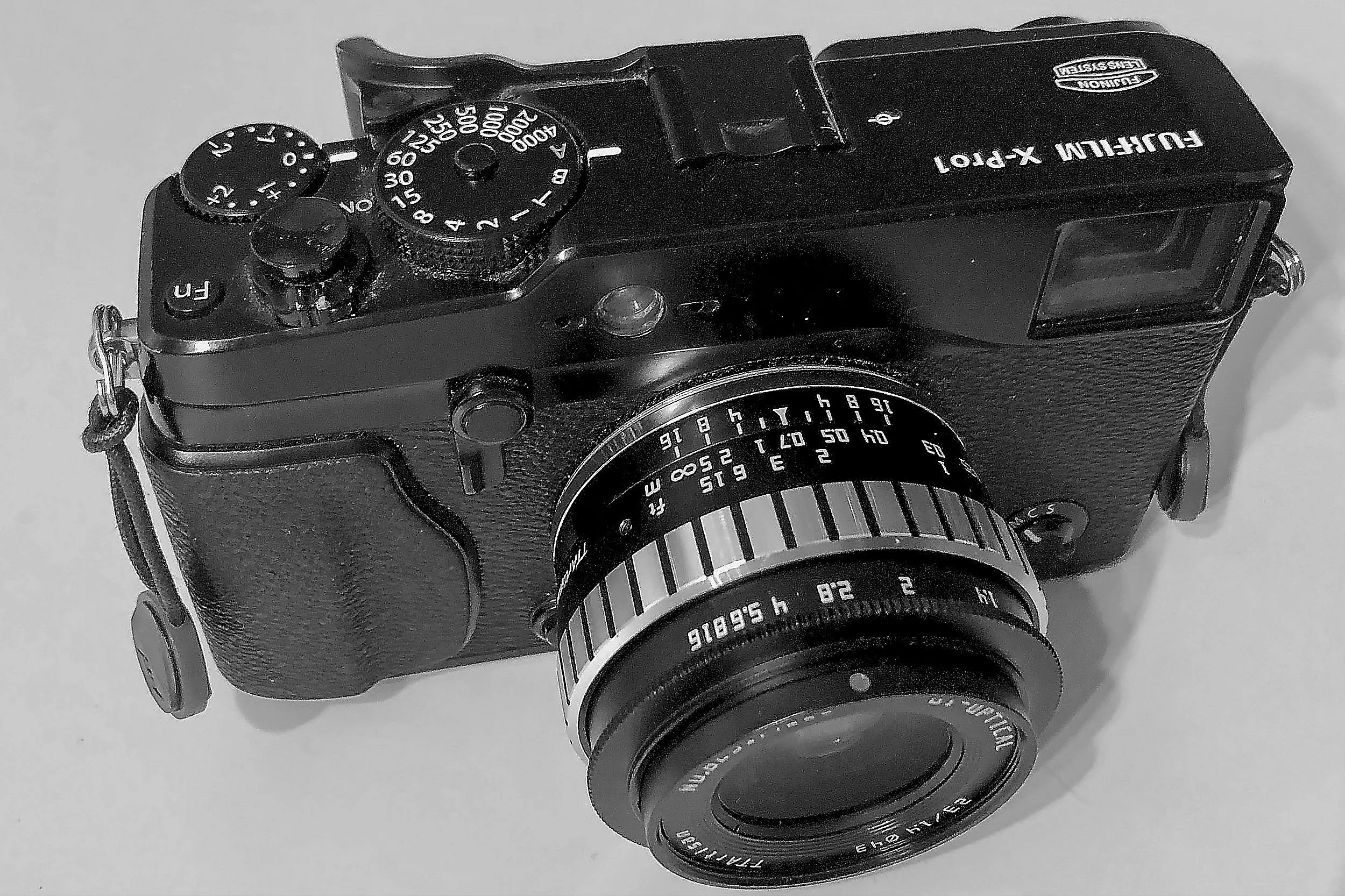
So now I am back to two daily cameras: the Leica M4 with the 35mm Summaron and the Fujifilm X-Pro 1 with the 23mm TTArtisan, which makes life also a bit easier because I don't have to choose between three cameras when going out on the street.
The images below are the first results of shooting with the TTArtisan 23mm (all are SOOC jpegs).
Admittedly, there is some learning curve since the lens is fully manual and does not communicate with the camera. I am finding, however, that the use of this lens is not much different from using the Summaron (all Leica devotees now probably are shaking their heads and un-friending me). And zone focusing even allows me to get great results using the X-Pro1's OVF.

On The Road Again
On A New Adventure With Willy Nelson
Remember when I wrote about moving to a new location in 2019 and how that triggered me to purchase the Fujifilm X100F? Well, it happened again.

On A New Adventure With Willy Nelson
Remember when I wrote about moving to a new location in 2019 and how that triggered me to purchase the Fujifilm X100F?
Well, it happened again.
After being quite unhappy in my previous work environment, several things happened in March this year, leading to me starting a new job in June.
About a month into my new role with my new employer, it has been a great experience.
There is one thing, however: my wife, our three dogs, and I are relocating from Upstate South Carolina to Upstate New York.
This move triggered us to go back to Willy Nelson's song "On The Road Again," which became our family anthem when we relocated from 2007 through 2011 from the Netherlands, to Spain, to Australia, to South Africa, to finally the USA.
I am living in a hotel since mid-June, while my wife is still in our house in South Carolina. We are closing on a home here in New York in August, and I look forward to being united again.
While some people think we have lost our mind, moving from warm SC to NY, which has a lot of snow in winter, we are looking forward to it.
We loved living in South Carolina (11 years!) and made many friends we will dearly miss. But moving from summer temperatures in the 90s with humidity in the 80s to the milder climate here in Upstate New York is one of the perks.
And while we will miss Greenville, SC, its restaurants, Saturday farmers market, and other events, we will get a lot to replace them!
We are in the area between Albany, NY, and Saratoga Springs, NY, which means farmers' markets, horse racing, good restaurants, the Aridondacks, lakes, and even proximity to Vermont and Massachusets.
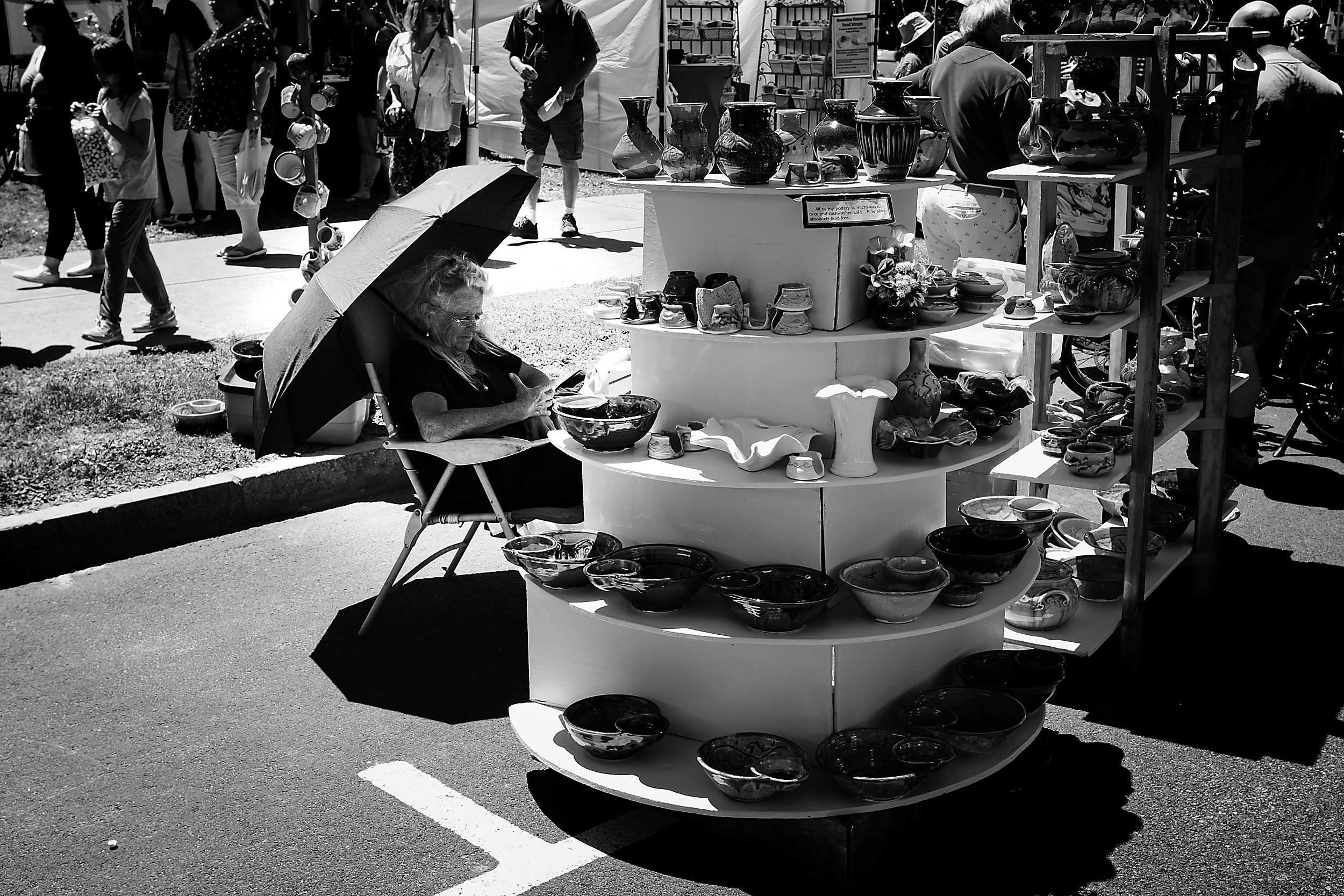
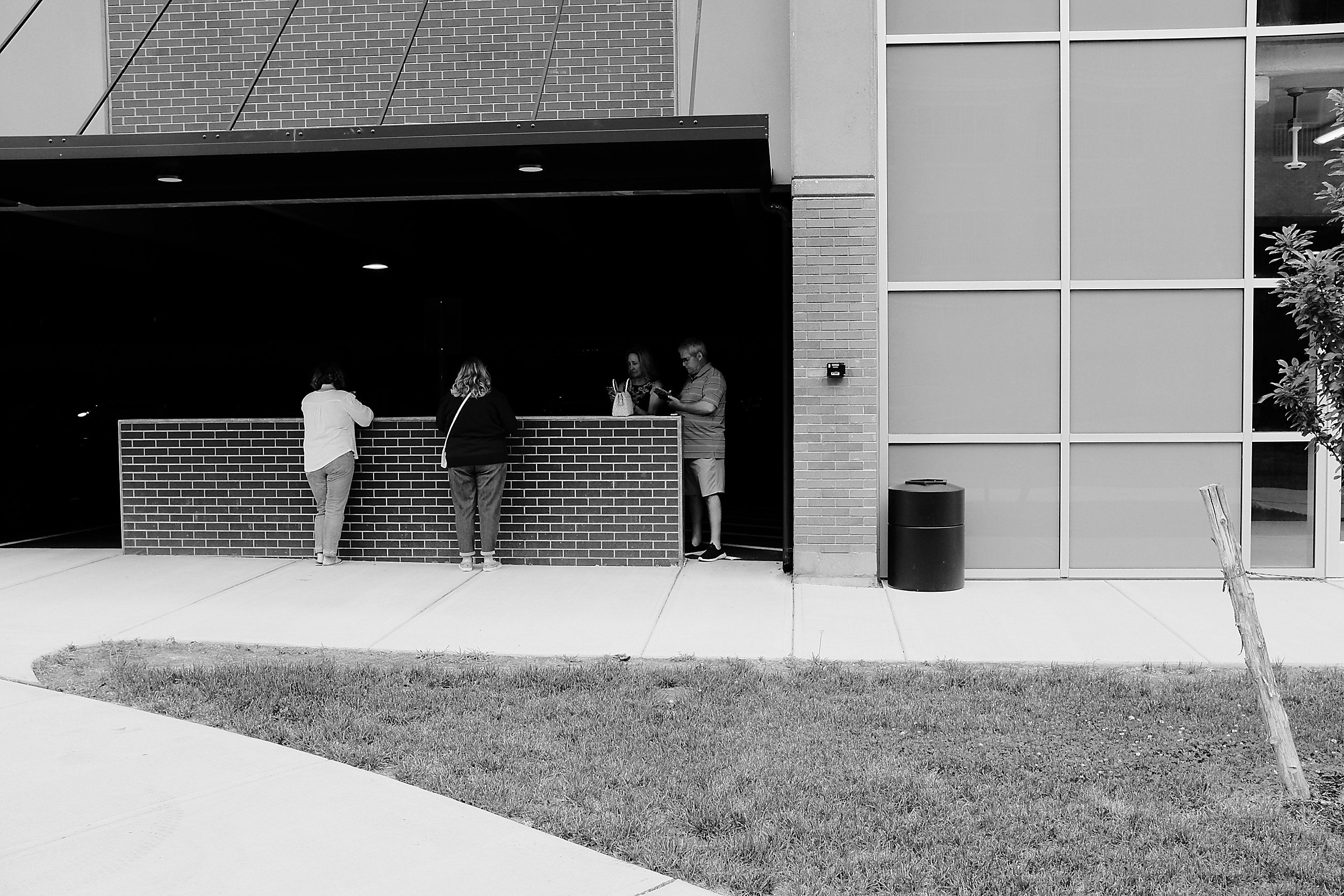

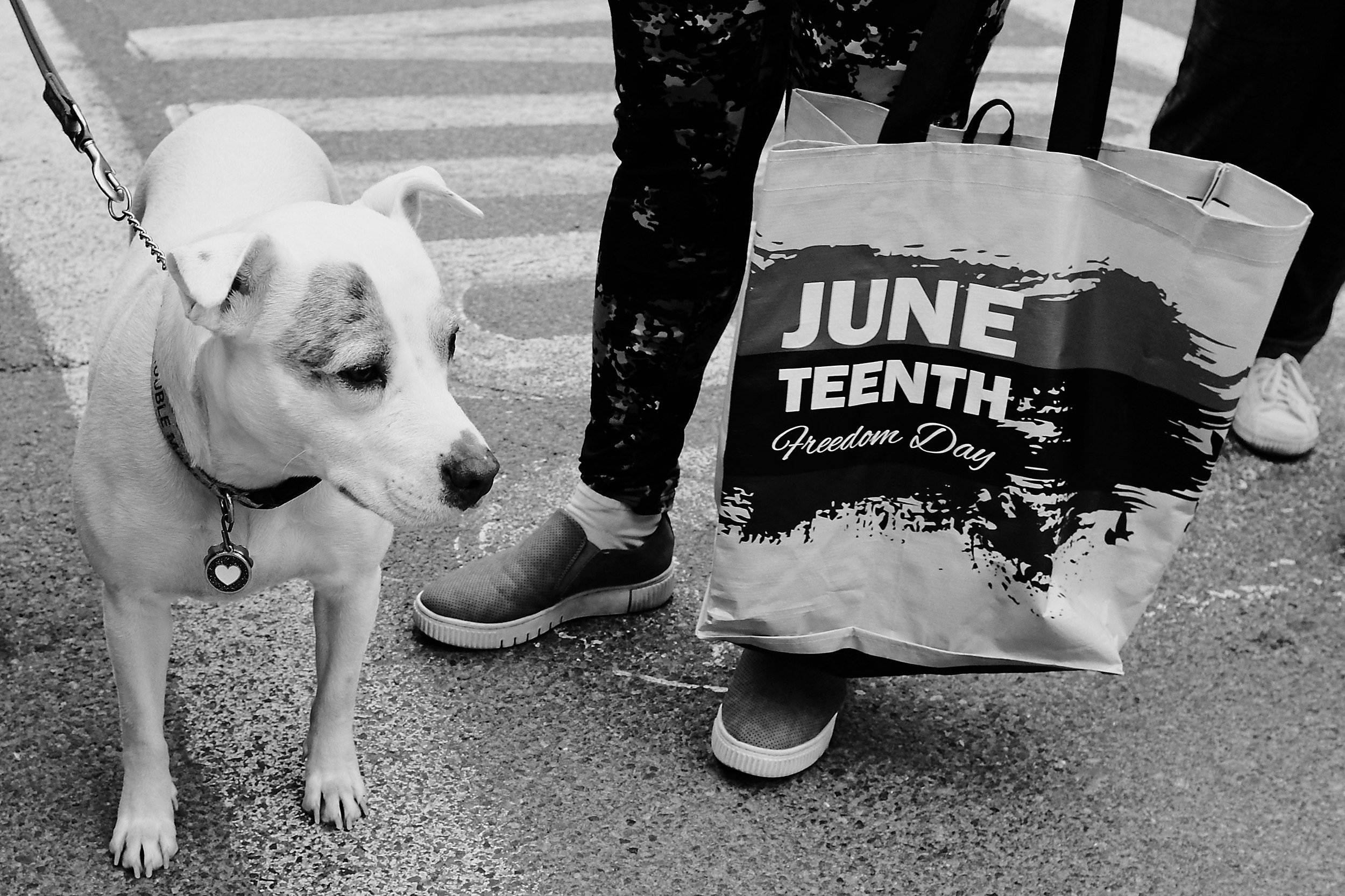
And from Albany, only a 2.5-hour train ride to New York City!
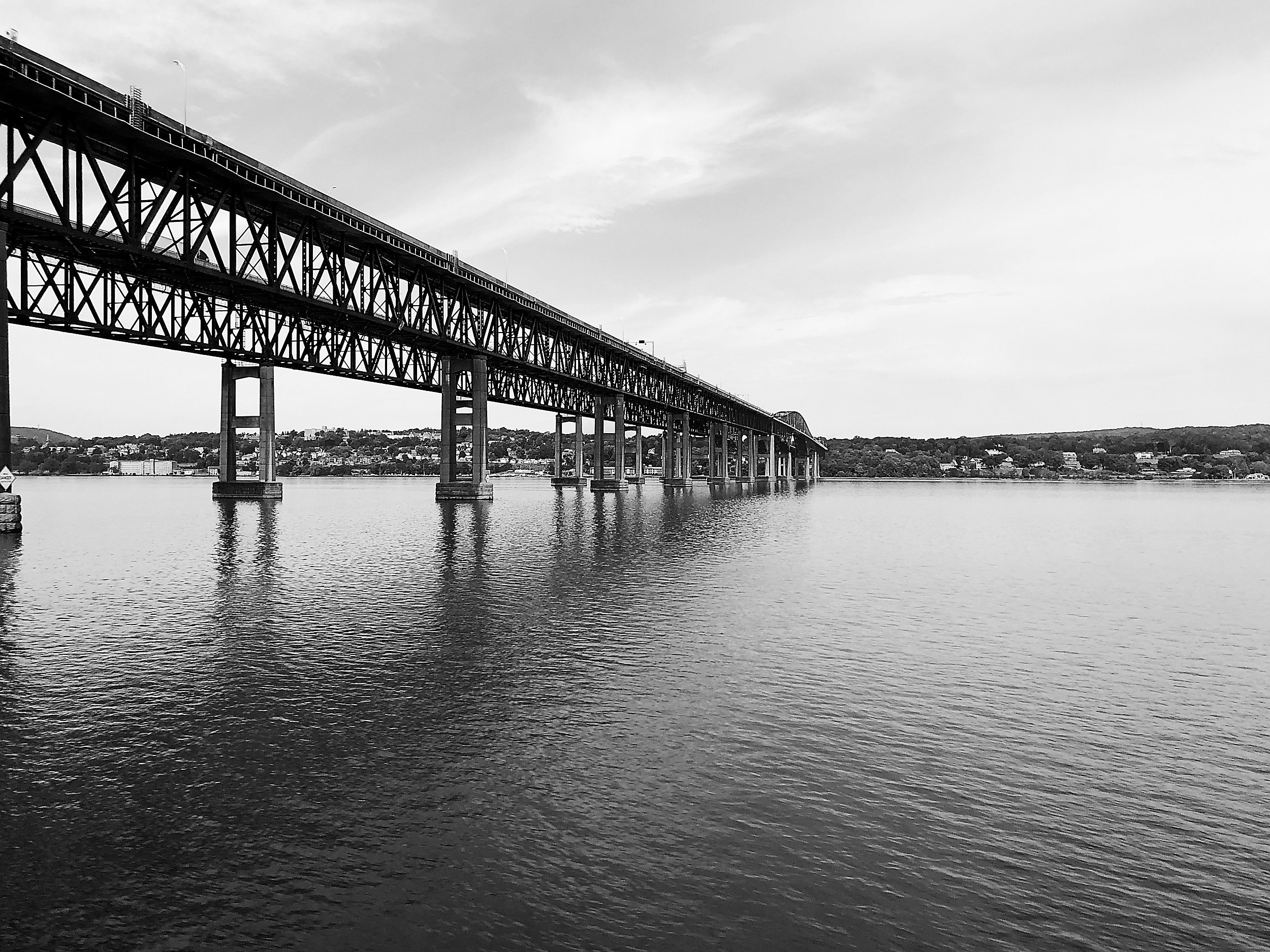
Hudson River, NY | Newburgh-Beacon Bridge | Jun 2019
As a self-proclaimed social documentary/street photographer, what more could I wish?!

New York City | 8th Ave - W 41 St | Jul 2019
While everything has been and still is quite stressful with everything that happened, we are looking forward to moving into this area and starting a new chapter in our lives. So, we are on the road again!

Never Too Old To Play
New York City NY | Hester St. Playground | Feb 2019
New York City's China Town area is a treasure trove for street photographers and cultural experiences.
New York City, NY | Hester St. Playground | February 2019
New York City's China Town area is a treasure trove for street photographers and cultural experiences.
I noticed two gentlemen near the Hester Street playground playing the Chinese game of Xiangqi.
I didn't know if they played for toothpicks, hard dollars, or fun, but they were having a good time, and the bitter cold temperature didn't bother them.
Several onlookers were sitting and standing around their table, undoubtedly providing their advice for the next move.
Unfortunately, I had to move on and never got to know who won.
Teamwork
Greenville, SC | N Main St | January 2022
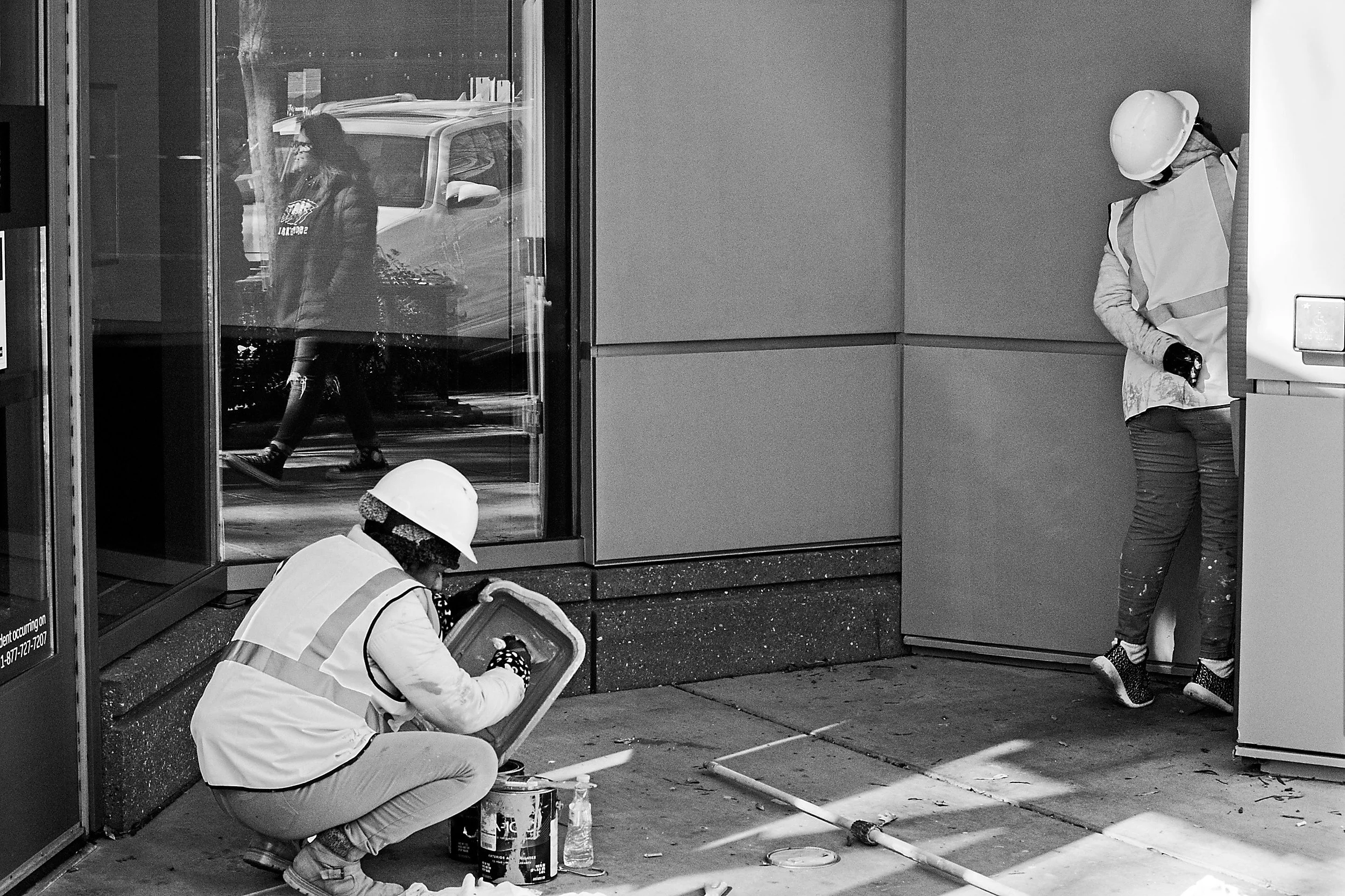
Walking on Greenville's, SC, Main Street, I saw these two workers repairing a wall…

Greenville, SC | N Main St | Jan 2022
Walking on Greenville's, SC, Main Street, I saw these two workers repairing a wall.
Working with their backs to the sidewalk, they seemed unaware of the people walking by. Focused on the task at hand, they quietly went about it, working together and getting the job done.
The public also did not notice them, indicated by the woman whose reflection is visible in the window in the background—going on with their daily chores, busy being busy. Not deliberately ignoring the workers, but not interested.
And is that not what generally is the case?
We all go about our busy lives without paying attention to the people around us.
It seems we are more interested in the actions and lives of movie stars, social media authorities, and other so-called 'influencers' than in the real people around us.
This thought inspired me to start working on a new project about real people: manual workers, parents, emergency services personnel, shoppers, office workers, etcetera.
In the upcoming weeks, I will need to flesh out the details: where to focus on possibly, what type of images, medium (film, digital, or both).
More to come.
What Is A Good Photo?
If your pictures aren't good enough, you're not close enough - is that it?
What does make a good photo? Is it just proximity to the subject (as Robert Capa famously said)? Or is there more to it? In this article, I provide some insights into the elements that could make a good photo, and also some tips to get educated about photography.
If your pictures aren't good enough, you're not close enough - is that it?
If you had only one social media account, you would be bombarded with hundreds of images daily. But, as most people do, if you have multiple, this number will go up into the thousands. Daily!
Assuming that you are interested in looking at photographs, possibly following photographers whose images you like, I recommend that you educate yourself about how to look at a photo and know if it is a 'good' one.
Now, here I am moving into dangerous territory.
Defining a 'good' photo is dependent on a multitude of factors
Robert Capa famously said: "If your pictures aren't good enough, you're not close enough."
But proximity to the action and capturing the decisive moment is only one part of the equation: Composition, the use of or absence of color, and the use of light are other and more important criteria to consider.
And then, of course, the most important is the artist's vision: what do they want to communicate with a specific image?
"Are my images good enough" is a question I ask myself when reviewing the images I created and considering whether they are worth putting on the website for viewing by others.
The first indication that an image might be 'good' is the use of technique
How did the photographer use the light? How was the subject chosen and placed, and how is the general composition of the image? Mastering technique is essential to get the basics right and to understand what you are doing as a photographer. There are a lot of rules to follow, and once you know how to follow the rules, better images sometimes can be created by breaking the rules.
The second and more significant indication that a photo might be 'good' is how viewers react to and interact with the image
To start with some quotes from famous photographers: "There are always two people in every picture: the photographer and the viewer" (Ansel Adams) and "To me, photography must suggest, not insist or explain" (Brassaï).
The questions to ask are: how did the photographer apply technique to create a story that the viewer can read and interpret? How did she create a mood, a feeling, to entice a reaction from the viewer?
Or, to speak with David duChemin: does the image have a soul?
The latter is, for me, far more important than knowing that I created a technically perfect image.
Black and white: look for tonality
When looking at black and white images, I not only look for the elements mentioned above. I, in addition, pay specific attention to the picture's tonality.
To understand what 'tonality' means, we first need to understand what 'tonal range' means: the range of grey tones in an image between pure black and pure white. A picture can have a wide tonal range, which means that besides pure black and white, the image has a lot of shades of grey. Conversely, a photo with a small tonal range has only a limited number of greys.
Tonality relates to the balance of blacks, whites, and greys in the photos.
An image that I consider to have 'great tonality' has a full range of well-balanced grey tones and pure black and white.
However, having low tonality does not mean that the image is automatically not good!
Examples of images with low tonality are:
Images with high contrast.
High key images.
Low key images.
Middle key images (typically only grey tones and no pure black and pure white).
Get educated about photography.
As we have seen above, there is a lot to consider when contemplating whether a photo is a 'good' one. Therefore, before being able to discern a 'good' image, you have to educate yourself about photography.
And for me, the only way to do this - to learn how to 'read' an image, understand what to look for in a picture, and understand what type of images you like - is to look at many photos.
You could do this on your phone's/tablet's/computer's screen or by looking at photography books.
I, however, recommend going to a museum or a gallery and looking at actual prints of images. A photo looks much better printed.
Furthermore, a gallery owner can talk to you about the pictures, explain the photographer's vision, the techniques used, the background of the images, and much more.
Most larger cities have at least one photo gallery and probably more. And don't forget to check the smaller galleries outside the cities. There is a photographic world to explore out there!
Go an do it. Check it out.
Pro tip: when in Greenville, SC, check out the SE Center for Photography and the Artists Guild Gallery of Greenville
Book Review: Blood and Champagne, by Alex Kershaw
An Unauthorized Biography of Robert Capa
The author provides the background story to Capa's work and insight into the photographers' community from the 1930s to the 1950s. Reading Capa's story made me realize how much happened in the relatively…

An Unauthorized Biography of Robert Capa
INTRODUCTION
Having spent my childhood in the 60s through 80s of the last century in the southeast of the Netherlands near the German border, I remember playing in the demolished remnants of the bunkers of the Westwall (Siegried Line) and seeing the dragon's teeth anti-tank devices just over the border near Aachen, Germany.
And with parents and other family members who lived through the Second World War, that period in history always has had my interest—specifically concerning what happened in the so-called European Theather of Operations (ETO).
Combine this interest with my passion for photography, and it will not be a surprise that I loved reading this unauthorized biography of probably the most famous photographer of World War 2 and the decades immediately before and after that terrible period in history.
The author, Alex Kershaw (England, 1966), is a journalist, public speaker and the author of several best-selling books. His journalism includes investigative pieces, reportages, and interviews with a broad range of subjects. He also has led many battlefield tours of Europe.
Technical data:
Published: 2003 (first US edition)
Publisher: Thomas Dunne Books
ISBN: 0-312-31564-3
Size: 6 3/8” x 9 1/2” x 1”
The book has 23 chapters, each based on an important stage of Capa's life.
Furthermore, it contains:
a List of Illustrations;
Acknowledgements;
a foreword/introduction by the author
an Epilogue
Notes
Bibliography
Index
It also includes a section with 26 images: 18 are images of Capa, and 8 are images of his friends or acquaintances (the book does not have any pictures made by Capa).
REVIEW
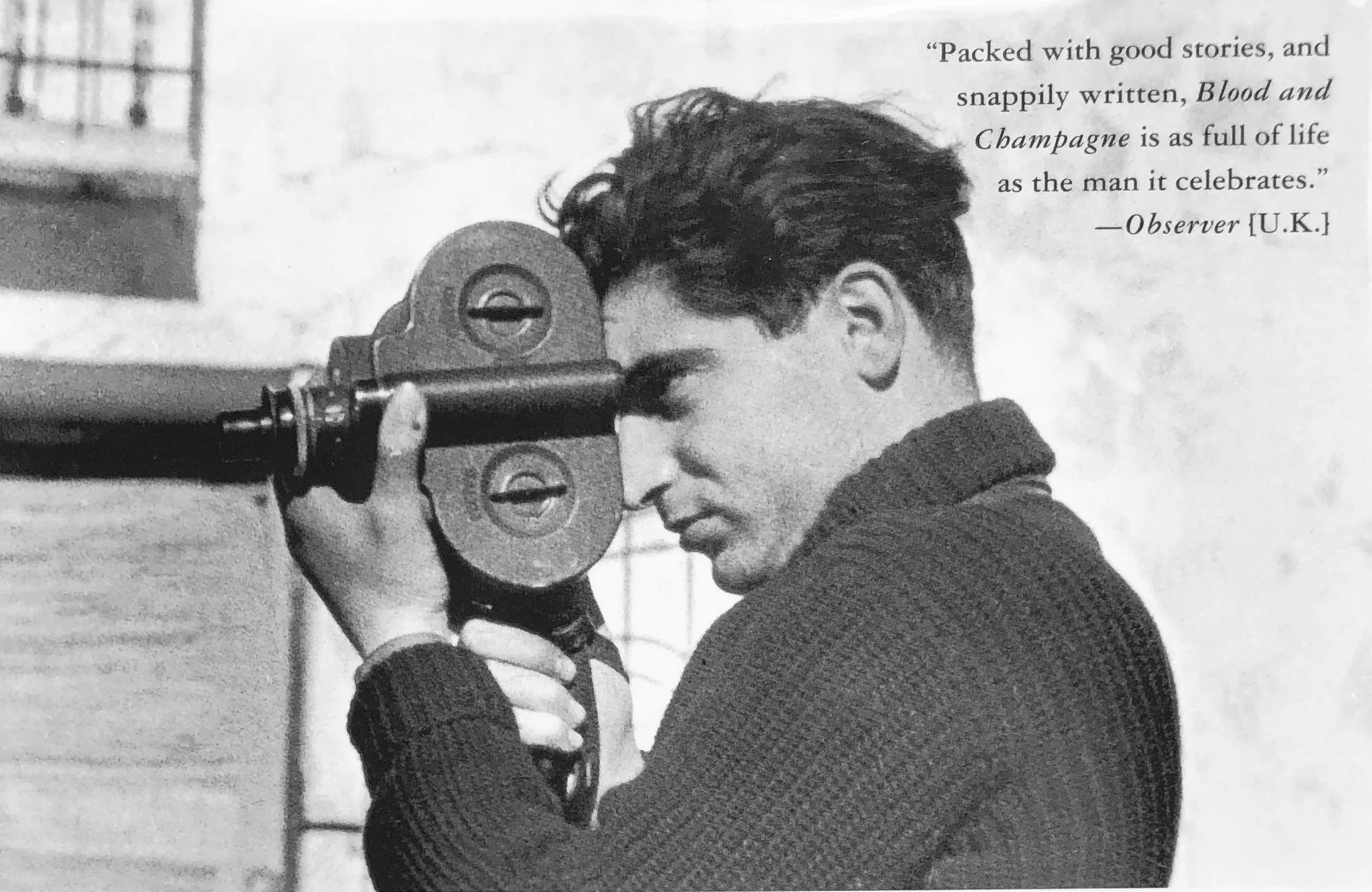
Kershaw's narrative provides a unique insight into the life and background of the man André Friedman, who became the famous war photojournalist Robert Capa.
The author provides the background story to Capa's work and insight into the photographers' community from the 1930s to the 1950s. Reading Capa's story made me realize how much happened in the relatively short period of 3 decades that he was active: the Spanish Civil War, the Chinese-Japanese wars, World War 2, Korea, and Indo-China.
It, therefore, should not be a surprise that Capa's lifestyle and restlessness show symptoms of what we currently probably would associate with PTSD.
Capa was a photojournalist. But he was also a passionate photographer. One of the gems I found in the book was a quote from John Steinbeck ('Popular Photography' September 1954): "It does seem to me that Capa has proved beyond all doubt that the camera need not be a cold mechanical device. Like the pen, it is as good as the man who uses it. It can be the extension of mind and heart." [p. 1]
While he tried his hands at other trades, fortunately for the world Capa "decided to become a photographer, which was the nearest thing to journalism for anyone who found himself without a language." [p. 16]
Whether this was because his German - and later English - seemed not to have been the best or for other reasons, it shows that photography is a universal language.
As the author observes, "like nothing else, a still photography conjures up vivid memories." [p. 4]. Eva Besnyö, a friend of Capa and a great photographer in her own right, already realized that "Photographs could be a socially conscious artist's means of showing truth to the world, thereby helping to change it." [p. 14]
Capa embraced this notion, as Pierre Gassman noted: "He wanted to show people things they had never seen. He wanted to shock and surprise." [p. 24]
Capa achieved this with his unique style of getting as close as possible to his subjects, which he developed early in his career. Already during his first assignment, photographing Trotsky, "he had got within a few feet of his subject" [p. 19]
Capa later explained his "trademark intimacy and intensity." [p. 19] with his famous words, "If your pictures aren't good enough, you're not close enough." [p. 164]
CONCLUSION AND RECOMMENDATION
This book is an impressive biography of one of the great, if not the greatest, photojournalists of the 20th century.
It provides a unique, intimate insight into Robert Capa's life, the 'how' and 'when' of some of the most famous images of that era, and the photographer's community during the heydays of photojournalism.
A 'must read' for anyone interested in photojournalism, the era from the Spanis Civil War until the origins of the Vietnam War, or the photographers' community from the 1930s to the late 1950s.
Forever Young
Washington, DC | 11th Street NW | July 2014
Bob Dylan, Rod Stewart, Alphaville, and probably many others sang about it. Movies have been made about it.
Staying forever young: a wish that many people need to have.

Washington, DC | 11th Street NW | July 2014
Bob Dylan, Rod Stewart, Alphaville, and probably many others sang about it. Movies have been made about it.
Staying forever young: a wish that many people need to have.
If we must believe the music and film industries.
And cosmetics and clothing firms are playing well too.
Helping people to stay forever young.
Or at least: helping people feel they can stay forever young.
Or at least: making people feel they need to stay forever young.
Madrileñas
Madrid, Spain | Plaza Platería de Martinez | August 2019
Something that always strikes me in Spain is the strong and articulated women. Irrespective of social status or age, they are Present, with a capital P.

Madrid, Spain | Plaza Platería de Martinez | August 2019
Something that always strikes me in Spain is the strong and articulated women.
Irrespective of social status or age, they are Present, with a capital P.
After a stroll through Madrid's famous National Botanical Garden, my wife and I decided we earned some tapas and a refreshing drink. Since it was summer, most bars and restaurants had tables outside on the street, and we quickly found one near the botanical garden and the Prado museum.
While getting seated, I could not ignore these three ladies sitting at a table next to ours.
They were involved in deep conversation. One of the ladies passionately articulated her thoughts on a particular topic, while the other two listened with great attention.
I would have loved to eavesdrop to hear what they were so animated talking about, but that is not something one does. Also, my Spanish is not so good that I could fully understand what she said.
HOWEVER, what I could do was take my trustworthy Leica M4 and seize an image of this beautiful trio.
This photo might not capture a 'decisive moment', but, as I explained previously, street photography is not always about the decisive moment and is far more.
This image, for me, represents a typical situation that someone easily can encounter in Madrid. Or in any town and city of Spain.
Three ladies are having a great afternoon, enjoying some food and drinks and discussing current events, maybe talking about global wars and inflation, or gossiping about the new girlfriend of one of their sons.
Not The Decisive Moment
Street Photography Is Social Documentary Photography
Writing last week's blog posts about the book Lost London: 1870-1945 made me realize that there is an easily overlooked aspect of street photography.
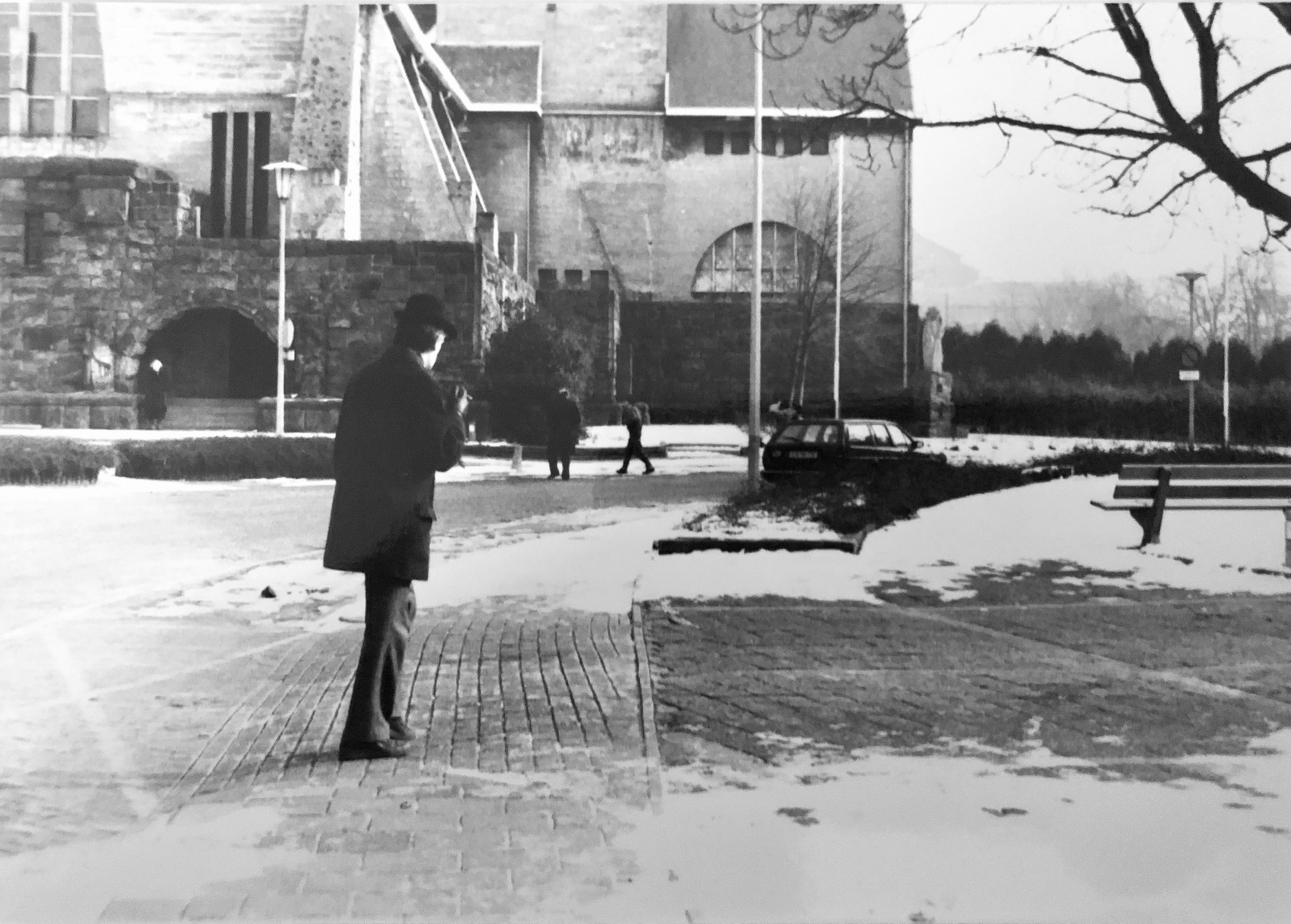
Image courtesy and copyright Amei Manten
Street Photography Is Social Documentary Photography
Writing last week's blog posts about the book Lost London: 1870-1945 made me realize that there is an easily overlooked aspect of street photography.
Every street photographer wants to capture a specific moment and create that 'one' image that will enthuse the world. With Olympians like Henri Cartier-Bresson, Vivian Mayer, Elliot Erwitt, and so many others as examples, we street photographers try to emulate their vision, their images, and their success.
But street photography is so much more, and street images can mean much more to our audience.
Street photography is not and does not always have to be about the decisive moment.
The images in Lost London: 1970-1945 made me realize that there is so much more to these pictures than the decisive moment. These images capture a particular place during a specific time that has a special meaning for contemporary viewers.
Allow me to explain this with an example of an image not related to the book.

Image courtesy and copyright Amei Manten
Recently I posted an image from the small village my wife and I grew up in on Facebook. My then-girlfriend, now wife, created the picture in the mid-1980s as part of a photography assignment while studying at the University of Leiden (the Netherlands).
It is quite an ordinary image: a village street with a woman.
However, posting this image on Facebook had a surprising result. Numerous people commented on the street and the buildings, with many trying to figure out who the woman in the picture was.
This result and the images from the book Lost London: 1870-1945 made me realize that street photography always is a form of social documentary photography. With or without a decisive moment captured, street images provide contemporary viewers and later generations insights into our environment's current state; it captures the Zeitgeist.

Image courtesy and copyright Amei Manten
The look of the streets, the buildings that may change or totally disappear in the future, the people, the clothes they wear, their occupation, and other details of daily life we at this moment take for granted but will be of interest later.
This realization gave me a feeling of calmness.
I no longer have that unsatisfied urge to hunt or fish for the decisive moment when creating street images. Instead, I am more aware of my surroundings and what my image might mean to future viewers. Maybe they lived in this specific area I am capturing; perhaps I captured one of their family members in my frame.
Street photography, for me, now is more about capturing the current state, and it's not only about the decisive moment.
I still will look out for it, and if and when I capture such a moment: outstanding, excellent! But, if not, I move on with the knowledge that at least I captured something from which future viewers can learn how the world looked today.
Book Review: Lost London 1870-1945 by Philip Davies
How A Photo Book With Old Images Impacted My Photography
I was lucky enough to stumble upon this book while browsing the bargains area of Barnes & Noble. It is a photo book with old images from London, United Kingdom, taken between 1870 and 1945, providing a unique insight into how the city and its inhabitants looked during those years.

How A Photo Book With Old Images Impacted My Photography
Introduction
I was lucky enough to stumble upon this book while browsing the bargains area of Barnes & Noble.
It is a photo book with old images from London, United Kingdom, taken between 1870 and 1945, providing a unique insight into how the city and its inhabitants looked during those years.
Philip Davies has curated the images in the book, an architectural historian who - from 2005 to 2011 was the Planning and Development Director for London and South-East England at English Heritage.
From the dust jacket: "Lost London 1870-1945 is a spectacular collection of more than 500 of the best images from the formor London County Council archive of photographs... Most have been never published before. Taken to rovide a unique recored of whole districts of London as they were vanisching, each of the photographs is a full-plate image, a stunning work of art in its own right."
Published: 2009
Publisher: Transatlantic Press
ISBN: 978-0-9557949-8-8
Size: 11 6/8" x 9 7/8" x 1 1/2"
Review
The book has 14 sections, with the photo sections arranged according to period and city areas:
Foreword by HRH The Duke of Gloucester
Author's Note
Introduction - The Lost City - Images of London 1870-1945
Chapter One - Urban Penumbra - The City fringe
Chapter Two - Engine of Commerce - The City of London
Chapter Three - Between Two Cities - Holborn and Strand
Chapter Four - Imperial Capital - Westminster and the West End
Chapter Five - City Of Dreadful Night - The East End
Chapter Six - London-Over-The-Water - South London
Chapter Seven - Urban Villages - Villas and leafy gardens
Chapter Eight - Zenith 1918-39 - Sovereign of cities
Chapter Nine - Catastrophe 1940-1945 - A city in ruins
Index
Acknowledgements
The first thing that struck me was that the quality of the images is remarkable. They have great detail and excellent tonality. We only wish future generations can view our currently mainly electronically created images with the same quality after one or two hundred years.

Lost London 1870-1945, page 71
The book also provides a great history of photography in London in its Introduction. Not only its 'why' but also its 'how.'
"Photography was not easy in London. Henry Dixon recorded how he had to obtain a photograph in a crowded street by removing a wheel from a wagon, and while his assistant pretended to mend it, he photographed his subject from under the canvas." [pp. 24-25]
The images also show how the photographers had to work the light to create their photos: look at how buildings in the background are over-exposed due to the exposure time needed for foreground objects.

Lost London 1870-1945, page 23
The book's main objective is to create a sense of urgency with the viewers of the importance of preserving architectural gems. To paraphrase from the Foreword: This kind of photography emphasizes the task of English Heritage (and similar organizations in other countries!) to preserve the best of historic buildings, help the general public understand why they should be kept, and increase the understanding of the significance of these buildings for our history.
For me, however, the value and importance of the book and the photographs go far further than this. The images of the streets, buildings, and people provide us with a unique insight into how people lived during the period covered by the book. It is a true social documentary trove and "Spanning a period of 75 years from the mid 1870s to 1945, [the photographs] depict a world in transition." [p. 9]
"Some of the physical impacts of these profound changes can be seen in these photographs - the arrival of tramlines, the progressive replacement of horse-drawn vehicles by motor cars,..." [p. 27]

Lost London 1870-1945, pages 202-203
While Davies, in his Introduction, does a great job to explain the importance of the images from an architectural history perspective and while he provides us with a socio-economic reference frame for the period covered, it is the images themselves that tell that story best.
"As primary sources of historical evidence, [the photographs] are by their very nature impartial, and bear witness to past places or events, undistorted by the interpretation of their creator." [p. 9]
One of my first reactions was Eugene Atget coming to mind when first browsing through the images: the streets, sometimes with and sometimes without people. Important in that context is that "[The images] have been selected to show the commonplace rather than the great-set pieces,....which conveys so vividly the actual feel of London as it then was..." [p. 9] and they are "important documents of social and topographical history,..." [p. 9]

Lost London 1870-1945, page 69
Consequently, I dare say that Davies did for the multiple photographers whose images he used in the book what Berenice Abbott did for Eugène Atget.
Other images reminded me of Lewis Hine with their harsh directness and focus.

Lost London 1870-1945, page 14
Conclusion and Recommendation
This book is a monumental document about one of the world's great cities and about the photographers who documented the changes in London over 75 years.
It provides a unique, intimate insight into the status of London's buildings and streets and the lives of its inhabitants.
In conclusion, this is a remarkable document, and it has very much influenced my view about street and social documentary photography. Creating images of the places I visit, I also try as much as possible to have my photographs as impartial and undistorted by my interpretation of the scenes I observe as possible.
Hello Mrs. Cartier-Bresson
Greenville, SC | S Main St - W McBee Ave | January 2022
When I saw this lady walking towards me, I almost froze. Where did I see those sunglasses before?

Greenville, SC | S Main St - W McBee Ave | January 2022
When I saw this lady walking towards me, I almost froze.
Where have I seen those sunglasses before?
Could it be?
Is it her?
If only HCB was here, he would be able to tell
61 years... impossible, it can't be her...
Maybe her daughter?
Paying Attention
Washington, DC | Lincoln Memorial | August 2014
One of the joys of street photography, actually the reason I think most street photographers do what they do, is observing people…

Washington, DC | Lincoln Memorial | August 2014
One of the joys of street photography, actually the reason I think most street photographers do what they do, is observing people.
People on their own, in small groups, or, as in this image, in large groups of individuals who are not in any way related to each other than for the fact that they are coincidentally in the same place at the same time.
When visiting the Lincoln Memorial in 2014 (obviously very much during pre-pandemic times) I noticed that most visitors are not really paying attention to the statue of the great man. Several were walking around in circles like lost in the vast space of the Memorial building, some were talking in groups, and quite a few were busy taking selfies with their omnipresent phones.
Except…
Except for this one woman, who stood still in the middle of the moving, chattering and self-focused crowd.
She was looking at the image of President Lincoln. Paying attention. As if to say: “What can you tell me. What can you teach me.”
And isn’t that what we all should do more often? Paying attention. Putting the phone away. Stop talking. Stop being focused on ourselves. And just pay attention.